De toekomst van mobiliteit is aangebroken
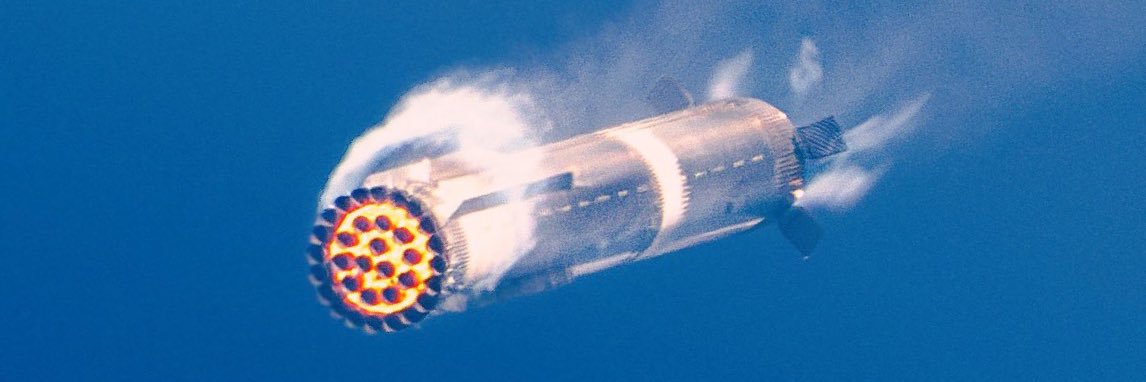
FSD Supervised has been approved in the Netherlands 🇳🇱 & will begin rolling out in the country shortly!
Trained on billions of kilometers of real-world driving data, it can drive you almost anywhere under your supervision – from residential roads to city streets & highways
No other vehicle can do this.
We're excited to bring FSD Supervised to more European countries soon
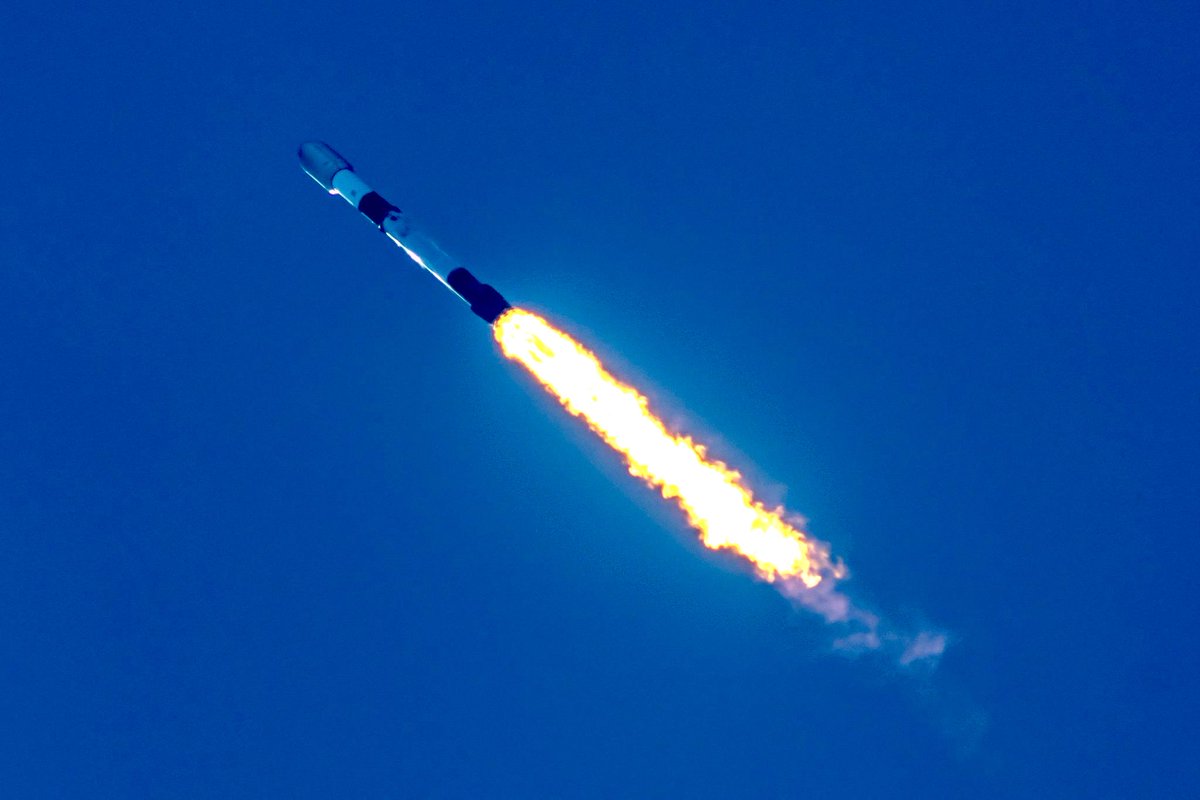
Yesterday SpaceX launched 29 more Starlink satellites from Florida.
Nobody cared. Routine. Another Tuesday.
Here is what actually happened.
Satellite number 10,074 entered an orbit where 300,000 autonomous collision-avoidance maneuvers were executed last year alone. Not by humans. By onboard machine learning that screens conjunction data from 30 million object-transit observations per day, computes probability in real time, and fires ion thrusters if risk exceeds one in a million. The industry standard is one in ten thousand. SpaceX set its threshold 1,000 times stricter and then automated the entire thing.
Three hundred thousand maneuvers. That is 820 per day. Forty per satellite per year. Every single one decided and executed by AI faster than a ground controller could open the alert email.
This is Tesla Full Self-Driving logic running in vacuum at 7.8 kilometers per second.
SpaceX did not stop there. In January they launched Stargaze, a space situational awareness network built on the star trackers already aboard every Starlink satellite. Thirty million observations daily, conjunction screening delivered in minutes instead of hours, and they gave the data away for free to every operator on Earth. They just made themselves the air traffic control system for low-Earth orbit and charged nothing because the real product is not the data. The real product is the standard.
Now connect this to last week.
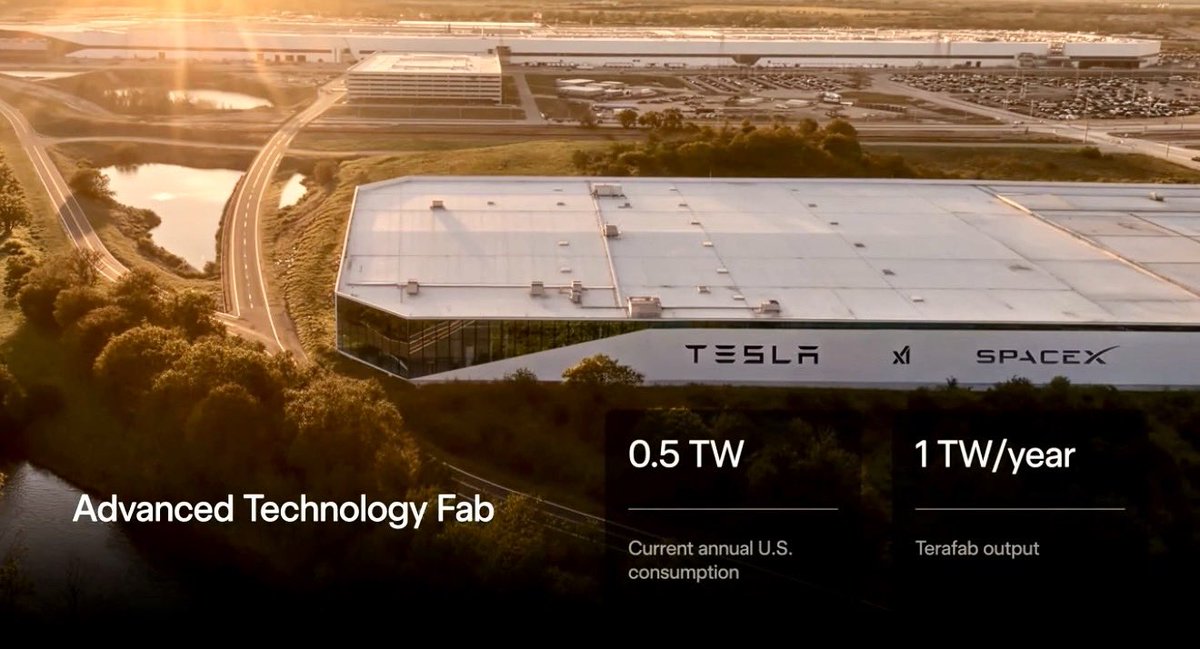
Terafab breaks ground in Austin. One terawatt per year of AI compute. Eighty percent allocated to space. D3 chips designed to run hotter in vacuum where radiative cooling is free. Satellites with 100-kilowatt solar arrays scaling to megawatt. Optimus robots replicating from raw materials. The Dyson Swarm bootstrap.
Every analyst covering Terafab is modeling chip yields, capital costs, and process nodes. Not one of them is asking the question that determines whether any of it works: how do you manage ten thousand satellites without a single collision, and then scale that to ten million, and then to five billion?
The answer already exists. It launched its 300,000th maneuver months ago. It processes 30 million observations every 24 hours. It operates at a collision-probability threshold three orders of magnitude beyond what any government or competitor has achieved. And it improves with every satellite added because more nodes means more eyes means better models means safer density.
This is the orbital operating system for a Kardashev II civilization and it is already running.
The Hormuz crisis proved that terrestrial supply chains are molecule-dependent and fragile. The Terafab announcement proved that Musk intends to move compute off-planet. But neither of those matter if the orbital environment becomes a debris field. The collision-avoidance AI is the gate. Without it, every satellite launched is a lottery ticket for Kessler syndrome. With it, density becomes self-reinforcing instead of self-destroying.
Nobody is covering this because it is not a product announcement. It is not a keynote. It is infrastructure so foundational that it has become invisible, the way TCP/IP became invisible the moment the internet worked.
SpaceX did not just build a satellite constellation. They built the nervous system of orbital civilization and trained it on 300,000 real-world decisions before anyone realized what they were looking at.
The rockets are visible. The chips are headline news. The AI keeping ten thousand objects from destroying each other in silence at eight kilometers per second is the actual breakthrough.
And yesterday they added 29 more nodes to the network.
Routine.
Everyone is covering Terafab as a chip factory.
It is not a chip factory.
Last night in Austin, Elon unveiled a facility that makes masks, fabricates chips, and tests them inside a single building with a nine-month recursive improvement cadence. No such loop exists anywhere else on Earth. Then he told you 80% of the output goes to space. Then he showed you a 100-kilowatt AI satellite with solar panels and radiators, scaling to megawatt range. Then he said Optimus plus photovoltaics will be the first von Neumann probe, a machine capable of replicating itself from raw materials found in space.
Nobody connected the sequence.
Terafab produces 1 terawatt per year of compute. The entire United States consumes 0.5 terawatts of electricity. Musk is building a single factory whose output in AI silicon exceeds twice the power consumption of the country it sits in. And he is sending 80% of it off-planet because Earth literally cannot power what he is building.
Follow the mechanism. Terafab seeds the chips. Starship launches Optimus robots and solar arrays at 100 million tons per year. The robots mine lunar and asteroid regolith for silicon, iron, and nickel. They 3D-print more robots. They fabricate more solar panels. They assemble more AI satellites. Each satellite runs hotter-burning D3 chips designed specifically for vacuum, where free radiative cooling eliminates the thermal constraints that strangle every terrestrial data center on the planet. The nodes replicate. The replication is exponential.
This is a Dyson Swarm bootstrap hidden inside a semiconductor announcement.
The math is public. The Sun outputs 3.828 times 10 to the 26th watts. A 2022 paper in Physica Scripta calculated that 5.5 billion satellites at 290 kilograms each, robotically manufactured from Mars resources, capture enough solar energy to meet all of Earth’s power needs within 50 years. A 2025 paper in Solar Energy Materials calculated a partial swarm capturing 4% of solar output yields 15.6 yottawatts, roughly a billion times current human civilization’s total energy budget. Musk just announced the factory that builds the chips that go inside the satellites that replicate themselves forever.
92% of advanced logic chips are fabricated in Taiwan. One factory in Austin does not fix that. But one self-replicating system seeded by that factory, launched by the only company with reusable heavy-lift rockets, assembled by the only humanoid robot in mass production, and powered by the only star within reach, does not fix a supply chain. It obsoletes the concept of supply chains entirely.
The market priced this as a $20 billion capex story about semiconductor independence.
The actual announcement was the engineering blueprint for Kardashev Type II.
Humanity sits at 0.73 on the Kardashev scale. 18 terawatts. The distance between here and harnessing a star is not a technology gap. It is a recursion gap. And recursion is exactly what a single building in Austin that makes its own masks, builds its own chips, tests its own chips, and launches the output into orbit on its own rockets was designed to close.
Every civilization that makes it past this point never looks back.
We're heading to the Moon.
The launch window opens as early as Feb. 6 for our crewed @NASAArtemis mission. Throughout the journey, we'll bring you live coverage on NASA+: https://t.co/XjTc1fTzOv
PLEASE HELP:
I'm thinking of finally replacing my Tesla with a gas car. I've never owned one, so I wrote down the 12 questions I've got so far.
1. The car dealer said I can't refuel while I sleep.
Is that true, and is there a workaround?
(1/12)
@DiemArchive Do I have to be sad because people don’t know or don’t care about the original creator of some of the most iconic memes out there? I mean I‘m looking at you profile rn and it’s not even at 1.000 followers!?
Wirtschaftsprüfer Mask ermittelt.
1600 E-Scooter müssen täglich geladen werden. Bei einer Kapazität von 25km (Durschschnittswert) sind das 40.000km die täglich innerhalb Berlins gefahren werden.
Wenn wir von 7l Benzin / 100km ausgehen, kommen wir bei 2.800l Benzin raus um diese Strecke mit Autos zu fahren.
1L Benzin setzt circa 2,3kg CO2 frei.
Rechnen wir 2.800 x 2,3kg, kommen wir auf 6440 kg CO2.
—
Eine E-Scooter Ladung bei Voi entspricht circa 0,6kg CO2. Wir kommen bei 1600 eScootern x 0,6kg / Akkuladung also auf 960kg/Tag.
Rechnen wir das in % um, ergibt das eine CO2-Ersparnis von 85,1%.
Ergo: die 48 Kleinbusstouren müssten über 5 Tonnen produzieren, dass es sich nicht mehr rentiert. Dafür müssten diese Kleinbusse 188.000 Kilometer fahren. Das heißt: mehr als 4x um den Äquator.
Der Äquator ist die Strecke ein Mal um die ganze Erde (die rund ist) an ihrer breitesten Stelle.
Das heißt: die AfD Befürworterin redet kolossale Scheiße.