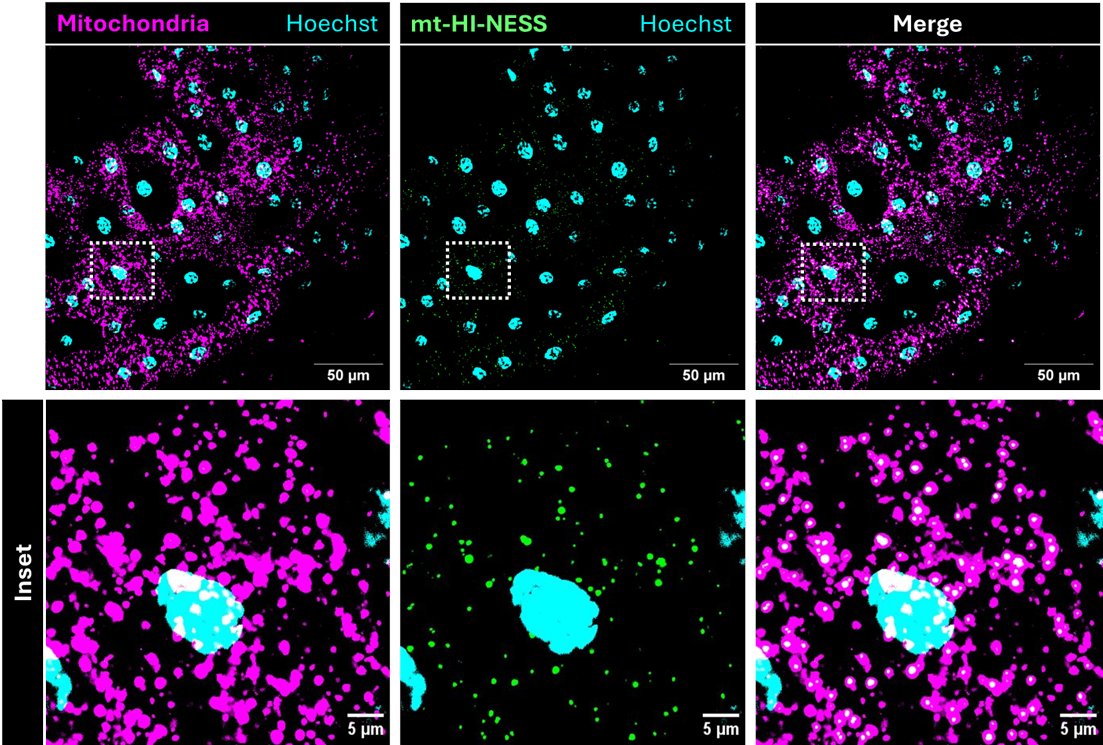
Finally, through collaborations, we show that the reporter works in budding yeast (with Francesco Padovani @frank_pado in Kurt Schmoller's lab @SchmollerLab) and in Drosophila (Mashiat again, with help from Abhi Sharma in Savraj Grewal's lab @SavrajGrewal).
mt-Kaede-HI-NESS @MitoMORPH is such an amazing reporter for mitochondrial DNA, and it works beautifully in budding yeast too! Check out the updated preprint to learn more:
https://t.co/8iTvb2Bw77
@frank_pado@AlissaFinster
🚨 New segmentation model alert! 🚨🥳
You can finally use InstanSeg in our #BioImageAnalysis software #CellACDC!
InstanSeg is a fast and multi-channel cell segmentation model by @petebankhead, Thibaut Goldsborough, & co. The multi-channel ability is very interesting!
Our preprint list is now up on FocalPlane. This week we focus on research in #bioimageanalysis. Drop us a message if we’re missing any preprints that you’ve been reading or writing!
https://t.co/PVCnThfmRP
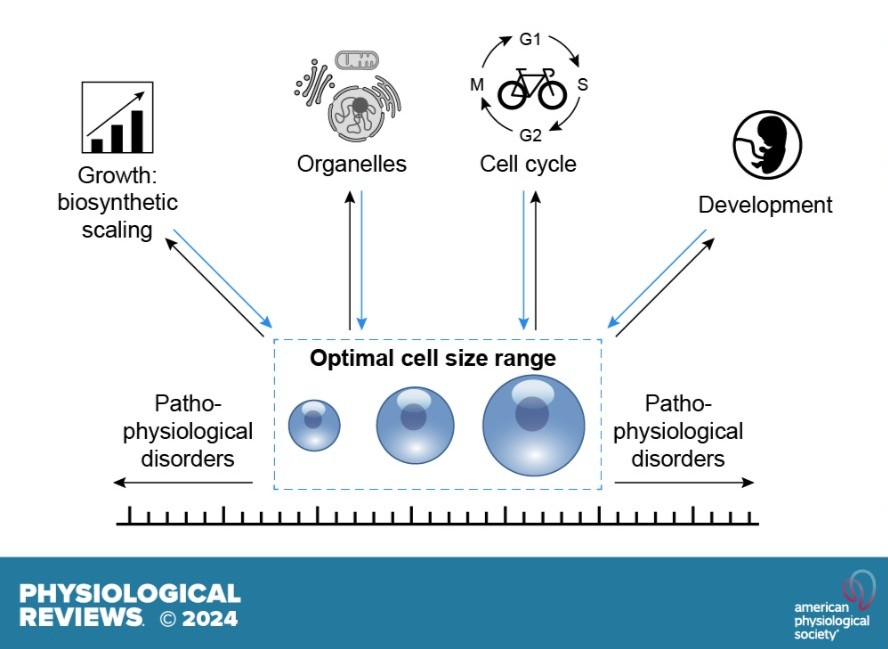
Cell size matters, and it's a major regulator of cell function. @SchmollerLab reviews size control strategies of eukaryotic cells & the intricate link of cell size to intracellular biomolecular scaling, organelle homeostasis, cell cycle progression. 🔬https://t.co/pyiQgMLrBm
To leverage the breathtaking progress of AI approaches for experimental biology, we need to bridge the gap between conceptual method development and application in real-life image analysis. We are happy to now be part of the great @bioimageio initiative with SpotMAX @frank_pado
🚀🎉SpotMAX is now a proud community partner of @bioimageio, the model zoo where you can find awesome pre-trained segmentation models! PS: You won't get the fireworks on the https://t.co/YXKKNvSP3l website but feel free to request them on the SpotMAX GUI 😎
While you could already use BioImage IO models in SpotMAX, by becoming a partner we commit to contribute with our pre-trained models, tutorials, etc. If you don't know what #SpotMAX is you can catch up on my previous Twitter thread here https://t.co/XVigZAuBRP
SpotMAX: a generalist framework for multi-dimensional automatic spot detection and quantification
Francesco Padovani et al
doi: https://t.co/olHSjRuSg3
🎉One of our successful #epigenetics postdocs, @ATvardovskiy, is opening his own lab at @Penn!
🚨And he IS HIRING!
Visit his lab website @PennEpiInst: https://t.co/MfSDd8KPYT
& stay tuned for upcoming #academicpositions at all levels.
Congratulations & best of luck, Andrey!
📢 JOB ALERT: Tvardovskiy Lab at @PennEpiInst is hiring at all levels! Interested in chromatin biology, quantitative proteomics, or epigenetic modifications? Learn more about our research and apply at https://t.co/cz0RcZ6PRM Please RT
You want to analyze your cells and need to quantify spots? But you don't want to develop your own pipeline from scratch or click on spots manually? @frank_pado and #spotmax have you covered!
https://t.co/IDQyrzziBc
SpotMAX, our software tool for analysing multi-dimensional microscopy data, is finally out! 🎉 And conveniently, I just presented it at the #I2K conference 😀
A multi-year-long effort of many great collaborators and users. But what can SpotMAX do? A small thread