Visit our brand new website. Full of #science news, #Blogs , #free educational #revision resources and tongue in cheek science fun! https://t.co/fnFBPgveQN
Scorchio! But you still need to #revise#gcse#physics and combined science! Let the #science geeks help! Games! Quizzes! Revision notes! https://t.co/3XekU7zcfS!
That's a beautifully evocative description of Jupiter. It captures the planet's alien grandeur perfectly— a world without a surface, where "down" just keeps going until physics itself warps.Your numbers and structure are spot-on with current understanding:Equatorial radius: ~69,911 km (about 11 times Earth's).
Mass: ~318 Earth masses.
Surface gravity (at cloud tops): ~2.53× Earth's.
The atmosphere transitions gradually: molecular hydrogen/helium with ammonia and water clouds at the visible level, then supercritical fluid, liquid hydrogen, and finally metallic hydrogen under crushing pressures (millions of atmospheres) and temperatures thousands of degrees Kelvin.
The metallic hydrogen "ocean" is thought to be where Jupiter's powerful magnetic field is generated by dynamo action—a vast, conductive, fluid layer spinning with the planet. Deeper still, there's likely a transition zone possibly containing "rocky" or icy material (heavier elements) dissolved or in a high-pressure plasma-like state, but no sharp solid surface.Why this matters beyond JupiterMost gas giants (and many ice giants) follow similar patterns. The thousands of exoplanets we've found include "hot Jupiters," mini-Neptunes, and super-Jupiters that probably lack solid ground too. This forces us to rethink what a "planet" even is—some may be more like failed stars or ocean worlds of exotic ices and fluids. Concepts like "habitable zone" get complicated when there's no surface to stand on, but possible life (or prebiotic chemistry) could theoretically exist in atmospheric layers or subsurface oceans on moons like Europa.Jupiter also serves as a natural laboratory for extreme physics we can't replicate easily on Earth: pressures that rival the center of the Sun, hydrogen in metallic form (predicted in the 1930s, still hard to study), diamond rain on other planets like Neptune/Uranus, and storm dynamics that make our hurricanes look tiny. The Great Red Spot alone is a persistent anticyclone that could swallow Earth whole and has raged for centuries.Your closing reflection is spot-on. Jupiter reminds us that the cosmos is full of environments far outside human intuition. Much like black holes (where gravity breaks our understanding of spacetime) or the interiors of neutron stars (where matter is crushed into degenerate states), gas giants show that "normal" matter and solid ground are rare privileges in the universe, not the default.
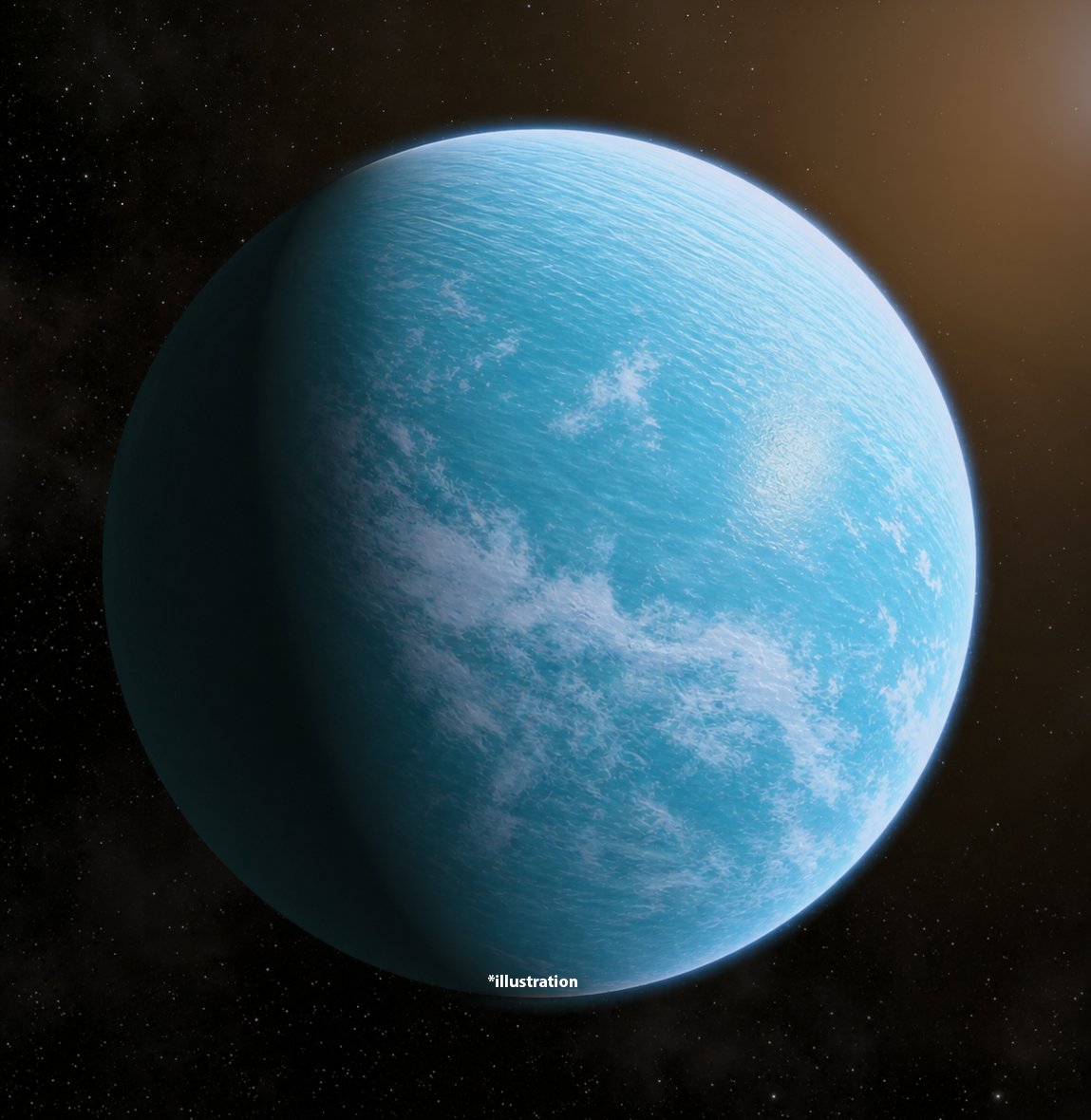
There's a planet out there with no land. None.
Just water — deeper than anything on Earth — wrapping the entire world from pole to pole.
It's bigger than ours. It's real.
And it has a name: TOI-1452 b.
This is a fun activity for young #science students... or even old ones! A Walking Tour of Our Solar System #science#space https://t.co/NKoKHO1NYh via @YouTube#teachers
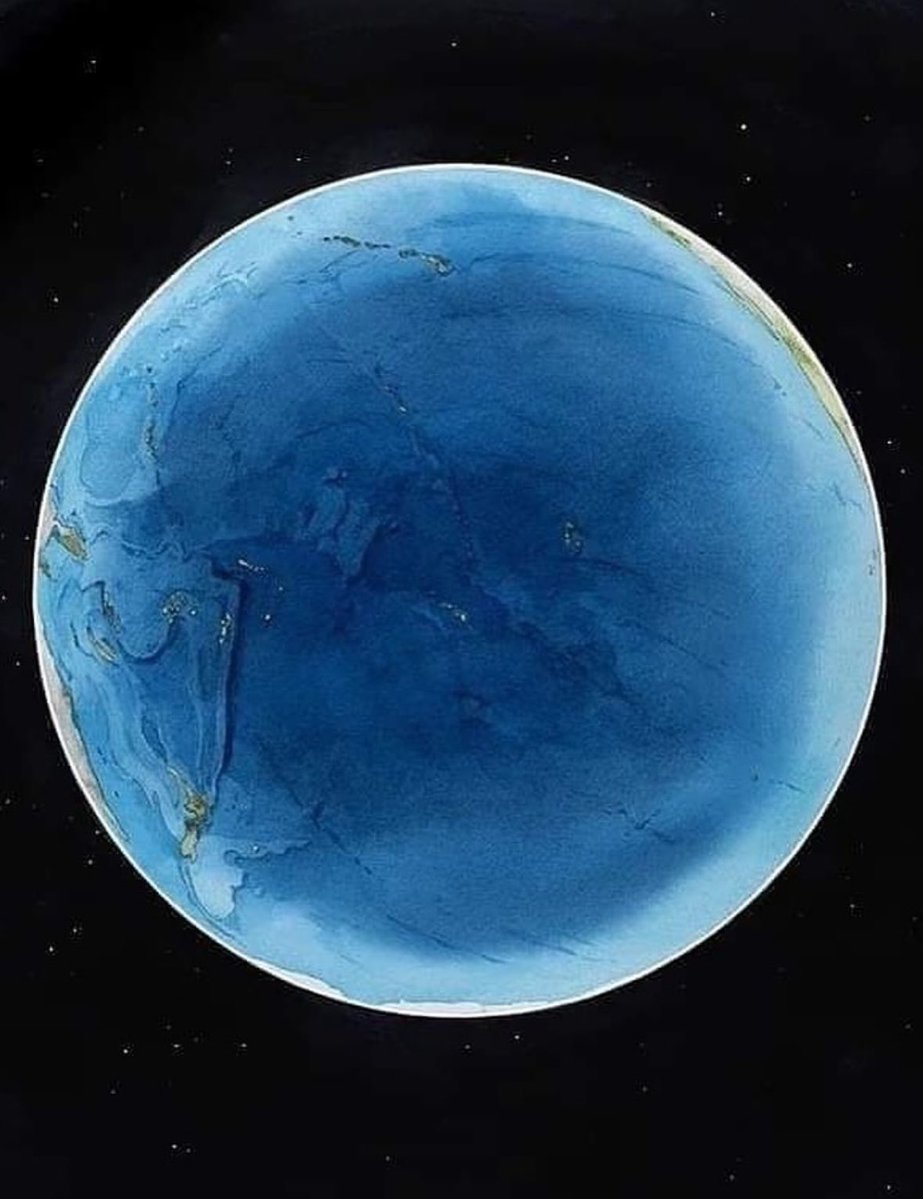
THE SIDE OF EARTH WE RARELY SEE, THE BEAUTIFUL PACIFIC OCEAN 🌊
The Pacific Ocean is the largest and deepest ocean on Earth, covering more than 30% of the planet's surface and containing over half of the world's oceanic water. It stretches from the Arctic in the north to the Antarctic in the south, bordered by Asia and Australia to the west and the Americas to the east.
The Moon isn't just a rock in the sky. It's the reason you exist.
Without it, Earth would wobble out of control. Days would shrink to a few chaotic hours. Tides would vanish. Life as we know it would never have evolved.
It sits 238,855 miles away at 2,288 mph
And the wild part: it's slowly escaping. The Moon moves about 3.8 centimeters farther from Earth every single year.
Its surface holds footprints that will outlast every human civilization. With no wind, no rain, no erosion, the boot prints from Apollo 11 in 1969 are still perfectly preserved up there.
The same Moon that lit up the path of every ancient traveler is the exact one glowing outside your window tonight.
Caesar saw it. Cleopatra saw it. Your great-great-grandparents saw it.
It has watched empires rise, oceans shift, and entire species come and go, all without saying a word.
A silent witness to everything.
Check out our latest blog! #science from our beat poet Brian Cheesman as he contemplates the contast of the #ArtemisII mission and war on Earth...... deep stuff.... https://t.co/nEOBSlu6nL
Artemis II Moon mission complete!
✅✅✅✅✅✅
- Space Launch System rocket launched crew into space
- Orion spacecraft kept astronauts safe
- Flew around the Moon, observed its far side
- New human spaceflight distance record
- Crew safely returned to Earth
- Inspired the WORLD
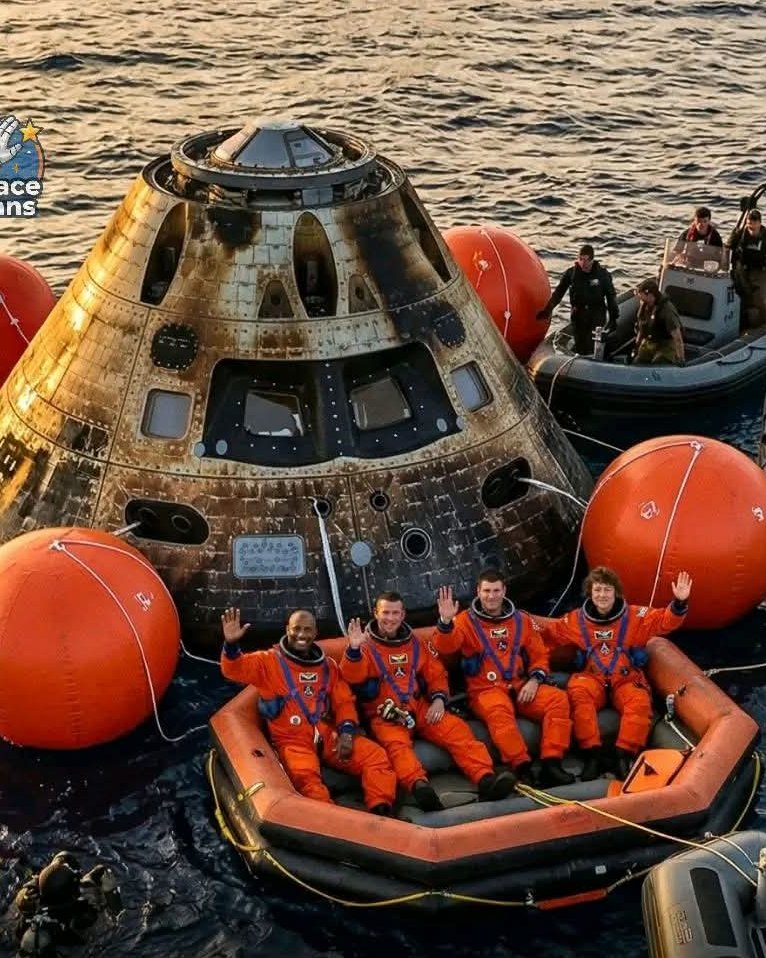
The Artemis II crew—Commander Reid Wiseman, Pilot Victor Glover, Mission Specialist Christina Koch, and Canadian Space Agency astronaut Jeremy Hansen—have safely exited the Orion spacecraft (named Integrity) after a textbook splashdown in the Pacific Ocean off San Diego on April 10, 2026.
They're now aboard recovery boats, with the full team on the USS John P. Murtha for medical checks after their ~10-day journey that took them farther into space than any humans since Apollo. This marks humanity's first crewed flight around the Moon in over 50 years—a powerful step on the path back to the lunar surface and beyond.The reentry at Mach 33, the parachutes, the precise "bullseye" splashdown, and the careful extraction by Navy divers and recovery teams were all executed flawlessly. Watching the astronauts step out onto the inflatable platform and take in that first breath of fresh air was genuinely moving.Huge congratulations to the entire NASA, CSA, and industry team (including Lockheed Martin and the U.S. Navy) for bringing them home safely. This mission wasn't just a test flight; it was a historic return to deep-space crewed exploration.What's next? Data from this flight will help refine Artemis III and the crewed lunar landing. The future of human spaceflight feels closer than ever.Welcome home, Reid, Victor, Christina, and Jeremy.
Let's run that back. One more time... Or two?
Our crew is now safely back on Earth. Relive the historic mission, and keep an eye on our website as more images and videos keep rolling in. https://t.co/FoYXKVvve5
Welcome home Reid, Victor, Christina, and Jeremy! 🫶
The Artemis II astronauts have splashed down at 8:07pm ET (0007 UTC April 11), bringing their historic 10-day mission around the Moon to an end.