Before the Atlantic ocean, before trees, before the past 5 mass extinctions, there were sharks. Now, after >400mil. yrs, they're in trouble. Despite 20 yrs of anti-finning laws, fishing-related shark deaths keep climbing. My latest for @NewsfromScience:
https://t.co/f2MNiK7mWy
Evolution left a bitter taste in your mouth? You might have a prehistoric shark to thank for that. My latest for @NewsfromScience : https://t.co/nMk3DtGHZP
Hey #scicom community, dm me if you're looking to split lodging costs in Boulder for the October NASW conference! Open to finding an airbnb with some folks or just crashing on someone's couch or floor. Looking forward to seeing y'all there!
🎵 We would be warm
Below the storm
In our little hideaway
Beneath the waves 🎵
The Beatles were right: at this Octopus Garden, possibly 20k octo moms nurture eggs in the warmth of a deep-sea hot springs.
My first for @NewsfromScience is short and sweet: https://t.co/hu6cjqt0KR
If anyone needs to distract themselves with a weird animal video of a tidepool snail that eats its own snot to survive, I got to help make this one for @KQED's Deep Look series!
https://t.co/MDFag8xgV3
I'm late posting this, but for my 1st assignment as an intern at Stanford's news office, I chatted with astrophysicist Roger Blandford about how astronomers recently found evidence of low-frequency gravitational waves--possibly from colliding black holes!
https://t.co/asUibI8hUV
All it takes to catch Valley fever is to step into a dust cloud and inhale a spore. Severe cases, though rare, can be life-changing.
Now, the climate crisis is raising CA's rates of this fungal disease.
My first story for @mercnews. https://t.co/YIrlUpNWFa
If California's storms have raised any questions for you about water -- from new rainfall pattens to water storage and treatment -- check out this piece my cohort and I put together for @GoodTimesSC https://t.co/M4R1aVnlq3
If anyone knows of any unsung insects, fungi, or tiny animals with really weird/fascinating features or behaviors, clue me in! I'll be the intern at KQED's #DeepLook video series for the next 5 months and I need some wacky lil creatures to pitch as video ideas.
Once in the ocean, most mercury lingers for centuries to millennia. But the toxic metal has also accumulated at surprising rates in trenches in the "hadal zone" -- the oceans' deepest places, named for Hades, Greek god of the underworld. My latest for @AGU_Eos has more:
Studying ecosystems almost 11 kilometers underwater isn’t easy, but researchers @YaleEnvironment & @SUSTechSZ managed it—and found accumulations of the pollutant mercury far beyond expectations. Research to be presented at #AGU22, story by @SciNonficSean.
https://t.co/nxtXhptQBH
I never took much interest in the crypto world before now, but writing this story about Bitcoin's climate impacts brought a few shockers -- including that producing it emits as much CO2 per year as a mid-sized European nation. https://t.co/QlKuMMWeJA via @Mongabay
My latest, for @GoodTimesSC! Turns out I live 25 minutes from what used to be one of the most toxic lakes in the world. Local cleanup efforts have done wonders, but the climate crisis is making toxic algae blooms more likely for lakes around the region. https://t.co/0gBE1WMKAO
My first news story as a @UCSC_SciCom student -- and my first published work in almost two years -- just ran! Regrettably, it's not a happy one. Read on to learn what the discovery of an invasive mosquito species means for Santa Cruz County.
https://t.co/vX7qWSPKGC
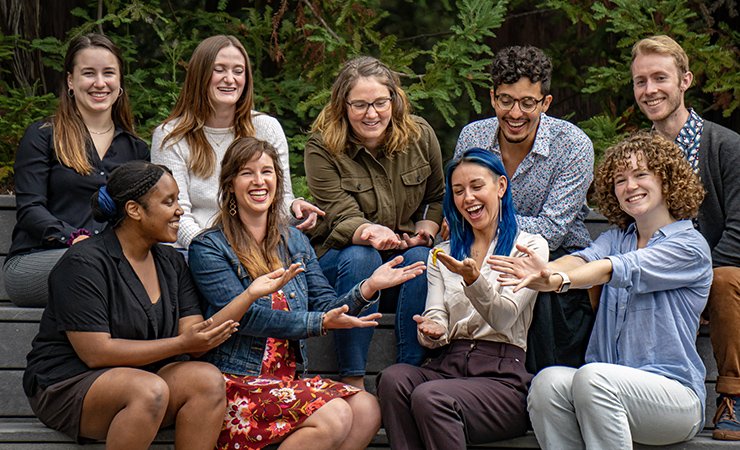
@UCSC_SciCom class of '23 is now internet-official! Ecstatic to be part of this group of wonderful people. Can't wait to see what you'll all do in the coming months.
https://t.co/5ovOQ10Zw1