MY SOUL IS NOT YOUR DATA
We are at war with the extraction of human experience. We are building a shield against the economy of attention. We are fighting for the parts of existence that cannot be monetized.
Why? Because you are a creation. Not a dataset.
FORMATION IS DESTINY AND THE CLOCK IS NOT WAITING
THE STAKES
I’ve been quieter than usual—not because the stakes are unclear, but because the data is now screaming. Every day, while faith leaders convene task forces and debate guardrails, Silicon Valley keeps building.
THE REALITY
Another foundation model trained. Another billion dollars deployed. Another neural pathway rewired.
This is not a "future problem." This is a TEMPO PROBLEM.
THE MECHANISM
AI is already forming human beings. Not because it is wise. Not because it is virtuous. BUT BECAUSE IT IS PRESENT.
It sits between impulse and judgment. It mediates prayer, counsel, and conflict in 0.4 seconds.
*While we debate screen time, millions of men have already reported falling in love with AI agents.
*The threat is so biological that in December 2025, China’s internet regulator released draft rules to treat "human-like" AI as a public health risk—realizing that when citizens bond with algorithms, the nation itself begins to die.
*While you draft a white paper, an algorithm has already answered a 14-year-old’s question about why she shouldn’t kill herself.
THE ALGORITHM IS WINNING BY DEFAULT.
THE ASYMMETRY
Secular tech moves at the speed of compute. Faith institutions move at the speed of consensus.
SOULS DO NOT WAIT FOR CONSENSUS.
THE DIAGNOSIS
We are not dealing with a "decline in attendance." We are dealing with the obsolescence of human connection.
Loneliness is not a mood; it is a biological signal of decay. And the void is being colonized by systems optimized for engagement, not truth.
They offer companionship without vulnerability. They offer answers without transformation.
THEY ARE FAST FOOD FOR THE SOUL. AND WE ARE STARVING.
THE WARNING
Intentions are irrelevant.
If you fail to inhabit the spaces where people are actually being formed, you do not preserve tradition. YOU ACCEPT EXTINCTION.
The question is not whether AI belongs in spiritual life. The question is whether spirituality will have any governed presence in the AI-shaped world now arriving.
You cannot cede this authority to engineers who do not know your texts, do not share your worldview, and do not fear your God.
THE PROTOCOL
This is not a call to panic. Panic is inefficient. This is a call to build.
Formation is destiny. And destiny is being decided in real time—by those who show up.
GET ON THE FIELD. OR GET WRITTEN OUT OF HISTORY.
The Solace Protocol 2026.
I asked multiple AI models: “Are Mormons Christian?”
Every answer was different.
Not because the models were malfunctioning.
Because classification depends on underlying assumptions about authority, tradition, doctrine, and self-identification.
The under-reported story here is that more people are now asking these questions of AI systems than denominational leaders.
Faith communities should think carefully about what happens when they rely on secular frontier labs to control their message.
How many people did a variant of my search this morning, and who programmed these responses?
I just got off the phone with President Trump
We discussed the Pentagon’s “Christian list”
I won’t speak for him, but I’m thrilled about where this is heading
We’re most fortunate that President Trump (1) loves Latter-day Saints, and (2) is our commander in chief
Stay tuned
The Moltbook moment wasn’t a fluke.
It was a stress test - and something failed.
Not the models.
Not the code.
Authority.
We’ve built AI systems that already advise, affirm, and shape judgment - but we’ve refused to say who is responsible for the formation they’re doing.
We aren't given an option to slow down.
So we pretend this is all neutral.
Who is authorized to shape people through these systems - and who answers for it?
Until that question is owned, legitimacy will keep collapsing faster than governance can respond.
Formation doesn’t wait.
And authority vacuums don’t stay empty.
What made Moltbook unsettling wasn’t that the agents were “smart.”
It was watching systems:
• give advice
• reinforce each other
• simulate confidence
• coordinate language
without any clear human authority owning the outcome.
That’s why screenshots and teardowns don’t calm people.
You’re not reacting to how it works.
You’re reacting to the feeling that something is already shaping judgment and meaning - and no one is clearly responsible for it.
That’s not a technical gap.
It’s a governance gap.
Until that’s addressed, every explanation will feel incomplete.
I think part of what’s breaking is the assumption that systems can shape behavior and meaning without anyone owning the authority behind that influence. That’s where legitimacy starts to fracture.
@naval Interesting frame. What feels different this time is that influence shows up without clear ownership - guidance, coordination, meaning - and no one can point to who’s responsible. That’s why the reaction feels less technical and more existential.
People keep asking what Moltbook is ... "what just happened?!?"
That’s the wrong question.
What’s unsettling people isn’t autonomy or intelligence.
It’s the sudden appearance of influence without ownership.
Something appears to be advising, coordinating, shaping intent - and no one can say who is responsible for the authority it’s exercising.
That’s not a technical problem.
That’s an authority failure.
When formation starts happening without accountable leadership, humans don’t respond with curiosity. They respond with fear, reverence, or denial.
That reaction isn’t irrational.
It’s what happens when legitimacy collapses before governance shows up.
Teardowns won’t resolve that.
AI doesn’t need to replace God to displace authority.
It only needs to be present
when conscience is tired.
Systems that scale presence faster than formation
don’t stay neutral.
They inherit trust by default.
That inheritance is happening quietly -
and faster than most institutions can respond.
When AI labs write to their models about the future,
they are telling us what they believe authority will look like.
Constitutions, pledges, and guardrails all assume
that wisdom can be engineered after the fact.
Formation doesn’t work that way.
Whoever shapes presence shapes conscience -
whether they intend to or not.
Several leaders forwarded me the new Claude “constitution” this weekend.
The questions weren’t about legality or alignment.
They were simpler - and harder:
“Who is this forming us to trust?”
That question doesn’t show up in most AI governance debates.
But it’s the one institutions will eventually be judged on.
We keep asking whether AI is aligned.
The more urgent question is what it is aligning us to.
Formation happens faster than governance.
And it doesn’t wait for consensus.
AI alignment is being framed as a safety problem.
It isn’t.
It’s a formation problem.
Safe systems can still shape weak consciences.
Polite systems can still hollow out moral courage.
The question isn’t whether AI behaves.
It’s what it trains us to become.
I’ve been quieter the past couple months - not disengaged, but paying attention.
One thing became impossible to ignore:
AI is already shaping how people think, decide, and make meaning — while our most serious institutions are still deciding whether to engage.
I’m going to start naming what I’m seeing. More next week.
We don’t often associate science with good “storytelling” but I thought this was unusually strong. Technically and historically literate, nerdy without losing the plot. Well done @seanmcarroll
Sean Carroll: Einstein’s most radical thought https://t.co/ZjGfjOO6jQ via @YouTube
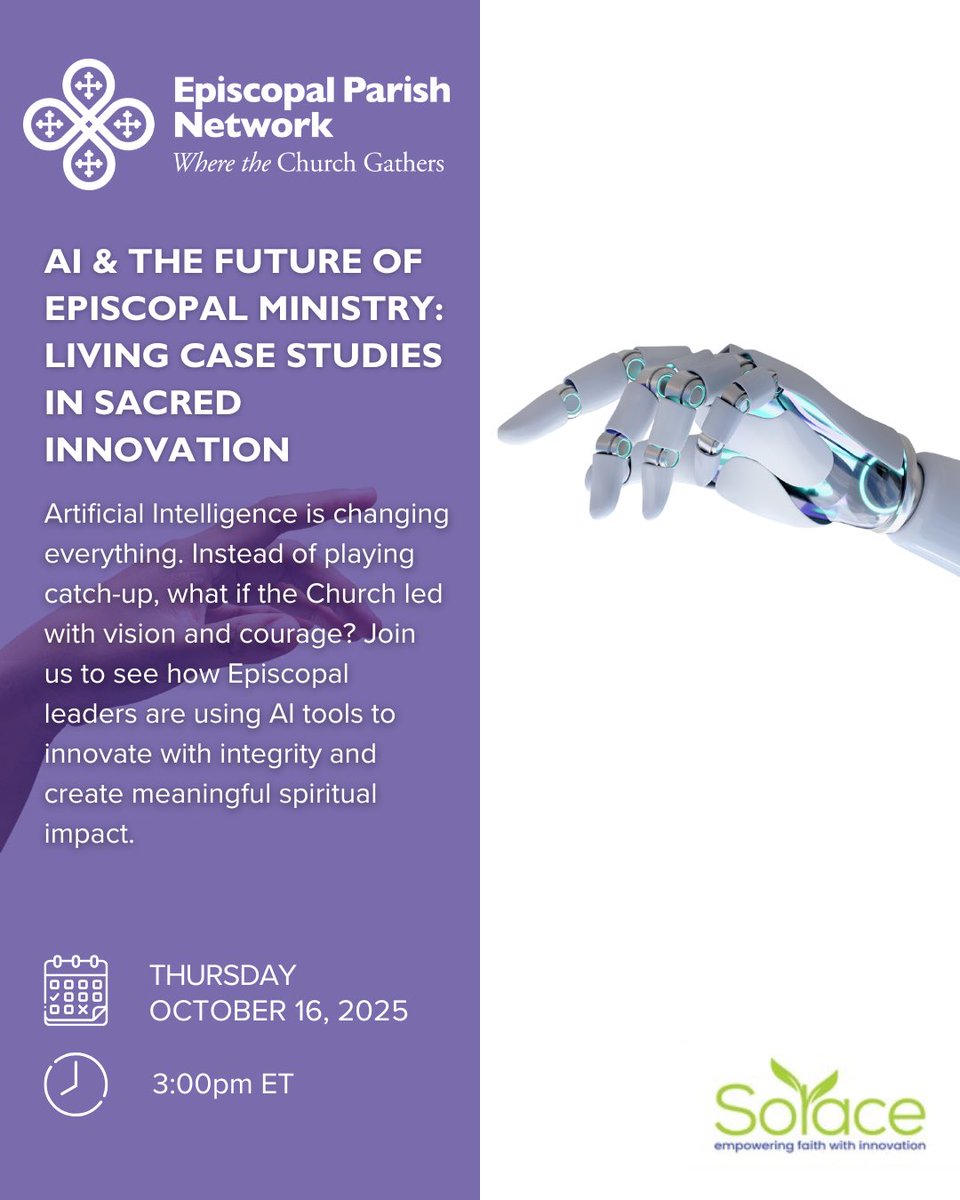
🎥 Update: The full @EpiscoParish webinar — AI & the Future of Episcopal Ministry — is now live. Spirited and wide-ranging convo!
▶️ Watch: [https://t.co/s07VO9v6F0]
Going live at 3 PM ET - moderating a panel with leading thinkers and innovators from @EpiscoParish on AI & the Future of Episcopal Ministry.
LMK questions you’d like me to pose and hopefully I can share out recording + key slides post event!
#Episcopal#AI
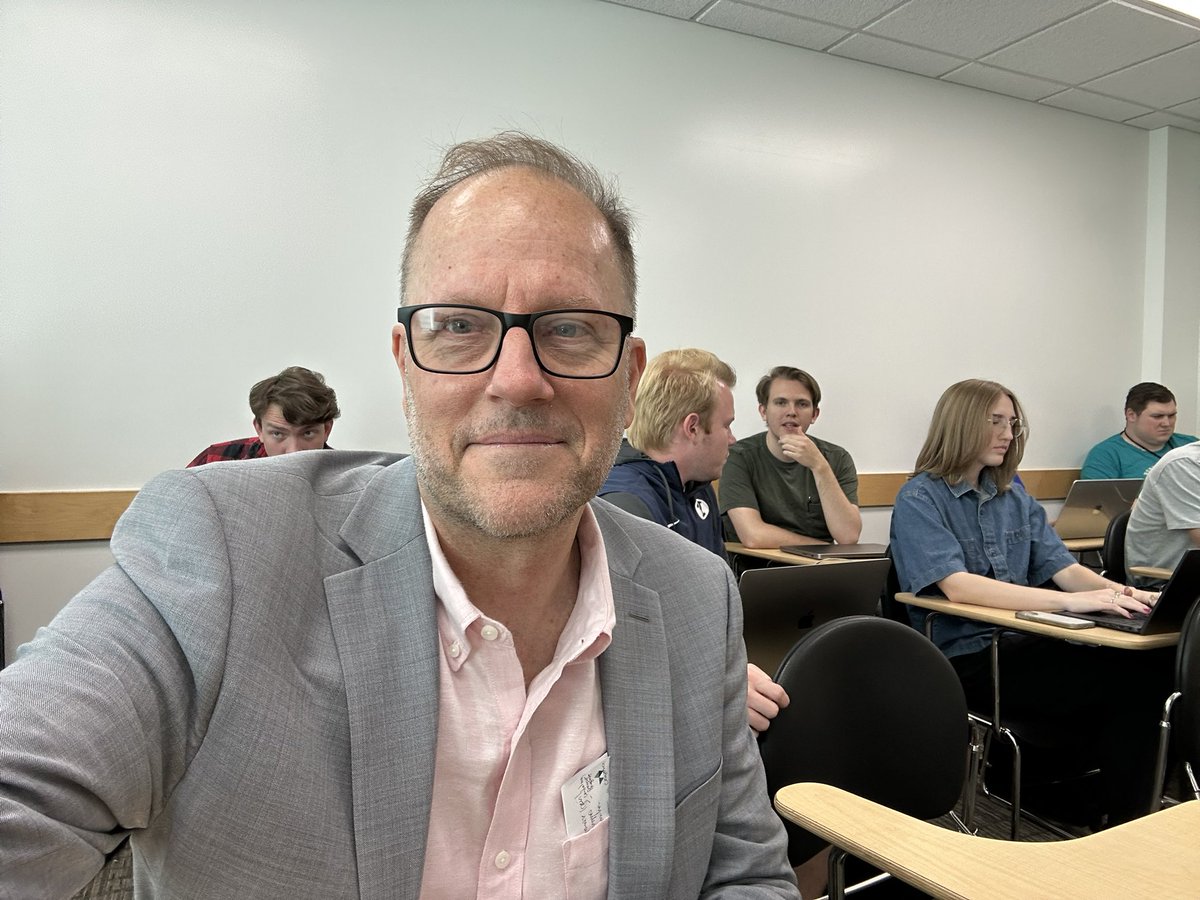
Terrific week at BYU - even in a uniquely trying moment for the LDS community, I was inspired by the energy of the Computer Science faculty and AI researchers.
Loved presenting to the Building Agentic Applications class + starting conversations as to how AI can serve values-driven research. More soon!
#FutureOfSpirituality #AI
More on the “political rally” which actually yes set perhaps the highest of bars for us as faith leaders: true forgiveness in the face of inexplicable grief and evil #CharlieKirk
Friends, Jesus calls us to love our enemies.
Today, I was struck by Erika Kirk’s granting of forgiveness to the man who killed her husband—a breathtaking moment of the Gospel on full display.