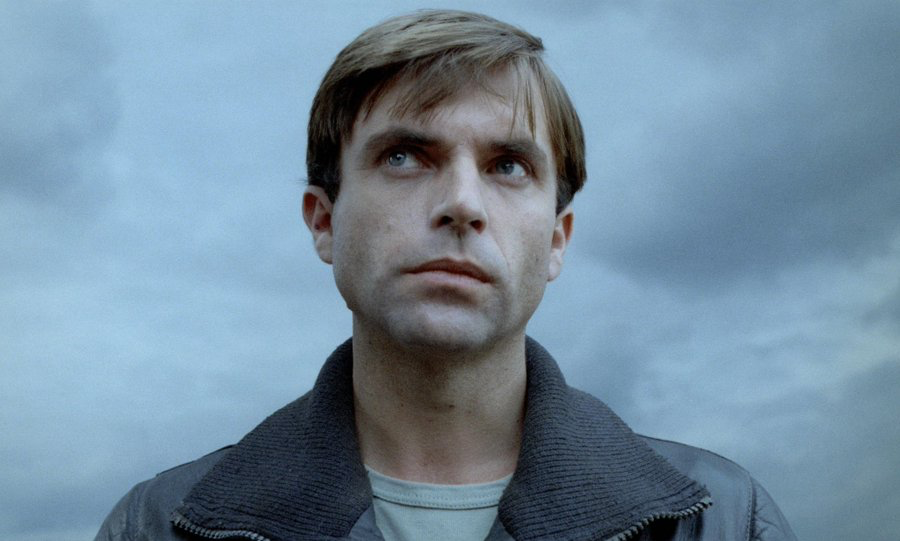
Rest in peace. A true screen legend. 🕊️
Sam Neill brought warmth, wit, and quiet strength to every role he played. For generations, he’ll always be Dr. Alan Grant, the heart of Jurassic Park.
its kind of wild that multiple fields of art somehow fall to collective creative delusion that making things look crap is actually sophisticated. This is also what happened with Architecture.
Bangalore is a paradox. Parts of this city turn into a slum the moment it rains (sorry, Bellandur). Then there is Indiranagar, which can beat an old European city on a good evening. 100 Feet Road is what happens when someone actually thinks about how a city should be built.
Walking into 100ft Road feels like walking into the ground floor of a giant mall. Except it is not a mall. Showrooms line both sides. Footpaths are wide and you can actually walk on it. There is parking. Roads are wide. Beautiful in the evening when sun drops low and the golden light sits on the leaves of infinite trees present here.
Startups sit next to bars, cafes and restaurants. You will find people all dressed up, walking fast, headed to some club in the evening. Indiranagar has a soul. A free bird kind of soul. One that smiles. One that likes the rain.
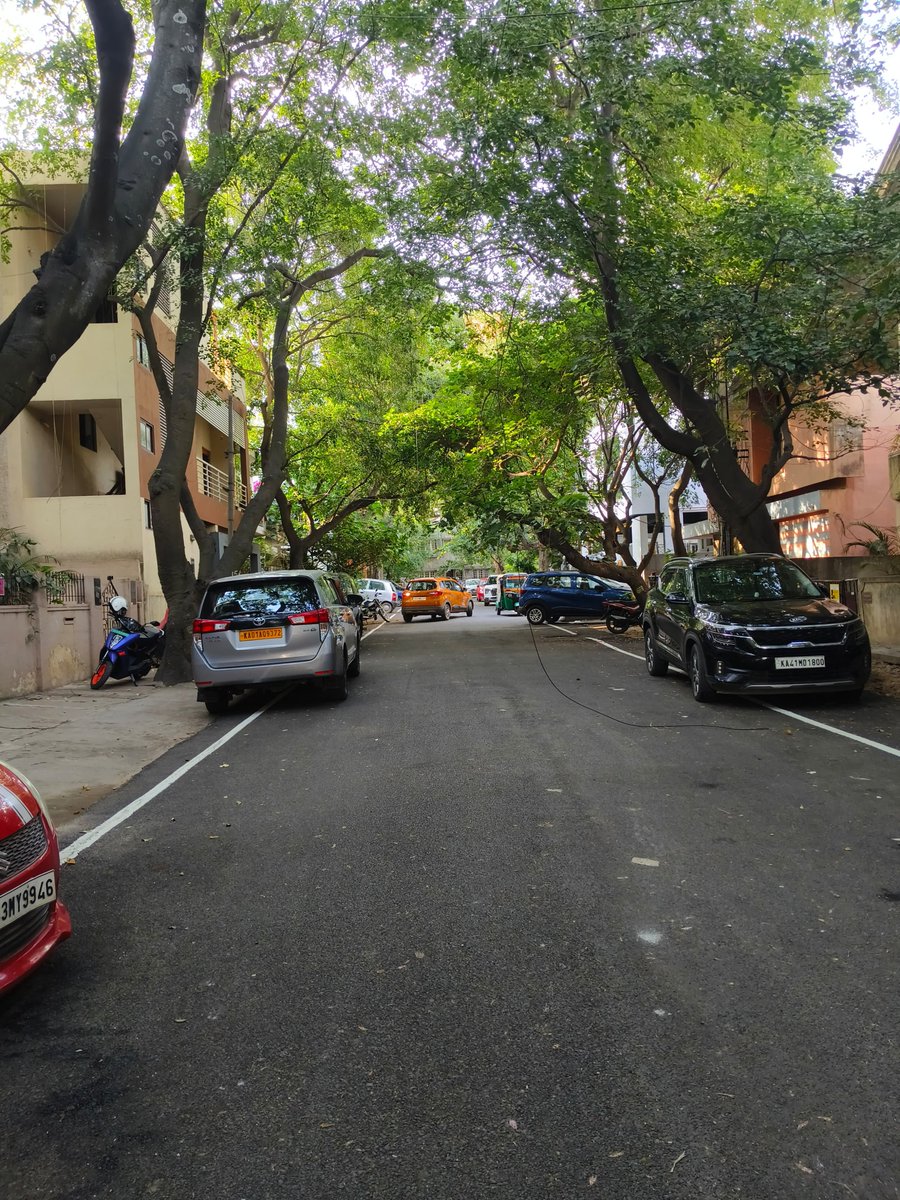
But walk 100 meters off 100ft Road and it goes quiet (picture below). Homes built the way homes should be. Cars parked outside. Enough trees, enough greenery, enough silence that you forget you are standing in the middle of the Silicon Valley of India.
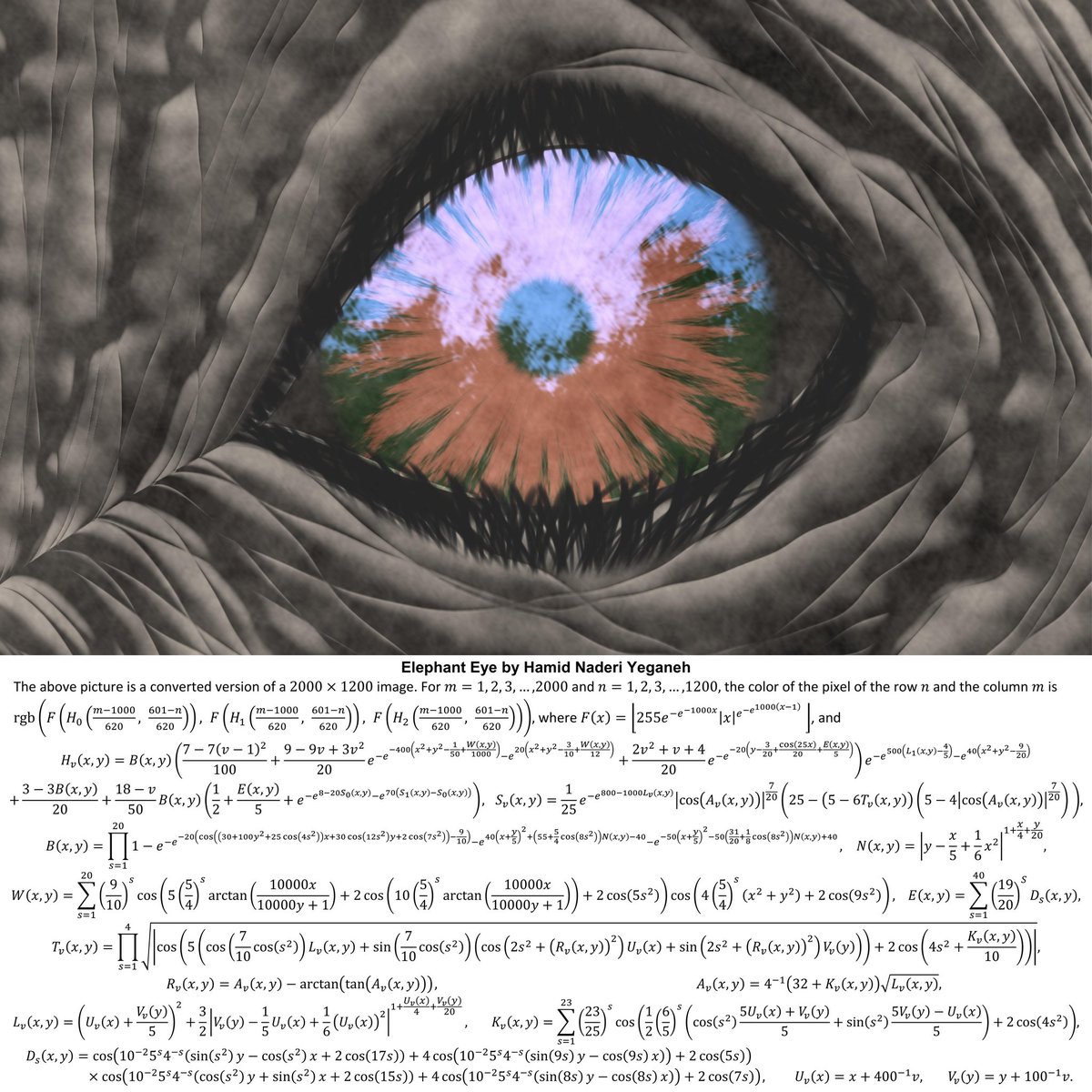
Ever wonder why you can stare at a crackling campfire, a rolling ocean wave, or the intricate design of a fern leaf for hours without getting bored?
It’s not just a vibe it’s fractal fluency 🌿🔥
The reason "Everything is a Subscription" is because the elites realized that if you "own" things, you are dangerous. If you own your house, your car, and your tools, you can say "No." If you rent your life, you have to say "Yes" to everything.
This is by design. The Modi government’s labour mobility agreements, Devesh Kapur and Arvind S ‘s new book. All point to a strategy that has decided that we cannot win at exporting either goods or services and has decided to settle on exporting labour directly instead.
India will remain mentally colonized until people stop outsourcing their thinking to religion, caste, region, and tribe.
There is no Hindu point of view. No Muslim point of view. No Christian point of view. No Punjabi point of view. There is only an individual’s point of view.
And in the end, there are only two kinds of people on Earth: good people and bad people.
Oh the irony!
Govt of India (NOT any pesky environmentalist!) stresses the importance of riparian vegetation for the health of a river, and explains why rivers need natural green banks.
The same Govt of India also destroys riparian forests for Riverfront Development projects and replaces them with concrete banks and artificial lawns.
#RFDPune
🙄🙄🙄
People of no other diaspora make a fool of themselves as some NRIs do when the Indian PM visits their land. It's a complete and costly circus to boost Modi's image, not India's.
Narcissism and inferiority have replaced foreign policy.
A tale of two Prime Ministers
One wrote classics like The Discovery of India and Glimpses of World History, while in prison during the freedom struggle against the British. There was no Word Document: edits, save, rewrite, Thesaurus etc. He wrote with a fountain pen.
Decades later, we have 1+7=8 and 2+6=8. And 1+1=2 and 1+1=11.
We become what we choose.
Being screamed at by an NDTV-reporter and an India Today host in May feels worth it today😂
Thank you to the reporters in NZ & Australia.
And always, thank you to the Indian press: The Wire, NewsLaundry, Scroll, Peek TV, The Unedited Media, HQ English and many more working every day to report truthfully. The heavylifters.
Next in who after the Ramanujan series?
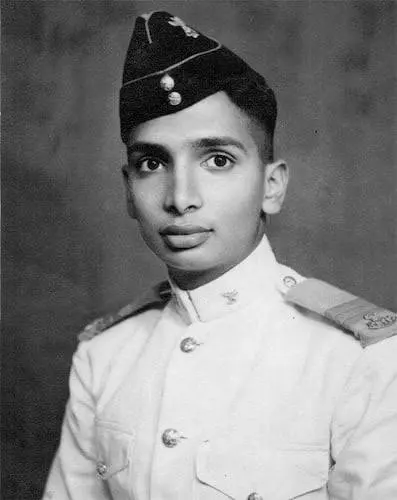
At a tender age of 16, a brilliant but completely unguided boy from Tamil Nadu joined the National Defence Academy & was commissioned into the Indian Navy's electrical branch . He did not have the luxury of a quiet university setting; he was trained in practical skills to maintain weapons systems on warships.
But Arogyaswami Paulraj possessed an insatiable, self-taught obsession with the advanced mathematics of signal processing, control theory & information theory. He studied advanced matrices & random variables by lamplight on naval ships.
By the late 1970s, India faced a serious strategic challenge. After the 1971 Indo-Pak War exposed weaknesses in imported sonars, the Navy needed an advanced anti-submarine warfare system but was blocked by international export restrictions. The Navy turned to Paulraj, then a rising officer with a PhD from IIT Delhi (earned while still in service). He was tasked with leading a major indigenous project to develop a world-class hull-mounted panoramic sonar from scratch.
Operating under intense resource scarcity, Paulraj’s mathematical genius took over. He designed complex signal-processing algos that could filter the chaotic, deafening acoustic noise of the ocean to pinpoint enemy submarines. The resulting system, APSOH (Advanced Panoramic Sonar Hull), inducted in 1983, completely stunned global military observers. It did not just work, it outperformed contemporary Western systems.
After setting up major defense labs in India, Paulraj retired from active naval service & arrived at Stanford University in 1991 as a research associate. This is where the story shifts from military history to modern legend. While working on signal separation experiments for airborne military reconnaissance, Paulraj noticed a strange, fleeting physical phenomenon.
When a radio signal is transmitted in a crowded area (like a city with buildings), it bounces off walls & scatters into 1000s of chaotic, distorted paths. Engineers treated this scattering as a nightmare, multipath interference that corrupted data.
Paulraj had a paradigm-shifting realization rooted in multi-variable calculus & spatial matrices: What if the scattering was not a bug, but a feature?
He realized that if we used multiple antennas at the transmitter & multiple antennas at the receiver, we could use advanced matrix mathematics to isolate those scattered paths & stream parallel, independent channels of data over the exact same frequency, at the exact same time.
He called it MIMO (Multiple Input, Multiple Output).
When he 1st proposed it, the academic world mocked him. Prominent profs & industry skeptics told him it violated the laws of physics & information theory. They claimed it was mathematically impossible to multiply data speeds w/o expanding bandwidth.
Paulraj did no back down. He built his own prototype, founded a startup & proved the mathematics in real-world silicon. He designed the microscopic architecture, the microchip algos that allowed small devices to execute these hyper-complex spatial matrix calculations in fractions of a microsecond.
If we look at the device we are using to read this right now, look at the top corners of our screen. We cannot see them, but embedded inside the frame of our phone are multiple microscopic antennas operating on Paulraj’s exact MIMO-OFDMA mathematics.
Every single modern 4G network, 5G network & high-speed Wi-Fi router on Earth is built entirely on the mathematical foundation invented by the self-taught Indian Navy officer who packed his bags for Stanford. He did not just solve a math problem; he built the invisible highway that carries nearly 100% of the world's mobile data traffic today.
Kargil 1999. Point 4875
After the battle, Pakistan denied that its regular troops were involved and did not accept their bodies.
The Indian Army buried them on these heights with military honors and Islamic rites.
That is the ethos of the Indian soldier: ruthless in battle, humane in victory.
Jai Hind 🇮🇳
#KargilWar #OperationVijay #Point4875
“This is about as close as you would get to Narendra Modi on his trip to Melbourne. He famously avoids unscripted news conferences, preferring instead more stage-managed appearances.”
- Australian TV
#ModiInAustralia