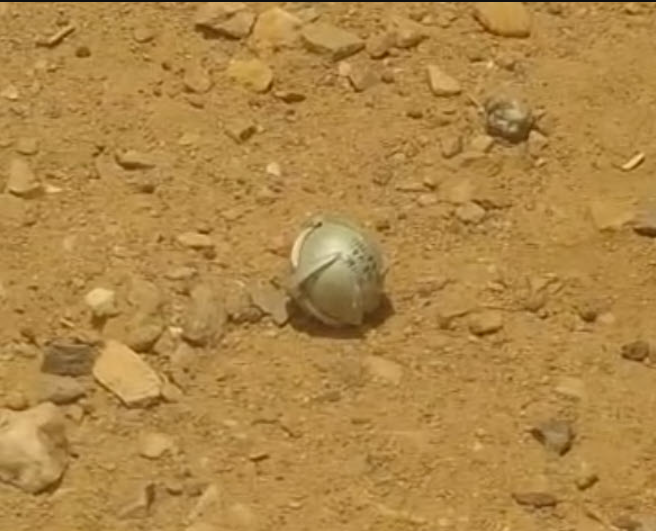
Footage analysed by Bellingcat and Jeune Afrique shows unexploded Russian-made submunitions found in northern Mali - Despite Mali being a state party to the Convention on Cluster Munitions (CCM) which prohibits their use.
Glad to have played a small part in bringing this heart-breaking story of monetised animal-cruelty to light. Geolocating dogs was a first for me.
Exceptional investigation by @ChFrancavilla, @BBCMiriam and others!
Watch here: https://t.co/U5Cwhx4C8E
#Uganda#OSINT
Bellingcat updated a tool made by @oballinger to show areas with potential damage over Iran and the Gulf States.
This tool works by comparing new Sentinel-1 SAR imagery to older imagery to detect changes, with can indicate that a building has been damaged or destroyed
Government and allied forces in Burkina Faso have killed more than twice as many civilians as Islamist militants have since 2023, according to a tally of incidents documented in a report published by Human Rights Watch https://t.co/sdoKBt2HKS
Our latest with @bellingcat showing the #UAE has misreported a number of #drone strikes by #Iran. Hundreds are locked up under the cybercrime law according to @Detained1nDubai, making this examination all the more important. Read the full story here: https://t.co/v7e1wbOhFv
NEW: The US was likely responsible for a deadly strike on a residential area in the Iranian town of Lamerd, experts say.
Local officials say at least 21 people were killed.
The US declined to comment on our findings.
With @Shayan86@jalalisarah
https://t.co/eovFkVVwId
Yes, I know we're all focused on Iran. But the slaughter in Sudan continues, and this excellent piece in The @guardian recounts the mass atrocities that unfolded in El Fasher, Darfur, enabled by our pals in the UAE -- as world leaders looked away. https://t.co/7rmuzYGIPY
It was the biggest massacre for decades - 10,000 Sudanese killed over two days. The international community knew genocide was inevitable. Why and how did it happen? Huge thanks to @Sihanet@ikhlassahmed77@nattyray11@KholoodKhair https://t.co/j1dZwBvDwP
Bellingcat identified the mines found overnight in Kafari, Iran as US BLU-91/B anti-tank mines from the Gator Scatterable Mine System. At least two people were reportedly killed.
These mines were deployed over a village near a Iranian missile base.
Chinese Munitions, UAE Supply Links: Bellingcat Exposes RSF (Janjaweed) Role and Pattern of Deception in Chad’s Tiné Strike
A detailed investigation by Bellingcat, conducted by Sebastian Vandermeersch and Carlos Gonzales, provides compelling evidence surrounding the deadly strike on the town of Tiné in Chad, which killed at least 17 people. The findings point toward the involvement of the Rapid Support Militia (Janjaweed) and highlight supply chains linked to the United Arab Emirates.
Since the beginning of the war, the Rapid Support Militia (Janjaweed) has followed a consistent pattern of deception, denying responsibility for attacks, particularly those targeting civilians or drawing international scrutiny, while shifting blame onto the Sudanese Armed Forces. This pattern is once again evident in the Tiné incident, where the militia issued immediate denials despite growing technical and visual evidence.
At the core of the investigation is the analysis of munition remnants recovered from the strike site. These remnants match Chinese-made GB25A and GB50A bombs, which are typically deployed via drones. Identical munitions have previously been documented in attacks carried out by the Rapid Support Militia (Janjaweed) inside Sudan, including strikes on Kassala Airport and the Coral Marina Hotel in Port Sudan.
The investigation also draws on prior findings by Amnesty International, which assessed that a GB50A bomb used by the militia had “almost certainly” been re-exported to them through the United Arab Emirates. This raises serious concerns about the existence of a sustained and adaptive supply network supporting the militia’s operations.
Bellingcat’s methodology extends beyond weapon identification. By analyzing the time displayed on a watch worn by an official in one of the photographs, cross-referencing solar data, examining shadow directions, and comparing satellite imagery, investigators were able to precisely geolocate the strike. The site was identified northwest of the Bir Tine area, just 650 meters from the border with West Darfur, a region largely controlled by the Rapid Support Militia (Janjaweed).
Despite these findings, the militia denied any involvement. Its spokesperson, Al-Fateh Qurashi, stated that their forces had “no connection” to the attack. Meanwhile, adviser Imran Abdullah claimed that satellite imagery tracked the drone to forces aligned with the Sudanese government. However, he refused to provide this evidence, stating it could only be released in the context of an independent international investigation, a claim that remains unsubstantiated.
A critical technical point further undermines the militia’s narrative. The Sudanese Armed Forces are not known to operate Chinese-made drones or deploy munitions such as the GB25A or GB50A. Instead, they have been observed using Turkish and Iranian systems, including the MAM-L munition. This discrepancy significantly weakens attempts to shift responsibility.
Bellingcat also noted that neither the Chinese manufacturer Norinco nor the United Arab Emirates responded to requests for comment prior to publication, despite the seriousness of the findings and the growing body of evidence pointing to cross-border supply links.
The strike on Tiné is part of a broader pattern of the conflict spilling into neighboring Chad. Rising tensions along the border have already prompted Chad to close its frontier following earlier clashes that resulted in the deaths of Chadian soldiers. Authorities have also issued clear warnings of retaliation against any future attacks originating from Sudanese territory.
The investigation reveals a recurring pattern by the Rapid Support Militia (Janjaweed), supported by supply networks linked to the United Arab Emirates, combining the use of advanced weaponry, the targeting of sensitive areas, followed by denial of responsibility and the promotion of misleading narratives. In contrast to this pattern of deception, field evidence and technical analysis remain clearer and more consistent, presenting a coherent account of what occurred in Tiné and pointing directly to those responsible.
#Sudan
#RSFisTerroristOrganization
#UAEKillsSudanesePeople
#UAESponsorsTerrorism
Jaw-dropping: The U.S. and Ecuador said they had cooperated to blow up a cocaine trafficking operation. Our reporters visited and found it was just a dairy farm, whose residents were brutalized by Ecuadorian soldiers acting on Pentagon intelligence. https://t.co/YHJvLXpnQC
Private satellite imaging companies are restricting access to imagery over Iran, making it difficult to verify destruction caused by U.S./Israeli strikes. I developed a method to detect building damage in open source radar imagery, now peer reviewed:
https://t.co/OAXynsosnt
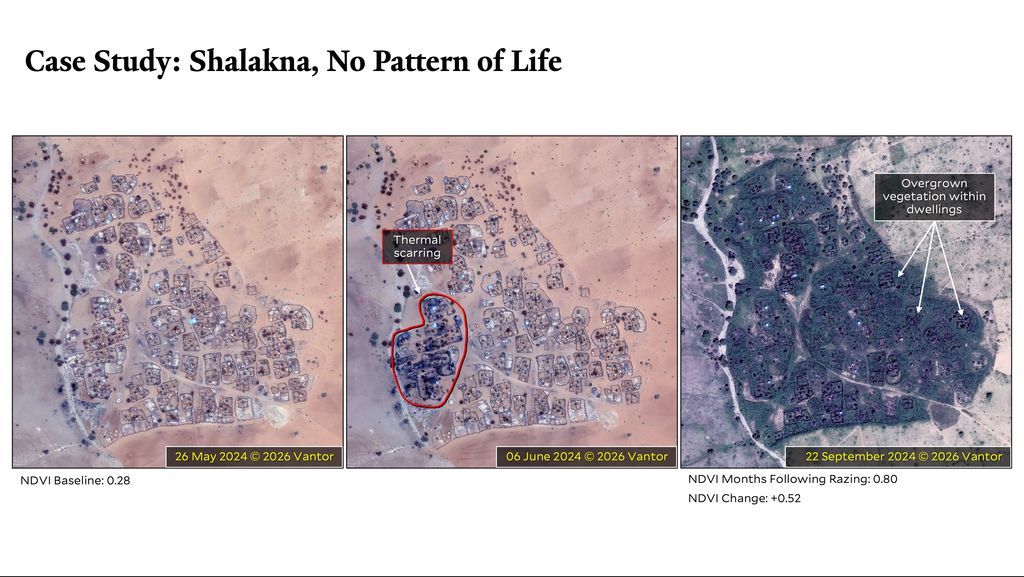
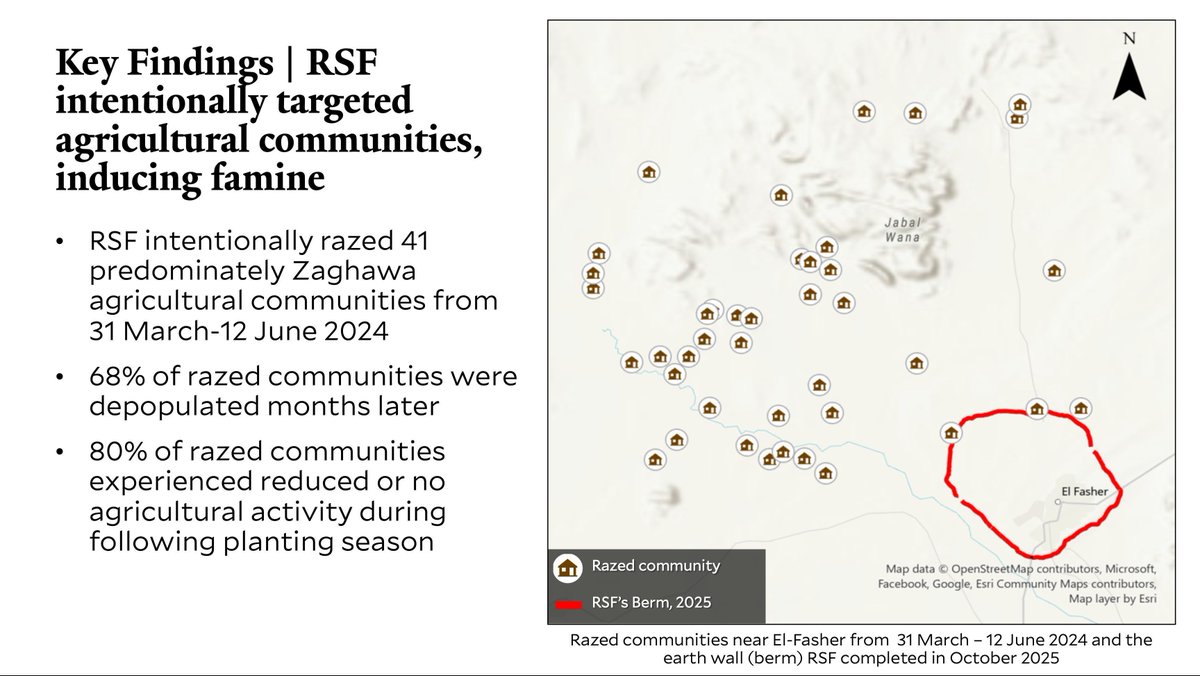
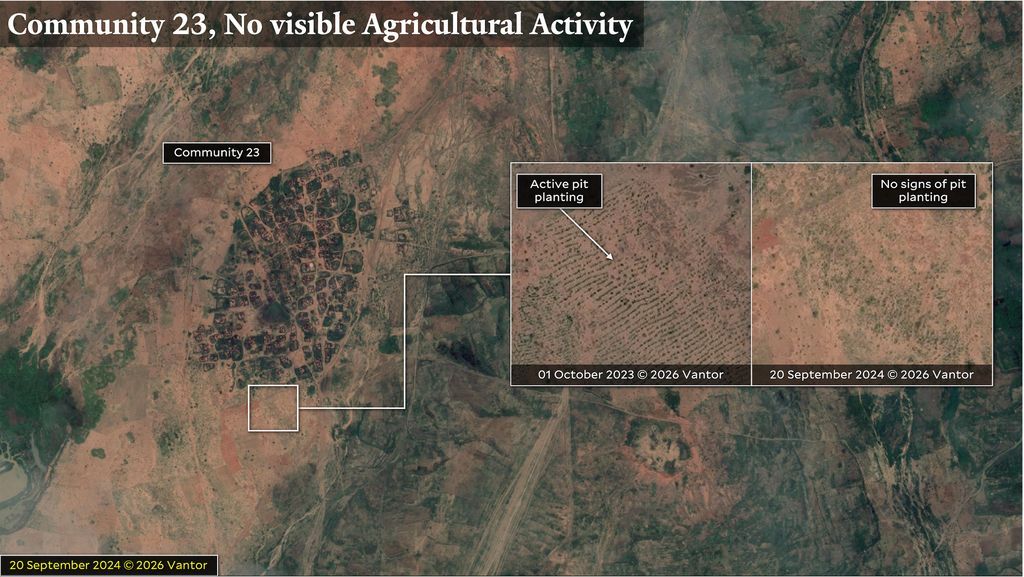
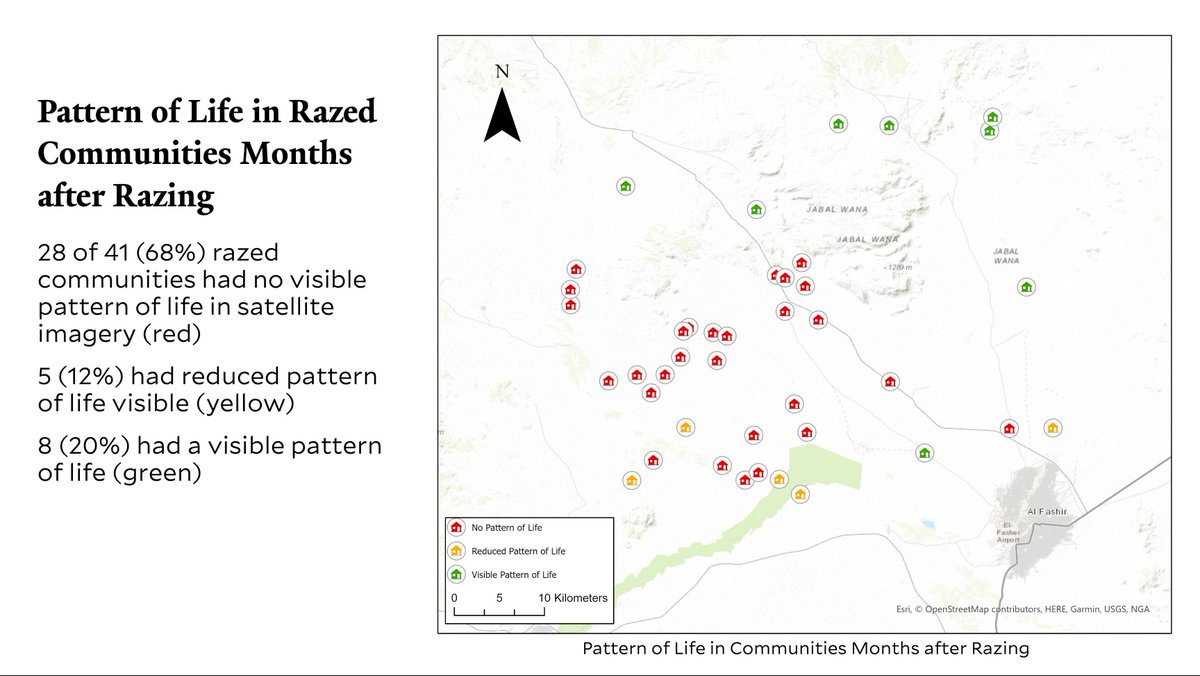
🚨LANDMARK REPORT on FOOD SECURITY🚨 In the first days and weeks of RSF’s siege on El Fasher, RSF razed 41 predominantly Zaghawa farming villages, killing and displacing people.
Months later the majority of these villages were depopulated and unable to plant and grow food that would sustain themselves and El Fasher.
#KeepEyesOnSudan
🛰️ @Vantortech
https://t.co/rBYTo9SgC5