Scientist at @ECMWF (#DestinE), climate modeller with a focus on internal variability, model evaluation, and #large_ensembles, sailor, climber, foodie.
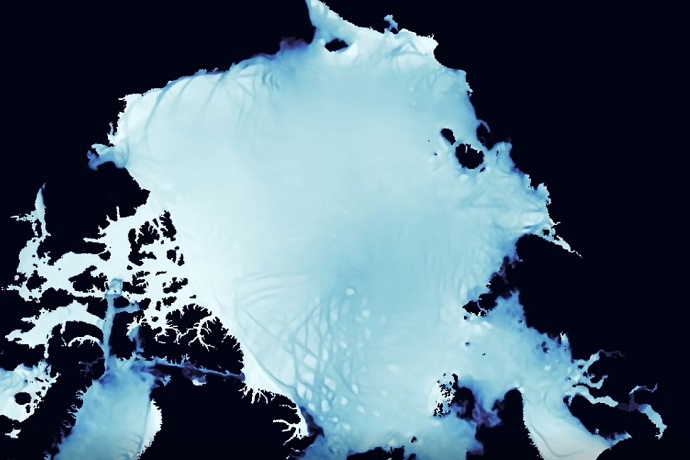
We are testing what needs to be done to improve the realism of global km-scale weather simulations. Find out how, as part of the @nextgems_eu project, we are modelling sea ice cracks in the Arctic and fixing water and energy budget imbalances: https://t.co/wd2o4lQfEU
Hi #climate and #wxtwitter, dows anyone know of any studies comparing biases between #CMIP models and their closest cousins from the seasonal (i.e. C3S) and subseasonal (i.e. S2S) forecast models. Wondering how far the seamlessness goes in terms of model errors/biases.
We have a new paper out looking at changes in different types of ENSO events. The event classification is trained on observations & reanalyses and then applied to #large_ensembles. Thanks @Nicola__Maher for the great idea and leading the work!
Our paper on using machine learning to classify ENSO in #large_ensembles is officially published! With Thibault P. Tabarin and Sebastian Milinski (@SebMilinski). Our work demonstrates the value of combining machine learning with climate models.
We're excited to invite you to submit an abstract to our @AGU#AGU22 Fall Meeting session on single-model initial condition large ensembles (SMILEs) as tools for exploring natural variability, change signals, and impacts https://t.co/iIv3xBYART (1/3)
Thanks a lot to @UCAR_CPAESS and @NCAR_CGD for hosting me for the past year and to all friends & colleagues in Boulder for an exciting year abroad!
Personal update: I started to work @ECMWF in Bonn on the #DestinE project last month. I'll be working on the evaluation of the model climate in the high-resolution #ECMWFDigitalTwins.
Last week I got the chance to join colleagues at the @nextgems_eu cycle 2 hackathon to analyse the latest IFS and ICON model runs.
https://t.co/SYxsLSFKFd
Thanks for hosting us @aikovoigt ! Very happy with our collective PhD & with how much we learned from analysing our cycle 2 #nextGEMS simulations:) (according to Aiko's estimate the number of working hours of the 100 participants over the 4 1/2 days = the length of one PhD)
The second special SMILE webinar is next Monday the 16th of May. 8am PDT; 9am MDT; 4pm BST; 5pm CEST. Presentations by: Ji-Eun Kim; Dirk Olonscheck; Samantha Stevenson @slgstevenson; Laura Muntjewerf @LauraMuntjewerf ; Laura Wilcox @LJ_Wilcox & Nico Wienders
The first of two special SMILE webinars on new SMILEs is next Monday the 25th of April. 8am PDT; 9am MDT; 4pm BST; 5pm CET. These webinars showcase large ensembles that have recently become available or will soon become available to the community, as well as discuss future plans.
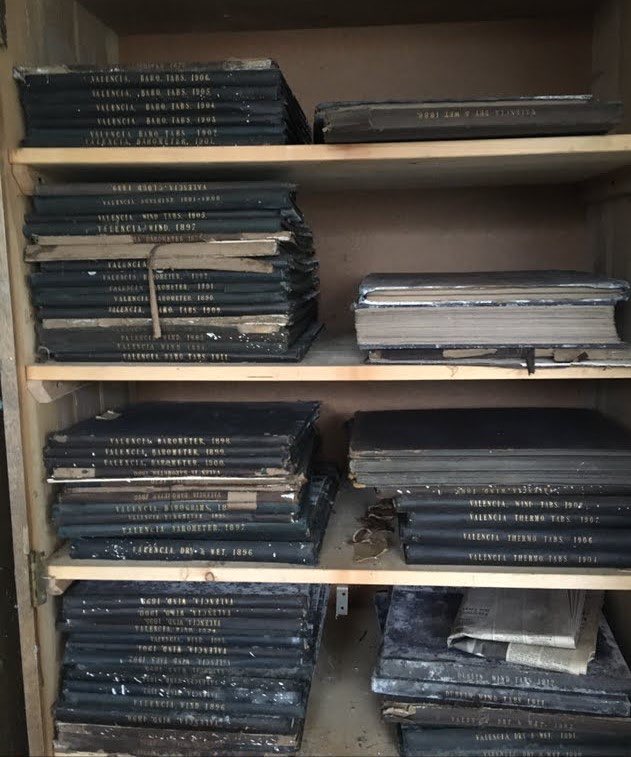
REMINDER: if you find a stack of weather logbooks from the late 19th century in a shed, please don’t throw them in a skip. Phone your local, friendly meteorological service who will happily come and save them.
Online for review! We use machine learning to classify ENSO then investigate projections ... take a look and feel free to comment.
This project has been pretty fun!
Friday is #large_ensemble day at #AGU21! We have 4 sessions with a wide variety of exciting new applications.
The first oral session A51E starts at 8am CST with our invited speaker @danielletouma talking about human-driven impacts on fire weather: https://t.co/aM3ucpIaKF
Full-length recorded talks and posters are already available online now and will remain available together with recordings of the live sessions after #AGU21.
Friday is #large_ensemble day at #AGU21! We have 4 sessions with a wide variety of exciting new applications.
The first oral session A51E starts at 8am CST with our invited speaker @danielletouma talking about human-driven impacts on fire weather: https://t.co/aM3ucpIaKF
From 4pm CST onwards you can visit posters in hall D-F or join our virtual poster session with breakout rooms on zoom. Make sure to check the poster programme to get the zoom link or poster board # and see the availability of each presenter. https://t.co/Kd0Ize1JdM