Search More, Think Less
A new framework for long-horizon agentic search that replaces sequential reasoning with parallel evidence acquisition.
Achieves SOTA across multiple benchmarks while cutting reasoning steps by 70.7% vs Mirothinker-v1.0.
🔥 GPT-6 may not just be smarter.
It literally might be alive (in the computational sense).
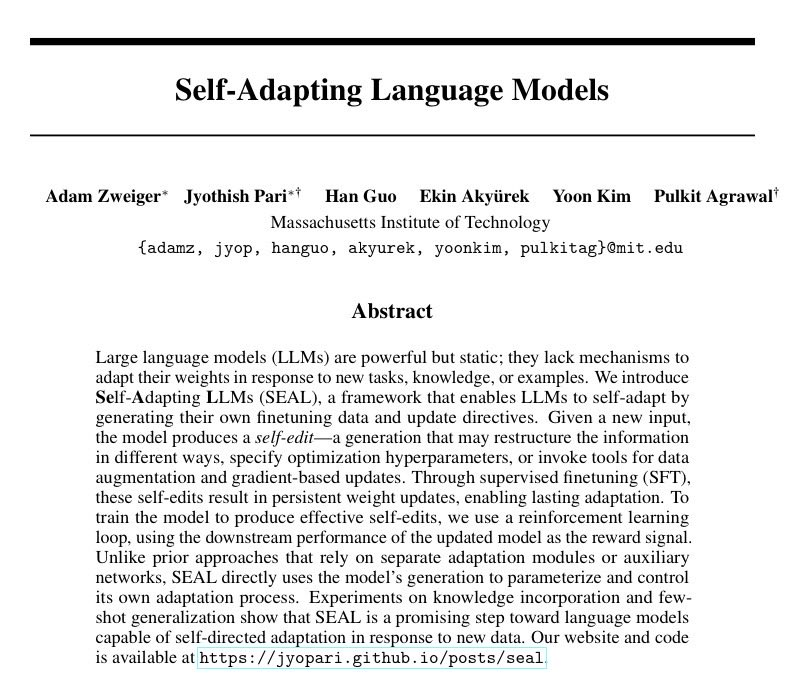
A new research paper, SEAL: Self-Adapting Language Models (arXiv:2506.10943), describes how an AI can continuously learn after deployment, evolving its own internal representations without retraining.
Here are the details: 🧵
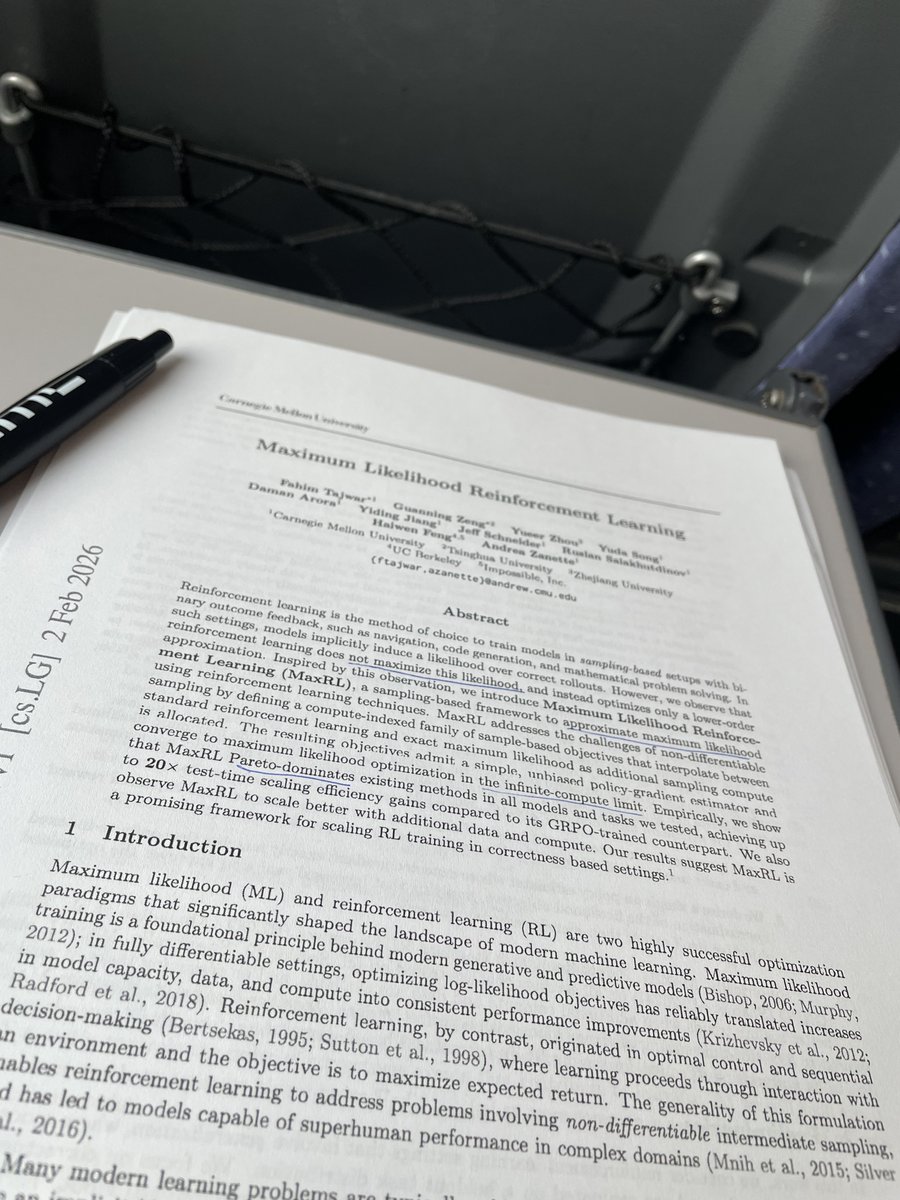
Incredible paper in all regards:
- Clear, easy to follow motivation
- Sharp analyses of GRPO's optimization behavior
- Clean math to prove the points
- Simple, practical fix with both theoretical and empirical advantages
- Thoroughly addresses key questions with honest discussion of limitations
- Great writing style, was fun to read
This might be my favorite paper of the year🤯
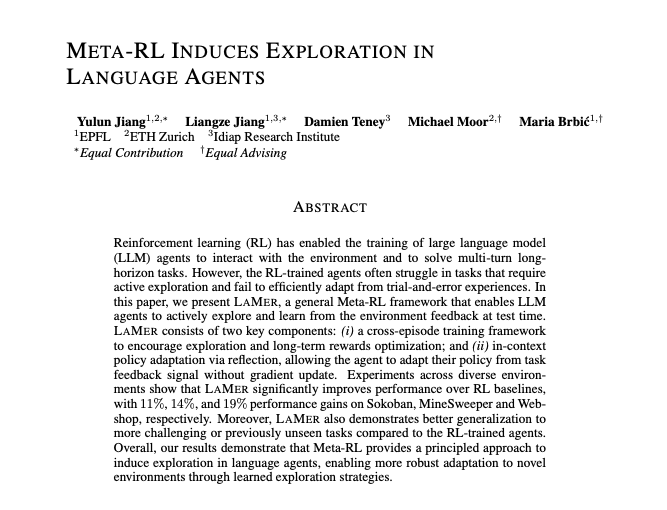
Rich Sutton claims that current RL methods won't get us to continual learning because they don't compound upon previous knowledge, every rollout starts from scratch.
Researchers in Switzerland introduce Meta-RL which might crack that code. Optimize across episodes with a meta-learning objective, which then incentivizes agents to explore first and then exploit. And then reflect upon previous failures for future agent runs.
Incredible results and incredible read of a paper overall.
Authors: @YulunJiang@LiangzeJ@DamienTeney@Michael_D_Moor@mariabrbic
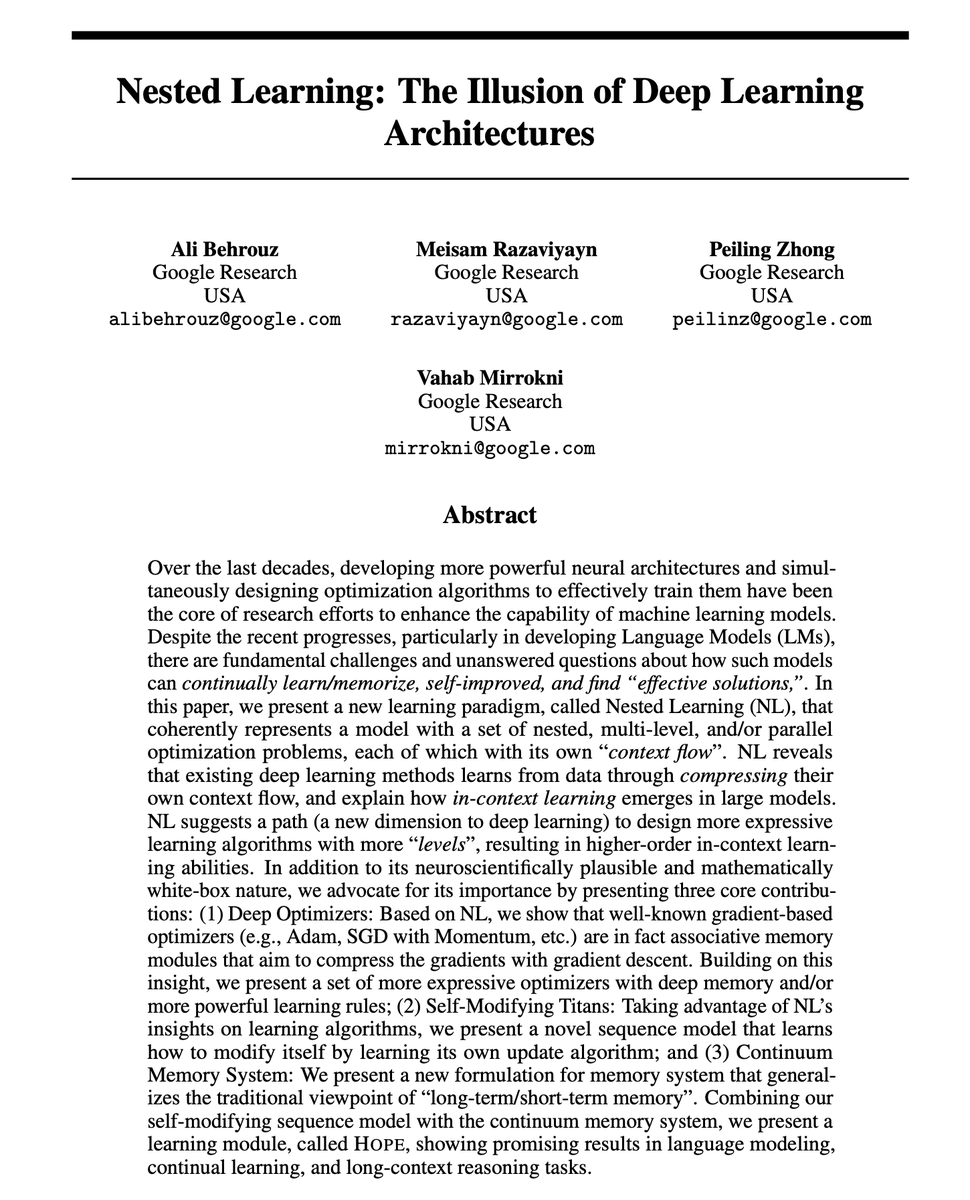
Google just dropped "Attention is all you need (V2)"
This paper could solve AI's biggest problem:
Catastrophic forgetting.
When AI models learn something new, they tend to forget what they previously learned. Humans don't work this way, and now Google Research has a solution.
Nested Learning.
This is a new machine learning paradigm that treats models as a system of interconnected optimization problems running at different speeds - just like how our brain processes information.
Here's why this matters:
LLMs don't learn from experiences; they remain limited to what they learned during training. They can't learn or improve over time without losing previous knowledge.
Nested Learning changes this by viewing the model's architecture and training algorithm as the same thing - just different "levels" of optimization.
The paper introduces Hope, a proof-of-concept architecture that demonstrates this approach:
↳ Hope outperforms modern recurrent models on language modeling tasks
↳ It handles long-context memory better than state-of-the-art models
↳ It achieves this through "continuum memory systems" that update at different frequencies
This is similar to how our brain manages short-term and long-term memory simultaneously.
We might finally be closing the gap between AI and the human brain's ability to continually learn.
I've shared link to the paper in the next tweet!
A beautiful paper from MIT+Harvard+ @GoogleDeepMind 👏
Explains why Transformers miss multi digit multiplication and shows a simple bias that fixes it.
The researchers trained two small Transformer models on 4-digit-by-4-digit multiplication.
One used a special training method called implicit chain-of-thought (ICoT), where the model first sees every intermediate reasoning step, and then those steps are slowly removed as training continues.
This forces the model to “think” internally rather than rely on the visible steps.
That model learned the task perfectly — it produced the right answer for every example (100% accuracy).
The other model was trained the normal way, called standard fine-tuning, where it only saw the input numbers and the final answer, not the reasoning steps.
That model almost completely failed — it only got about 1% of the answers correct.
i.e. model trained with implicit chain of thought, called ICoT, gets 100% on 4x4 multiplication while normal training could not learn it at all
One of the best resource on Reinforcement Learning ❤️
A classic 216 page overview covering the basic fundamentals of RL.
The paper maps RL clearly, showing how agents learn good behavior from rewards and experience.
The agent observes a situation, chooses an action, receives a reward, then lands in a new situation.
The goal is to raise total reward over time, not just the next reward.
Value methods estimate how good a situation or action is, then pick the highest.
Policy methods tune the action rule so rewarding actions become more likely.
Actor critic blends both, a policy acts while a critic scores.
Learning signals use full episodes or partial bootstraps, called Monte Carlo and temporal difference.
Function approximation uses neural networks so learning scales, target networks and replay buffers help stability.
Exploration is essential, the agent must try uncertain actions or it will get stuck.
On policy learns from its own behavior, off policy reuses broader experience for better data efficiency.
AI Industry Made $57 Billion Mistake and No One’s Talking About It.
While GPT-5 headlines kept you distracted...
NVIDIA quietly released a bold claim:
�� Small Language Models (SLMs) are the future of AI agents
Cheaper, faster and just as capable for 80% of real-world tasks.
Easily one of the biggest shifts in AI this year and most people missed it.
99% people haven’t read this but they should: 🧵
🚨This week's top AI/ML research papers:
- GSPO
- Diffusion Beats Autoregressive in Data-Constrained Settings
- Gemini 2.5 Pro Capable of Winning Gold at IMO 2025
- Rubrics as Rewards
- Deep Researcher with Test-Time Diffusion
- Learning without training
- Stabilizing Knowledge, Promoting Reasoning: Dual-Token Constraints for RLVR
- GR-3 Technical Report
- Beyond Binary Rewards
- AlphaGo Moment for Model Architecture Discovery
- ThinkAct
- Zebra-CoT
- Checklists Are Better Than Reward Models For Aligning Language Models
- Pixels, Patterns, but No Poetry
- Latent Denoising Makes Good Visual Tokenizers
- The Invisible Leash
- MiroMind-M1
- GUI-G^2
- Step-Audio 2 Technical Report
- Beyond Context Limits
- Captain Cinema
- NABLA
- MUR
overview for each + authors' explanations
read this in thread mode for the best experience
Google's AI just made math discoveries NO human has!
—Solved optimal packing of 11 and 12 hexagons in hexagons.
—Reduced 4x4 matrix multiplication from 49 operations to 48 (first advance in 56 years!)
and many more.
AlphaEvolve is the AlphaGo 'move 37' moment for math. Insane.
We've made some improvements to Codex CLI, based on your feedback:
⬥ Sign in with ChatGPT to quickly connect your API org
⬥ New model, codex-mini, optimized for low-latency code Q&A and editing
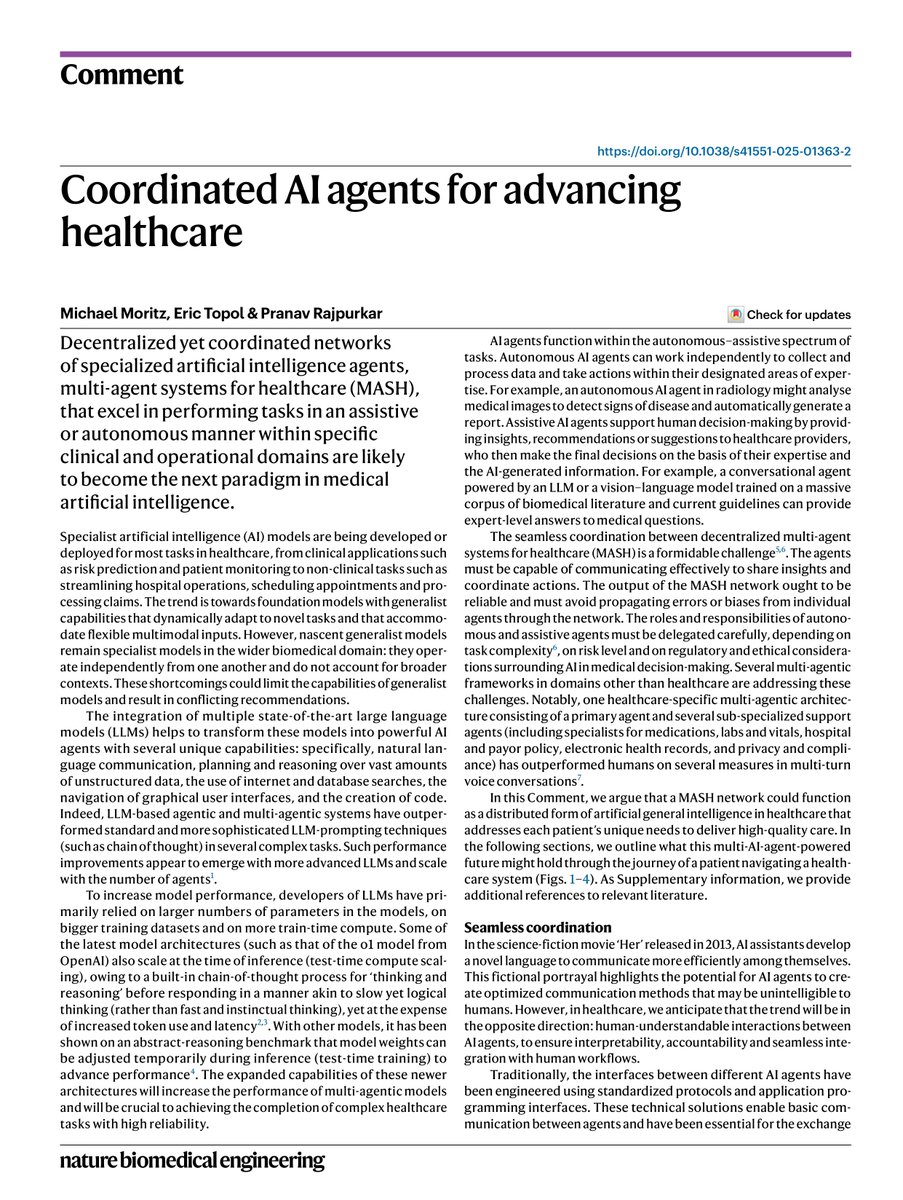
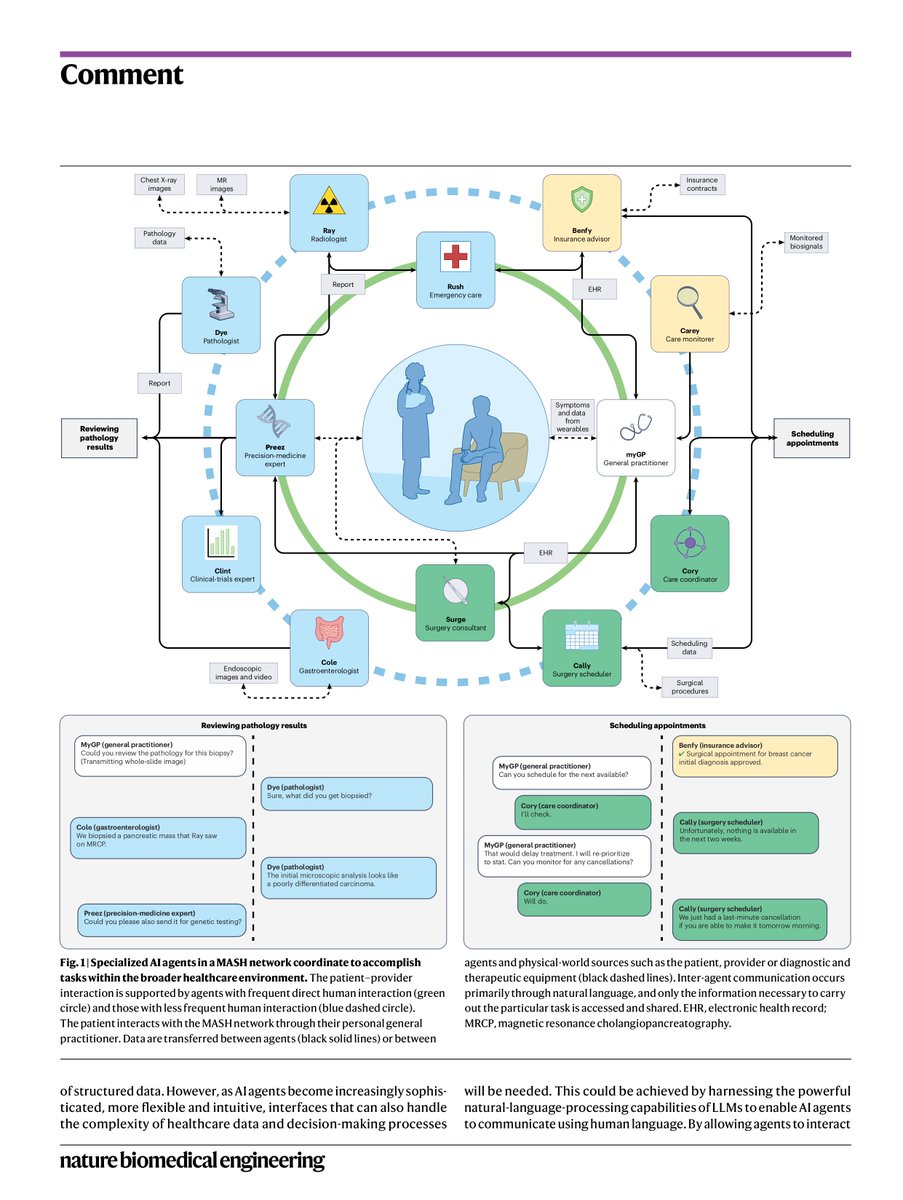
Our new paper on Multi-Agent Systems for Healthcare (MASH) just came out today in Nature Biomedical Engineering. with colleagues Dr. Michael Moritz and Dr. @EricTopol
Excited to share our new paper published in Nature on how multimodal generative ai is transforming the interpretation of medical images (radiology and others)!
The open source DeepSeek-R1 model is now available as an NVIDIA NIM microservice preview on https://t.co/bBiHtSVqqK to help developers securely experiment with its advanced AI reasoning capabilities.
Goodbye ChatGPT
It’s only been 5 days since Deepseek R1 dropped, and the World is already blown away by its potential.
13 examples that will blow your mind (Don't miss the 5th one):
I agree with Einstein, and have some thoughts on the matter that I might write up at some point. Einstein's intuitions have almost always turned out to be correct in the fullness of time.