@AlisonMitchell very interesting. thank you. and lovely to know that someone is in the box who understands leather. the photo was at the old clayton’s tannery by the way. such a shame it’s now gone
@AlisonMitchell fair play. you have clearly done your research. i had the pleasure of seeing a huge pile of red ball hides at a tannery once. i’m sure any of the local tanneries would welcome the opportunity to talk about the details of what’s involved to you.
@AlisonMitchell@bbctms ball chat happens every season. one day i hope #tms will get someone on who works in the leather trade to explain the difference between aniline, the red ball, and surface sprayed dying processes involved in currying
@dieworkwear my studio has been based in one of the traditional weaver precincts of east london for years. we have hundreds of tourists coming through to see “historic london” constantly. spitalfields has always been a confluence of different cultures. not a fixed ethnicity
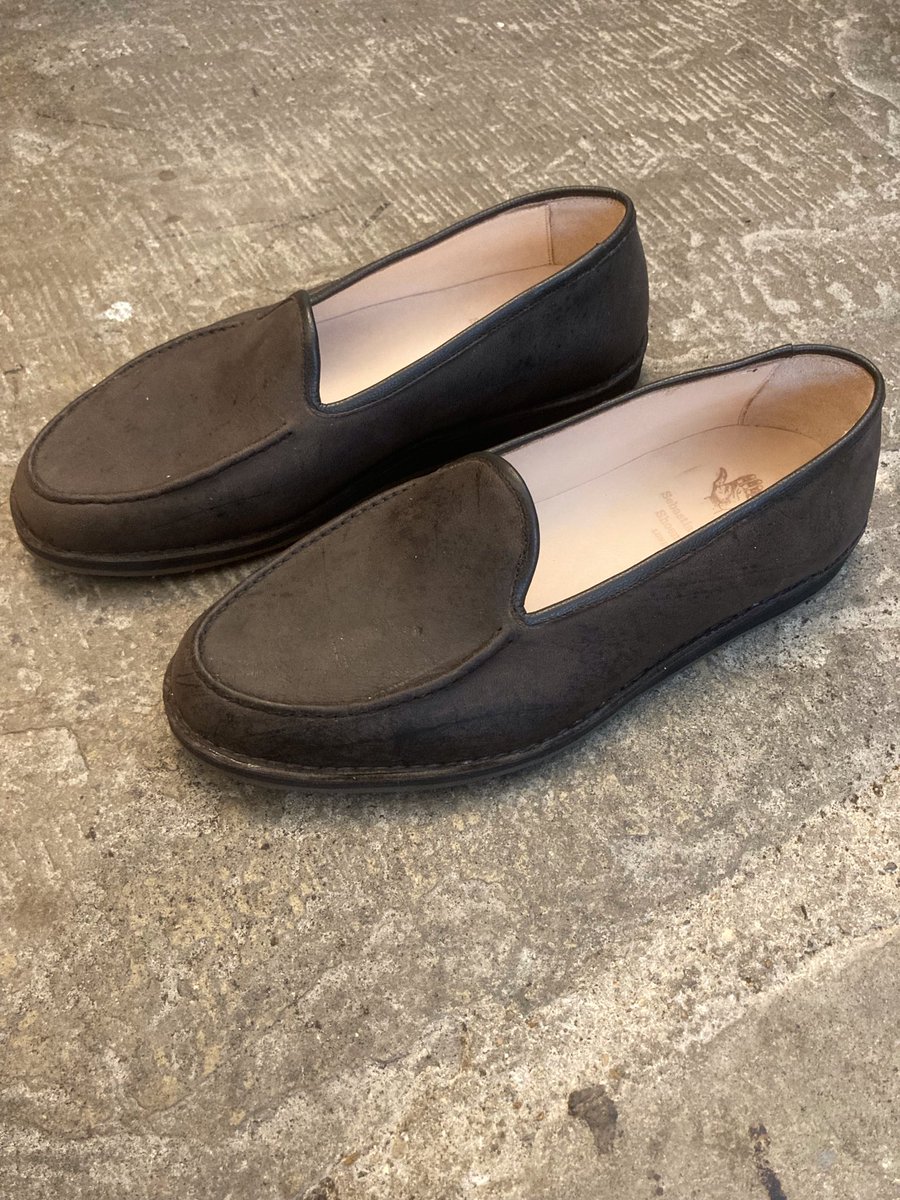
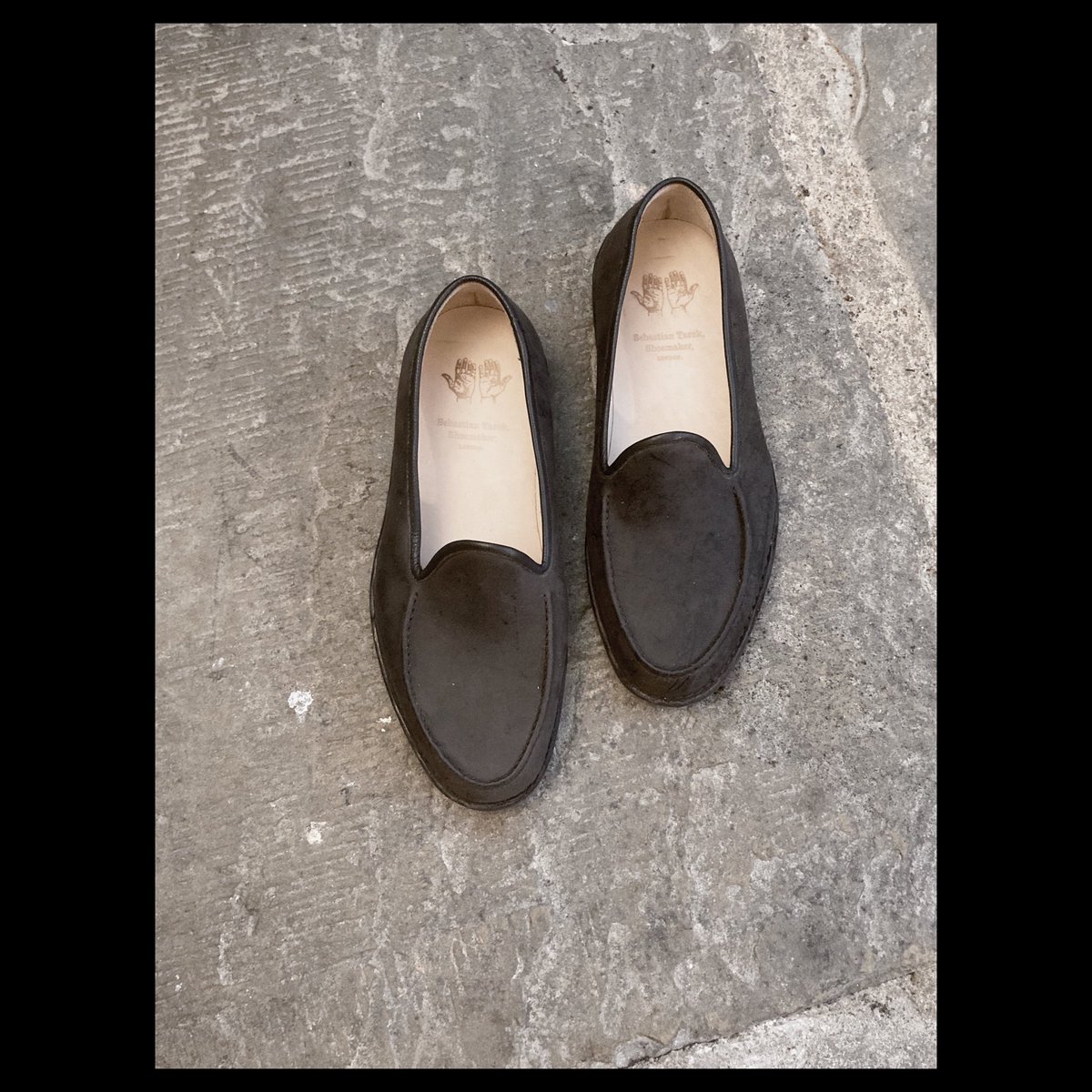
This trip i will be bringing a new MTO slipper style for the first time. This will compliment the moccasin ive long traveled with, in the unstructured MTO catalogue of my work. Appointments for sunday 3rd of may still available
The Evan Kinori collaboration slots have already been filled unfortunately. However feel free to contact me about waiting list for last minute cancellations.
For those interested I will be in New York the first weekend of May. I’ll be seeing people for fittings and first appointments. And bringing some interesting new material options. I will also have a small selection of MTO styles.
Modern Art
4-8 Helmet Row, London EC1V 3QJ, United Kingdom
Open daily, December 5 through 14th from 11am to 7pm
Opening Reception – Friday, December 5th from 5-7pm
for exhibition three, part of @evankinori ongoing series of events around the world, i’ll be working on site for the duration. producing a new piece of work, in response to Evan and the assembled group of collaborators. this, and my other work will be available to see and discuss
@JayRohrer3@dieworkwear i was going to suggest amara too. she’s great, has a distinct point of view stylistically, but is also very flexible. she creates lots of different styles
always a great validation of my work to get a mention from derek. and a particular honour to be in such great company. emiko is a modern day titan of our industry. still one or two spots available for next weekend. please email me directly if you’d like to discuss options
If you’re interested in bespoke shoes and based in New York City, I have some trunk show announcements to share with you.
There are two ways to build a wardrobe. The first is to buy whatever catches your fancy and layer these items on your body, like the collection of novel tchotchkes, antique liquor ads, and exotic currencies that decorate your local TGIF. The second is to consider the semiotics of clothes, as they’ve been shaped by history, and try to create outfits that are culturally legible. If you’ve been reading me for a while, you know where I fall on this dichotomy.
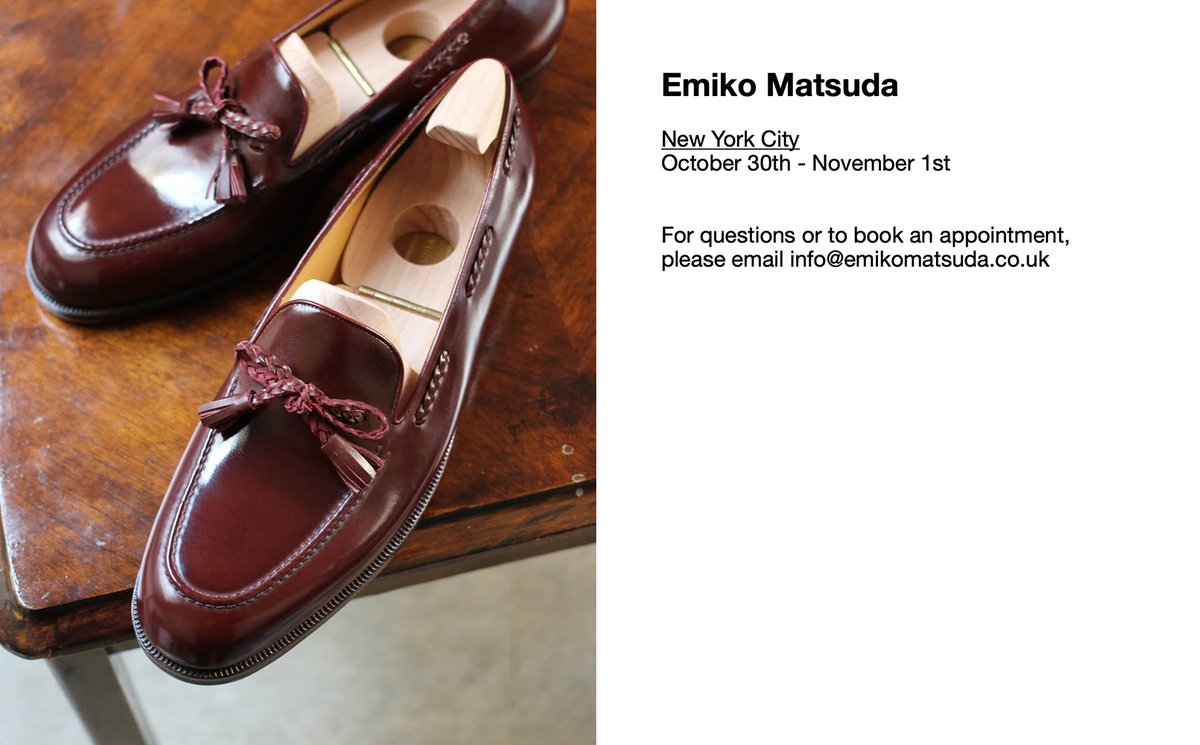
If you share my view of style and you’re interested in buying bespoke shoes, you should consider Emiko Matsuda. Born in Japan, Matsuda immigrated to England in the 1990s to study shoemaking at Cordwainers’ College. She later got an apprenticeship at Foster & Son, where she learned lastmaking under Terry Moore, one of the last great West End lastmakers and someone who worked at the legendary Peal & Co before they shuttered. When Moore retired, Matsuda stepped into the role he had long occupied and became the main lastmaker at Foster. If you’ve seen a pair of bespoke Foster & Sons shoes made sometime in the last twenty years, there’s a good chance Matsuda made the last.
Matsuda is unique in that she’ll make you a pair of shoes that will last in both material construction and design. The world of custom clothing (and shoes) is rife with many potential pitfalls, one of which is overeager customers who go wild once given the option. This is how you end up with bright blueberry-colored suits with contrast colored buttonholes and USA flag linings. The same goes for shoes, as men buy red hippo, purple ostrich oxfords to go with their conservative navy suits. Matsuda is exceedingly polite and will, of course, make you anything you want. But if you want to be guided towards more classic choices, she’ll gently tell you that loafers and split-toe derbies should be made with a square waist, not the fiddleback that may seem exciting today but is simply the wrong choice for that style.
Consider Matsuda if you, like me, love genuine classic men’s style and have a particular fondness for West End traditions. Her thirty years of experience working in the West End gives her a certain perspective and skill level not easily found elsewhere.
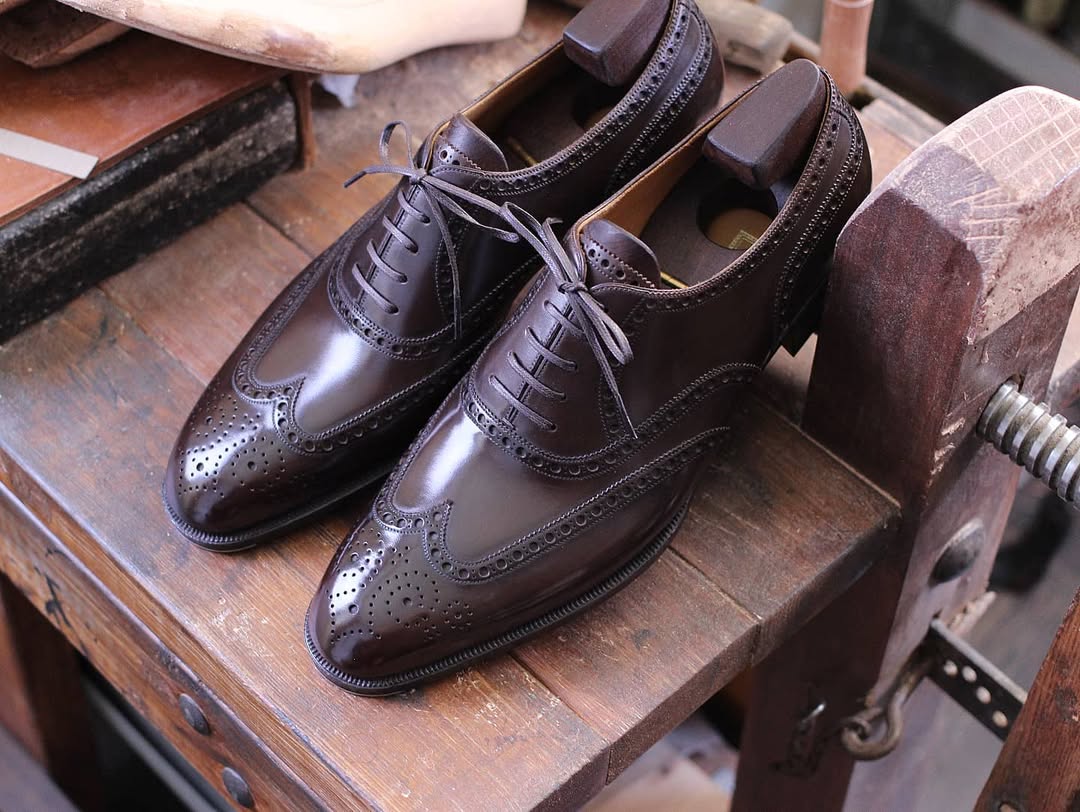
I’m often mistaken for someone who only loves classic men’s style. The truth is that I love many styles — streetwear, workwear, techwear, and the avant-garde — but believe that outfits look better when they are coherent and make cultural sense. This is why I so admire Sebastian Tarek. By day, he works as an outworker for one of the more prestigious West End firms, turning bits of leather into things such as oxfords and derbies for conservative business people. But he also runs his own shop, where he gets more creative license.
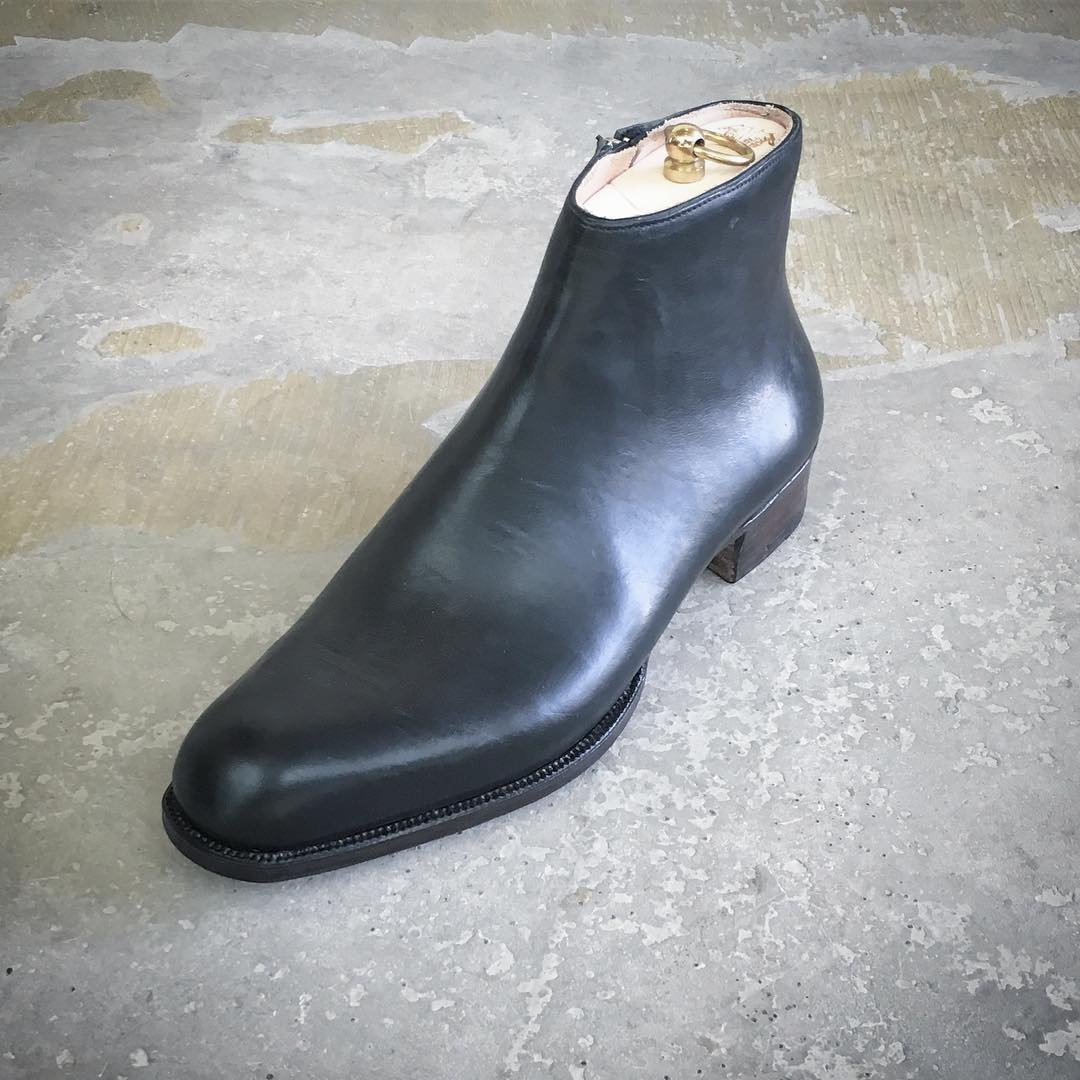
To me, Tarek sits at the intersection of traditional West End craft and fashionable design. By “fashion,” I don’t mean trendy, but the kind of things you’d see at StyleZeitgeist, a leading online publication focused on high-minded fashion design run by fashion critic Eugene Rabkin. Tarek could make you a pair of conservative oxfords, of course (that is his bread and butter). But he can also make you a pair of derbies in a washed-out black, boarded calfskin that will go beautifully with clothes from Comme des Garçons, Paul Harden, and Evan Kinori.
Tarek’s shoes are made in the traditional West End way: he takes multiple measurements of your feet, which inform how he makes the last (the block of wood that determines the shape of the shoes). This ensures the perfect, Cinderella-slipper-like fit. The shoes are handlasted and handwelted, which allows for more resolings. But since his aesthetic leans towards artistic and rustic, these are the sorts of shoes that you can easily wear with casualwear, rather than just classic tailored clothing. The black side-zip boots pictured above would look great with slim black jeans, a crisp white t-shirt, and a black leather five-zip jacket from Maison Margiela.
Consider Tarek if you love traditional craft but want something you can wear with casualwear to bars and music shows. In the right material and style — say, black calf George boots — his shoes can also make the right suit look a bit more rock ‘n roll.
Finally, my usual disclosure: this is not a paid tweet, as I don’t do paid tweets. I get nothing from making these announcements — no freebies, discounts, kickbacks, money, store credit, or whatever else. I make these announcements simply because I greatly admire craftspeople in this trade and would like to see them be able to continue their work. If you have questions, please contact the shoemakers directly, as I am not their representative.
@dieworkwear and i get how absurd that sounds. but the fact the vast majority of parliamentarians wear r.m williams is as much to do with their status as stock man’s boots, as it is their place as a heritage brand
@dieworkwear i said he had a stylist. i couldn’t vouch for how well versed in black tie they are. but as someone else here has pointed out, an explicit observation of the trappings of wealth and privilege via a cummerbund would not go down well with the base