@cutlossess We can also find better TWAP to avoid manipulations, but it is an hard problem as price can fall sharply in case of stress for good reasons.
We have been using TWAP oracle for more than a year on all PT markets we deployed (probably 1-2 exceptions).
We are adding a min with a linear discount when it is unsafe to not do it (through Ojo min contract).
Linear discount tended to be aggressive creating risk for lenders as it cap the implied PT rate.
Having an actual price is the right way to protect lenders (it's still capped at the Pendle AMM side).
On PT markets, borrowers can still avoid liquidation and use them like they would with linear discount oracles, just use a LTV that matches the highest YTM on the Pendle AMM. With a TWAP oracle you can get more leverage but no one is saying you should do it.
For this particular case, the drop in price was 2.7%. If you have LTV > 85% on PTs I would urge to reconsider. PTs have duration risk.
Update on this morning's PT-reUSD markets on Morpho. No lenders in Steakhouse vaults are affected and no bad debt is incurred. The underlying reUSD asset is unaffected.
At around 04:30 UTC, price action around the PT-reUSD (10 Dec maturity) asset caused a number of large and highly levered positions to liquidate. This is increasingly likely with trade size.
The PT asset price moved 2.8% with high volumes. Leveraged positions with health factors less than 1.03 were susceptible to have their positions liquidated.
Combining 15min TWAP and linear discount is generally good practice for Pendle oracles to mitigate the possibility of bad debt in the event of an impairment in the underlying asset. This is consistent with configuring PT oracles for lender protection.
Steakhouse curates markets that accept this asset as collateral. As a cautionary move, our systems withdrew liquidity from all affected markets while evaluating. We are now restoring liquidity back into the markets.
Lender positions on vaults allocating to these markets are not impacted.
@cutlossess It's not about the liabilities, it's about pricing duration.
There are 2 schools:
1. linear model: let's assume the PT YTM is 20% which overstate the price of the PT sometimes
2. TWAP: PT YTM can range between 6% and 33% and if borrowers want to be safe they price LTV at 33%.
To clarify the linear discount alone is usually a big discount like 20% on the PT-reUSD-JUN, even if the Pendle AMM can go up to 33% YTM. This is what people call the linear discount method.
When we use a linear discount in a min it is a small number, like 6% (we are capping the delta between this 6% and the max YTM of the Pendle AMM). It is just an add-on to the TWAP method.
So both are linear discount but usage is completely different. I know it's a bit unclear from the message.
We never share Deblock’s numbers. Not because we can’t. Because competitors don’t need free data, and vanity metrics don’t build companies. Today, we’re breaking that rule. Once.
🎉 €1B in total card volume.
📈 Growing 20% MoM.
💳 €100M+ monthly volume.
That last number matters. That’s >13% of GLOBAL crypto card volume. In other words: more than 1 in 8 dollars spent on a crypto card worldwide runs through Deblock.
Let that sink in.
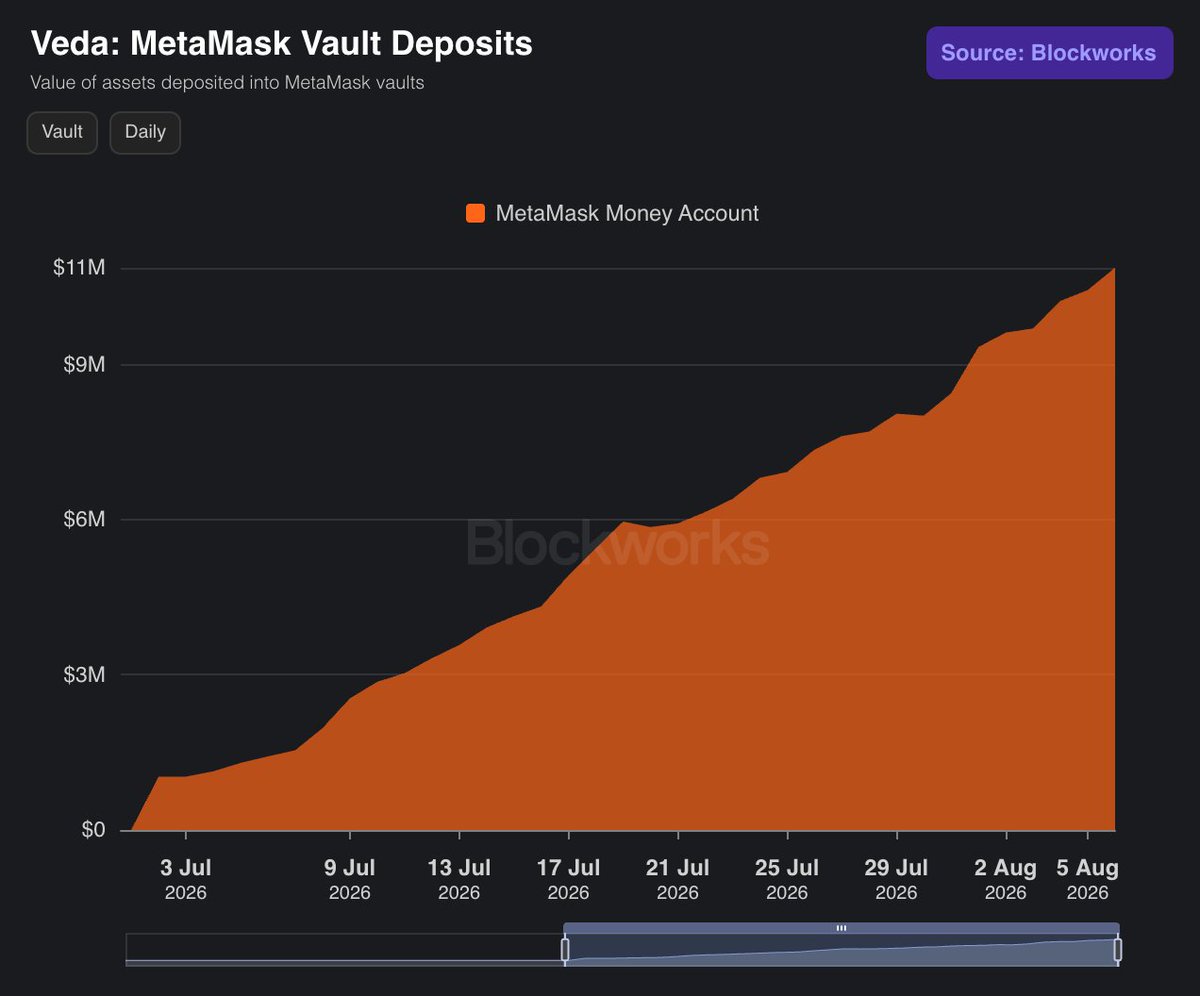
NEWS: The @MetaMask Money Account vault has exceeded $10 million in deposits.
→ Veda vault infra on @monad
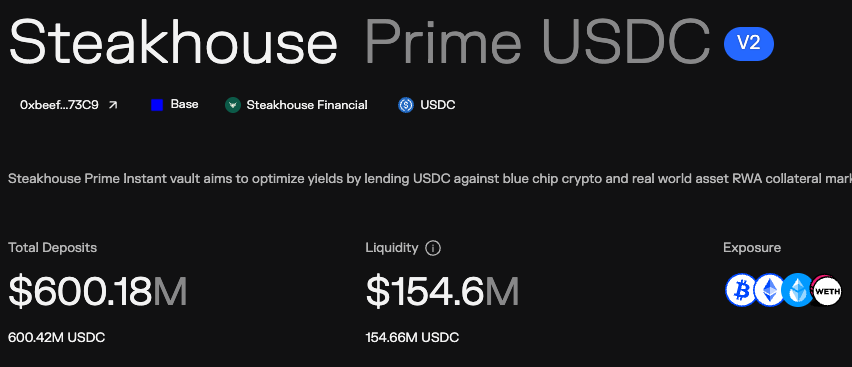
→ Strategy by @SteakhouseFi
Earn, trade, and spend with your balance 💳
@fltmu DTCC chose Canton because they are good seller. Same for Stellar.
Privacy can be something that is missing on Ethereum but if that is the case, we should solve this and not issuance.
When you want to create value you need to focus on what matters.
I think the technical arguments of the EIP are fine. BUT it was obvious that it would divise the community on something of little importance.
DTCC launching on Canton and Stellar before Ethereum but the problem is the issuance curve. Sure.
All fintechs building outside of Ethereum, with a clear L2 lack on integration mess, but the problem is the issuance curve. Sure.
🚨 New EIP: Tapered Issuance Burn
We just submitted an EIP to ethereum/EIPs: a minimal, market-driven fix to Ethereum's issuance policy removing the incentive for stake growth beyond 50% of ETH supply.
EIP-8361 by @pintail_xyz, @jdetychey, @dapplion, @pa7x1, @ladislaus0x & @drakefjustin 🧵
@awmacp Basic economies of scale show that it would favor a cartel of stacking platform indeed.
But I would assume that solo stackers are irrelevant in any case.
The Tokenized Stocks Trident
- Swiss Obligation code which brings bearer asset tokens to life (a masterpiece way ahead of its time)
- Jersey, because of stamps issues
- Lichtenstein, because the EU prospectus regulation is the best thing ever done in Europe