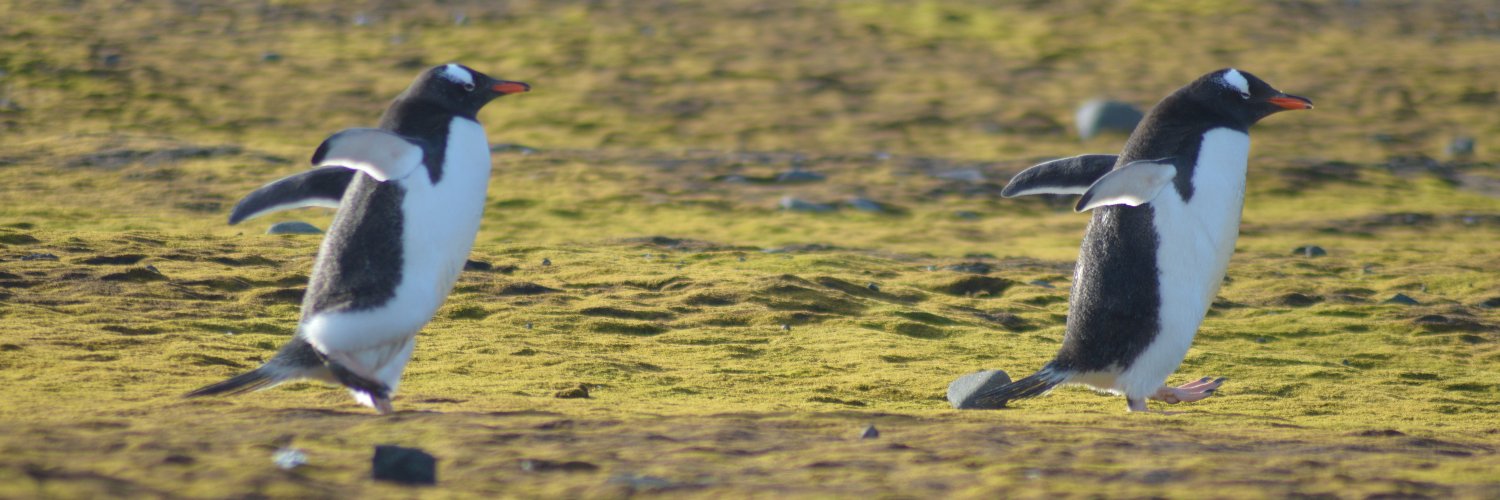
I'm just getting onto the last leg of my journey home from James Ross Island, Antarctica and I'm trying to slowly process the last 3 months. It was an honour to join the Czech Antarctic expedition at Mendel Base and an incredible experience to collect data in Antarctica 😁🐧🇨🇿🇦🇶
From snow cover to bare glacier ice in two weeks at Great Aletsch Glacier!
Snow depletion was never so early recently, not even in the extreme year 2022! Virtually snow-free ice in May below 2200 m results in early onset of ice loss and enhanced albedo feedback
@glamos_ch
After one full year of review process, this feels very satisfying. The paper will demonstrate how <1% of basin area can transfer signals 1000s of km downstream in case of really really large mass-wasting events.
Can't wait to see this online and share with all of you!
I am delighted to share that our paper, exploring land cover change in Antarctica, has been awarded the Editors' Choice Award by @arctic_alpine
This award recognises influential work, contributing to our understanding cold environments
Read more here: https://t.co/HrGiNfQ2EP
Marinelli Glacier (Cordillera Darwin)
1913 | 2024
Another mind-boggling comparison! 🧊🔥
Marinelli Gl. has lost >15 km during this period! 😲
Mte Shipton (2568 m) at the background is highest peak in CD 🏔️
📷 1913: pano made of 5 pics by Alberto de Agostini
📽️ 2024: C. Donoso
🐧 Antarctic PhD Opportunity 🐧
We are advertising for a PhD position based at the University of Leeds. This is a NERC funded opportunity through YES•DTN.
"Proglacial landscape evolution across the Antarctic Peninsula in a warming climate"
https://t.co/pDw9gaRuL3
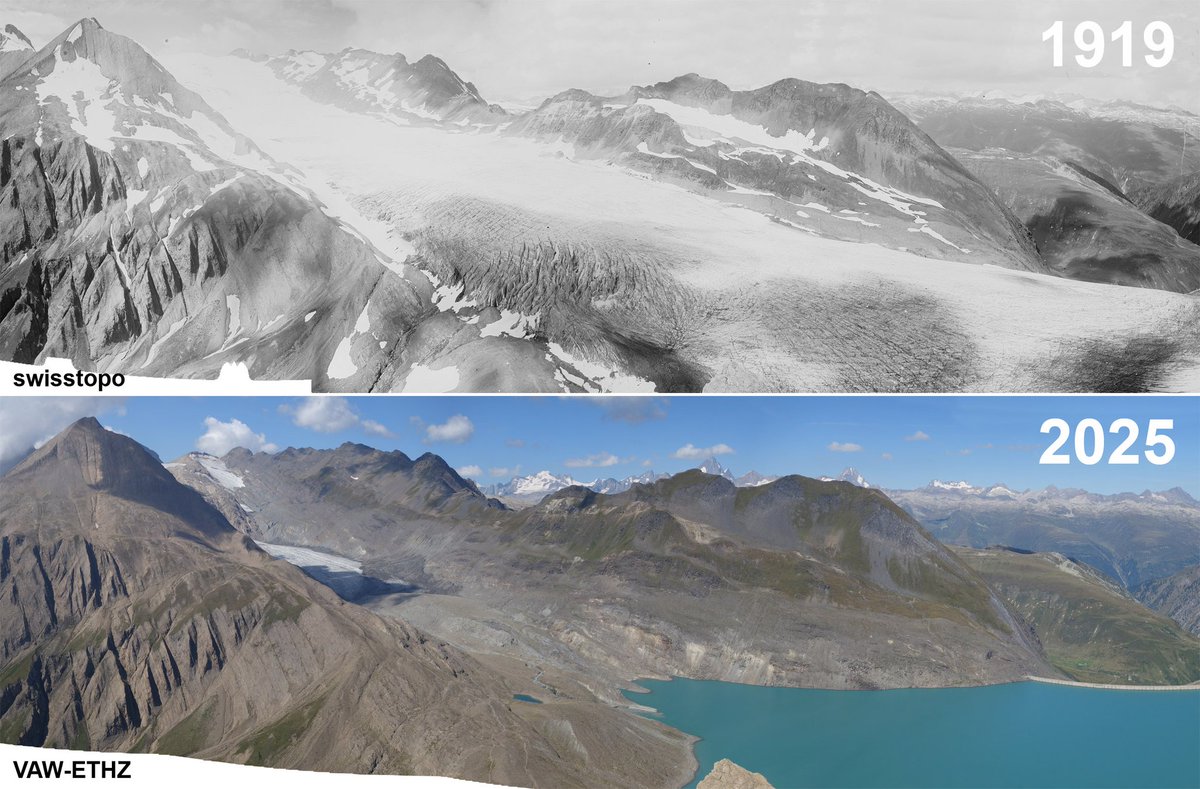
Like pulling the plug of a bathtub: an incredible mass of #glacier ice disappearing at Griesgletscher (🇨🇭/🇮🇹) in one century.
It felt emotional to visit the exact same spot @swisstopo cartographers chose in 1919. The view was so different.
Simply unbelievable!!
@VAW_glaciology
Our latest study is now published in J. Glac:
"Accelerated glacier changes on the James Ross Archipelago, Antarctica, from 2010 to 2023"
🧊Recent warming has led to enhanced rates of melt.
We also observe:
⏩Surging
🏔️Disconnection
Find out more👇
https://t.co/mfZtMxj7w2
Our latest study is now published in J. Glac:
"Accelerated glacier changes on the James Ross Archipelago, Antarctica, from 2010 to 2023"
🧊Recent warming has led to enhanced rates of melt.
We also observe:
⏩Surging
🏔️Disconnection
Find out more👇
https://t.co/mfZtMxj7w2
Did you know that already more than 1000 glaciers have disappeared in Switzerland over the last 50 years as a consequence of human-caused climate change?
One of those is Pizolgletscher which I visited today. Always a saddening yet impressive sight...
I am delighted to see our latest study published in Journal of Maps:
https://t.co/iuvo9Jw6vz
The study, led by Göksu Uslular, describes the landscape of key proglacial sites on Nelson Island, Antarctica - mapped using fieldwork, drone imagery, and a 360 degree imagery 🏔️🐧
The tongue of Rhone #Glacier ten days after my last visit. Can you guess how much ice melted away? 1️⃣ meter in terms of thickness! 1️⃣0️⃣ days... And that's just the beginning of the summer season.
We know the times are bad for the ice, but still it is hard to accept these numbers!
Delighted to see our latest paper published in @arctic_alpine
I started on this research on the first day of my PhD (back in 2020!)
It explores the land cover and land cover changes of some key proglacial areas of the Antarctic Peninsula Region 🇦🇶🛰️
https://t.co/jNhUfksGte
#newarticle by Stringer (@sedsstringer) et al. offers a new data set of land cover of major deglaciated sites in West Antarctica, highlighting a spatial pattern where northern sites have more vegetation & active sediments and have changed more rapidly: https://t.co/rIBAsFu8u0
Delighted to see our latest paper published in @arctic_alpine
I started on this research on the first day of my PhD (back in 2020!)
It explores the land cover and land cover changes of some key proglacial areas of the Antarctic Peninsula Region 🇦🇶🛰️
https://t.co/jNhUfksGte
Floods and landslides often dominate headlines, but their lasting impact flows beneath the surface—in the sediment carried by rivers. Dr Abhishek Dixit is studying how the Ganga and Brahmaputra are responding, and may continue to respond, to rising climate-driven events.
Featured in an excellent series by IIT Gandhinagar. We explore sediment dynamics in the two large Himalayan river system-Ganga and Brahmaputra. Both combined, carry the largest amount of sediments in the world.