𝐅𝐢𝐧𝐚𝐧𝐜𝐞 𝐌𝐚𝐭𝐭𝐞𝐫𝐬
𝐕𝐨𝐥𝐮𝐦𝐞 𝟎𝟖, 𝐈𝐬𝐬𝐮𝐞 𝟐𝟎, 𝟐𝟗 𝐍𝐨𝐯𝐞𝐦𝐛𝐞𝐫 𝟐𝟎𝟐𝟒
𝙀𝙙𝙞𝙩𝙤𝙧𝙞𝙖𝙡: 𝙀𝙞𝙜𝙝𝙩 𝙘𝙝𝙖𝙧𝙜𝙚𝙨 𝙖𝙜𝙖𝙞𝙣𝙨𝙩 𝙒𝙤𝙧𝙡𝙙 𝘽𝙖𝙣𝙠 𝙤𝙣 𝙞𝙩𝙨 80𝙩𝙝 𝙮𝙚𝙖𝙧
As the Bretton Woods Institutions complete 80 years, here are eight charges against them (not in order of the severity of the crimes!).
1. Perpetuator of Climate Crisis:
Now championing as a climate saviour and “climate bank”, the Bank must be the one institution which might have contributed the most to the crisis the planet is facing now. It’s not just with their investments in key sectors and projects they did this, but religiously and ruthlessly promoting a development model based on extraction from and exploitation of nature, without considering planetary boundaries.
2. Privatising public sector and services:
Apart from promoting a development model that put the planetary boundaries in jeopardy, promotion and sustaining that model required systematic dismantling of public sector and services one by one. In India, it started with the power sector and then spreading into nearly all key sectors and services like education and health. Once created with a vision for the development of a nation, and with public money, these public institutions were handed over to private corporations in the name of encouraging competition, reducing governmental inefficiency, and spurring innovation.
3. Conditionalities:
All fiscal interventions the Bank/IMF initiated in emerging economies were accompanied with drastic conditionalities impacting the economy and people of those countries. The story of the debt trap in Latin America in the 70’s and 80’s is well documented. In recent years, the austerity measures in countries facing economic crisis put people in severe constraints.
4. Not accountable:
Until fishworkers from Gujarat won the case in the US Supreme Court (Jam vs IFC) in Feb 2019, World Bank Group enjoyed even legal immunity. But that aside, in none of the projects where the Bank invested, despite causing massive devastation of the environment and negative impacts on people, the Bank never was accountable to people. This is despite the institution taking huge credit over putting Independent Accountability Mechanisms (IAMs) to address the negative impacts. But over the years, the powers of the IAMs got watered down, their findings ignored, and IAMs never could hold anyone accountable in the Bank for gross violations of their own policies.
5. Undemocratic:
Despite 8 decades of its operations, despite there has been significant progress in global governance structures, good practices and better understanding of democratic rights, the Bank remains undemocratic and dancing to the tunes of the rich and powerful nations. Just to illustrate that, eight of the Bank’s largest shareholders – US, Japan, Germany, France, UK, China, Saudi Arabia and Russia have 42% of voting share. In contrast, all 47 Sub-Saharan African countries command less than 6% of all voting shares.
6. Development Finance Gatekeeper:
Country policy and Institutional Assessments, Investment Climate Assessments, Global Economic Prospects Report and Ease of Doing Business Report are some of the reports through which the Bank influences smaller economies to facilitate easy investments of private corporations. In India alone, Ease of Doing Business rankings paved the way for the dilution of thousands of environmental and labour safeguard policies. The Make in India website proudly claims that “India jumps 79 positions from 142nd (2014) to 63rd (2019) in ‘World Bank’s Ease of Doing Business Ranking 2020’. To further enhance the ease of doing business in the country, more than 39,000 compliances have been reduced, and more than 3,400 legal provisions have been decriminalised.” Interestingly, the ranking was discontinued in 2021 after getting exposed over data fraud and methodology.
7. Knowledge provider & Standard setting institution:
As a knowledge provider, the Bank continues to create an atmosphere in favour of the business model and projects they want to promote, by generating research and literature. Bank sets the standard for nearly all developmental sectors. While their data collection and methodology are never open for scrutiny, the knowledge they produce and the standards they define often influence the public and academic debates to the extent that it makes it a difficult task to expose those.
8. Promoter of wealth inequality:
The World Bank has been accused of focusing too heavily on GDP growth as a primary indicator of success, often overlooking the distribution of wealth and income within countries. Bank’s failure to address the root causes of inequality in its development strategies has perpetuated, rather than alleviated, social and economic disparities. The World Bank has historically emphasized free-market reforms as the path to economic growth, often prioritizing the interests of multinational corporations and wealthy elites over those of the general population.
This week:
⭕Interrogating the World Bank and IMF at 80: Development or hypocrisy? By Mehul Singh
⭕Revisiting Bretton Woods@ 80: Critiques and Calls for Change in Global Development by Sejal Singh
⭕World Bank’s Ironical 80 years; but why we are more unequal than ever? By Rachit Tiwari
⭕World Bank on Trial | Independent People's Tribunal on the World Bank/IMF on their 80th Anniversary
⭕80 Years Too Long | Shalmali Guttal | Video
⭕80 Years Too Long | Mecanzy Dabre | Video
https://t.co/tsTvB1S3xo
🌟 Congratulations to the Winners!🌟
🎉 Essay Writing Competition: Interrogating the World Bank @80🎉
🏆 First Prize:
🥇 Mehul Singh
Essay: "Interrogating the World Bank and IMF at 80: Development or Hypocrisy?"
Mehul holds a BA in Journalism and Communication and an MA in Social and Cultural Anthropology from KU Leuven, Belgium.
📖 Read the essay here: https://t.co/PYOMV0gvk6 🌐
🥈 Second Prize:
Sejal Singh
Essay: "Revisiting Bretton Woods @ 80: Critiques and Calls for Change in Global Development"
Sejal is a graduate of Economics and Statistics from St. Xavier’s College, Mumbai.
📖 Read the essay here: https://t.co/Zd2YSfesx4🌐
🥉 Third Prize:
Rachit Tiwari
Essay: "World Bank’s Ironical 80 Years: Why Are We More Unequal Than Ever?"
Rachit is pursuing a Master’s in Environment and Development at the London School of Economics and Political Science (LSE).
📖 Read the essay here: https://t.co/KRaFwjN5M8🌐
We sincerely thank all participants for their incredible contributions to this competition. A total of *34 essays from 16 states across India* were submitted, showcasing remarkable depth and insight into the theme, making it challenging for our jury to select the winners.
Our Esteemed Jury:
- Prof. Siddik Rabiyath, Department of Economics, Kerala University
- Dr. Rajendran Narayanan, Azim Premji University
- Meera Sanghamitra, National Alliance of People’s Movements (NAPM)
- Maju Varghese, Centre for Financial Accountability (CFA)
📆 As the World Bank Group commemorates 80 years, the Working Group on International Financial Institutions (WGonIFIs) in India will host an Independent People's Tribunal on December 7th and 8th in Kolkata. The event will critically examine the adverse impacts of the World Bank Group’s interventions in India.
👉 Learn more about the tribunal: https://t.co/ejAXFj55dy
#WorldBank@80 #EssayCompetition
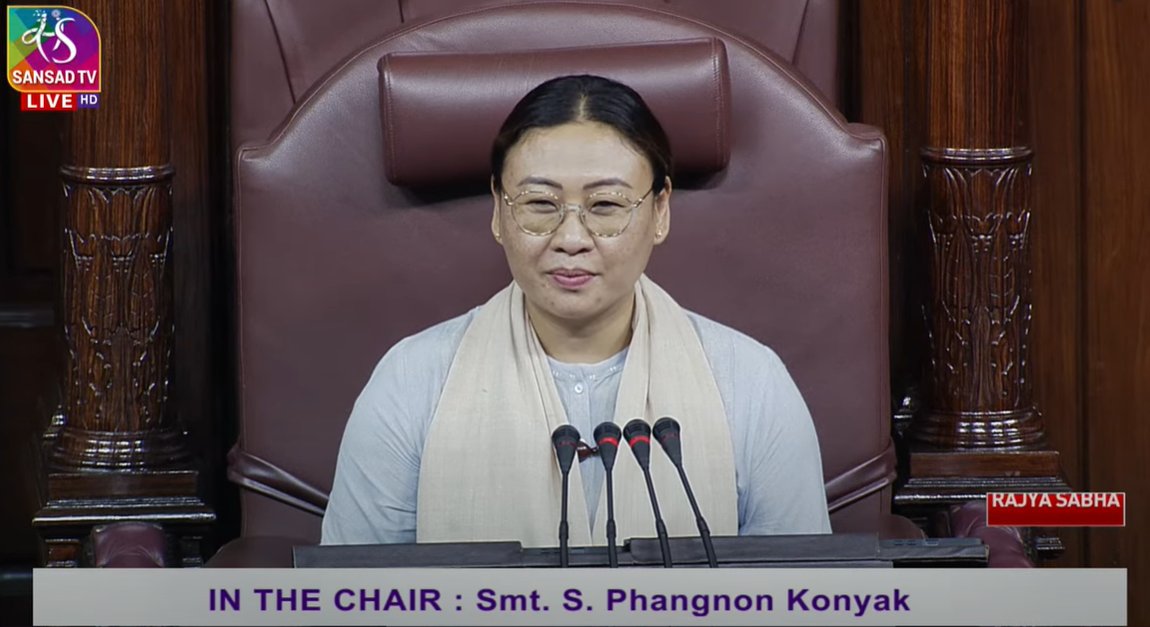
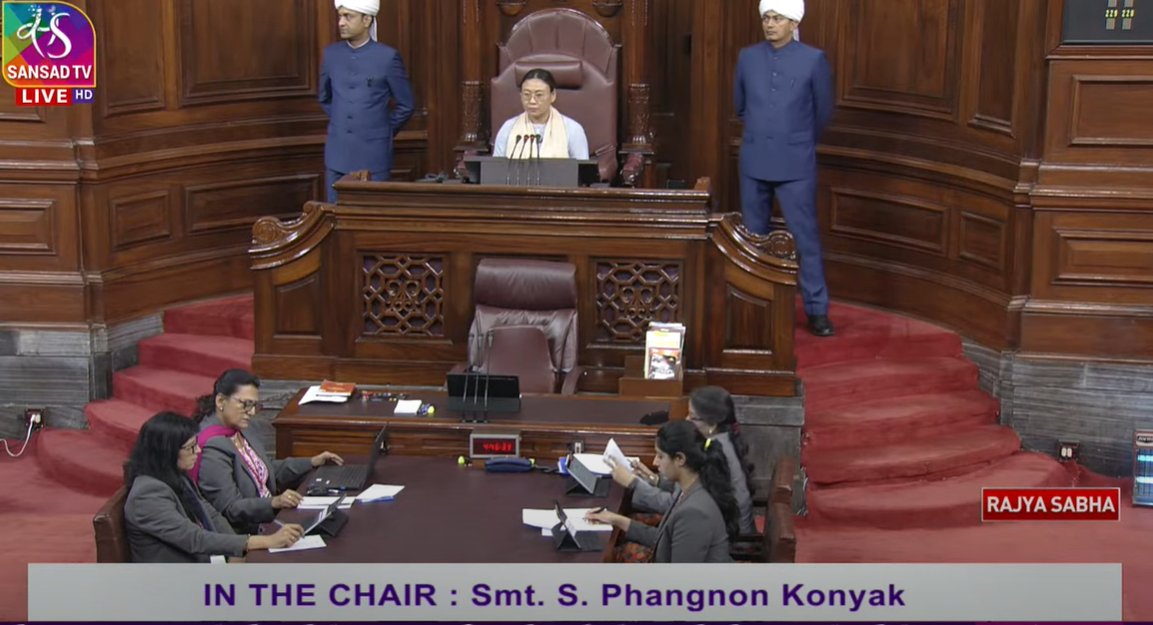
Historic day in Rajya Sabha for Naari Shakti!
Phangnon Konyak presides over proceedings, Mamata Mohanta speaks on a bill while team of all women officials manage the table in the well of the House.
@VPIndia@SPhangnon@MamataMohanta5
Marriage market in India is cip against the homo economicus.
Men prefer a grihani > additional spousal income.
Strong bias against working and independent women triumphs long term welfare of the households, of which men claim to be the heads. The Irony!
https://t.co/fM1YuTOMTr
Current mood summed up in a quote by Sylvia Plath — “What horrifies me most is the idea of being useless: well-educated, brilliantly promising, and fading out into an indifferent middle age.”
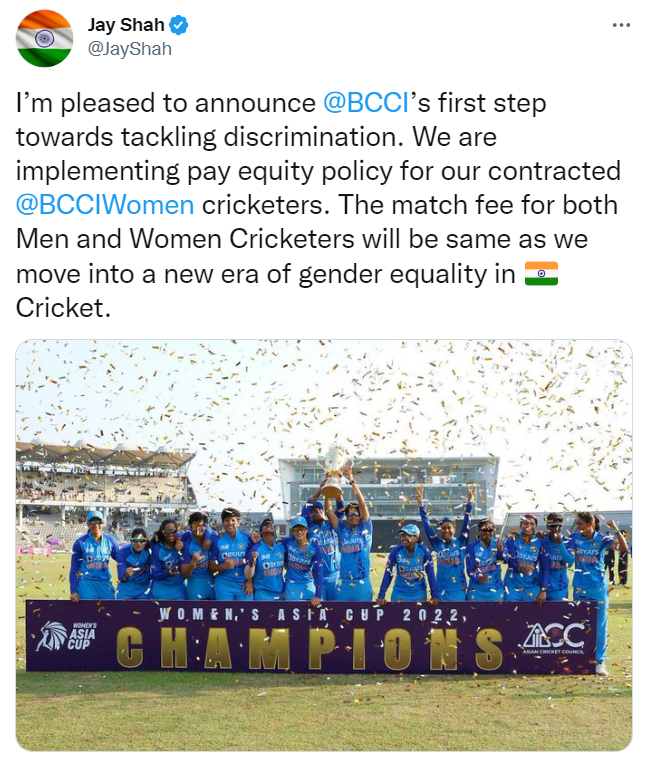
BCCI announces the implementation of pay equity policy for contracted Indian women cricketers. The match fee for both Men and Women Cricketers will be the same.
still cannot wrap my head around the fact that women modify/change their last names after getting married by choice. all that unnecessary paperwork to uphold patriarchal traditions.. ok.
This sort of mutual criticism (hint: AAP visit to Gujarat schools) over matters of concern like education will surely bring change. This is the true spirit of democracy. Mudda padhai he !!