“For a scientific career the most important elements are good teachers and mentors […] not only during early years as student and postdoc, but throughout the entire career of a scientist.”
- medicine laureate Thomas Südhof.
#NobelPrize
Photo: Christopher Michel
Less than 2 weeks since OpenAI started rolling out GPT-4o.
And people have been busy executing god-like tasks.
50 truly mind-boggling examples:
(29th is my favorite)
I am excited to share our preprint: “A torpor-like state in mice (TLS) slows blood epigenetic aging and prolongs healthspan”. Congratulations to @LornaLJayne and big thanks to our collaborators @prof_horvath, @bloodgenes, @VadimGladyshev and others.
https://t.co/vUyAK8OVJH
A true curiosity-driven journey, fulfilling one of my childhood dreams! The tail loss marks a pivotal evolutionary step towards humans and apes. But how did it happen? https://t.co/jTcOAH0Fcs @ItaiYanai@JefBoeke
It was great to be part of this comprehensive study examining striatum function within a learning paradigm, led by my exceptional mentor and friend, Kim. Another significant contribution to the field of striatum and sensory-motor association.
This is new work from the lab. If you are interested in exactly when and how striatum contributes to learning, take a look. More details to follow. Let by the great Kim Reinhold, now on the job market.
The HBC Career Fair will be returning on next Monday November 6th 2023 from 10 AM-5 PM! The career fair will take place in person in the New Research Building at Harvard Medical School.
Thrilled to be starting my journey in the biotech field with the world's first-ever biotech company #Genentech . I eagerly anticipate gaining valuable insights and contributing to the field of biotech innovation.
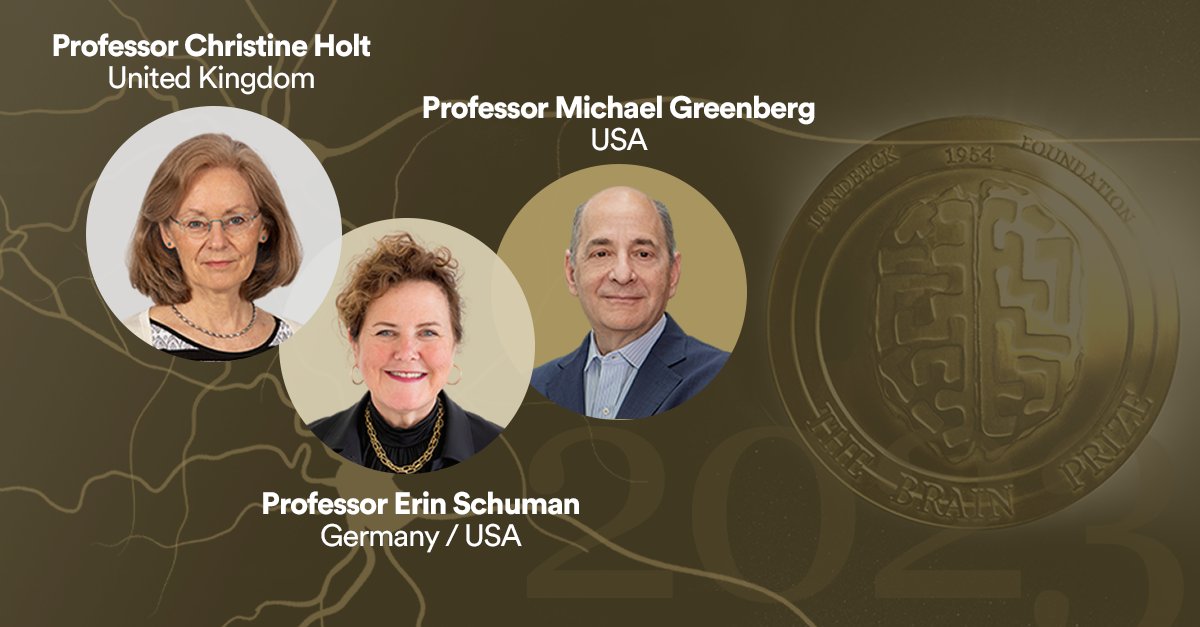
Congratulations to The Brain Prize winners of 2023: Professors Michael Greenberg, Christine Holt and @erin_schuman.
They have done pioneering work on molecular mechanisms of brain development and plasticity
Read: https://t.co/2E2Ij4reP3
#TheBrainPrize#BrainPrize23#neuroscience
We’re excited to extend noninvasive optogenetics beyond the brain to address a nearly 150-year-old question in a new study out today @Nature:
https://t.co/DjQ22EAtWy
Work led by @HsuehBrian, myself, and @KarlDeisseroth, with an amazing team in the D-lab and many others!
Now out: “Humidity sensors that alert mosquitoes to nearby hosts & egg-laying sites” @NeuroCellPress. Led by Willem Laursen w/Gonzalo Budelli, Ruocong Tang, Elaine Chang, Rachel Busby, Shruti Shankar, Rachel Gerber, @ChloeGreppi& Rebecca Albuquerque. https://t.co/p0pZOOmHlj ¼



![NobelPrize's tweet photo. “For a scientific career the most important elements are good teachers and mentors […] not only during early years as student and postdoc, but throughout the entire career of a scientist.”
- medicine laureate Thomas Südhof.
#NobelPrize
Photo: Christopher Michel https://t.co/ZVYENBCE5G](https://pbs.twimg.com/media/G8SY0hIWQAEYWLM.jpg)