@caloriesproper2@hanz333_ I remember trying my granny's yard grown tomatoes as a kid and being astounded at the flavor. Would make tomato sandwiches and be happy with them.
@runliftrunlift A few years back I couldn't run a half mile without feeling gassed. I was picking up bagels the other day and the gal at the counter told me I was an inspiration because she and her family always saw me running. I'm not anywhere near your abilities, but that did feel good.
@ketogods@ScottAppliedSci Again, you're just a mishmash of bizzaro information. I've done keto rigorously for years because I too fell under the sway of the bullshit. But information and data leaked in, and I have a more balanced view now. But you, you've clearly fallen for all the bullshit.
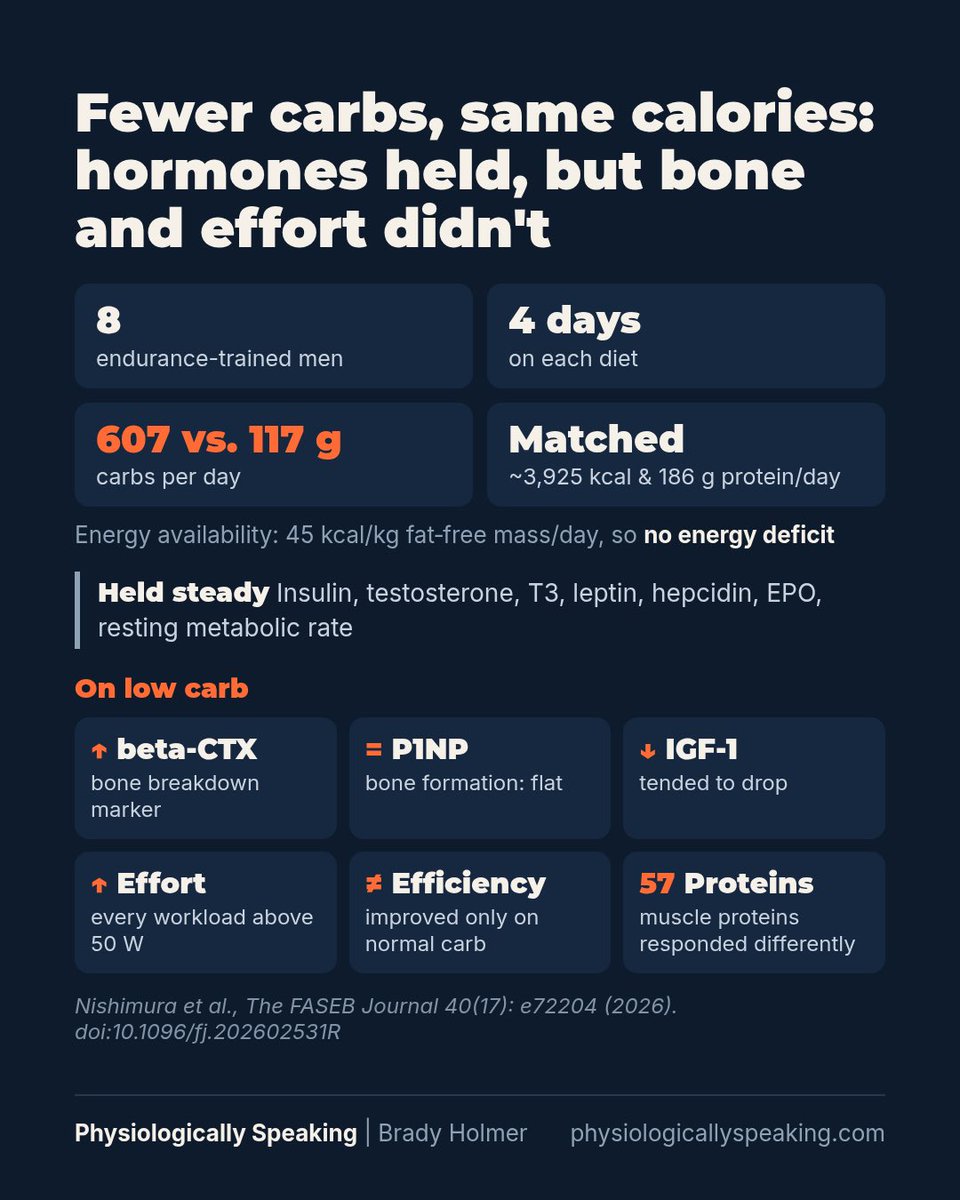
Eating enough calories doesn't mean you're fueled.
Endurance athletes ate the same calories and protein on two diets: 607 vs 117 g carbs/day.
After 4 days of low carb, most hormones held. But a marker of bone breakdown went up, and effort + cycling efficient got worse.
A bunch of dumb people fooled an even larger bunch of even dumber people into believing BEEF TALLOW was some kind of health elixir
One of the biggest crocks of shit in the nutrition space in recent memory
Never forget
@ssoaphie@baselessassert You literally wrote, "Its not intelligence its consciousness and they are not at all on the same level as actual people." It sounds as if you're saying exactly that: their consciousness is the critical component to making them special.
@ssoaphie@baselessassert But you seem to be basing your argument on consciousness. An infant is less conscious than a crow or an orca. Ergo, babies yum yum.