I attended a small seminar yesterday on “U.S.–China relations after the Trump–Xi meeting in Beijing”. It was particularly interesting to hear the observations of Washington and the view that Trump has handed Beijing much of the initiative in the bilateral relationship.
I made three points.
First, Xi will probably focus on preparing for his fourth term at the 21st Party Congress in autumn 2027. That makes the next 12 months more domestic focus driven. He probably does not want to rock the boat externally, and would prefer to maintain the current phase of détente in U.S.–China relations.
By traditional retirement norms, all current Politburo Standing Committee members except Ding Xuexiang, who will be 65, and Xi himself, who has given himself a life term, would be expected to step down.
The whole world will be watching the composition of the next Politburo Standing Committee. How Xi shapes that lineup will be revealing. It will tell us how he is thinking about succession, what his horizon on retirement may be, and where he intends to take China over the next five years.
Second, China’s foreign-policy apparatus has changed fundamentally under Xi. Before Xi, the Ministry of Foreign Affairs was bureaucratic, process-driven, and relatively institutionalized. Under Xi, it has gone through repeated upheavals. The most dramatic example was Qin Gang’s meteoric rise and sudden disappearance as foreign minister.
Since then, foreign policy has become far more personality-driven — shaped above all by Xi himself and Wang Yi. Wang Yi is now 73, making him the oldest senior officials still actively on the job, roughly five years beyond the traditional retirement age. I believe he is likely to leave within the next 12 months, most probably by the 21st Party Congress.
How Wang’s departure and the subsequent appointment will impact Beijing’s foreign policy?
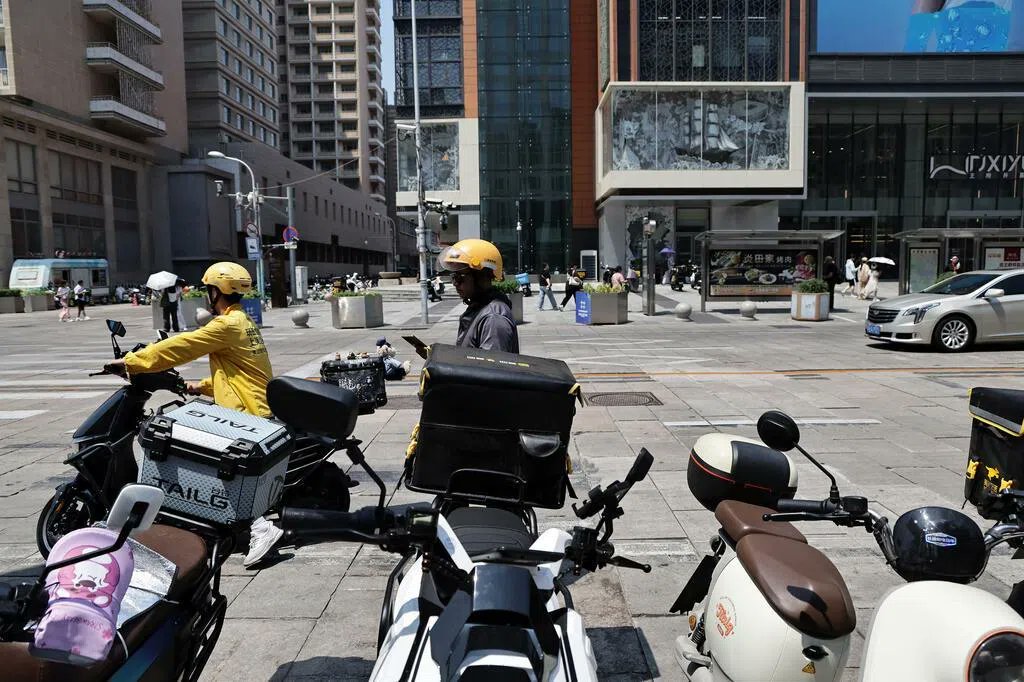
Third, China’s economy is in poor shape, and unemployment is becoming a more serious political problem. About half of China’s urban workforce is now stuck in gig-economy jobs without stable income, benefits, or long-term security. This month, another 12.8 million university graduates are entering the workforce. According to Chinese academic research, roughly half of recent graduates have struggled to find employment over the past two years.
How China’s economy performs over the coming year will have a major impact on how Beijing manages its relationship with Washington — and with the rest of the world.
My sense is that U.S.–China relations have moved from a phase in which Washington had the initiative and was on offense, to a more entrenched posture. Beijing would likely prefer a calmer and more receptive external environment as Xi focuses on domestic affairs and China relies on exports to prop up its economy.
Xi Jinping’s right-hand man, Cai Qi, is now president of the Central Party School, among his other roles.
Xi Jinping and Hu Jintao both served as head of the school before becoming top leader, as did prior generation leaders like Hu Yaobang, but in more recent years it’s been a landing spot for a favored senior retired official (e.g., Chen Xi held onto the post even after he stepped back from running the Organization Department).
This will set off a flurry of speculation about Cai’s future, following recent reports describing him as “China’s second most powerful man.”
But it’s not a clear signal of much other than that Cai continues to be someone Xi relies on and supports.
https://t.co/tvMkt99qel
The EU is gearing up to warn its citizens and companies about a potential trade war with China as the bloc starts weighing new restrictive measures against Beijing https://t.co/UWIKCZBU8x
Exclusive: EU trade chief Maros Sefcovic will meet China’s international trade envoy Li Chenggang in Paris on Thursday, as the sides look to defuse tensions that have pushed them to the brink of a trade war.
https://t.co/z12gkxDfQa
As I’ve warned for years, one of the EU’s biggest strategic mistakes has been its pursuit of “strategic autonomy” — a concept Beijing has interpreted as a strategic opportunity.
If Europe continues trying to go it alone instead of coordinating closely with the US, its autonomy will turn into autism.
Understand Friday's commission debate on China went as expected.
Sefcovic outlined what they see as a direct link between trade with China and European deindustrialisation. Presented a diversification instrument and the need to use safeguards to protect key industries.
🇨🇳🇪🇺Yu Yuantan: China will retaliate if EU presses ahead with 'overcapacity tool'
Yu Yuantan wrote that the European Commission will meet on the 29th to discuss adjustments to its China trade policy. Sources say Beijing could launch anti-discrimination probes and supply-chain security investigations into EU measures. The Ministry of Commerce (MOFCOM) has warned it will firmly retaliate to defend national and corporate interests. If the EU proceeds with a so‑called 'overcapacity tool', China said it would act immediately and deploy comprehensive countermeasures.
(https://t.co/zApBBah4GI)
Chinese EV and battery investments get most of the attention in Europe.
But China is really building a Europe-wide EV supply chain. Look at these new investors in Serbia:
• Minth Group: auto parts supplier focused on exterior trim, lightweight structures, and EV battery housings.
• Shandong Linglong Tyre: major tire manufacturer for passenger cars, trucks, and specialty vehicles.
• Changzhou Xingyu Automotive Lighting Systems: automotive lighting supplier producing headlights, LEDs, and smart lighting systems.
• Yusei Holdings: precision manufacturing company focused on automotive plastic molds, lighting components, and other vehicle parts.
• Shanghai AgiBot Innovation Technology: humanoid robotics and embodied AI startup.
Weichai Power: industrial engines, truck powertrains, fuel cells, and heavy equipment systems.
• Zhejiang EV-Tech: EV technology and component manufacturer.
• Jiangsu Reliance Energy: lithium battery company focused on large cylindrical battery cells for power tools, mobility devices, and energy storage.
• China Construction Fourth Engineering Division: state-owned infrastructure and construction contractor.
New: On the table at Friday's Commission China debate:
- diversification instrument
- broader use of safeguard measures (tariffs & quotas)
- broad use of FSR in a sector-focused way to combat market distortions by subsidised Chinese firms
My report
https://t.co/seQzlvAnaq
Beijing’s invisible digital net is closing around its citizens, turning the entire country into an inescapable, AI-driven open-air prison. A chilling investigation by the Financial Times reveals that China is aggressively weaponizing advanced artificial intelligence to execute the largest, most terrifying upgrade to its global surveillance network in a decade. The days of passive monitoring are over; the regime is shifting to automated "predictive policing" designed to analyze human behavior in real time, decipher intent, and preemptively crush dissent before a single word is spoken.
The horrifying scale of this upgrade leaves absolutely nowhere to hide. Tech giants like Hikvision and Huawei are flooding the country with next-generation cameras powered by computer vision and large language models running on highly advanced semiconductor chips. Police no longer have to manually scrub through hours of footage. Instead, an officer can simply text the system a prompt like "woman in red hat," and the AI immediately tracks the target across a web of hundreds of millions of cameras. The system is trained to automatically flag "abnormal" behavior, scanning everything from crowd formations to individuals loitering on bridges.
This is a dystopian nightmare engineered for total societal control. By integrating large language models directly into the world’s largest surveillance grid, the Chinese Communist Party has built a system that actively guesses what citizens are thinking and blocks their freedom before they can even act. Forcing an entire population to live under the unblinking, predictive gaze of a digital dictator proves that Beijing is no longer just tracking its people; it is engineering a future of absolute, automated submission.
#UnveiledChina #AISurveillance #DystopianTech #PredictivePolicing #Hikvision #Huawei #TotalControl #HumanRights #DigitalPrison
https://t.co/UYuqOoi0p3
Several stories today showing how fear of retaliation can paralyse EU planning on China
1. Germany & Spain lead opposition to Brussels plans to ban Huawei & ZTE from telecoms networks. They want to keep state-level control amid concerns that bans risk retaliation from Beijing
South Korea has unveiled a road map to launch its first domestically built nuclear submarine in the mid-2030s, while pledging to fulfill its nuclear nonproliferation obligations.
https://t.co/61qHqiFzEO