@disparutoo It's could be an animated show based on the comics, it could be a live action follow on from the movie with de aged/voicover wash flashbacks also🤷♂️. Whatever it is I'm hyped
I've been reflecting on the Starship program the last week and one thing has become obvious to me. SpaceX is enjoying the freedom to try and fail in a way they couldn't with Falcon 9.
Doing anything "experimental" on the Falcon 9 was risky because it was SpaceX's only source of income, it was their lifeline, their work horse. Making any tweaks to the Falcon 9 to try and land a booster back in the day was a delicate balance. Don't push the envelope too hard because it could lead to a failure of the primary mission (which did happen twice).
When SpaceX first landed a booster almost 10 years ago, they were fairly slow to refly and those first non "block 5" boosters were only capable of a couple of re-flights. This gave pause to some in the industry / community fearing all this reusability hype wasn't going to pan out.
But SpaceX learned from every landing attempt to develop their Block 5 Falcon 9 which has now gone on to have a single booster fly 30 missions. Absolutely unheard of.
Now imagine if SpaceX could've had the freedom to not worry about flying customer payloads to get data during Falcon 9's reusability campaign. Imagine if they could've tested engine out procedures or push booster reentry profiles, or try hot staging, or what have you.
This is the phase that SpaceX is in now during the Starship program. I know we hear the talking point of "today's payload is data" and it could seem like a gimmick or excuse even, but that's a freedom almost no rocket program has had before. To know you can just try things out, fly real life hardware, without bankrupting the company, is the ultimate development platform.
To be able to push engine out capabilities, remove heat shield tiles on purpose, test reentry profiles, have failures, have set backs, discover flaws, learn operations.
When people say things like "Starship hasn't even reached orbit yet" are completely missing the point. They're not just trying to reach orbit, they're trying to do something that's never been done, build a rapidly reusable rocket. A rocket that can land and refly. This has never been done before and honestly it's silly to think you COULD do something like this without trying some extreme things. That's what we're seeing today, and that's extremely exciting to me.
I can't wait to see version 3 of Starship fly because they've learned so many lessons already and they have a factory capable of making rockets at scale, and we just get to sit back and watch the cook. It's an exciting time to be alive.
“NASA has this phrase that they like: ‘Failure is not an option.’ But failure has to be an option in art and in exploration, because it’s a leap of faith. And no important endeavor that required innovation was done without risk. You have to be willing to take those risks. So, that’s the thought I would leave you with, is that in whatever you’re doing, failure is an option, but fear is not.”
-James Cameron
Keep chasing the stars @SpaceX@elonmusk
ALTITUDE MATTERS!
For Starship 7 Launch the FAA issued a NOTAM (Notice to Airmen) that specified the closed airspace area around the launch, and a broader warning area under Starship’s planned path. Starship 7’s rapid unscheduled disassembly occurred over the NOTAM’d WARNING area.
Why was this airspace not CLOSED to begin with?
EXPLOSION IN SPACE
Because SpaceX and the FAA calculate what Starship’s ALTITUDE will be along its path. Starship was in already in SPACE (~90 miles above the earth) when it exploded.
ROCKETS TRAVEL IN SPACE & AIRLINERS FLY IN THE ATMOSPHERE
Most airliners have a max service ceiling of 41,000 feet or ~7 miles above the earth. The explosion, while spectacular, posed no immediate danger to planes far, far below. It occurred more than 83 miles above them!
PLAN ACTIVATED
What happens next? SpaceX notifies the FAA of Starship 7´s rapid unscheduled disassembly, the FAA activates the warning area, & ATC follows normal procedures and vectors planes out of or around the Warning zone airspace—long before any debris could possibly fall to the altitude of a plane below. These calculations are done, and contingency plans made, in advance. The FAA doesn’t HOPE for the safety of the airliners, it KNOWS they will be safe, by DESIGN.
Anytime some airspace is restricted—TFRs can be issued for the President’s movement, the SuperBowl, Military airspace—it can create delays. Since this was NOTAM’d prior to the launch, airlines can choose to flight plan around the warning area, or carry extra contingency fuel to hold, or plan to divert if required. From a pilot’s perspective, this is the same type of contingency planning we do for weather, like thunderstorms. Today a few planes rerouted, a few held, a few experienced ground stops. To put it in context, a few DOZEN planes were effected today whereas the average Houston Thunderstorm, or a Presidential fundraiser typically create HUNDREDS of delays…
STUNNING VIDEOS!
The videos are attention getting and stunning. This video from the flight deck is my favorite! Lucky pilots, I’m so envious. But some are misinterpreting the videos (because people aren’t used to judging altitudes of objects, and to them it looks close). These space debris are MILES further away than they appear.
The FAA did its job. SpaceX followed protocol. SpaceX already identified the mechanical issue, and potential fix, allowing the cadence of launches to stay on track. @spacex@elonmusk
(Note: My apologies in advance for providing inconvenient facts that contradict false outrage).
Who is Jared Isaacman? Why is his nomination as NASA administrator being welcomed in most quarters of the spaceflight community? And how might he shake up the space agency?
https://t.co/J64y2o7nP3
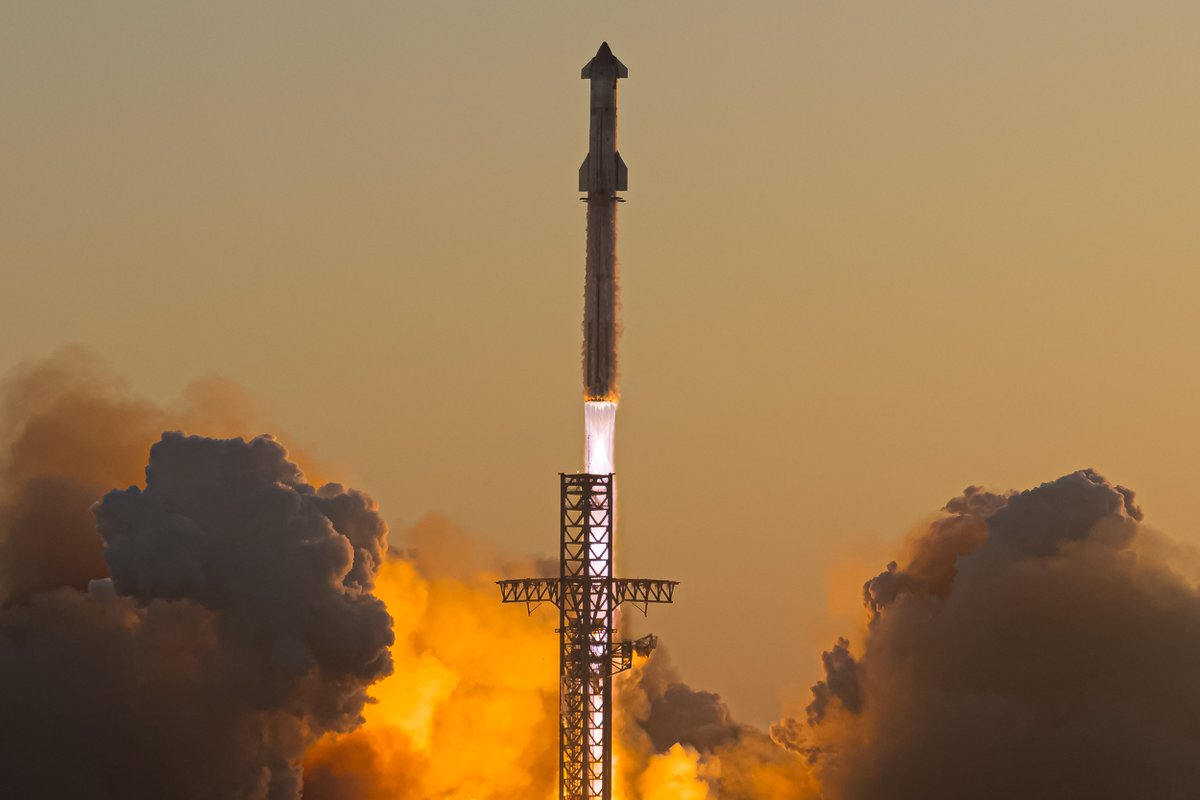
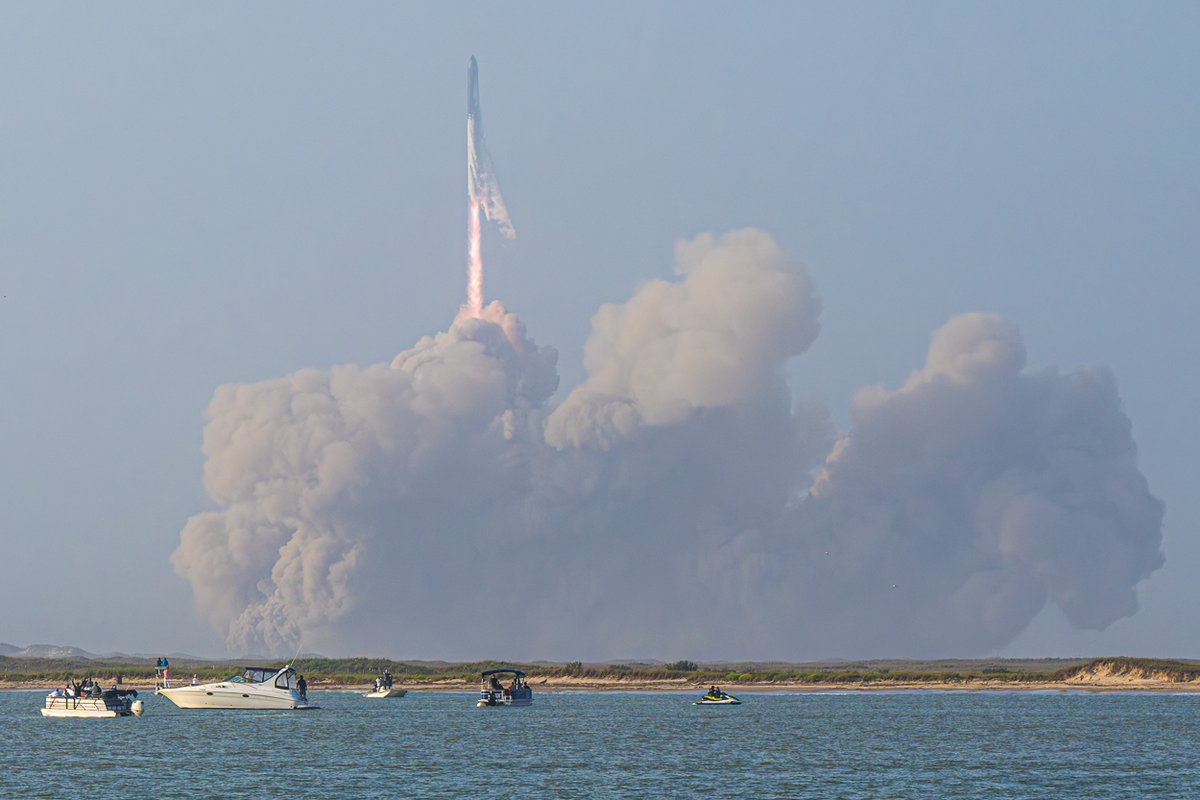
See all of my photos + order prints from all six full-scale flight tests of the Starship program → https://t.co/B1gEEJCSdY
Print sales help me continue to cover the most exciting moments in spaceflight full-time - thank you!
Starship’s fifth flight test was a seminal moment in iterating towards a fully and rapidly reusable launch system.
Next up: the sixth flight test of Starship is targeted to launch as early as Monday, November 18 → https://t.co/oIFc3u9laE
Starship's fully and rapidly reusable design will exponentially increase humanity’s ability to access and utilize outer space. To unlock its full potential, and do it rapidly enough to meet commitments to national priorities like NASA’s Artemis program, Starships need to fly → https://t.co/TSBCzaflYP
Hands down the most impressive thing I've ever seen.
The way Ship 29 re-entering the Earth's atmosphere hung in there all the way to relighting its engines and splashed down in 1 piece.
Credit @SpaceX
✂️ Me
🕵️ @CSI_Starbase
Rocket science can be extremely intimidating, but you don’t need to be a rocket scientist to be excited.
Everyday Astronaut - Bringing space down to earth for everyday people
See all my photos + order prints of the first three flights of Starship:
Flight 1: https://t.co/2P1P30vQs3
Flight 2: https://t.co/9uVqiEjIFd
Flight 3: https://t.co/s9MzRhUUq3