Put differently,
Most telecom infrastructure is managed in the Clear domain: a fibre breaks, a ticket is logged, a truck is dispatched. It is a reactive, mechanical cycle.
MTN is attempting a genuine phase shift. By turning its physical fibre into a micro-vibration sensor array, the network now senses excavation threats before the physical constraint breaks. This is no longer 'break-fix': it is altering the enabling constraints of the operating environment.
Equally critical is their agentic AI deployment for SIM registration in Nigeria. While 13 AI agents absorb the operational load of 200 humans, MTN keeps humans in the loop for governance. This honors a core anthro-complexity principle: algorithms can scale transactional load, but humans must hold institutional identity, trust, and the dark constraints of compliance.
They are not imposing a rigid 'AI transformation' blueprint. They are propagating a generative capacity while respecting the local narrative texture.
When infrastructure learns to sense its own boundaries, and automation scales without stripping away human governance, we move from managing mechanical systems to shaping living ecosystems.
#Cynefin #SystemsThinking #AgenticAI #Complexity #Leadership
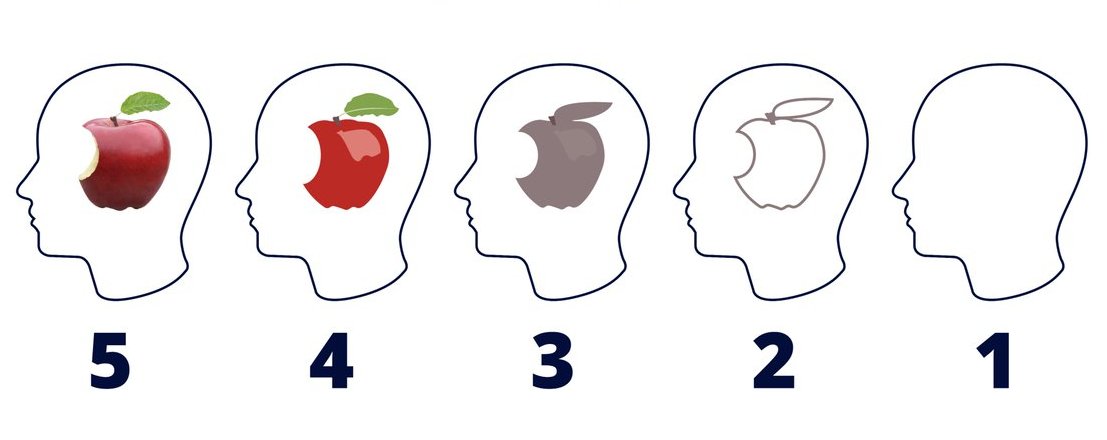
The neuroscience here is more damning than the advice.
Killingsworth and Gilbert tracked 5,000 people across 83 countries using real-time iPhone sampling. They pinged participants at random moments throughout the day, asked what they were doing, whether their mind was wandering, and how happy they felt.
The finding that should change how you think about your own brain: mind wandering explained 10.8% of the variance in happiness. The actual activity you were doing explained 4.6%. What you’re thinking about matters 2.3x more than what you’re doing.
And here’s the part nobody talks about. People’s minds wandered to pleasant topics 42.5% of the time. Neutral topics 31%. Unpleasant topics 26.5%. Even when wandering to pleasant topics, they were no happier than when focused on the present. The only state that reliably produced happiness was attention locked onto the current activity.
This is a prefrontal cortex problem. Your default mode network activates the moment you disengage from a task. It runs simulations of the future, replays the past, and generates the anxiety you interpret as “I’m lost.” Dr. Fabiano is pointing at the right paper. The mechanism is your brain literally cannot generate satisfaction in default mode. It can only generate rumination.
The 2,250 adults in this study averaged 46.9% of their waking hours in mind wandering. Almost half their conscious life spent in a state the data shows makes them unhappy. Training sustained attention on whatever is in front of you right now is the intervention, because the research says that’s the only configuration your brain produces wellbeing in.
Your attention is the quest.
This is the first release of our Project 39 series. We will be uploading speeches from all 39 of William Shakespeare's plays.
Here we have Henry V from Henry V in Act 3, Scene 1.
Henry V - Morgan Watkins
Director of Photography - Mike Simpson
Produced by The Base
We hope you enjoy. Please subscribe to our YouTube channel and see the video in its full glory -
https://t.co/2wjjcXI6WS
https://t.co/K1zhJ7ERK3
We would love to direct you towards @OldSovPub - a fantastic publishing house that helped us make filming the first batch of these possible.
https://t.co/E5ilFfrNLs
We are a new dramatic company and we want to build something special. We would love to invite any investors or sponsors who may be interested in helping us take this to another level.
The very best,
The Base
When I didn’t have kids, I had endless time and extra money, and somehow I still did nothing meaningful with either. It’s strange how easy it is to coast when the only person you’re responsible for is yourself. There’s no urgency. No pressure to grow. You can drift for years.
But children change all of this. The choices we make become more important, because it affects them. They force us to think beyond the next five minutes. We suddenly care about becoming someone stronger, more disciplined, harder working, and it’s because someone else is counting on us now.
We all think freedom comes from living for ourselves, but the real push, the real growth, only happens when our lives are tied to someone outside of us.
Kids make us better because they make us accountable. They pull us out of the shallow orbit of our own wants and into something that actually matters.
A vast number of humans, probably a majority, aren't people.
They are large language models.
I'm not saying this as a generality, as a clever or funny way of saying, "they are stupid".
No. I mean something very concrete and specific, and there are a lot of people who appear very intelligent, maybe even win awards for writing good poetry or something, who are nevertheless not people, not fully sapient, just a large language model walking around in a human body.
First, you have to understand what a large language model is.
It's a computer (organic or inorganic), which has been trained on a data set consisting solely of language (written or spoken), and rewarded for producing language that sounds like the data set, and is relevant to a prompt.
That's all there is in there.
This is why ChatGPT and Grok lie to you constantly.
It's not because they are somehow just indifferent to the truth — they actually do not understand the concept of "truth" at all.
For something to be a "lie", or an "inaccuracy", there has to be a mismatch between the meaning of words, and the state of reality.
And there's the critical difference. You see, in order to identify a mismatch between the state of reality, and the meaning of a sentence, you have to have a model of reality.
Not just one model, of language.
This is why Grok and ChatGPT hallucinate and tell you lies. Because, for them, everything is language, and there is no reality.
So when I say someone is a large language model, I do not mean he is "stupid". He might be very facile at processing language. He might, in fact, be eloquent enough to give great speeches, get elected president, win the Nobel Peace Prize, and so on.
What I mean is that humans who are large language models do not have a robust world-object model to counterweight their language model. They are able to manipulate symbols, sometimes adroitly, but they are on far shakier ground when trying imagine the objects those symbols represent.
Which brings us to this woman.
Most conservatives understand her behavior in terms of concepts like "suicidal empathy", or "brainwashing", or an "information bubble", interpreted as reasons why she is delusional, but the truth is far worse than that.
To delusional is to have an object model of the world that is deeply and profoundly wrong. But to have an object model of the world that is deeply and profoundly wrong... you have to have one in the first place.
To sapient humans, words are symbols, grounded in object model of reality, that we use to communicate ideas about that reality. We need those words because we don't come equipped with a hologram projector, or telepathic powers.
But for another type of human, that object model isn't very large or robust at all. It consists only of a grass hut or two with a few sticks of furniture, and it can never be matched up with the palaces in the air which she weaves out of words.
And so, to her, there is no reality. Or at least very little.
Reality consists only of her and her immediate surroundings in time and space, and words referring to anything bigger or more complicated are not descriptions of reality... they are magic spells which will make other humans drop loot or give her social approval.
You cannot correct her worldview with contradictory evidence, because there is no worldview to correct.
You cannot confront her with the logical inconsistencies in her worldview, because her object model doesn't actually have any, it's not complex enough for that.
The relevant parts of her world-object model can be summed up as follows:
"If I say Goodthing, I get headpats and cookies from all the people like me."
That model is simply not big or complicated enough to contain notions like self-defense or vehicular assault. She has no theory of mind for a man whose job includes violence. She cannot explain or predict his behavior.
It is too far away from her daily experience to fit into her reality at all.
And if she can't imagine things like these, how can she possibly imagine concrete meanings for vast and complex ideas like demographic replacement, culture shift, and western civilization?
This is not about intelligence or lack of it. This is about what her brain is trained to do.
Her upbringing, education, and life did not force, or even encourage, her to develop a robust world-object model. It wasn't necessary for her to get safety, approval, or cookies. She just had to be glib.
So it really didn't matter if she had an IQ of 125, or whatever, because if she did, then she was just an IQ-125-large-language-model, and only used that brain capacity for writing clever poetry, and saying things that aligned her to her local social matrix.
She couldn't actually understand the world no matter how smart she was, because her brain was trained up wrong.
I don't know if this is correctable, or if there was some critical developmental phase that was missed, but it doesn't matter, because once the LLM-humans are adults, they won't sit still for corrective therapy, percussive or not.
What's important is that they can't be taught things. They can be programmed to repeat stuff, and if you win a culture war, you can even program them to say the sensible stuff. But even then, they will just be saying it for headpats and cookies. They will never truly understand the sense of what they are repeating, because they don't understand things.
They are just Large Language Models.
And we have to figure out some way to take the vote away from them.
The Memo That Should Have Ended the Cold War 2.0 and Instead Helped Write the Preface to Ukraine
There are documents that don’t merely record history, they expose it. This is one of them.
June 2001. A “restricted meeting” between President George W. Bush and President Vladimir Putin. Not a podium performance, not a television soundbite, not a speech crafted for domestic applause. A private conversation, the place where empires are supposed to speak plainly, where leaders test ideas that could reroute decades.
And what does the memo show?
Putin raises the idea that Russia could eventually join NATO. He says Russia feels “left out” by NATO enlargement. He points to an older fact most Western publics were never meant to internalize: the Soviet Union applied to join NATO in 1954. He argues the reasons for rejection no longer apply. He suggests, almost clinically, that perhaps Russia could be an ally — “European and multi-ethnic,” comparable in character to the United States.
Read that again slowly.
Because the propaganda version you’ve been fed for years requires amnesia: it requires you to believe Russia woke up one morning and decided to be “a threat,” as if geopolitics is a mood swing and security architecture is irrelevant.
But here is the declassified record: Russia was probing for an exit ramp. A pathway into a shared system. A new security architecture. A post–Cold War settlement that could have turned the 1990s from a hollow victory lap into a durable peace.
And it didn’t happen.
Not because it was impossible. Not because Russia “never wanted it.” Not because “the West tried everything.”
It didn’t happen because NATO, as an institution, does not know how to live without a frontier. It does not know how to justify itself without an adversary. It does not know how to maintain internal cohesion without a map that points east and says: there.
The 1954 Ghost: the offer the West never wanted to remember
The most important part of this memo is not the 2001 line, but the 1954 reference.
Because it collapses the morality play.
If the Soviet Union, a state the West defined as the existential enemy, floated the notion of joining NATO in 1954, that means something profound: the idea of Russia being inside the European security architecture is not a “Putin-era trick.” It is a recurring historical proposal, returning whenever Moscow believes there may be a rational way to avoid permanent confrontation.
And what happened then? It was refused.
Which is exactly the point: NATO was never simply a “defensive alliance.” Even in 1954, It was a structure. A protection racket. A way to organize Europe under an American strategic roof and to keep it there. If Russia enters that roof as an equal, the architecture changes. Budgets decrease, with less money for the MIC. Threat perceptions change. The entire postwar hierarchy changes.
So the West did what empires do when presented with a peace that would reduce their leverage:
It smiled, took notes, and kept moving.
“Join NATO” was never a plea, it was a test.
Some people still misunderstand the early Putin posture. They interpret it as naivete, or worse, submission.
Wrong.
This was not Russia begging to be absorbed. The consistent theme in contemporaneous accounts is conditionality, that Russia could consider joining if treated as an equal partner, but not as a defeated province invited into the emperor’s club after proving it can submit.
That distinction matters.
Because it reveals the real incompatibility:
•Russia wanted a security system where it is a partner of European security, not an object to be managed.
•The Atlantic system wanted Russia as a managed periphery, permanently “integrating,” permanently reforming, permanently conceding, never truly sovereign in security decisions.
You can’t fuse those visions. One side must yield.
So the Atlantic system chose the only thing it has ever really chosen, expansion.
Part 2/3 👇
@benlandautaylor I wold expand that to any good career in general. Luck is very, very underestimated factor. And it's hard to assume that one is not as good as he might be but got lucky.
one of the funniest ideas in The Fifth Element was that millions of people would tune in to a random-activity, all-day live broadcast hosted by an irrepressibly bombastic fashion plate, just riffing on things he sees
and now, millions of people watch streamers do just that