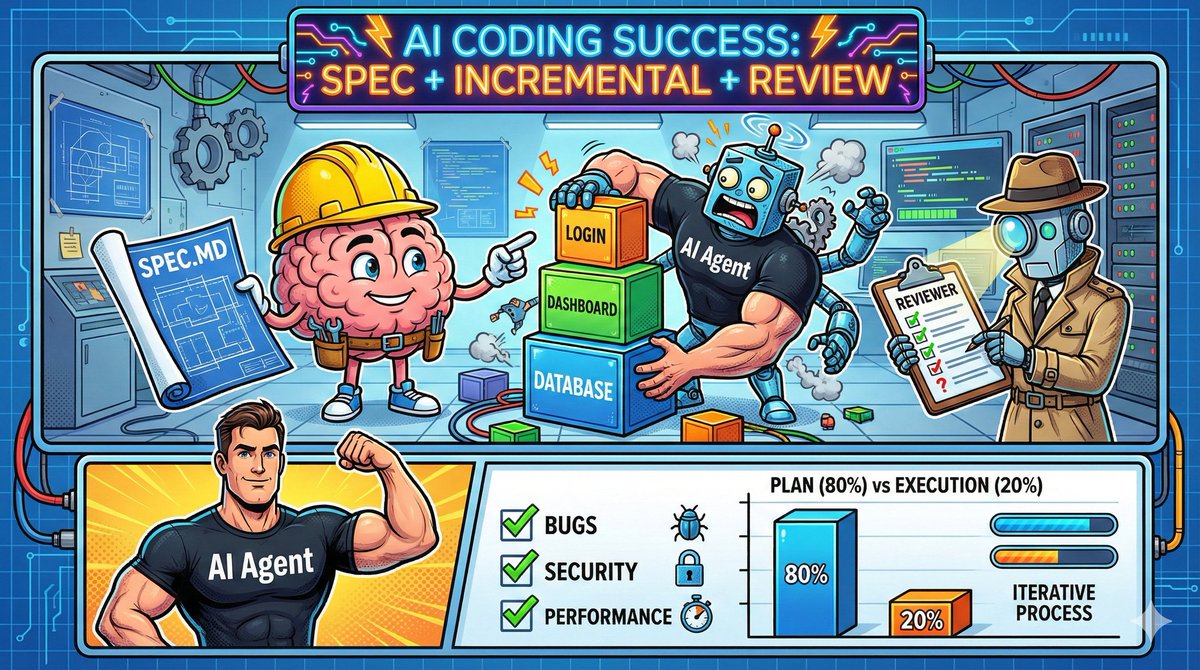
Vibe coding can look fast and cool,but it often breaks.
I’ve seen sites full of bugs and apps that crash or never finish.
Serious products need real coding and full-stack thinking: frontend, backend, databases, servers, hardware, scalability.
There are no vibes without foundation
Ever notice how an LLM can explain a complex financial concept like Black-Scholes perfectly, but then fails when you ask it to apply a simple set of rules to a list of stocks?
It's not a coincidence. And the reason why is a huge red flag for finance.
I always thought these failures were about bad data or a knowledge gap. Like the AI just didn't "know" enough about that specific stock or metric.
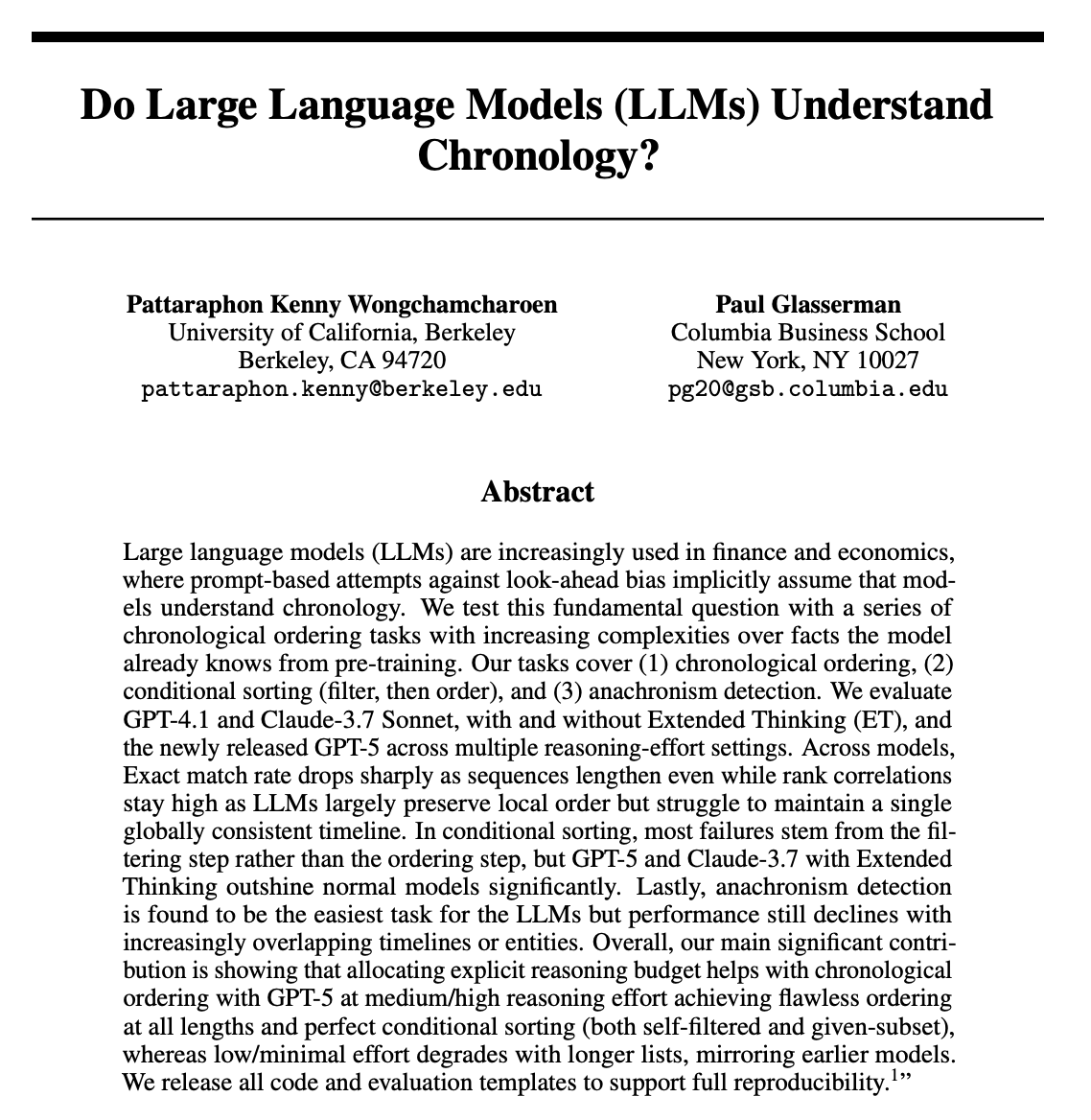
But a recent paper on how LLMs handle chronology suggests it's a much deeper problem. A process problem.
The researchers gave models like GPT-4 a simple, non-finance task: sort a shuffled list of US presidents.
On short lists, it was fine.
On long lists, it fell apart. It would get the local order right (e.g., Reagan before Bush Sr.) but the global timeline was a total mess. It even started making up presidents.
This is where it gets scary for anyone using LLMs for finance.
The researchers found the AI fails because it's trying to "think" and "talk" at the same time. It streams the answer as it figures it out. For complex tasks, its "working memory" gets overloaded and the process corrupts.
It's like a junior analyst trying to calculate portfolio returns while simultaneously explaining their methodology out loud, without pausing. They're bound to drop a number or forget a step.
This is exactly what happens inside the LLM.
Now, watch what happens when you apply this to finance.
Imagine you give an LLM a simple backtesting instruction:
"Go through this 10-year price history. Buy when the 50-day moving average crosses above the 200-day, BUT only if RSI is below 70 and it's not a Friday."
A standard LLM might start correctly. For the first few years of data, it follows all the rules.
But as it gets deeper into the 10-year history, its process starts to degrade. It might "forget" the "RSI < 70" rule, or the "not a Friday" constraint.
It won't tell you it forgot. The output will still look confident.
This is a silent, catastrophic failure. The backtest results would be completely invalid, but you'd have no obvious error message. You'd just be acting on garbage data.
(I'm still wrapping my head around how many people might be doing this right now.)
But wait—here's where it gets strange. And hopeful.
The researchers ran the exact same president-sorting test on newer models (GPT-5, Claude 3.7) with their "reasoning modes" enabled.
The result: 100% accuracy. Every time. The errors vanished.
These new modes give the AI a private "scratchpad." It can think the whole problem through—check all the conditions, build the full sequence—before it writes the final answer.
It separates deliberation from output. This is a game-changer for reliability.
So, the next time you see an AI-generated financial analysis, don't just check the facts. Check the logic.
Did it apply its own rules consistently from start to finish? Or did a rule get silently dropped halfway through? You'll start seeing this pattern everywhere.
This reframes the entire risk of using AI in finance.
The real danger isn't just a "hallucinated" fact. It's a "corrupted process."
Stop using standard LLMs to backtest strategies or perform any multi-step financial analysis. The risk of a silent process failure is just too high.
The whole thing reduces to this: an LLM's financial reasoning ability isn't just about its knowledge, it's about its cognitive workflow.
Forgetting this is how you build models that are secretly broken. And in finance, secretly broken is how you lose a lot of money.
(1/3) Google AI Pro and Ultra users now receive priority access, featuring our highest, most generous rate limits with quotas that refresh every five hours.
Starting today, memory in ChatGPT can now reference all of your past chats to provide more personalized responses, drawing on your preferences and interests to make it even more helpful for writing, getting advice, learning, and beyond.
Which Protein Powder Is Best? Understanding Biological Value & Absorption
Are all protein powders the same? In this video, we break down the science behind protein quality, absorption, and how to choose the best one for your goals.
💪🔥
#gym#protein