We have a PhD position opening for Australian domestic students interested to work at the intersection of immunology, data science, and paediatrics! Check out the full description here!
https://t.co/1JST9pY21t @YUmmunology
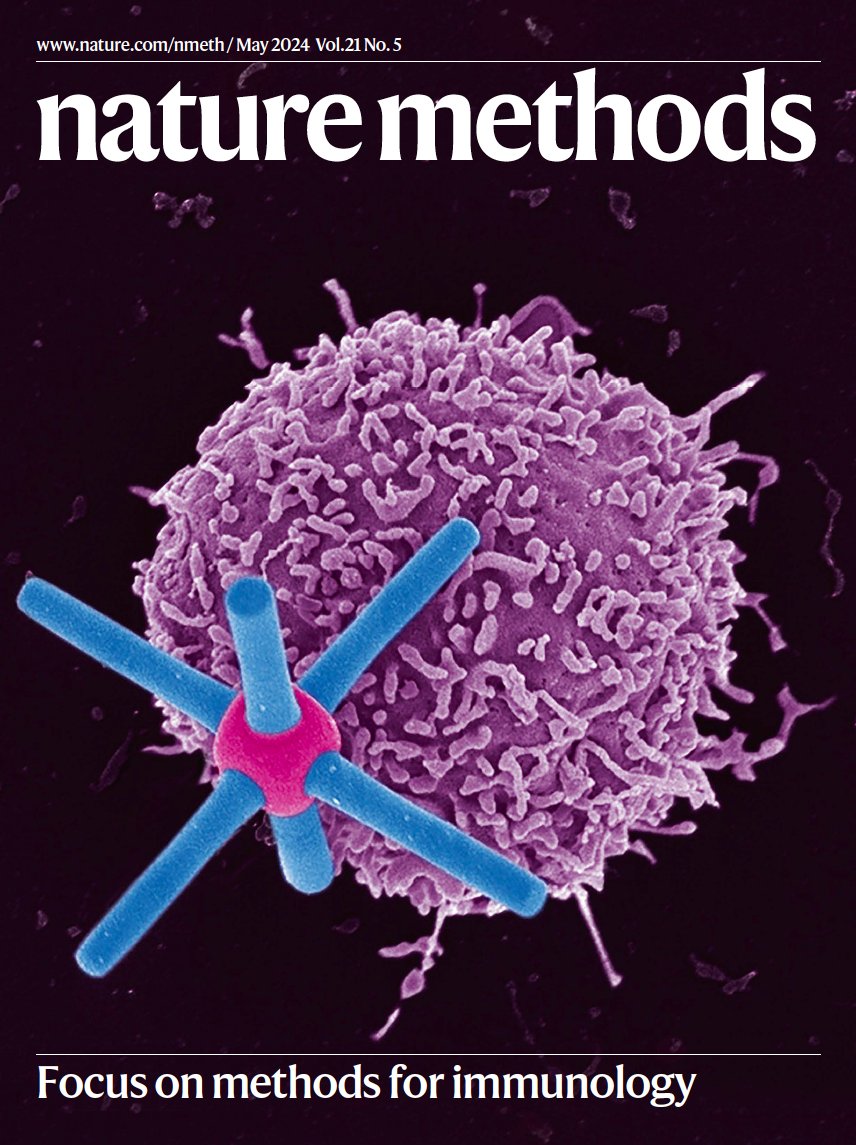
A big shout-out to our resident editor-immunologist, @madhuramukho, for curating this wonderful Focus on methods for immunology! We hope you enjoy reading our May issue!
https://t.co/Hrs4cCcL1F
In our May Editorial we discuss how recent methods development in immunology has revolutionized investigations of immune related mechanisms and highlight some recent papers published in Nature Methods.
https://t.co/booKj13hdC
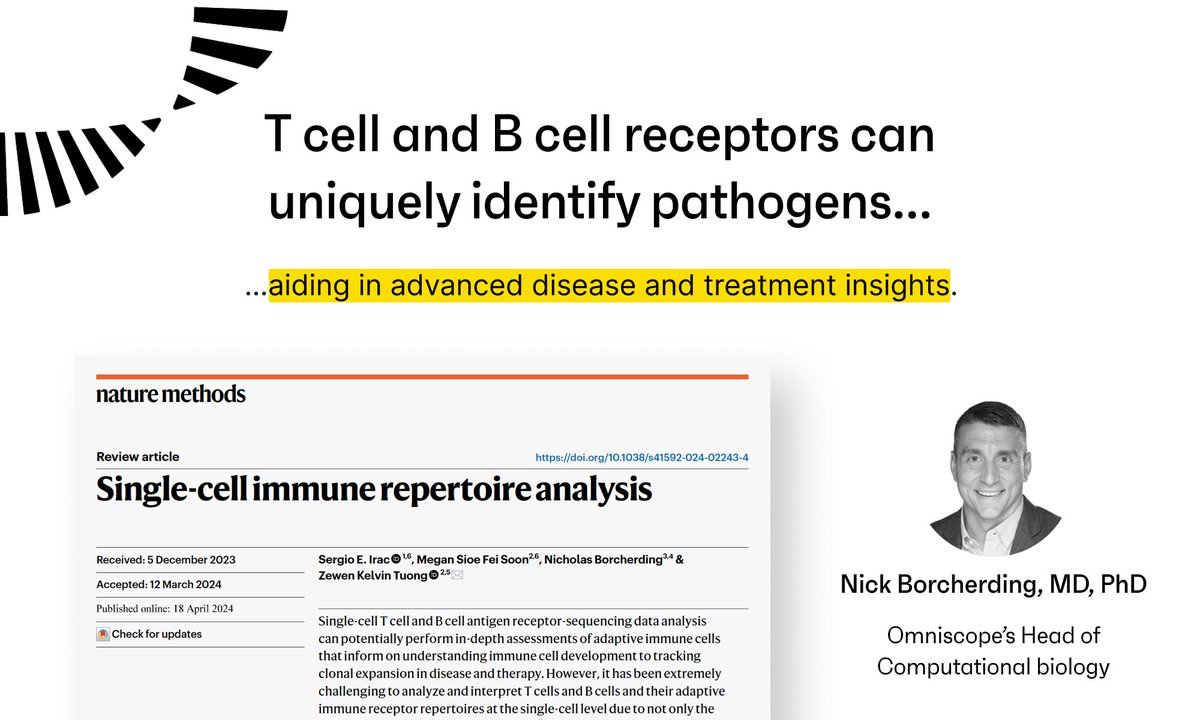
A Review by @kelvintuong, @Sergioerdal, @MeganSoonSF and @theHumanBorch delves into the different computational methods for single-cell T cell and B cell antigen receptor-sequencing data analyses.
https://t.co/4XSXmHloEo
Discover the profound insights of deep, single-cell TCR and BCR sequencing in the latest publication by @theHumanBorch.
Our technology offers insights into adaptive immune receptors, allowing discovery and interrogation of immune diversity.
🗞️ https://t.co/iqjLTFvsYq
I'm thrilled to announce that our review on "Single-cell Immune Repertoire Analysis" is now published in @naturemethods
! 🎉 Couldn't have done it without the amazing help from @KelvinTuong ,@MeganSoonSF , and @theHumanBorch . A huge thank you to everyone involved!
Apple lost $1 billion in 1997.
Steve Jobs returned to the company and spoke to developers at WWDC.
When an audience member insulted him, he responded:
“One of the hardest things when you’re trying to effect change is that people like this gentleman are right.”
Excited and relieved to share with you our microglia-sufficient brain organoid work just online @Nature https://t.co/cCVFTUqq4h
IPSC-derived microglia reprogram them metabolically! And make them mature faster!
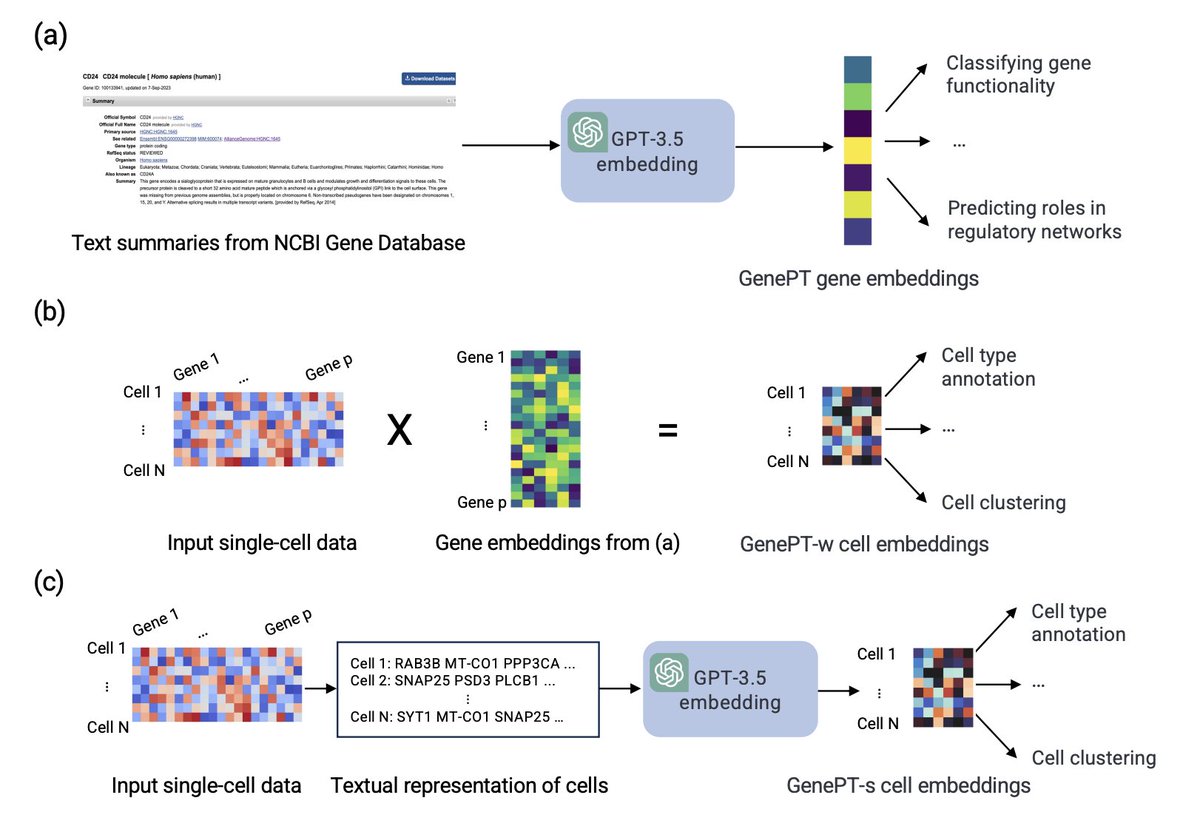
📢Introducing GenePT, our new #gene + #singlecell#foundationmodel built from #ChatGPT. It's simple yet surprisingly effective!
1. we use text summary + #ChatGPT to generate embedding for each gene
2. cell embedding = avg of gene vectors weighted by expression
GenePT can outperform sc foundation models like Geneformer (which are very cool works!) on some applications: gene prediction, cell classification, batch correction, etc. It's fast + easy to use. Great job by @yc_yc_yc_yc!
Paper https://t.co/Oh6KgVLNwB
Code https://t.co/22cmMHyyij
Recent sc foundation models learn representations from correlations in millions of scRNA-seq profiles. Here we find that an alt source of information, text summary, is also effective. These approaches are very complementary and we can see further boost in combining them.
@mo_lotfollahi Good, short study, as always it is astonishingly hard to beat simple (often linear) models… My argument would be that we need tougher problems (and better benchmarks). At least cross tissue cell type prediction is: https://t.co/GpleyWB9md
veloVI enhances RNA velocity analysis with uncertainty quantification and extensibility by deep generative modeling of gene-specific transcriptional dynamics. @adamgayoso @PhilippWeiler7 @fabian_theis@YosefLab
OA paper: https://t.co/rf8K60Xi8o