Seshat: Global History Databank compiles information on the social and political organization of human societies, and how civilizations have evolved over time.
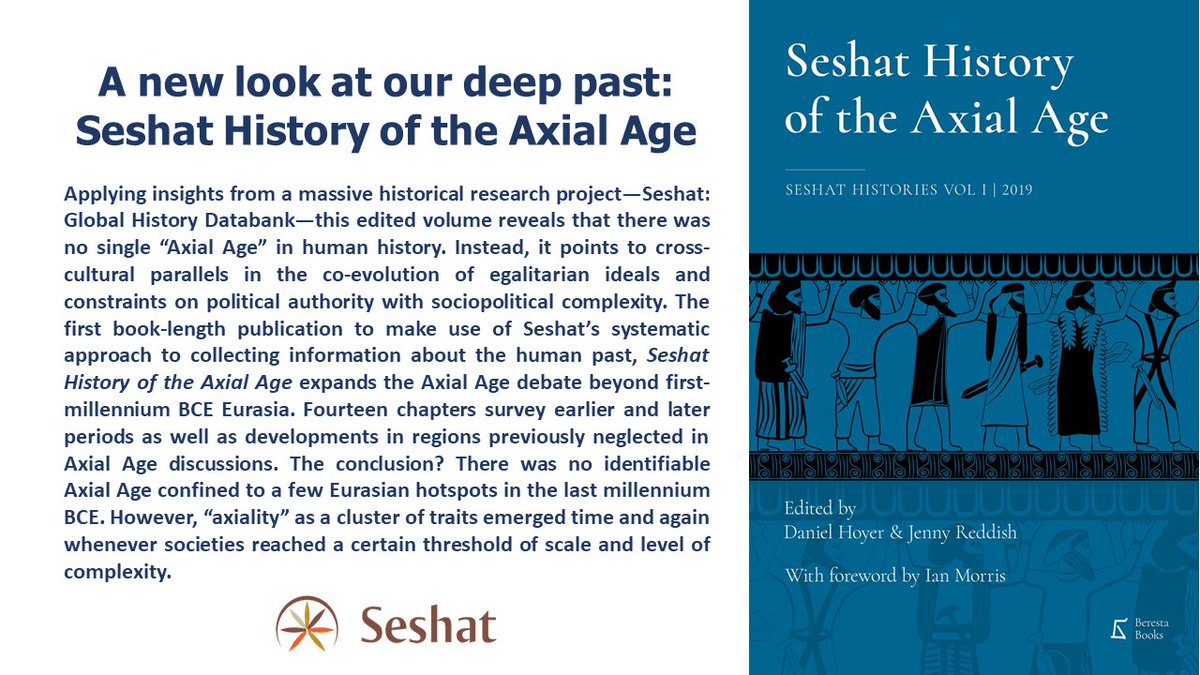
Seshat History of the Axial Age is out!
Fairness and equity, universal rights, freedoms, representative, democratic governance, the notion that no one is above the law—these are ideas many of us cherish in the modern world. But where did they come from?
https://t.co/baRE4G6a5m
Our 🌐 world 🌐 is becoming ever more interconnected 🤝 and interdependent – and thus, complex. Today's problems span beyond traditional disciplines, calling for interdisciplinary research to find solutions. But what these problems often have in common is the necessity to man ...
What's it like to be a 'Crisis Detective'? Dan Hoyer writes in @ConversationUK about his journey from classics to complexity science, and why studying crises in the past gives him nightmares, but also helps him find some hope for our present polycrisis: https://t.co/aFiWJyhuOt
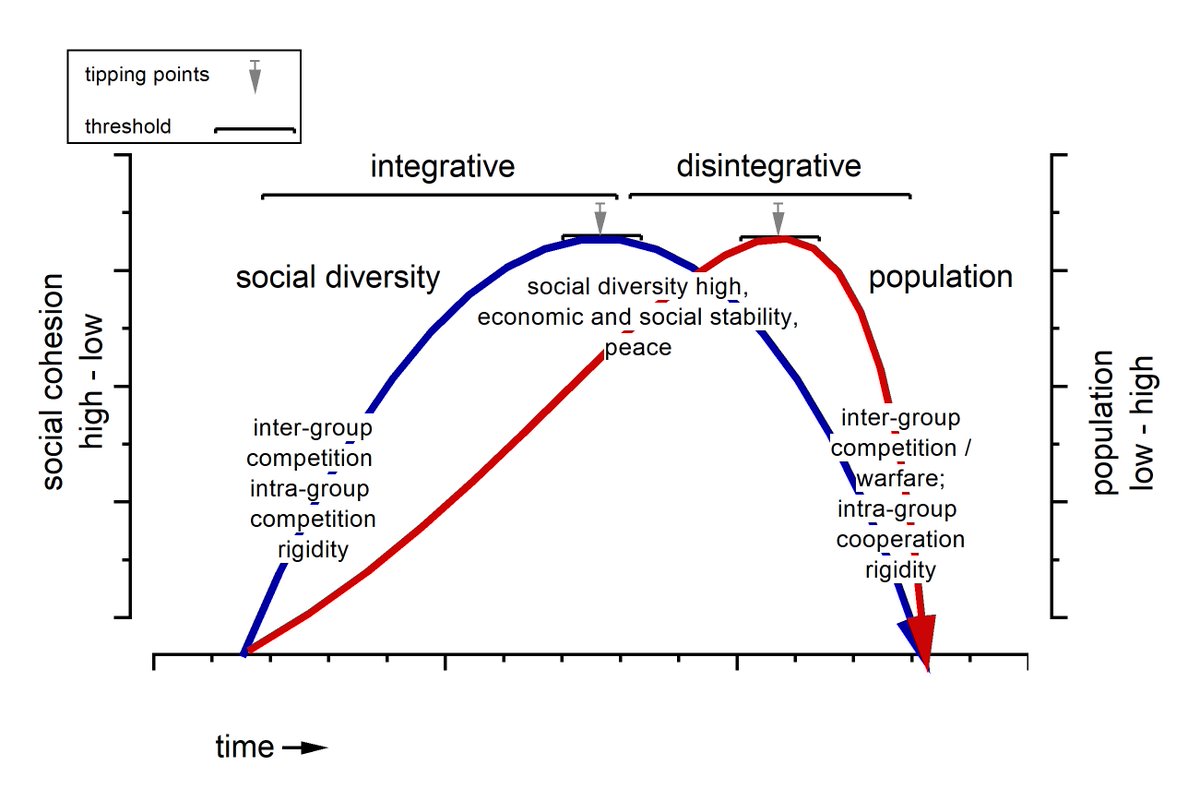
Every society's path to complexity was somewhat unique, but there are some clear patterns in the ebbs-and-flows of how they get there. New paper published today in @PNASNexus using @SeshatDatabank explores these timescales: https://t.co/dhoLvV2Y71
Hear about the way history prepares societies to face major threats -- or to become overwhelemd by them. @SeshatDatabank researcher @hoyerdan talks with Quantum Photonics on @Clubhouse tomorrow!
New #postdocposition working with @jsegoviamartin on sustainability, environmental economics and computational science; Mohammed IV Polytechnic University, Morocco: https://t.co/93x0DUsLhG
Climate change has toppled some civilizations but not others. Why?
The link between environmental disasters and societal collapse, explained.
https://t.co/2w0aXCO6Cj
History shows us not only what happened before, but can help show us why – and these can turn into lessons for today. See the great new piece on work by @Peter_Turchin@hoyerdan and @SeshatDatabank team in @grist
There are a lot of reasons why people are fascinated by the rise and fall of ancient empires. But could America go up in smoke? We explore: https://t.co/1rMGq4Vedi
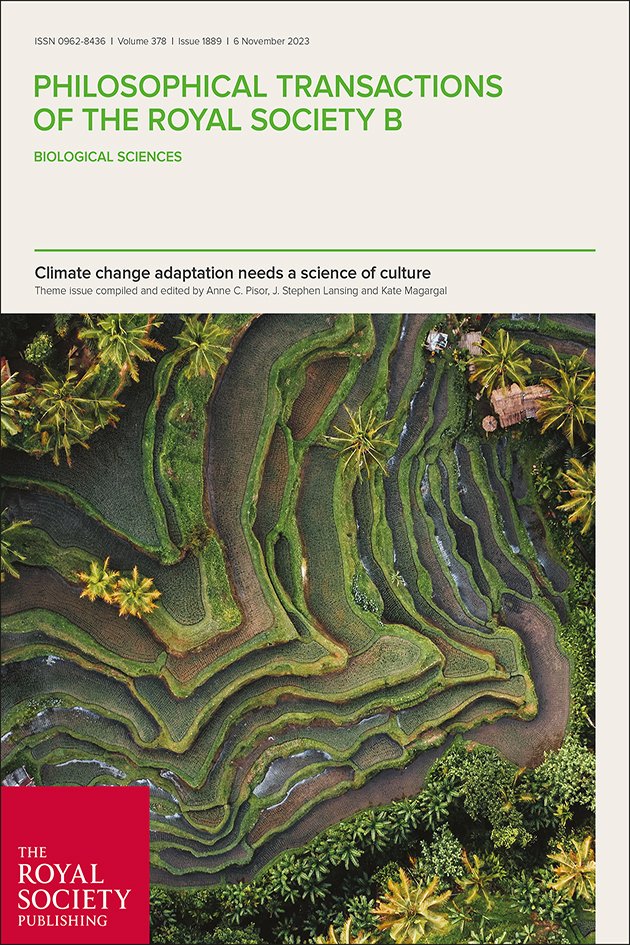
New theme issue of #PhilTransB edited by @AnnePisor, J. Stephen Lansing & Kate Magargal looks at methods people use to adapt to environmental changes. Understanding this can help researchers, policymakers and organisations better support communities as they respond to #ClimateChange: https://t.co/YxDzyy540p #CulturalEvoReads
Neither the present nor the future are disconnected from our shared past. Thrilled for @SeshatDatabank work to be part of this incredible special issue
4. To understand the broad brushstrokes of what cultural practices work for climate extremes & what don’t, look to the past:
Databases summarizing the historical record (like CrisisDB; @hoyerdan et al)
Archaeological data - & don't forget the Global South (Scheinsohn et al)
6/
Climate resilience is built into human nature, including the innovations we design & share. In our special issue out today in Phil Trans B, 14 teams discuss how studying culture brings insight to contemporary climate adaptation: https://t.co/NJSviGkat5
Some take-homes:
1/
I am delighted that the International Journal of Humanities and Arts Computing has posted a call for papers for a special issue on Spatial Humanities and the Global South. Please spread the word! Papers due end of January 2024! More information here! https://t.co/tp4XSa5qir
He unpacks the theory of elite overproduction and details instances of how frustrated ambition leads to unrest and, sometimes, societal catastrophe in his new book, End Times: https://t.co/rkJWM3jsBU
@Peter_Turchin sat down with the Spectator UK to explain why it is that elites have been the drivers in pretty much all of history's major periods of unrest. https://t.co/CyVr36iUa5
I am in London in the middle of my book promotion tour in UK. A new experience for me. 6-minute interviews are tough!
This evening's event should be more relaxed (and enjoyable):
https://t.co/a64SeDjk7A
- interesting piece by zack walsh on how @cliodynamics and complexity science can help us understand the prospects for catastrophic, civilizational collapse - while also highlight what is truly unique about our current 'age of Polycrisis'
"Although we can learn from past collapses, no one can predict them, and we should be careful interpreting the history of past collapses through the lens of present-day social and environmental concerns and vice versa": https://t.co/AKl8cw3kaU