On this July 4th, I get to celebrate America's 250th birthday and the publication of my first journal article.
"Whiteness as a Gendered Framework: How White Chicagoans Explain Ethnoracial Inequality in Unemployment" is now out in Social Currents 🎉
https://t.co/IcmnCZxlI4
Seeking men married to U.S. active duty servicewomen to take a 10-15 minute online survey about their experiences with military spousehood and gender.
Completing the survey = chance at $100 Visa gift card!
https://t.co/AliU6Aly1b
Graduate and doctoral students: Apply to join our 2025 Graduate Student Summer Associate Program, a paid internship that pairs students with RAND mentors to collaborate on research projects.
Learn more: https://t.co/6Od95wkb0H
As a veteran, I know how important it is to understand + improve the lives of military servicemembers and their spouses. Seeking men & women married to active-duty servicemembers to discuss their gendered attitudes/experiences with mil-spousehood.
https://t.co/AliU6Aly1b
"I really want answers and solutions for people who have been essentially deprived of the full rights of American citizenship. That's really what drives my work at RAND."
New Q&A with social scientist Jessica Welburn Paige: https://t.co/RhaxF6r79f
👀Americans who experience downward mobility are more likely to attribute inequality to structural processes, while those who rise are more likely to reject structural explanations. NEW: @UM_PSC's Sofia Hiltner and @CechErin in @SF_Journal. Full abstract below ⬇️
https://t.co/58782JVGwv
Abstract
Popular explanations of inequality as the result of individual failings rather than structural processes are powerful cultural mechanisms that legitimize and reproduce inequality in the United States. How might individuals’ experiences of downward or upward mobility shape the explanations they give? We argue that perceived experiences of economic mobility may not only shape how Americans understand economic inequality but may also impact their beliefs about social inequalities more broadly. Using proportionally representative survey data of 1110 U.S. residents, we find that those who perceive that they currently occupy a lower economic class than when they were growing up (i.e., they experienced subjective downward mobility) were more likely than class-stable individuals to reject individualistic explanations of economic inequality and embrace structural ones. By contrast, the upwardly mobile were more likely to reject structural explanations. We find that mobility is similarly related to the likelihood of giving individualistic or structural explanations for race and gender inequality as well. Downward mobility is also associated with greater support of redistributive policies related to economic as well as gender and race inequality. These findings suggest that economic mobility may influence popular explanations of inequality and support for redistributive policy not only related to class inequality but for multiple axes of inequality.
@UMSociology@umisr
Retired Army general and sitting member of Congress says employment struggles for military spouses are part of being a family in the service while arguing against bill to offer MilSpouse federal employees flexibility during PCSs: https://t.co/pr4l425bkM
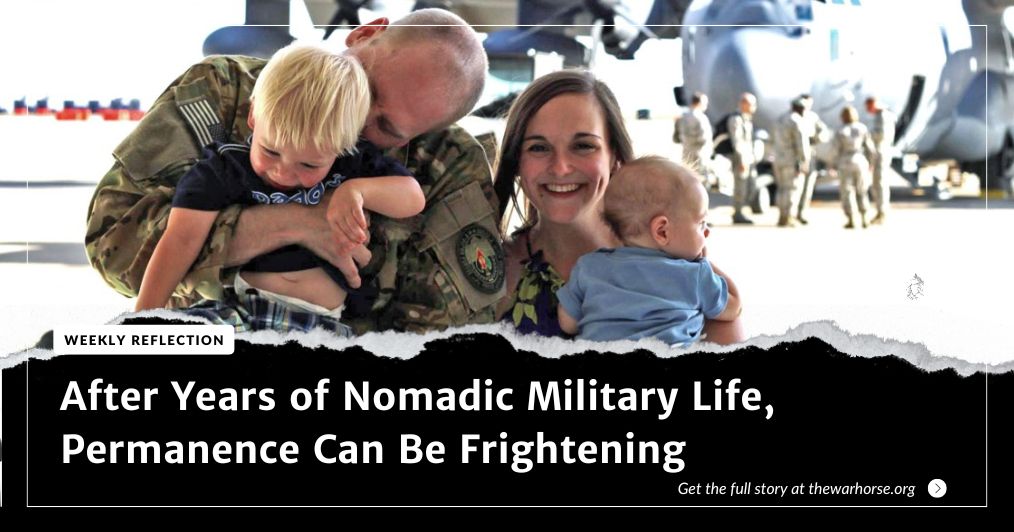
"Put me in a stable place and leave me! they seem to beg, and I understand. My children have often made the same pleas," writes Jessica Morse for @thewarhorse@military_family
https://t.co/aXggb3dWa2
DoD and State are applying gendered perspectives at the strategic, operational, and tactical levels. Join RAND experts and distinguished guests for a conversation about why these perspectives are indispensable as the nation faces new security challenges. https://t.co/M8YQjWI4FU
📢 Calling All Connections 📢 Do you know any men married to US active duty servicewomen? I'm investigating their gendered experiences + perspectives as mil spouses and could use help reaching more of these folks! Please share my recruitment flyer and participate if eligible🙏
🚨New article alert on women’s role in political violence🚨 As women’s participation in conflict increases, it’s important to go beyond romanticized narratives and assess the impact of this trend.
Here’s the correct link: https://t.co/WqSgsloUb8
Thread👇
"DoD has all of these strategic documents, strategic frameworks, and implementation plans. We wanted to give the implementers, the commanders, an idea of how it looks in action … to incorporate a gender perspective."
@joslynmfleming on her RAND research: https://t.co/85sTvf6vn4
Want to spend your summer working on public policy research with RAND experts?
Apply to our Graduate Student Summer Associate Program by Monday, 12/4: https://t.co/g2AKv9YCeO
Read my review of Sarah Percy's terrific Forgotten Warriors in this month's Army Magazine - it's a fascinating exploration of women in combat across time, continents, and cultures that demands we reconsider the history we've been taught: https://t.co/npq7185BTB
As a U.S. military vet, I know how important it is to understand the lived experiences of military spouses. Seeking spouses of U.S. active-duty servicemembers to complete an online survey + possibly an interview. Please share with your networks!!🙏
https://t.co/AliU6Aly1b