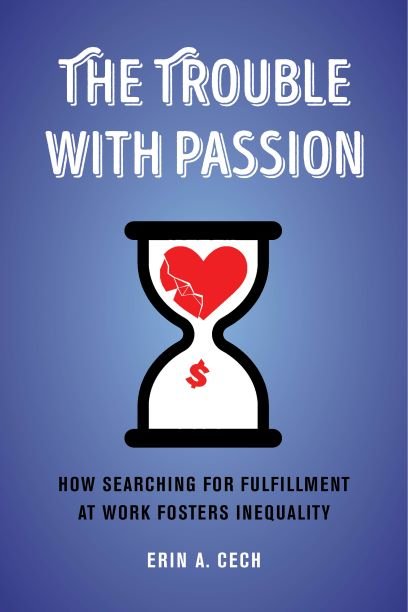
It’s book release day for #TheTroubleWithPassion
from @UCPress!
At heart, the book takes to task a ubiquitous western cultural belief: that an ideal way to make career decisions is to “follow your passion.”
A 🧵of themes…
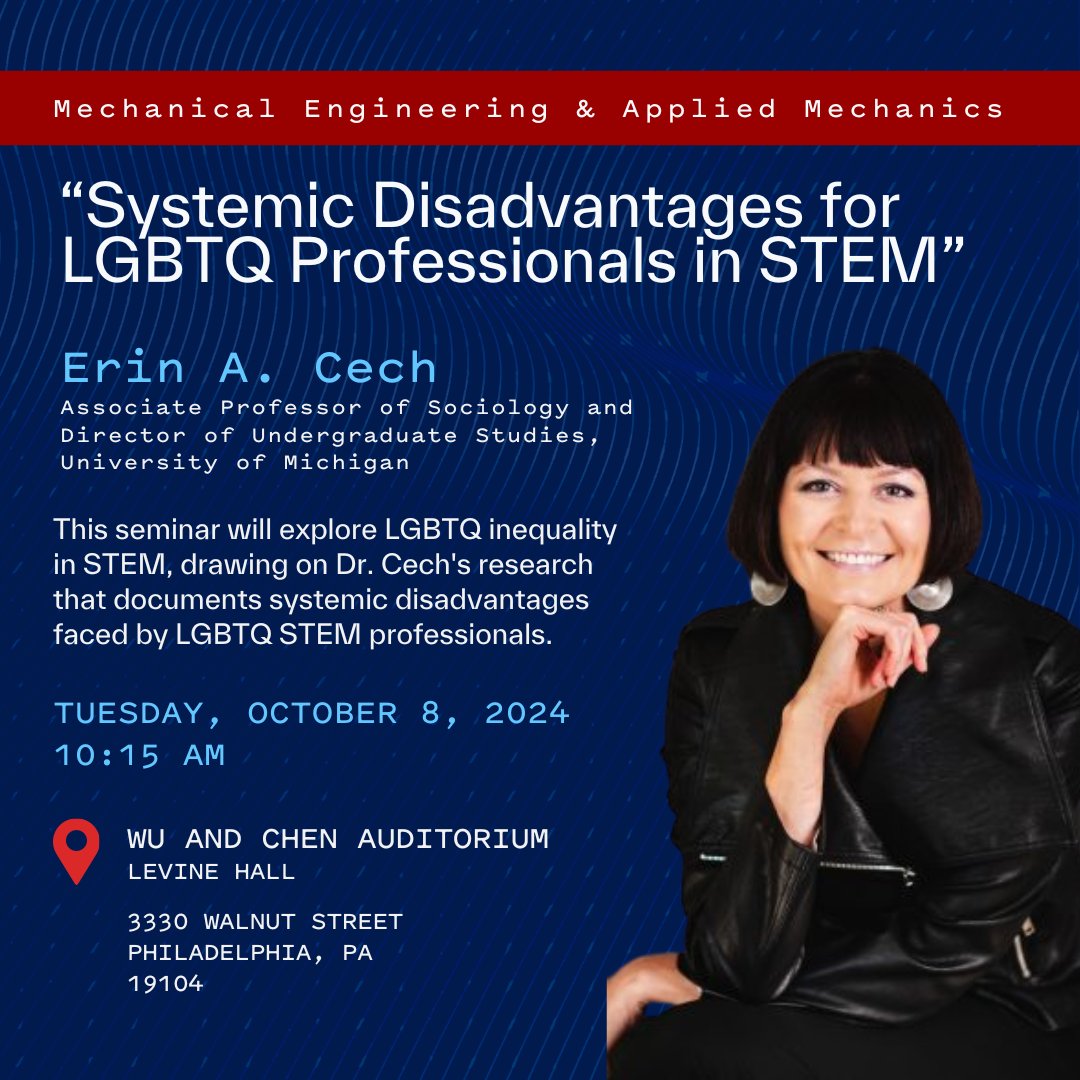
Join @CechErin for a seminar on LGBTQ inequality in STEM, exploring systemic disadvantages faced by LGBTQ STEM professionals. Brought to you by @MEAM_Penn. #LGBTQinSTEM https://t.co/PESvyhqPAD
New study finds that white men who experience workplace mistreatment are more likely to recognize and act against gender and racial biases among colleagues. @UMSociology's @CechErin's research suggests that personal encounters with bullying can significantly shift perceptions of fairness, making white men more vigilant allies in the fight against workplace discrimination.
Understanding biases through personal experience could be a key strategy in promoting equality. Learn more about how these experiences influence awareness and advocacy via @ConversationUS: https://t.co/lcJk59Vuan
Engineers must ensure their technologies do not harm public safety or well-being, but nearly a third of U.S. engineers never received training on this. @CindyFinelli & @CechErin are integrating sociotechnical issues into engineering education
Article 🔽 https://t.co/kWvFUOneUn
👀Americans who experience downward mobility are more likely to attribute inequality to structural processes, while those who rise are more likely to reject structural explanations. NEW: @UM_PSC's Sofia Hiltner and @CechErin in @SF_Journal. Full abstract below ⬇️
https://t.co/58782JVGwv
Abstract
Popular explanations of inequality as the result of individual failings rather than structural processes are powerful cultural mechanisms that legitimize and reproduce inequality in the United States. How might individuals’ experiences of downward or upward mobility shape the explanations they give? We argue that perceived experiences of economic mobility may not only shape how Americans understand economic inequality but may also impact their beliefs about social inequalities more broadly. Using proportionally representative survey data of 1110 U.S. residents, we find that those who perceive that they currently occupy a lower economic class than when they were growing up (i.e., they experienced subjective downward mobility) were more likely than class-stable individuals to reject individualistic explanations of economic inequality and embrace structural ones. By contrast, the upwardly mobile were more likely to reject structural explanations. We find that mobility is similarly related to the likelihood of giving individualistic or structural explanations for race and gender inequality as well. Downward mobility is also associated with greater support of redistributive policies related to economic as well as gender and race inequality. These findings suggest that economic mobility may influence popular explanations of inequality and support for redistributive policy not only related to class inequality but for multiple axes of inequality.
@UMSociology@umisr
ARE TOMORROW'S ENGINEERS READY TO FACE AI'S ETHICAL CHALLENGES?
Our team finds engineering students are woefully unprepared for AI's ethical dilemmas & engr colleges often provide little serious training
w/@egoldenkoff@CindyFinelli
https://t.co/4O6MUyW93t - @ConversationUS
Thanks to @thier_jane for this great writeup in @FortuneMagazine on the "lowering meritocratic blinders" research-- how workplace harassment experiences increase white men's recognition and reporting of race and gender bias at work
New: White men who have been targets of harassment themselves (bullying, physical or verbal intimidation, etc) in the workplace are more likely report other instances of racial and gender bias, per a new study from @CechErin:
https://t.co/nEgrTj5Cfn
(2) Antiracism & antisexism efforts must account for how privileged workers’ meaning-making about own experiences act as blinders to bias recognition/reporting. White men’s critique of status quo via reflection on mistreatment may stave off backlash that undermines change efforts
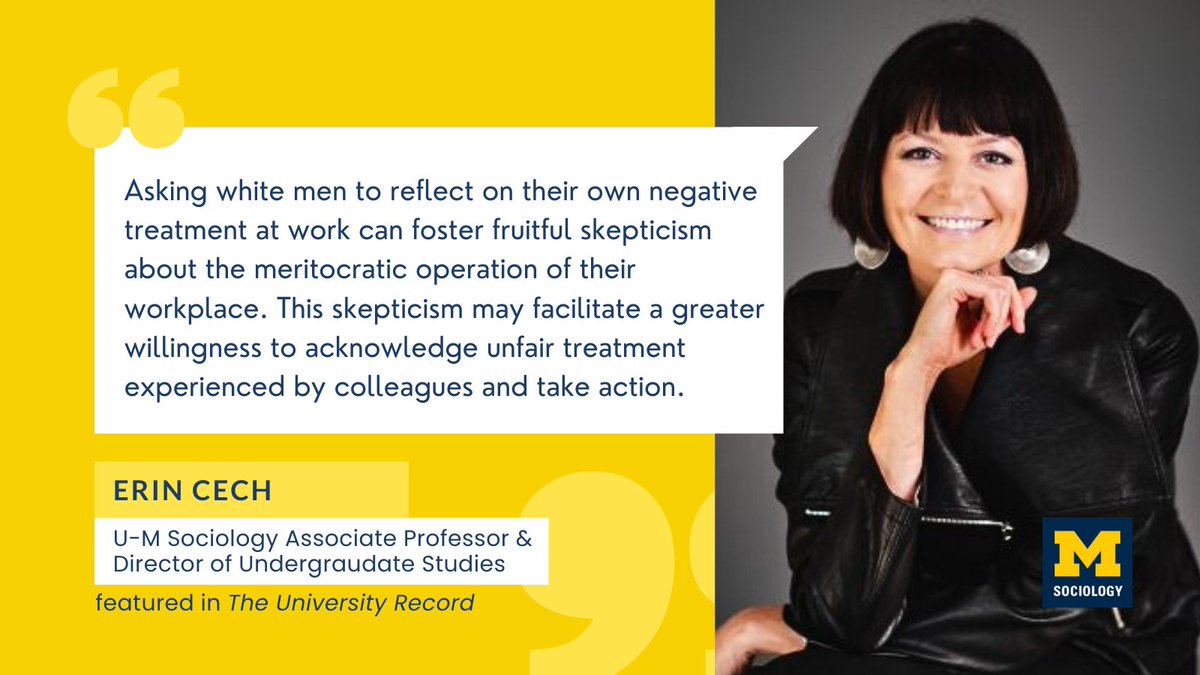
Which white men recognize and report sexism and racism in their workplaces? As it turns out, those who have experienced harassment/bullying themselves.
New in AJS, I show how workplace harassment experiences help lower white men's "meritocratic blinders"
https://t.co/R6jdvlmbPj
Of course, the answer is not that we should ⬆️harassment toward white men.
Rather…
(1) White men harassment targets may be unexpected allies: reflecting on experiences may foster fruitful skepticism that their workplace really operates fairly.
#UmichSoc Associate Professor Erin Cech’s study finds that white men are more attuned to systemic race & gender bias after experiencing workplace harassment.
Explore her impactful work and fascinating findings!
➡️ https://t.co/hqnzzLqKPx
@CechErin and I are studying how engineering students and practitioners learn about their responsibilities to the public. We have a new article comparing the impact of different types of instruction - we need to do a better job educating engineers!
https://t.co/TykAgyvcDb
📢Postdoc Opportunity!
Come work with our multidisciplinary (psych, soc, environ sci, hist, phil) UMich & Mich State team on our NSF-funded project investigating the effects of negative dept and team climate on early-career STEM folks. Apply now! https://t.co/4fiu5mupSo
Thank you all for sharing your heartfelt words & stories of Xiaohong. His impact is deeply evident.
In honor of Professor Xu, and to ensure his legacy lives on for future generations, we have established the Xiaohong Xu Memorial Support Endowment Fund. https://t.co/iQEs8UA2E1