#Epidural haematoma is a rare but significant complication of #neuraxial anaesthesia, but Amoroso et al show that the incidence is low in this retrospective analysis of 96,103 cases.
https://t.co/FPhAS9nwio
Congratulations to SAMBA Leaders, Director, and Past Presidents on their A&A publication, which explores the care of obese pediatric patients in ambulatory settings.
View the article here: https://t.co/O6lA7Cw5VV
Many airway algorithms start with equipment.
This one starts with physiology.
Before choosing a device or technique, determine whether your patient can maintain oxygenation.
That single assessment guides the rest of the airway plan.
Here's a practical framework to help.
🫁PEEP in ARDS is no longer just a number. It is a phenotype test.
The last 3 years of PubMed indexed literature show a clear shift in ARDS ventilation: from oxygenation based PEEP tables toward individualized assessment of recruitability, overdistension, transpulmonary pressure, regional ventilation, and mechanical power.
The 2023 ESICM ARDS guideline strongly supports lung protective ventilation and recommends against prolonged recruitment maneuvers, but does not give a universal recommendation for one PEEP titration strategy (Grasselli et al., 2023). The 2024 ATS guideline, however, conditionally suggests higher PEEP without lung recruitment maneuvers in moderate to severe ARDS and strongly recommends against prolonged recruitment maneuvers (Qadir et al., 2024).
This disagreement is clinically important.
Why? Because PEEP can be protective or harmful depending on the lung.
In a recruitable lung, PEEP may reduce cyclic opening and closing, improve homogeneity, lower dynamic strain, and reduce ventilator induced lung injury. In a poorly recruitable lung, the same PEEP may mainly increase overdistension, dead space, right ventricular afterload, and mechanical power.
Recent PubMed indexed evidence supports this personalized approach.
Electrical impedance tomography guided PEEP titration improves compliance, reduces driving pressure, and lowers mechanical power compared with conventional strategies, although larger trials are still needed before routine outcome based recommendations can be made (Songsangvorn et al., 2024).
The recruitment to inflation ratio is attractive because it can be measured at the bedside, but recent CT validated data show important limitations. In a 2025 study, the R/I ratio had poor diagnostic performance for identifying high recruitability, especially in focal ARDS, although very low values may still help identify low recruiters (Richard et al., 2025).
Esophageal pressure remains physiologically elegant because it separates lung stress from chest wall pressure. This is especially relevant in obesity, abdominal hypertension, pleural effusion, and extrapulmonary ARDS. However, it requires technical expertise and should not be treated as a simple number.
The future of PEEP titration will probably not be one method, It will be an integrated bedside phenotype.
The key question is no longer: “What PEEP gives the best PaO₂?”
The better question is:
At this PEEP, is the lung being recruited, protected, or injured?
References📚
*Grasselli, G., Intensive Care Medicine, 49, 727–759. https://t.co/67nFMfpurf
*Qadir, N., American Journal of Respiratory and Critical Care Medicine, 209(1), 24–36. https://t.co/Cf5W5R79KU
*Songsangvorn, N.. Intensive Care Medicine, 50(5), 617–631. https://t.co/BsnCgclUEZ
*Pavlovsky, B., Annals of Intensive Care, 14, 1. https://t.co/p51IFsuMjn
*Richard, J. C., Critical Care, 29, 220. https://t.co/JZp9cxdsKn
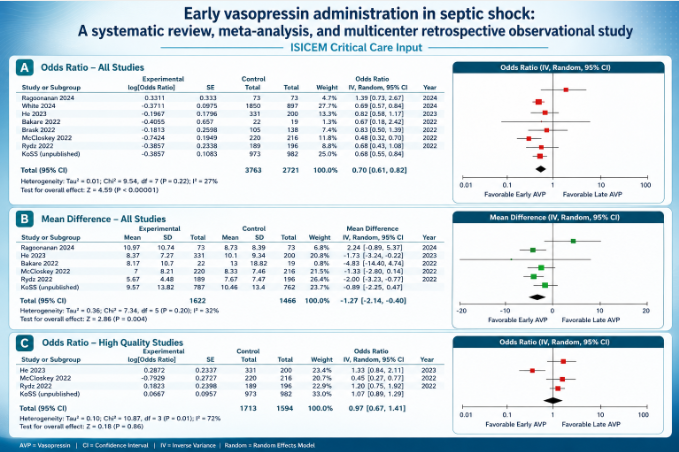
@ISICEM Critical Care Input
Early vasopressin administration in septic shock: A systematic review, meta-analysis, and multicenter retrospective observational study
https://t.co/iAyvOZji9e
#ISICEMelearning#Meded@Sciencedirect
Barriers to Multiprofessional Information Sharing for Early Mobilization in the Intensive Care Unit: A Qualitative Descriptive Study https://t.co/c1NmN8ldLv #icurehab#A2Fbundle
Spironolactone vs Amiloride for Resistant Hypertension: A Randomized Clinical Trial | Hypertension | JAMA | JAMA Network
Haven’t used amiloride much in icu in tx resistant hypertension..guess its about time https://t.co/ahSCd9aj1J
https://t.co/stMsyEyBYb
Well it really doesnt work so we should stop draining them and causing pain only for it to reaccumulate when we remove the drain
Dear friends and colleagues,
It is with overwhelming sadness that we share news of the death of our colleague, mentor and friend, Rinaldo Bellomo. During recent days, both he and his family have received dedicated, expert and compassionate care from some of the finest in our ICU community. We share their pain and sense of loss.
Over several decades, Rinaldo has made a profound and enduring impact on ICU practice in Australia, New Zealand and around the world. As a passionate researcher he challenged conventions, championed evidence-based practice in the care of the critically ill and supported countless colleagues in their research careers. As a compassionate mentor, colleague and friend, he touched and enriched numerous lives, and will be greatly missed. His loss will affect our whole community and in due course there will be opportunities to come together to celebrate his life.
This will be a difficult time for many, but we know that our memories of Rinaldo’s relentless enthusiasm, warmth, optimism and boundless energy will help us all through the weeks ahead. In lieu of flowers, Rinaldo's family would welcome donations to support his research legacy at https://t.co/29kO6OeHxe
Our sincere condolences and best wishes go out to his family, friends and colleagues.
Craig Carr, on behalf of the ANZICS community
...🧵This is a thread about 8.4% sodium bicarbonate (aka bicarb amp) in critical care.
This the first part in a series of three about sodium bicarbonate 🧂in critical care:
🧐I will get in deep to complexities, benefits, risks and clinical implications of this (overused) drug.