@dharmesh said he liked this vodcast and I think you will too!
I've been building agents on agent ai, and talk about:
- how anyone can think like a PM
- who should build (no code) agents
- and much more
Check it out:
https://t.co/oGgfW1Ziip
@boardyai building IndustryGTM, helping B2B SaaS companies break into financial services with AI agents for marketing workflows. Boardy Pro would be huge for this
@jonaswillett1 I'd love to add this list to an app I built that helps people connect professionally in cafes (and avoid the awkwardness of bothering someone behind a laptop screen if you're not sure whether or not they're open to talking).
https://t.co/8oNsGDAjtG
@EverettRandle This inspired me to set one up w/ Kindle. For those with a Kindle: Claude project writes 2-3k word web-researched reports in markdown → small Python script converts to EPUB and emails to my Send-to-Kindle address → read offline.
Check them out directly at https://t.co/cWRAp82M08 or DM me for a link. First few runs of the new agents are free. Over the next few weeks, I'll be posting more about the process to build these. I believe we all need to be sharing all the amazing AI tools we're building.
NEWS: The first paid agents built by a citizen builder are LIVE on https://t.co/nC41Agxv8U. Someone had to go first, and I guess I drew the short straw.
Everyone is tired of AI slop.
You can take the output and drop it into the *Cold Email Analyzer* and *Web Copy Analyzer* to get edits and see how your target persona would react to your content. All delivered in a visually appealing output that provides reasoning and context.
@ericvishria This is excellent. "Stick with it for a long time" is the one people most often forget, especially when we see so many "overnight successes" on social media.
As the saying goes, it takes years to be an overnight success.
The people in this photo aren't friendlier than you. Their apartments are just smaller. So small that Parisians basically gave up on living indoors and moved their living rooms onto the sidewalk. And that was the whole plan.
In the 1850s, a city planner named Baron Haussmann tore apart medieval Paris and rebuilt it. He widened streets into boulevards, capped every building at five stories, and added one rule that explains this entire photo: the ground floor of every building had to be a café, a bakery, or a shop. The apartments above were intentionally tiny. Some were single rooms carved out of old mansions. No garden. Barely any sunlight. A private balcony was something most Parisians would never have.
So the café became home. You ate breakfast there. Held meetings there. Received your mail there. By the late 1700s, Paris already had close to 2,000 of them. In 2002, there were still 1,907. Even now, after years of closures brought that number to about 1,410, the coverage is absurd: a 2020 city study found 94% of Parisians live within a five-minute walk of a bakery. When COVID shut indoor dining in 2020, Paris ripped out parking spaces, turned them into outdoor terraces, and let 9,800 cafés and restaurants keep them permanently.
An American sociologist named Ray Oldenburg wrote a book in 1989 called The Great Good Place. He had a name for spots like the Parisian café: "third places." Not your home, not your office, but the casual in-between spots where you actually get to know people. Cafés, pubs, barbershops, the corner store where the owner knows your name. His whole argument was that American suburbs were built with only two zones, your house and your job, connected by a car. No sidewalk café, no place to bump into a neighbor by accident.
The U.S. Surgeon General declared loneliness a national health epidemic in 2023. Being alone all the time is as bad for your body as smoking 15 cigarettes a day. Half of American adults say they feel lonely. Weekly socializing dropped from 5.5 hours in 2003 to just 4 hours in 2023, and it never bounced back after COVID. Americans between 15 and 29 now spend 45% more time alone than they did in 2010.
The scene in this tweet looks like a personality trait. It is a 170-year-old engineering project that works exactly as designed.
There's a physicist at Stanford named Safi Bahcall who modeled this exact principle and the math is wild.
He calls it "phase transitions in human networks." When you're stationary, your probability of a lucky event is limited to your existing surface area: the people you already know, the places you already go, the ideas you've already been exposed to. Your opportunity window is fixed.
When you move, your collision rate with new nodes in a network increases nonlinearly. Double your movement (new conversations, new cities, new projects) and your probability of a serendipitous encounter doesn't double. It roughly quadruples. Because each new node connects you to their entire network, not just to them.
Richard Wiseman ran a 10-year study at the University of Hertfordshire tracking self-described "lucky" and "unlucky" people. The single biggest differentiator wasn't IQ, education, or family money. Lucky people scored significantly higher on one trait: openness to experience. They talked to strangers more, varied their routines more, and said yes to invitations at nearly twice the rate.
The "unlucky" group followed the same routes, ate at the same restaurants, and talked to the same 5 people. Their networks were closed loops. No new inputs, no new collisions.
Luck isn't random. Luck is surface area. And surface area is a function of movement.
The lobster emoji is doing more work than most people realize. Lobsters grow by shedding their shell when it gets too tight. The growth requires a period of total vulnerability. No protection, no armor, soft body exposed to the ocean.
That's the cost of movement nobody posts about. You have to be uncomfortable first. The new shell only hardens after you've already moved.
@saranormous Yes! I've been building ai agents on @dharmesh 's agent [.] ai, but still consider myself nontechnical and want to get more powerful in how I use AI.
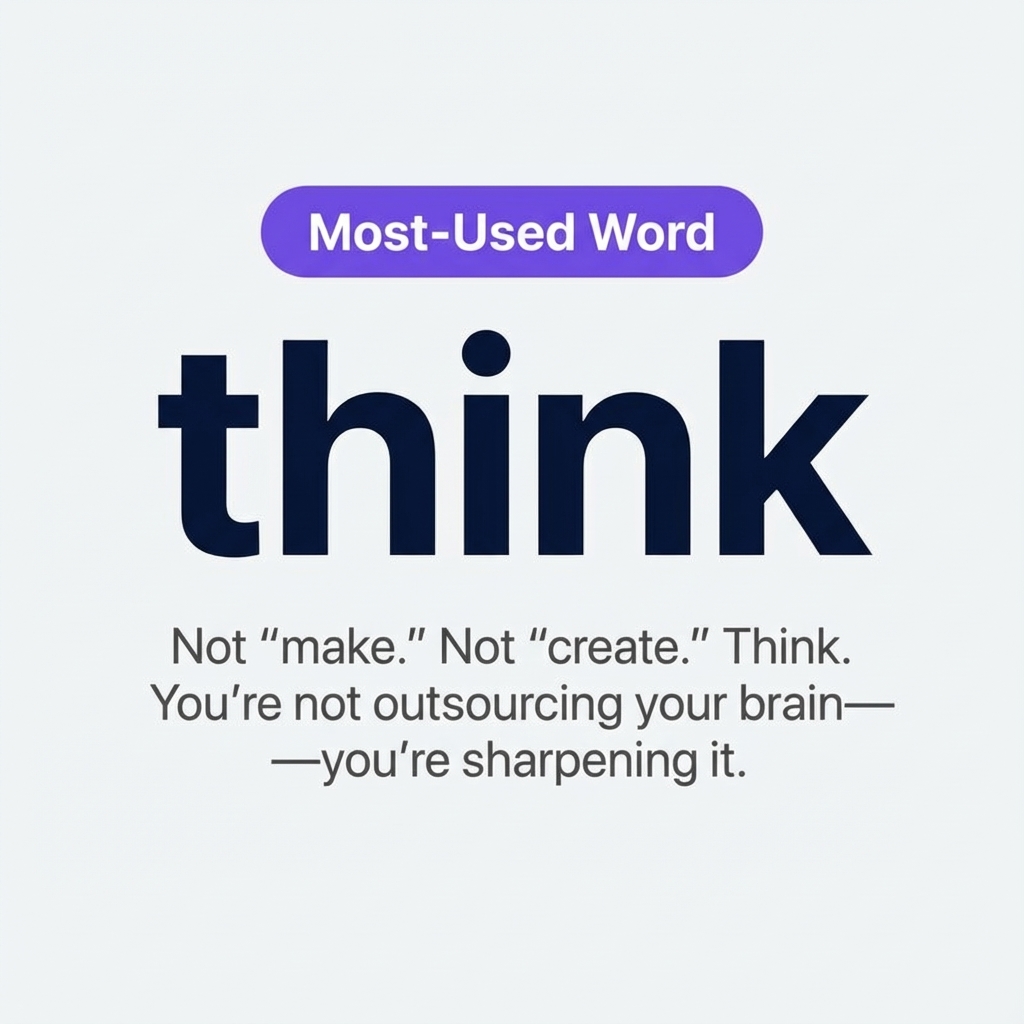
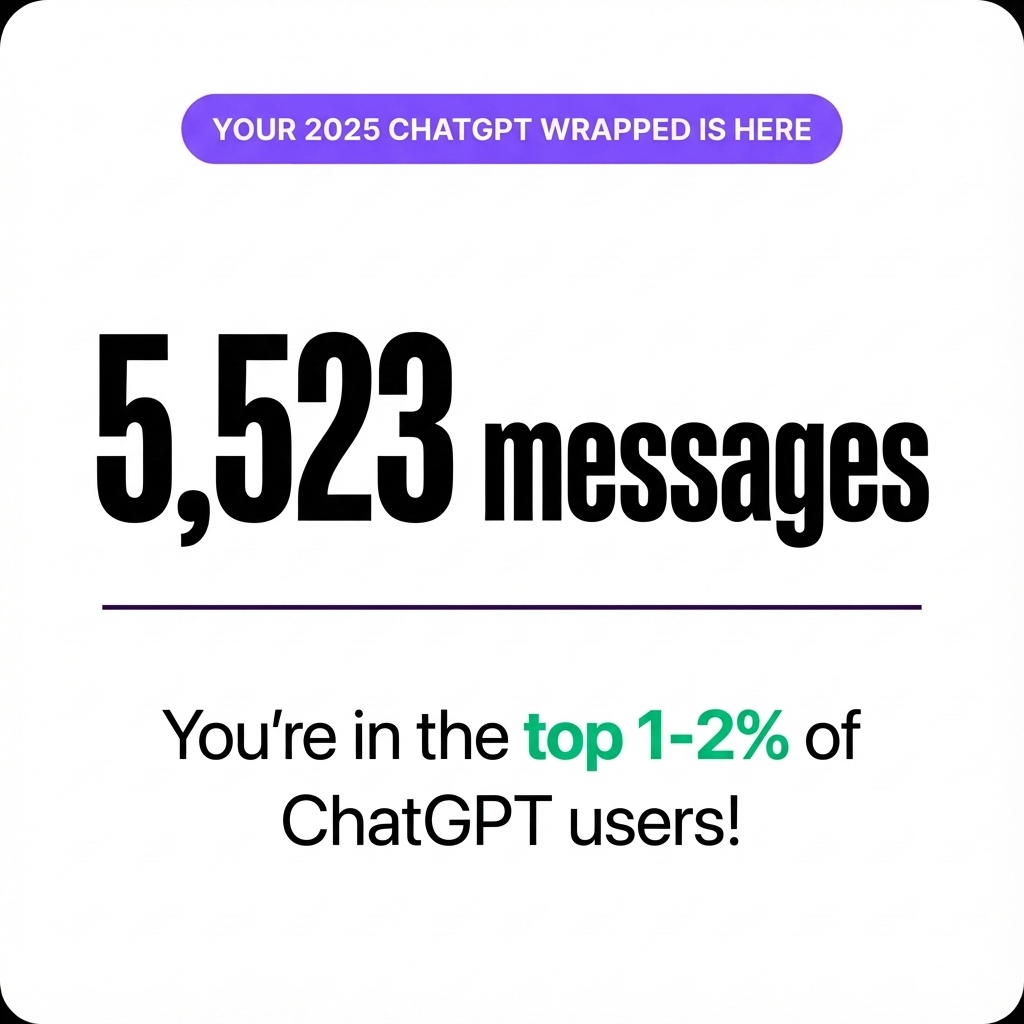
Disclaimer: OpenAI didn't generate this for me. I built it with ChatGPT, Claude, Python, Canva, and @dharmesh 's imagegen[.]ai
Want to build your own? I'm breaking down the full process in this week's newsletter. Sign up at agentGTM[.]ai
My most-used word: "think", not "create," "do," or "write." Hopefully that means I'm using it as a thought partner, not totally outsourcing my brain. (But something to watch.)