dropped a little something the other day: https://t.co/ucNPgffHJS
if you're looking for an easy way to run sandboxed agentic vm sessions in the cloud with strict permission enforcement at the gateway level, give it a spin.
dms open for feedback.
I love tiny Rust crates.
So I built one.
isdocker → detect if your program is running inside Docker / containers.
• zero deps
• no unsafe
• single function API
isdocker::is_docker()
https://t.co/PZSPsVb3S4
Ever had localhost work fine on iOS… then break on Android… and then break AGAIN on a real device?
I got tired of juggling 10.0.2.2, LAN IPs, tunnels & .env switching — so I built a tiny tool that makes API URLs “just work” in React Native / Expo
👉 rn-dev-ur
Just published a new blog — wrote about what truly matters as an engineer at startup:
not titles, not hype… but reducing real pain for users.
If you’re someone who cares about craft & ownership, you might like this 👇
https://t.co/da2Dzu3ZzZ
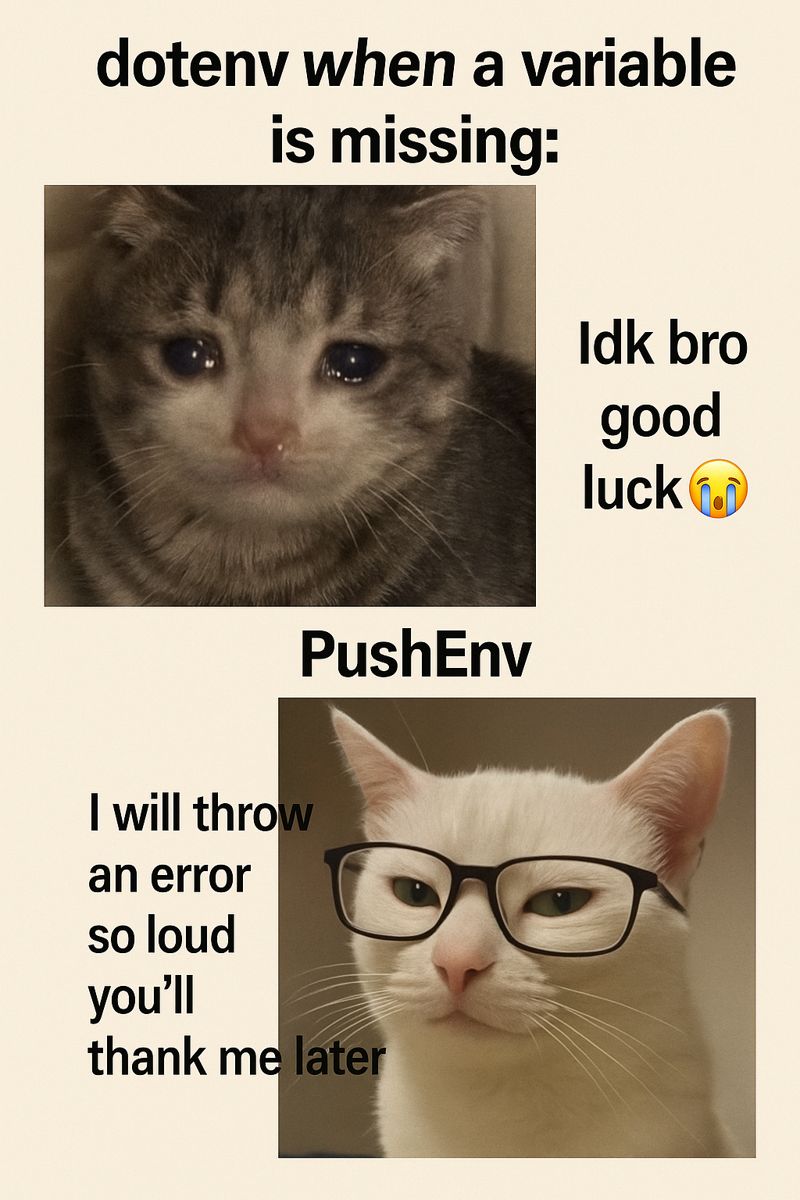
I used dotenv for 6 years and never questioned it.
Then one missing env var quietly broke production.
No crash. No logs. Just… wrong behavior.
That’s when I realized:
silent configuration is a liability.
Curious — what finally broke dotenv for you?
https://t.co/pwtZj7HU9E
I built a Rust crate by starting with the problem.
Retry logic was opaque, macro-heavy, or copy-pasted everywhere,
so I built retryx: a tiny async retry & backoff primitive with explicit behavior.
Solve the problem first.
https://t.co/BMgpQECh0L
At the most basic level, every product exists to reduce something negative:
• Time wasted
• Money lost
• Errors made
• Stress felt
If none of these go down, the tech didn’t matter — no matter how clever it was.
Read:
https://t.co/qMymMKyw5X
Being a tech lead at a startup isn’t about writing better code.
It’s about making decisions with half the information, shipping anyway, and owning the consequences.
I wrote honestly about the parts no one talks about 👇
https://t.co/tMQz1bznZM