Thomas Ibounig, LL, will defend his doctoral dissertation “From Images to Insights in the Management of Shoulder Complaints - Prevalence of Shoulder Imaging Abnormalities and their Association with Symptoms in the General Population" in the Faculty of Medicine, University of Helsinki, on 28 August 2026 at 12:00.
📍 Siltasairaala, Töölö-luentosali Haartmaninkatu 4, Helsinki
Opponent: Prof. Karim Khan, University of British Columbia
Custos: Prof. Teppo Järvinen
The full dissertation will be available in Helda from 18 August 2026.
More information on the event: https://t.co/yxntkW99dJ
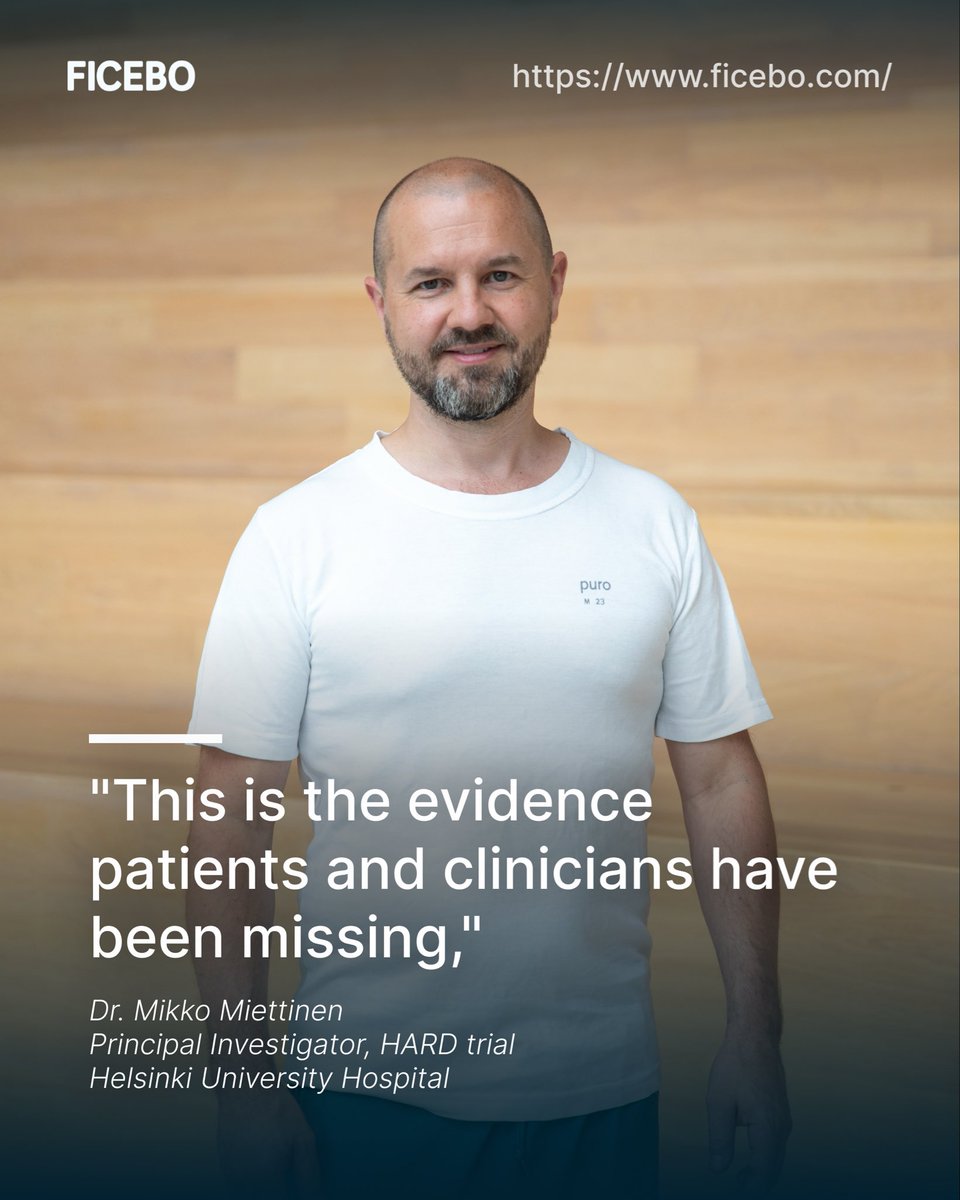
The 12-month results of the HARD trial have now been published in Annals of Internal Medicine.
The HARD trial is the first randomized controlled trial to compare surgery with watchful waiting in patients with symptomatic hallux rigidus, addressing a decades-old question in the treatment of the painful big toe.
Led by principal investigator Mikko Miettinen, the trial compared first metatarsophalangeal joint arthrodesis with watchful waiting. FICEBO core members Lasse Rämö, senior author of the publication, and Tuomas Lähdeoja, co-author, also had the opportunity to contribute to the trial.
On our website, you can read more about the trial, hear comments from the research team, and explore the key findings from the newly published results.
Read the full news article here: https://t.co/tgxzdFKqg0
Encouraging to see high-quality evidence reaching patients as well as clinicians.
Generating evidence is only the first step. Translating it into everyday clinical practice is often the greater challenge.
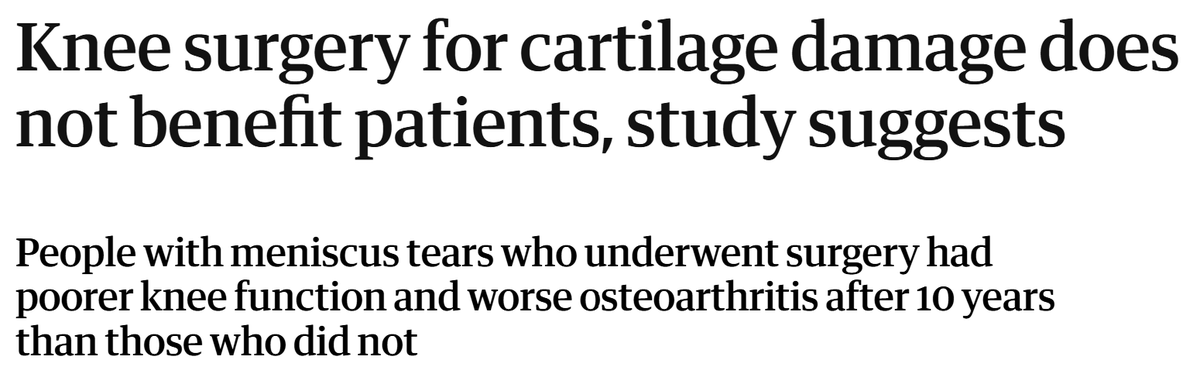
A 10-year study found a common surgery to address knee pain provided little or no benefit and was associated with worse knee troubles.
@RosenthalHealth reports ⤵️ https://t.co/79e4DJnaFy
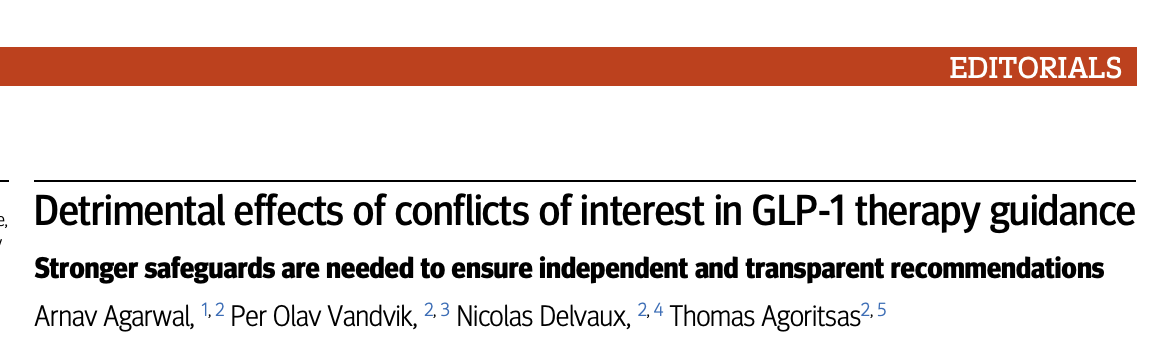
GLP-1 therapies bring major promise -- but also major commercial stakes.
In this @bmj_latest editorial, we argue that trustworthy guidance requires stronger safeguards for conflicts of interest.
👉 https://t.co/wCHwWst83A
am fascinated @David_Cameron
first, do you think that a group of professional experts did not recommend screening out of any other concern than for the evidence?
second, it's very easy to think that more diagnosis are always useful. But they can just be a fig leaf -/
Yes, the hypothesis was that PCSK9 inhibition to establish very low LDLs would abolish heart disease.
This was tested in two large trials : FOURIER & ODYSSEY.
In super high risk patients that had already had a coronary event, achieving very low LDL levels had a small effect on reducing heart attacks and no reduction in death.
This was a much smaller reduction than has been achieved with statins in high risk patients with high LDLs.
As LDL in the general population gets lower, additional risk lowering becomes harder and harder.
Biology is complicated— there’s a group of people who have high HDLs who have almost no heart disease. Artificially attempting to do this with the drug Torceptarib raised mortality.
I’m jaded perhaps, but an alternative reading of what’s happening is that this is a billion dollar play to put out something mechanistically plausible that will get a lot of hype about the putative benefit. It’s a PR campaign that eventually creates pressure we know that FDA regulators simply can’t bear.
By the way, if you want to not take a pill to do the same thing, there’s already a twice a year injection on the market that you can get at your doctor’s office. (That Medicare pays for).
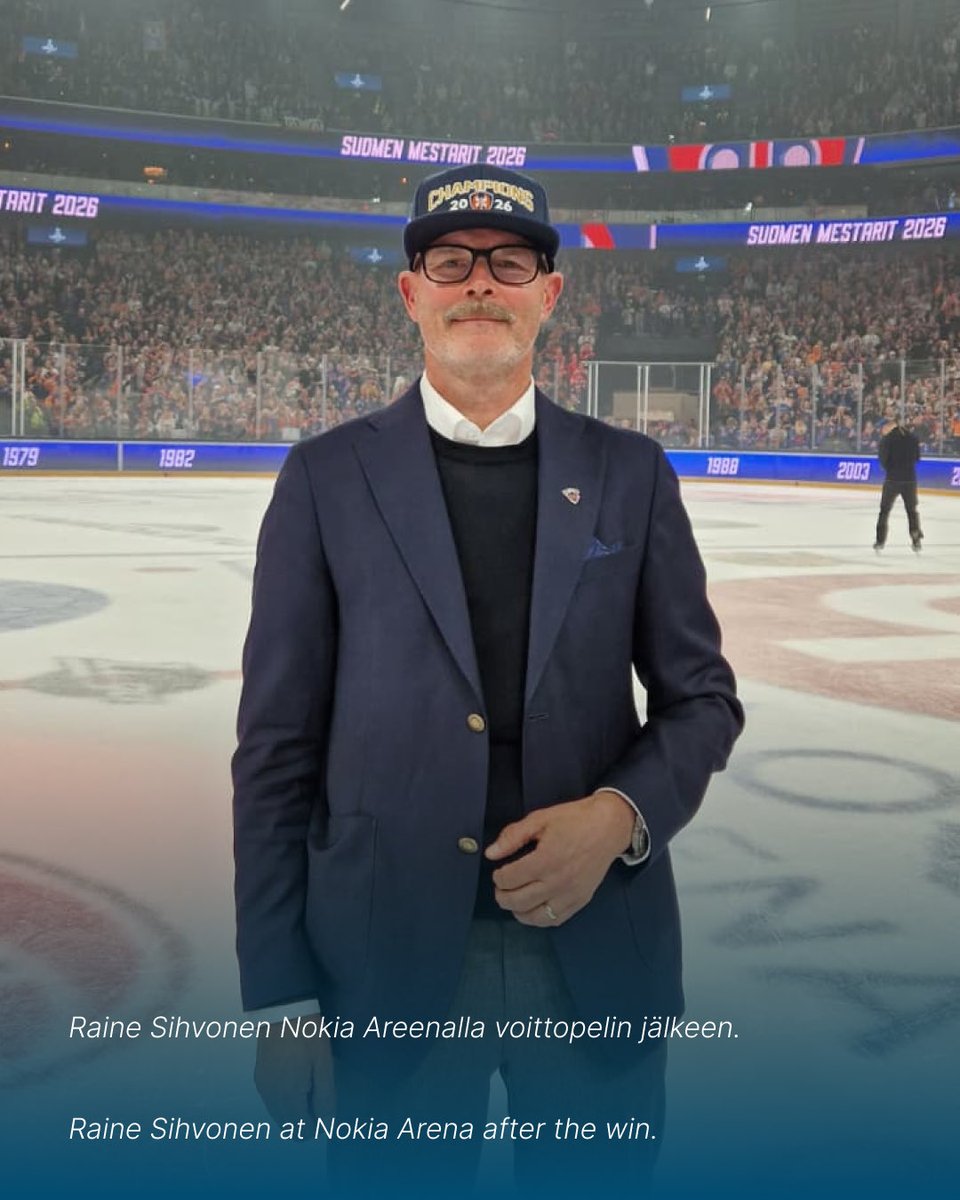
Congratulations to Tappara on the win once again! 🏆
We’re proud to see one of our researchers Raine Sihvonen celebrating with the team as Tappara’s doctor. Our researchers do many things, and supporting sports is one of them!
#Tappara#Research#IceHockey#Orthopedics
Stories like this are common — and understandable.
Symptoms often improve over time, regardless of what we do.
That’s exactly why placebo-controlled trials matter.
Many years ago I hurt my knee playing sports. I was referred to the orthopedist for one of the local pro teams. After keeping me waiting for 2.5 hours, he diagnosed a cartilage tear and recommended surgery. I was so mad at his manner and tardiness I left without scheduling.
The next week I got a second opinion from a much younger doc who was likely more current on the recent medical literature. He looked at the same MRI. He said he could do surgery now but his advice was to wait 30 days and see if it healed on its own. It did.
Medical reversal is when a practice that became widely used is later shown to be ineffective or even harmful. Examples like meniscus surgery show the need to keep gathering evidence. A not immaterial part of the practice of modern medicine doesn't improve health, and may be net harmful.
Bravery (and Humility) is Needed to do Proper Medical Science: Hundreds of thousands of knee arthroscopic meniscus repairs are done. At a cost of $10,000 per surgery in USA. Now let @drjohnm tell you about the @shamteppo et al FIDELITY trial follow-up at 10 years.
https://t.co/c8RFUiinpW
We performed arthroscopic partial meniscectomy for decades.
Then tested it against placebo.
And followed patients for 10 years.
No benefit.
Signals of harm.
The challenge now is not evidence —
but what we do with it.
FIDELITY showed no benefit of arthroscopic partial meniscectomy for degenerative tears. https://t.co/h0X6MtsmiK
But randomized trials — alongside other evidence — have not shown clear benefit for traumatic tears either.
The scope may be broader than we thought.
The interesting part is not just the finding —
but that without placebo-controlled trials,
we might still be attributing these outcomes to the surgery itself.
Thanks @adamcifu — that means a lot.
@Sensible__Med has genuinely been one of my go-to sources for EBM and critical appraisal — probably (one of) the best medical podcasts out there.
Really appreciate the support.