You check your Apple Watch in the morning. Sleep score: 62. You decide it's going to be a foggy day. And then it is.
A 2014 Colorado College study suggests the score itself causes the fog.
164 people walked into a lab. Researchers hooked them up to fake EEG equipment and told them the readout would show their REM percentage from the night before. Then they fabricated a number. Half the room was told 28.7%. Half was told 16.2%. The machine wasn't measuring anything.
Participants took four cognitive tests. The Paced Auditory Serial Addition Test, where you add numbers spoken at increasing speed and hold your last sum in working memory while computing the next. And the Controlled Oral Word Association Task, where you generate as many words as you can starting with a single letter under time pressure. Both are gold-standard measures of attention and executive function used in clinical neurology.
The 28.7% group outperformed the 16.2% group on both. Significantly. How rested participants actually felt that morning predicted nothing.
The mechanism is mindset priming an executive resource. When you believe you slept well, you allocate cognitive effort more aggressively. You don't conserve. You don't pre-disengage. Belief about the resource changes how you spend it.
Two control conditions ruled out demand characteristics. Participants weren't trying harder because they thought they should. Real measurable cognitive performance shifted with the number on the readout.
The Apple Watch sleep score. The Oura ring readiness number. The morning ritual of checking either one is taxing the resource you're about to need.
The performance gap from a fabricated REM percentage was larger than the gap from how rested participants actually felt. The number was louder than the night.
Yes $550 could still have quartz counters and other higher end finishes. Countertops as a percentage of total building costs is such a small amount that going up a few grand for good quality always makes sense in my opinion. But yes if the client wants very niche products or top tier appliances/floors/windows/custom cabinets, the numbers will go up.
@bwengr@jasonjosephlee we are in the 450-550 range depending on scope. solid regular family houses should for sure be in the 400 range. Anybody quoting 900 for these homes is raking in obscene profits. they do not cost that much to build.
For a half-century, America has critically under-built family-sized housing in our most dynamic cities and neighborhoods, rendering them childless and unaffordable.
It's time to save the American Dream.
Introducing The American Housing Corporation.
Is there site with Ai generated interiors of houses and you rank two images side by side. And it learns over a lot of rankings the styles/materials/colors, that you like the best and can articulate it.
I feel like people know what they want when they see it, but have a hard time articulating it unprompted. Would be very useful to me.
With a good prompt, 5.2 pro is exceptional at reading arch and structural plans. It’s actually crazy that small businesses can have a cross domain genius working on demand 24/7.
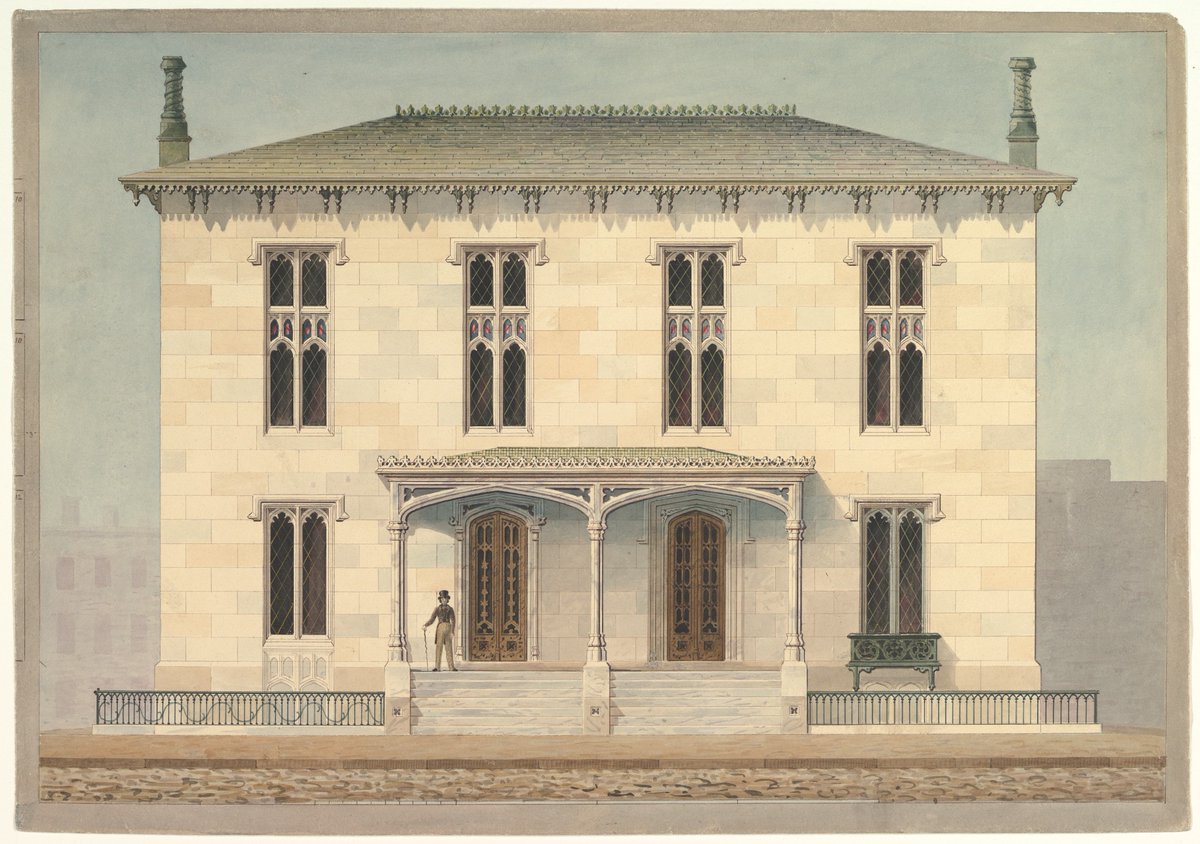
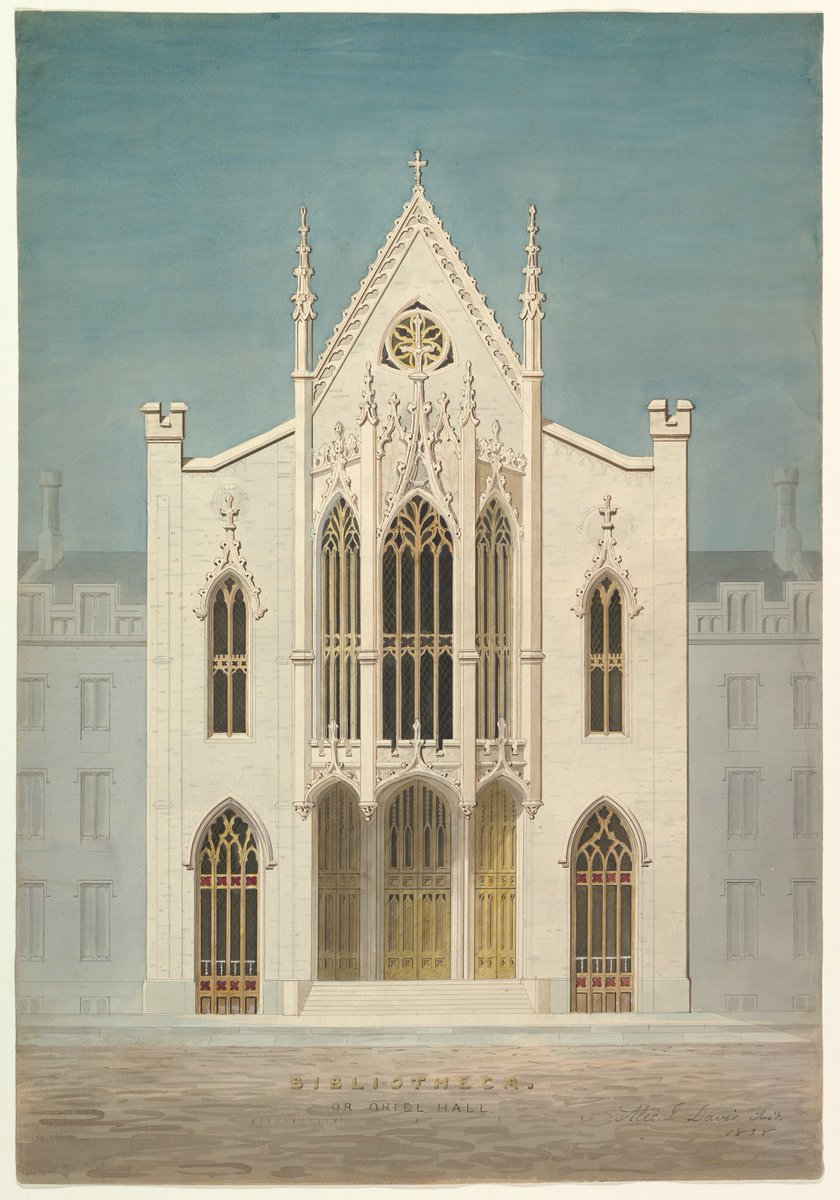
If Americans are pining for some worthwhile building project, why not realize some of the plans proposed by Alexander Jackson Davis? Gothic revival double townhouse (looks villa-ish) 1843, two libraries 1838-43, and a clever terraced house alternative 1831 (note roof promenade!).