"The Commission finds that the Israeli authorities intended to kill as many Palestinians as possible through its military operations in #Gaza since 7 October 2023 and knew that the means and methods of warfare employed would cause mass deaths of Palestinians, including children."
With the United States posed to again depart the Paris climate agreement, other parties feel a “rising frustration” with the country’s inconsistency, Dean @KellySGallagher tells @Shankman for @BostonGlobe.
https://t.co/iv6Lcmj3wH
I know many of you will roll your eyes at this, but that's OK; I wouldn't be in this field if I was afraid of being dunked on every now and then.
When I first came to The Washington Post in 2017, I was extremely wary it would be too establishment for me. Too corporate. Too deferential to power.
What I have instead found over the last seven years is that the paper has consistently given me a unique, awesome platform to fulfill the highest calling of journalism -- to comfort the afflicted, and to afflict the comfortable.
The Post has spared no resource in allowing me to pursue this mission. It flew me to Puerto Rico to interview hurricane victims cut off from federal food stamp aid. To Maine to cover the long-term care crisis facing the nation's elderly. To Kentucky to document the closure of a steel plant. To Las Vegas to cover the housing crisis. To Wisconsin for farmers caught in the crosshairs of a trade war. To Detroit for a story on the nation's unraveling safety net. To the Bronx to chronicle appalling public housing conditions. (OK, I took the train there.) To Ukraine to cover a war. To Indonesia for meetings of the world's most powerful financial leaders.
Since the beginning of the year, the Post has devoted thousands of manpower hours to a series -- six parts published thus far -- on the unintended consequences of U.S. sanctions. This effort included paying me and a team to travel to northeast Guatemala to chronicle an economic calamity almost 2,000 miles away from my desk, in one of the poorest parts of the world. At least 20 people have worked on this series alone. The Post did not greenlight this series because it thought there would be huge pageviews in U.S. sanctions policy; it did so because it's important for the public to understand how the surging use of the tool is affecting the world and the nation's foreign policy. It did so because the story matters.
I fully understand the misgivings people have expressed about billionaire control over our journalism. (I published a story today -- pitched by an editor, put by editors on today's front page -- about billionaires threatened by Trump who are now hedging their bets.) But these are stories that require more than just substantial resources; they require a devotion to journalism that seeks to document how machinations in Washington affect the lives outside it.
I could try a Substack where I spout off whatever happens to be in my head that day. I could work for a publication that only caters to lobbyists and elite insiders. But there are precious few publications still doing the coverage -- however incomplete; however still in need of improvement -- aimed at serving the broader public at large. I believe The Washington Post is one of them.
I am not here to tell anyone what to do. We are imperfect. My work can suffer from negativity bias, recency bias, imperfect data, faulty assumptions, motivated sources. I get things wrong. My journalism can be flawed and you should yell at me on twitter when it is. I want to be more transparent about the decisions I make and the stories I publish.
But I promise you: I and many, many other journalists throughout this newsroom would quit The Washington Post if we ever felt our work was not in service of the public at large. That is the point of the job. That is why I hope we get to do it for as long as possible.
WINNER! General Excellence in Online Journalism, Large Newsroom: @BostonGlobe — leveraging all its digital tools to provide meaningful journalism that enhanced and enriched people’s lives. https://t.co/tvC7vxku4L #OJA24
starting in 2021, I reported on whistleblowers who said they were being pressured to make new chemicals seems safer than they were. Today the EPA IG found they were retaliated against https://t.co/FWQ0gNjfkh
@vaguelysimilar @growingwisdom My understanding is late Sunday night (starting around 11 p.m.) into early Monday, as per an astronomer with MIT Wallace Observatory.
🇺🇸 Fighting To Save A Hidden Past
▫Traces of Maine's Indigenous people are increasingly threatened by rising seas
▫@shankman
👉 https://t.co/KsPgcXsFYL 👈
#frontpagestoday#USA@BostonGlobe 🇺🇸
The ever brilliant @mlavelles breaks down the wide-ranging, devastating impacts Trump's first term had on climate and environmental policy. Yet the climate crisis will get even worse in a second Trump term, environmentalists say. https://t.co/gfdvgRrsgq
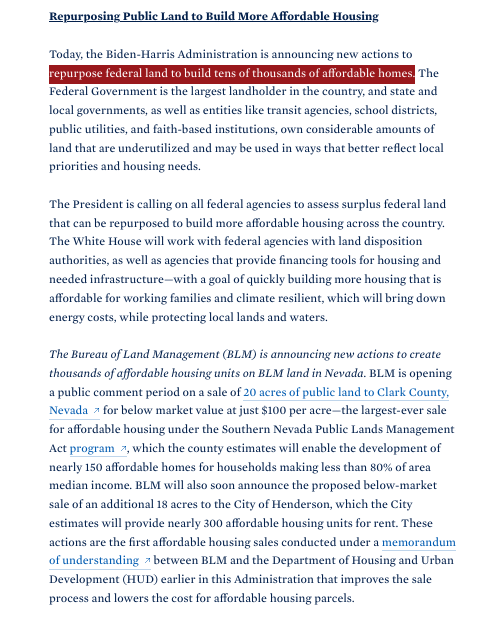
welp, Biden's new plan to address housing affordability (left) is...the same as the new GOP party platform's proposal (right) to address housing affordability
both call for disposing of federal lands to make way for homes
amazing
After months of uproar about the climate impacts of a proposed expansion of Hanscom Airport, Mass. state officials rejected a draft environmental impact report submitted by developers working with Massport, @shankman reports.
https://t.co/2QLcWyCU2J via @BostonGlobe
Rooftop solar carried the day in this week's heatwave. https://t.co/hwp5MZ1JyZ @shankman explains while introducing a term that was new to me--the "duck curve"--one I look forward to hearing a lot more about in coming years.