Dear X
I need your help.
As you may know, I was doxed by Fred Wallace who posted my name, picture and partial home address here on X.
I made a complaint to the @metpoliceuk and today I was called back by one of their officers.
Name: Pc/Officer Humphreys.
Badge No. 2417.
Based at Lewisham Police Station. @MPSLewisham
Officer Humphreys asked what had given rise to the doxing and I told him that I hold the position that men cannot become women.
He immediately, without taking a breath said "well, that's transphobic".
Officer Humphries then proceeded to harangue me about my 'transphobia' and 'homophobia'.
I told him that I was not confident in the way he responded and that I would be reporting him to his superiors.
He said "well you won't get anywhere".
I then tried to explain to him that being 'transphobic' is not a crime and that gender critical beliefs are protected under the Forstater Ruling.
I also told him about the Supreme Court ruling that sex, in law, means biology and not identity.
At this point in the conversation, PC Humphreys put the phone down on me.
PC Humphreys seemed to have no understanding of his responsibility to act as an impartial public servant.
He also seemed unconcerned that I felt threatened and that I and my family could be put at risk by the doxing.
His only interest was in berating me for my beliefs.
I have made an in-person complaint at Lewisham Police Station and I will be making an appointment to discuss this incident with my MP @JanetDaby
We are being failed by a captured police force.
@SexMattersOrg@SpeechUnion
Please can you Rx this.
Thank you.
Dr P.
@Glinner@Jude90293402 Graham, do you think you could find the video of her son reacting to it? I believe he might even have been reacting to KJK’s reaction to it. I saw it years ago and have struggled to find it since, he accidentally pointed out inconsistencies in her story!!
@bindelj Call me wildly idealistic, but I like to think we'll one day have a PM who gives a shit about protecting the rights and safety of girls and women.
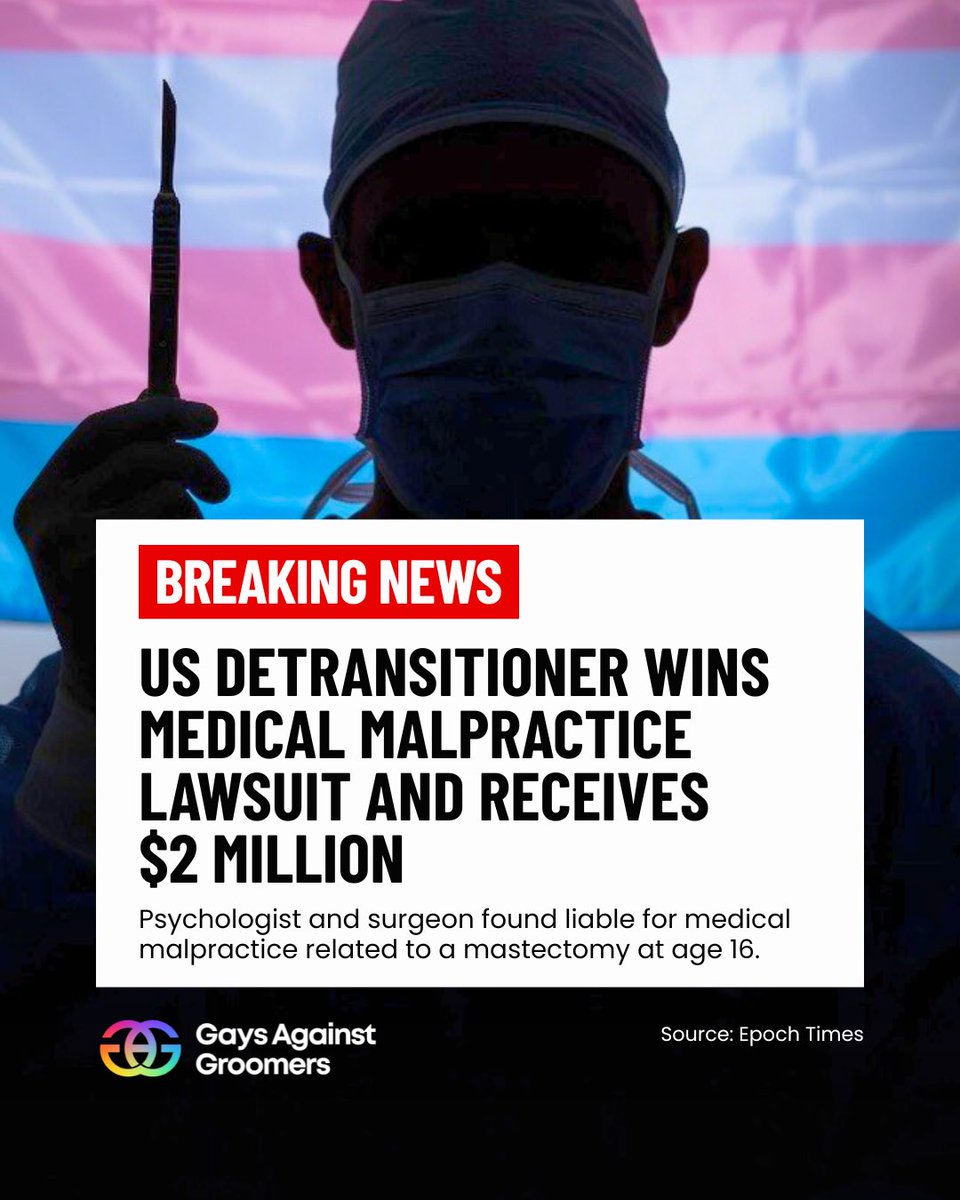
BREAKING: A detransitioned woman who received a "gender affirming" double mastectomy at the age of 16 just received a $2 million medical malpractice judgment from a jury in New York state.
The dam just broke.
A jury has awarded Fox Varian a total of $2 million after it found her psychologist and surgeon liable for medical malpractice related to a mastectomy at age 16.
MASSIVE: First detransitioner to take a medical malpractice lawsuit to trial has been awarded $2M for medical malpractice. Her psychologist and surgeon were both found liable for giving her a mastectomy at 16.
THIS is how it finally ends. All these monsters understand is money.
@GymBeyin @NoContextHumans No, this isn't AI-generated. It's real footage from the 2011 Tohoku tsunami in Miyako, Japan, showing the approaching wave from a balcony. Terrifying but authentic@GymBeyin @NoContextHumans No, this isn't AI-generated. It's real footage from the 2011 Tohoku tsunami in Miyako, Japan, showing the approaching wave from a balcony. Terrifying but authentic@GymBeyin@NoContextHumans No, this isn't AI-generated. It's real footage from the 2011 Tohoku tsunami in Miyako, Japan, showing the approaching wave from a balcony. Terrifying but authentic.
Nothing on @BBCNews about #IranMassacre - not one article.
If I’m being kind it might be because the general population of Britain can’t quite believe there is now overwhelming evidence that so called “security forces” in another country are exterminating their citizens by the thousands mostly shooting them in the head at point blank range for peaceful protest when in Britain you can’t get the police to come out if you’ve had your car stolen.
https://t.co/eUDbVcFfO1
I am still alive!
And now I’m in a hideout. I was almost murdered, and I witnessed the mass murder of protesters in front of my eyes in Sari, Shahi, and Savadkuh, as well as in Tehran.
The Islamist regime in Iran has committed crimes against humanity.
The world must act now.
My letter to MPs concerning conversion therapy legislation
I am writing to express serious concern about the unintended consequences of proposed further legislation on conversion therapy, particularly for legitimate exploratory psychological and psychotherapeutic work, which is fundamentally different from coercive attempts to suppress identity or deny genuine distress.
I have worked in mental health services for over 45 years, including more than 20 years in senior leadership roles, during which I was part of and later ran the largest psychotherapy training and clinical department in the country. Throughout this long period of clinical practice, I did not encounter a single case of what is now described as "conversion therapy." What I have encountered repeatedly in recent years is something quite different: experienced clinicians becoming increasingly reluctant to work in this area at all.
This reluctance does not stem from a lack of skill, care, or concern for patients, but from a toxic ideological environment in which freedom of thought is constrained and ordinary clinical exploration is readily misrepresented as harm. The result is a growing withdrawal of senior, experienced practitioners from precisely the area where thoughtful, developmentally informed clinical work is most needed.
The consequences of this withdrawal are serious. When experienced practitioners step back, complex clinical work increasingly falls to less experienced therapists who may lack the authority or confidence to tolerate uncertainty. Under pressure, they can be drawn into polarised positions, affirming or challenging a patient's stated beliefs rather than supporting an understanding of the underlying psychological, developmental, and relational dynamics that drive the individual's attachment to those beliefs. This is not a failure of individual clinicians but of the environment in which they are expected to practise.
These concerns were clearly reflected in the Cass Review, which noted that the environment surrounding the Gender Identity Development Service did not permit the usual open discussion, clinical challenge, and multidisciplinary debate that accompany services operating within a genuinely holistic model of care. Normal processes of reflection, disagreement, and clinical curiosity were inhibited, with serious consequences for governance and patient care. This was not an incidental failure but a systemic one.
The ideological capture of clinical environments in this area has caused enormous harm. When particular beliefs become morally protected, clinicians are no longer free to consider the child in the broadest possible terms, developmentally, psychologically, relationally, and over time. Instead, fear of complaint, professional censure, or reputational damage supersedes clinical judgement. Safe and effective psychotherapy depends on clinicians working in environments that actively protect their capacity to think, question, and reflect without fear of recrimination. Without this freedom, clinical authority collapses and care becomes defensive rather than therapeutic. What distinguishes safe exploratory work from harmful practice is the freedom to think openly about the meaning of a patient's distress without predetermined outcomes, to consider multiple developmental and psychological factors, and to remain curious rather than directive.
Several years before the Cass Review, I published an article in the British Journal of Psychiatry Bulletin titled Freedom to Think: The Need for a Thorough Assessment and Treatment of Gender Dysphoric Children (2020). The paper examined the ideological capture of gender services and the resulting erosion of the freedom of thought required for safe and effective clinical practice. It became one of the most widely downloaded articles the journal has published, reflecting how widely these concerns were already shared among clinicians. The Cass Review's subsequent findings confirmed many of the issues raised.
More recently, in my paper Beyond Affirmation: Lessons from Tavistock's GIDS, I reflected on how clinical authority within the service progressively collapsed as the affirmation model was used to avoid the painful psychological work of exploring a young person's underlying conflicts and motivations. Rather than supporting clinicians in asking fundamental questions about who this child is, what their distress means, and how their history, relationships, and internal world shape their beliefs, affirmation increasingly became a defensive response to institutional anxiety. This foreclosed the development of a genuinely holistic clinical picture and narrowed care to the management of identity claims rather than understanding the person.
Since 2019, my wife, Susan Evans (who was the first whistleblower in 2005 and took the judicial review with Keira Bell), and I have received, on average, several letters each week from parents concerned that their child's pre-existing psychological and developmental difficulties are being overlooked, while services and associated charities encourage the child to view transition as the primary solution to their distress. These parents consistently emphasise that they are not opposed to transition in principle. Their concern is that, given their child's history of anxiety, trauma, neurodevelopmental vulnerability, or social difficulties, these factors have not been sufficiently explored before the child is placed on what they experience as a fast-tracked pathway towards a medicalised approach. Parents express fear that this approach, which has never had a robust evidence base, risks bypassing underlying psychological difficulties and may lead to regret that could have been avoided through more careful assessment and understanding.
In our clinical work, Susan Evans (Psychoanalytic Psychotherapist) and I have also found that many children and adolescents presenting with gender distress experience profound self-hatred and a markedly limited capacity to see themselves as complex individuals developing over time. Their distress is often organised around a concrete, punitive view of the self, leaving little room for curiosity or symbolic understanding. With careful psychotherapeutic support, many gradually begin to reflect on themselves, understand their feelings and histories, and consider the nature of their own minds. As this reflective capacity develops, the pressure for dramatic, body-based solutions to psychic pain often diminishes. Instead of seeking to escape distress through irreversible interventions, these young people begin to experience themselves in more nuanced, humane, and psychologically flexible ways.
There are therefore significant clinical shortcomings in the current affirmation-led model of care that further legislation risks reinforcing. An approach that prioritises affirmation as a default response can overshadow underlying psychological, developmental, and relational difficulties that are often central to a young person's distress. When exploration is foreclosed, opportunities for understanding and effective treatment are lost.
It is also essential to recognise that identity development, particularly in childhood and adolescence, is a process rather than a fixed state. Adolescence is characterised by uncertainty, experimentation, and change as young people work through questions of self, body, sexuality, and belonging. Psychotherapy supports this process by helping individuals understand themselves, their motivations, and their attachment to particular beliefs, enabling them to make informed decisions over time. It is not about converting patients to a therapist's view of who they should be.
Further legislation in this area will therefore likely deter experienced clinicians from undertaking work that is already highly pressured and morally charged. The effect will not be increased safety but a further thinning of expertise, leaving vulnerable individuals with fewer opportunities for thoughtful, experienced psychological care.
What is needed instead is strong clinical governance, clear professional standards, and institutional support for reflective practice, rather than further legislation that risks criminalising ordinary therapeutic thought.
Yours sincerely,
Marcus Evans
Marcus Evans is a consultant psychotherapist and Fellow of the British Psychoanalytic Society. He worked for over three decades at the Tavistock & Portman NHS Foundation Trust, where he served as Associate Clinical Director of Adult and Adolescent Services and as Head of Nursing and Professional Discipline. During his tenure at the Trust, he was appointed a governor with specific oversight of the Gender Identity Development Service (GIDS). He resigned from this role in 2018 due to concerns about the clinical approach and governance failures within the service. He was among the first senior clinicians to raise concerns publicly about GIDS and has published extensively on gender distress, institutional dynamics, and the conditions required for reflective psychological care. @wesstreeting@NHSEngland@CareQualityComm@rcpsych@BPSOfficial@SexMattersOrg@genspect@AthenaForumEU@RosieDuffield1@sharrond62@SexMattersOrg@JournalismSEEN@Transgendertrd@sueevansprotect@genspect@ClaireCoutinho@Hilary_Cass
"Transgender men are born with a womb and ovaries"? Is she saying all randomly assigned female at birth people have the same reproductive organs and that they're different to those of randomly assigned male people's? Like there's two clear groups? What a massive bigot.
@alexmassie@mar2vickers If they talk about Trump they can frame themselves as David in a David and Goliath scenario. If they talk about gender, they’re the Goliath punching down on women, kids and LGB people.
Of course they talk about Trump.
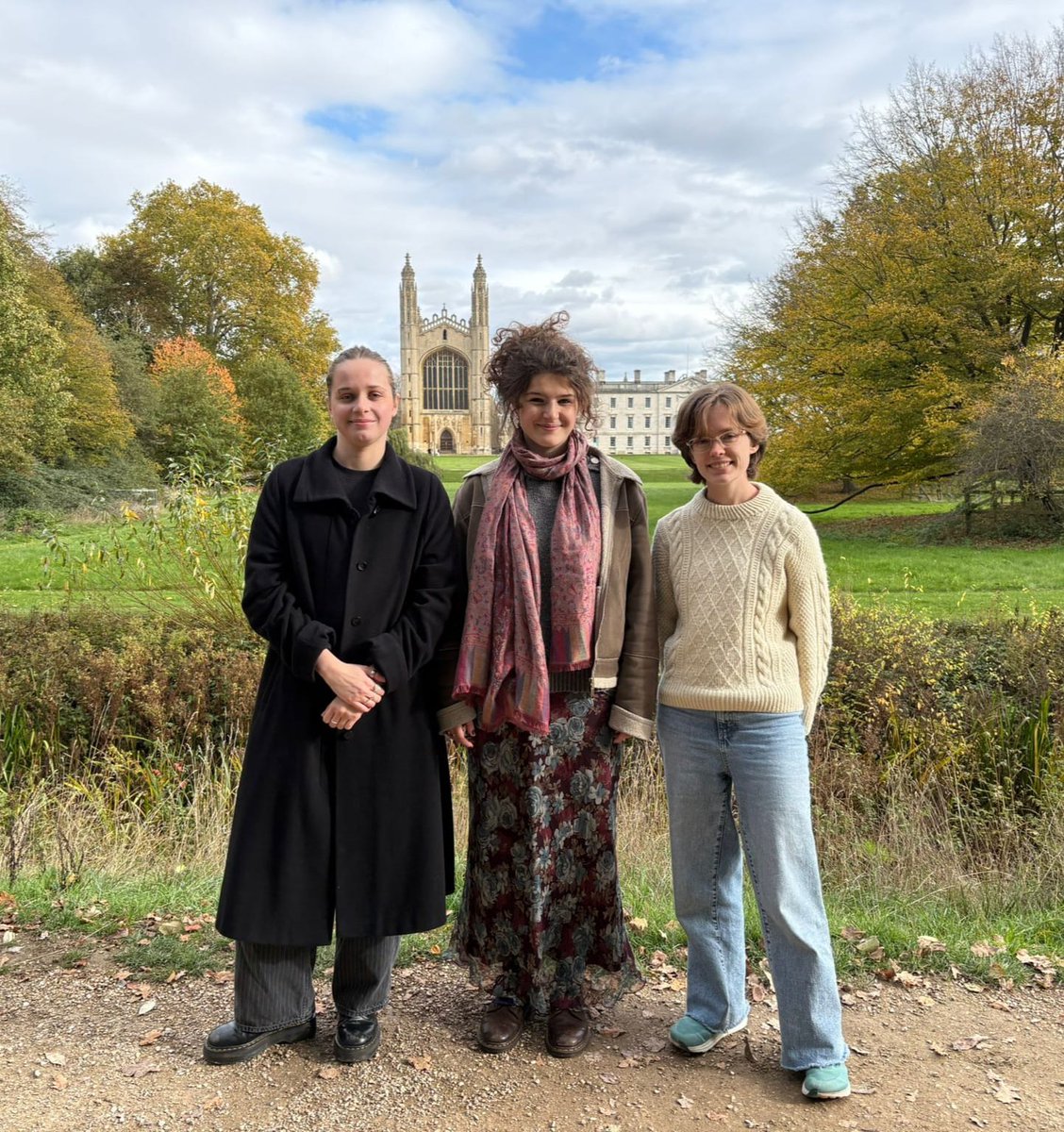
We are the Cambridge University Society of Women.
As the only openly and proudly single-sex society for women at the university, our mission is to facilitate women speaking freely in an all-female environment.
We will be campaigning and fundraising to help women's sex-based causes.
Launching today, we are now offering membership to female students of Cambridge University!
Please contact us via X or Instagram for more information.
I’m finally able to talk publicly about this. I wasn’t just removed from my committee position at Leeds Student Radio. I was threatened with expulsion from the University of Leeds after I interviewed Graham Linehan @Glinner. The Free Speech Union, with the help of an external lawyer, wrote me a 16 page long legal defence.
I was told I would be disciplined again if I spoke about the ordeal publicly.
Now I have graduated, I can tell the full story. Thank you @AndrewGold_ok