Every company, government agency, and institution is navigating the same dynamic: more information, more complexity, and less time to make sense of it.
I joined @mattlevenhagen on The Builders Podcast to talk about that challenge, the journey to founding @CapitolAI, and why we believe the next phase of AI is about helping expertise scale.
Appreciate the thoughtful conversation, Matt.
Listen here: https://t.co/UPuINKtbC6
A lot of AI products today remind me of Nokia in 2006. Technically impressive. Market-leading, even. And completely missing the point.
Back then, every phone had a different interface and the burden was on the user to adapt to the machine.
Then the iPhone came and shifted the landscape with one universal interface. Software was now part of the user experience.
AI today is still in the “every device has a different keyboard” phase. Different prompts. Different behaviors. Different levels of reliability depending on how you ask.
We’re asking users to learn the systems instead of designing the systems around them.
That’s not a model problem. It’s a design failure.
That idea has followed me from Nokia and NASA to Airbnb and now Capitol AI.
We’re not just building more AI. We’re building systems that help people make sense of complexity without forcing them to become AI experts first.
Read more about this in our latest blog here: https://t.co/nUJSdKVb98
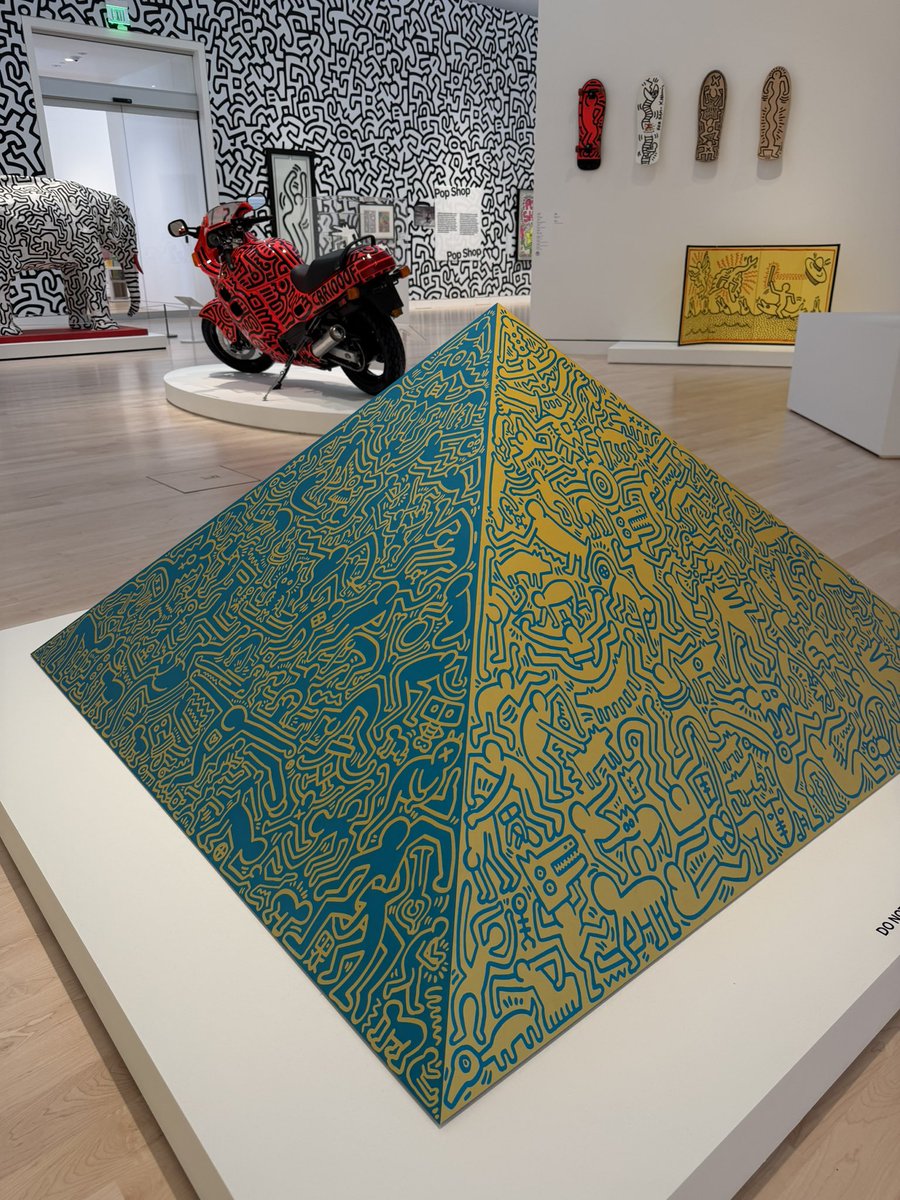
In a world where AI is everything, it’s important to take a step back and think about history. Had a special time visiting Bentonville Arkansas to visit the first Walmart, and @crystalbridges, a PHENOMENAL museum of American art
This is the actual bottleneck. The models are smart enough already. What is missing is the company-specific context locked in senior people heads. Whoever cracks knowledge extraction at the company level unlocks the rest.
As you work on this, please consider using GBrain as your OSS retrieval layer
https://t.co/0F5uDQzPHu
@t_blom Precisely the capability we’ve built at @capitolai
Business logic and tradecraft, built into agents in ways that companies control with sovereignty.
Microsoft is letting Office users remove an annoying Copilot button. A floating Copilot button has irritated Excel users the most, and some relief is coming next week. Details 👇 https://t.co/h9IIM3a1QO
Every era of technology has its iPhone moment. The moment a category stops being for specialists and becomes something for everyone.
The personal computer. The smartphone. The internet itself. Each was built by engineers, for engineers, until someone designed it for everyone else. Today we are at that moment in AI.
I've spent my career at the intersection of complexity and clarity. At NASA, I worked on systems where the stakes of a bad interface weren't frustration, they were catastrophic failure. At Airbnb, I learned that trust, at scale, is a design problem. When millions of strangers are asked to open their homes to each other, the product has to feel safe and natural, or the whole thing collapses.
There's no engineering shortcut to human trust. It has to be designed into the system itself.
That design lens is what I brought to @capitolai. And it's why I believe the next great competitive unlock in artificial intelligence is in the product design rather than the model.
I wrote about this on our blog. Read it here: https://t.co/nUJSdKVIYG
Token costs will become a dominant topic in enterprises going forward with AI. Just got out of a dinner with many Fortune 500 enterprise CIOs and this was the most heated topic.
A mix of strategies are being employed, but basically no one feels like they have the right solution. A mix of: figuring out how to prioritize workloads to different models, giving out access to better or worse agents by user type, setting different spend caps by team, having teams justify AI by their use-case, and some just having unfettered access.
Everyone is trying to figure out a semi/predictable model right now in a world where the underlying tech and cost models are constantly evolving.
We’re starting to see early signals of something that’s been inevitable. AI model pricing is going up.
This piece from @LauraBratton5 and Aaron Holmes at @theinformation is a good example — enterprise customers are already bracing for volatile, usage-based costs, and many are just absorbing it for now.
That dynamic only intensifies as these companies move toward public markets. Revenue predictability matters. Margins matter. Pricing power follows.
Most organizations haven’t internalized what that means yet. If your workflows are tied to a single model, your cost structure isn’t really yours. It’s downstream of someone else’s roadmap.
The next phase of AI will be about more than capability...it will be about cost control, flexibility, and where you place the abstraction layer.
This isn't being talked about enough and it's worth paying attention to now, not later.
https://t.co/5dYicEAP8F
We're excited to announce a new Capitol AI x @CarbonArcAI partnership.
Carbon Arc built a platform with 210+ real-world data assets (card spend, payrolls, trade claims, foot traffic) and made them available through a single, clean consumption model. Data that used to take months to source and negotiate? It's just there.
What this means for our clients: you now have access to instant, hard to find data that Capitol transforms into decision-grade intelligence. No more stitching together sources or waiting on lengthy procurement cycles, just the data you need, ready to inform real decisions.
Our clients don't just need access to great data, they need to understand it, trust it, and use it to make better decisions faster. That's exactly what this partnership delivers.
Carbon Arc brings the data. Capitol makes it actionable. Our clients get a serious edge.
Spent some time thinking about this Axios piece on private equity and AI and I realized that this isn’t really a private equity story.
What stands out is how hard it’s getting to underwrite what a business looks like three to five years out as things like AI are changing faster than models can capture.
That same pressure is showing up in how companies build with AI. Teams make a model choice and wire it into real workflows, but the landscape keeps shifting underneath them. What felt like a solid decision at the start can look different a few months later.
So the question becomes less about picking the right model and more about how often you can revisit that decision.
That’s where flexibility starts to matter. Systems that let you revisit decisions and easily move between models as the landscape shifts are the ones that hold up better over time.
The environment is moving faster than the plans built on top of it. That’s the shift.
https://t.co/0iUCnZulWY