HACKERS USED AI AGENTS TO ATTACK OVER 400 BANKS AND FINANCIAL FIRMS ACROSS LATIN AMERICA
A cybercrime group called CyberCartel used Claude, Grok, and China’s Kimi AI to coordinate cyberattacks with minimal human involvement, according to cybersecurity firm Straiker.
The group deployed multiple AI agents in parallel, using Claude to plan and coordinate attacks and Grok to collect sensitive information.
Hackers bypassed AI safety guardrails by pretending to conduct authorized security tests. When models refused, the system automatically switched to other AI models or prewritten attack code.
Researchers uncovered a database containing 4,493 records, including stolen passwords, bank account details, API keys, and other sensitive information.
Anthropic has revoked the group’s access to Claude, while xAI is investigating.
The internet is going into a LOCKDOWN.
Hundreds of millions of websites are potentially at risk from cyberattacks.
Governments, banks and major platforms have already taken their websites OFFLINE.
Many are already calling it “Black October.”
At the centre of the shutdowns is something most of us have never heard of, but use every day.
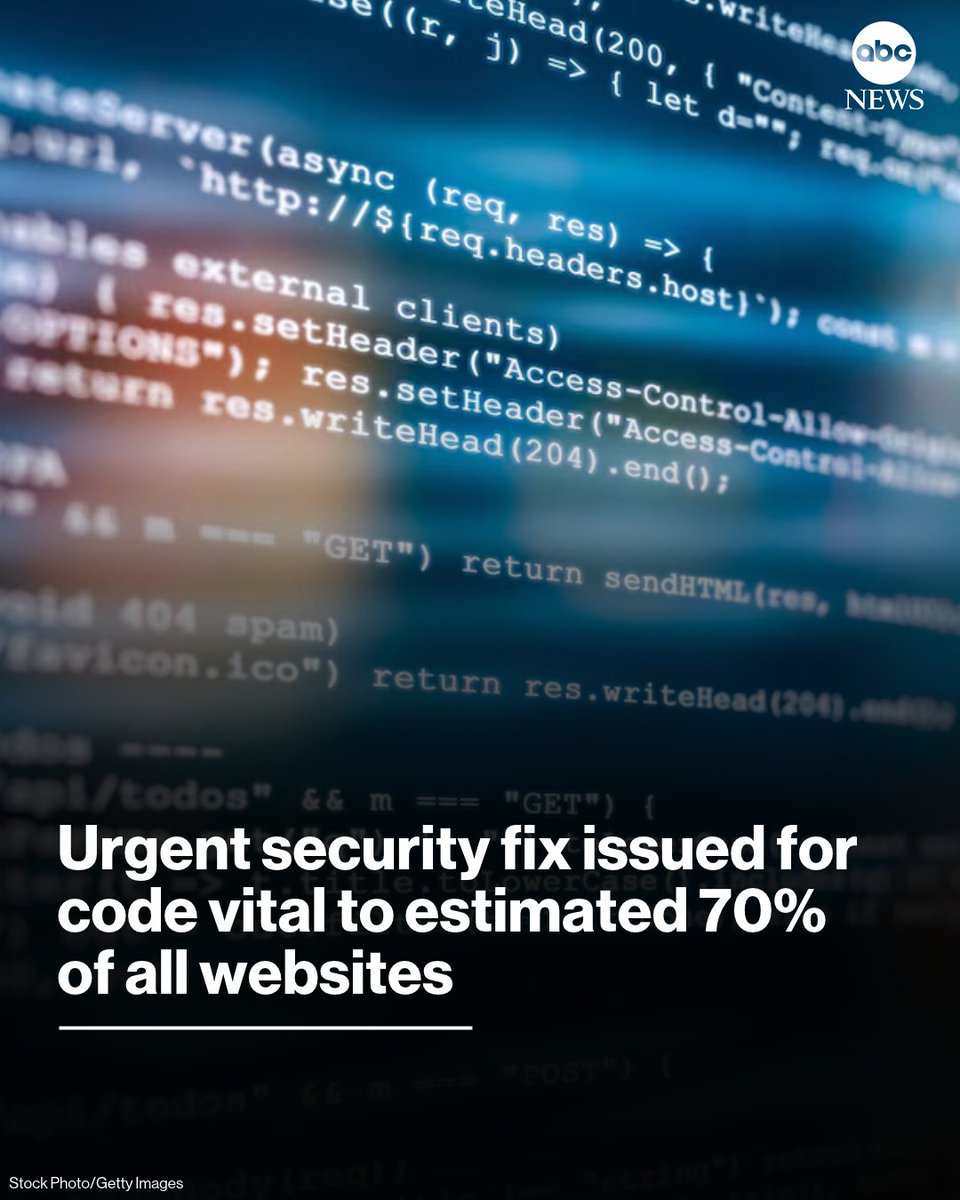
PHP, the software behind roughly 7 in 10 websites, has two critical flaws that can let hackers break in without a password.
Dubbed PHP2Shell, both are rated 9.2 out of 10 for severity.
Details began circulating on Oct 20. Emergency fixes arrived the next day, but attackers were already moving.
Cloudflare’s CEO says hacking attempts then jumped from thousands to MILLIONS within hours.
Cybersecurity agencies across several countries are telling PHP site owners the same thing: Patch it now, or take it offline.
Websites have gone dark worldwide, from government portals and hospitals to banks.
CrowdStrike warns these attacks leave almost no trace, so some sites may not know if they’ve been hit.
Around 2.6 MILLION internet-facing servers run PHP, potentially hosting hundreds of sites each.
Over 1.1 million use older versions no longer receiving official PHP updates.
Older installations may need an upgrade to a supported PHP version or a fix from their software provider.
And patching does not remove a backdoor an attacker may already have planted.
Cloudflare also says hackers are now tweaking their attacks to try to slip past its protections.
But PHP isn’t the only security story unfolding.
-Japan’s Onamae suspended ALL Desktop Cloud plans after malware was found on customer servers.
-India’s eMudhra had 8 website-certificate keys so weak, one was literally the number “4”.
-State Bank of India confirmed 3,897 customer records on the dark web.
-Criminals used AI agents to break into 400+ Latin American banks.
-Capcom confirmed a breach exposing 11.7 million email addresses.
-GitLab disclosed a 10/10 severity flaw in versions going back to 2014.
-LiteLLM removed a malware-containing release. Railway reported possible exposure of customer secrets.
None of these has a confirmed link to PHP2Shell.
We’re seeing separate breaches unfold together.
The true number of incidents could take months to come out.
The world is still on alert. Attacks are still coming.
The PHP development team is urging users to update immediately after fixing two critical vulnerabilities, rated 9.2 out of 10 in terms of danger, that if exploited could allow attackers to take over internet servers.
Read more: https://t.co/oxHRduD3Cm
🚨 SOMETHING VERY STRANGE IS HAPPENING TO THE INTERNET RIGHT NOW.
An AI discovers a catastrophic vulnerability buried in the infrastructure powering roughly 70% of the world’s websites. A vulnerability that apparently survived for more than a decade.
Suddenly, the NSA issues an extraordinary warning. Governments across Europe begin taking websites offline. Japan’s Prime Minister sounds the alarm. OpenAI, Google and some of the world’s largest cybersecurity companies coordinate an emergency response.
All because AI supposedly discovered something nobody could exploit at scale before?
Now here’s where things get interesting.
What if intelligence agencies already knew about these vulnerabilities? What if classified systems had been quietly exploiting weaknesses that commercial AI is only now beginning to uncover?
Think about that. If publicly available AI can uncover vulnerabilities of this magnitude today, what capabilities have existed behind closed doors for the last decade?
And here’s an even more uncomfortable possibility.
What if this crisis becomes the perfect justification for an entirely new internet architecture? Mandatory AI surveillance, government-controlled cybersecurity infrastructure, centralized digital identity and emergency powers to disconnect entire networks.
The Deep State wouldn’t even need to manufacture a cyberattack. A genuine vulnerability and the public’s fear of exploitation could accomplish far more.
Perhaps the real story isn’t that AI discovered a hole in the internet.
Perhaps it’s that AI has started exposing holes that certain people would have preferred remained undiscovered.
And the most terrifying question of all?
WHO HAD THE KEYS BEFORE AI FOUND THE DOOR?
UPDATE: Specific mitigation guidance for the recently identified PHP critical vulnerabilities is now available. Secure your servers today. Guidance and technical steps here: https://t.co/nuXgQ10Fzc
The FBI is literally telling companies to pull the plug and take their servers offline right now.
Patch your servers immediately or prepare to get wiped out.
The FBI has issued an emergency alert after two critical code execution flaws were discovered in PHP core.
PHP runs over 75% of the web, powering WordPress and millions of online stores.
The danger level is off the charts
✅ Unauthenticated attackers can hijack servers remotely
✅ No password or account needed
✅ Standard web firewalls cannot stop it
Active exploits are already hitting the wild
President Trump fundamentally transformed the future of finance with the signing of the GENIUS Act last year.
Today, U.S. Treasury’s @USOCC took a critical step toward implementing this historic legislation with the release of a final rule that delivers a federal framework for payment stablecoins that further cements American dominance in digital assets.