“A key question is whether that US block holds?” “America first really does in that situation become America last.”
@ShearingNeil speaks at Policy Exchange yesterday on geopolitics and the splintering of the Global Economy 👇
On this episode of the #FreeExpressionPodcast, I spoke with @ShearingNeil, Group Chief Economist of Capital Economics and author of “The Fractured Age: How the Return of Geopolitics Will Splinter the Global Economy.”
https://t.co/TEJhZVgFmH
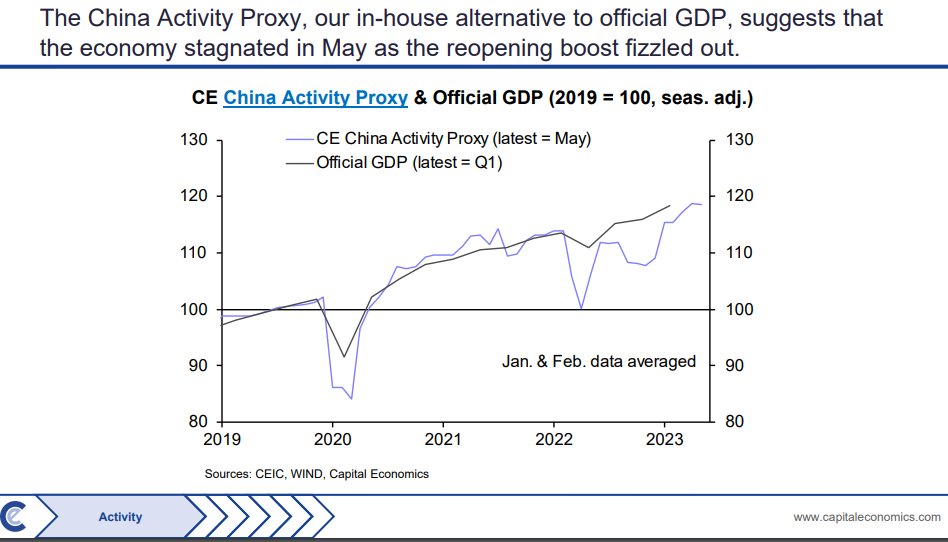
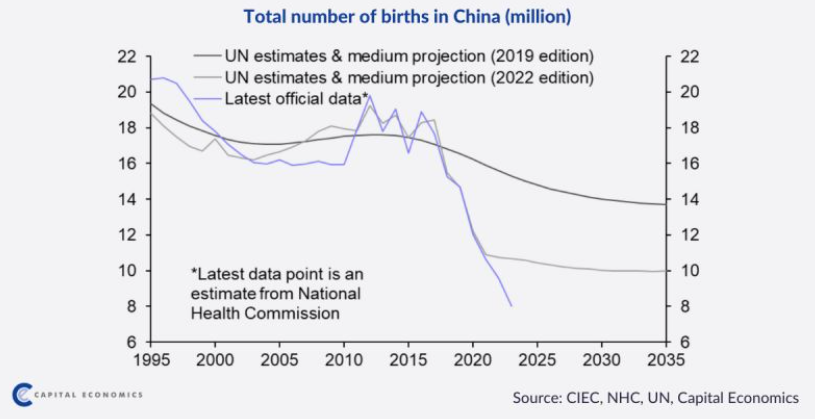
In his latest column Martin Wolf draws on our work on US-China fracturing. Analysis and data here - message me if you want access:
https://t.co/f0CJ7zvBqG
"Certainly, I think we'll be entering 2024 on a substantially weaker footing." - Neil Shearing, Chief Economist at Capital Economics Group https://t.co/YKdZ79vhvF
Artificial intelligence will boost economic growth in the US and other advanced countries more than in China and emerging nations https://t.co/Yho36or5ng
Pleasure as always to chat to @mattmiller1973, @GinaMartinAdams and @dsassower.
Tl;dr: China matters but not for the reasons you think, and don't expect fireworks from Powell tomorrow. (Cue fireworks.)
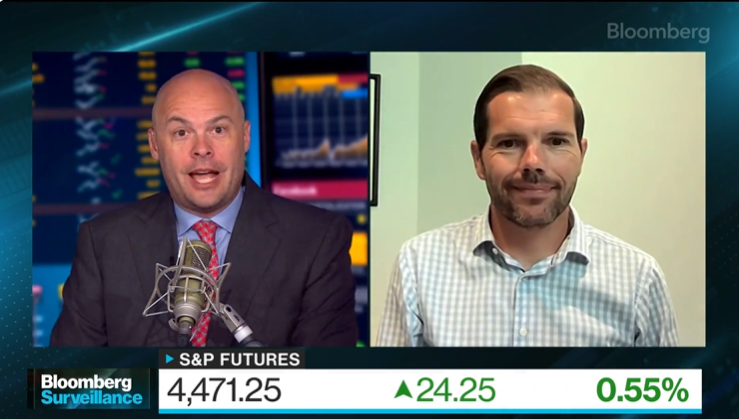
"Jackson Hole, if you're a bond investor, is kind of the main event this week." - Neil Shearing, Group Chief Economist at Capital Economics https://t.co/BXRqqGAsLk
The greedflation thesis “muddles inflation’s symptoms with its cause”, according to Neil Shearing of Capital Economics. Wages have tended to play catch-up with prices, not vice versa. https://t.co/1qXS1Cgs0Y
Finally: we've been asking clients for their views on AI. Results so far:
- Large majority think AI will be a genuinely transformative technology.
- 50/50 split as to whether it’s a US-only story.
- Large majority think a bubble is forming around AI
Will continue to update...
📢Annoucning our annual Spotlight project...
This year we'll be tackling AI and the economic and market implications. I know, I know - not another report on AI. But what's missing on the macro front is a comprehensive framework to pull everything together.
The debate around "Greedflation" muddles the distributional consequences of inflation with its underlying causes. Profit margins haven't expanded - but firms have been able to pass on higher costs. Which reflects the relative strength of demand. More here: https://t.co/UVGxDjKjkj