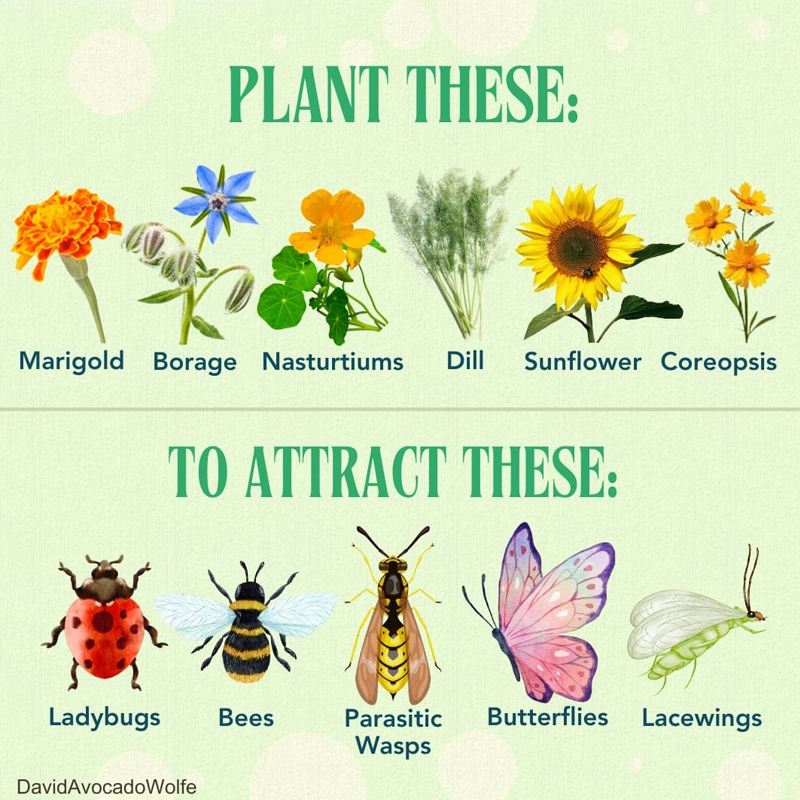
Plant these for the bees 🐝 🌺 🍯
If the #bees disappeared off the surface of the globe, then man would have only four years of life left. No more bees, no more #pollination, no more plants, no more animals, no more man 🐝
https://t.co/ytpgQhGTYD
FREEMAN DYSON Emeritus Professor, Princeton Institute for Advanced Studies (2009)
THERE IS NO GLOBAL WARMING, THERE IS ONLY REGIONAL WARMING (AND IT'S A GOOD THING!):
"The change that’s now going on is very strongly concentrated in the Arctic. In fact in three respects, it’s not global, which I think is very important. First of all, it is mainly in the Arctic. Secondly, it’s mainly in the winter rather than summer. And thirdly, it’s mainly in the night rather than at the daytime. In all three respects, the warming is happening where it is cold, not where it is hot.
The people in Greenland love it. They tell you it’s made their lives a lot easier. They hope it continues. I am not saying none of these consequences are happening. I am just questioning whether they are harmful.
There’s a lot made out of the people who died in heat waves. And there is no doubt that we have heat waves and people die. What they don’t say is actually five times as many people die of cold in winters as die of heat in summer. And it is also true that more of the warming happens in winter than in summer. So, if anything, it’s heavily favorable as far as that goes. It certainly saves more lives in winter than it costs in summer.
So that kind of argument is never made. And I see a systematic bias in the way things are reported. Anything that looks bad is reported, and anything that looks good is not reported.
A lot of these things are not anything to do with human activities. Take the shrinking of glaciers, which certainly has been going on for 300 years and has been well documented. So it certainly wasn’t due to human activities, most of the time. There’s been a very strong warming, in fact, ever since the Little Ice Age, which was most intense in the 17th century. That certainly was not due to human activity.
And the most serious of almost all the problems is the rising sea level. But there again, we have no evidence that this is due to climate change. A good deal of evidence says it’s not. I mean, we know that that’s been going on for 12,000 years, and there’s very doubtful arguments as to what’s been happening in the last 50 years and (whether) human activities have been important. It’s not clear whether it’s been accelerating or not. But certainly, most of it is not due to human activities. So it would be a shame if we’ve made huge efforts to stop global warming and the sea continued to rise. That would be a tragedy. Sea level is a real problem, but we should be attacking it directly and not attacking the wrong problem."
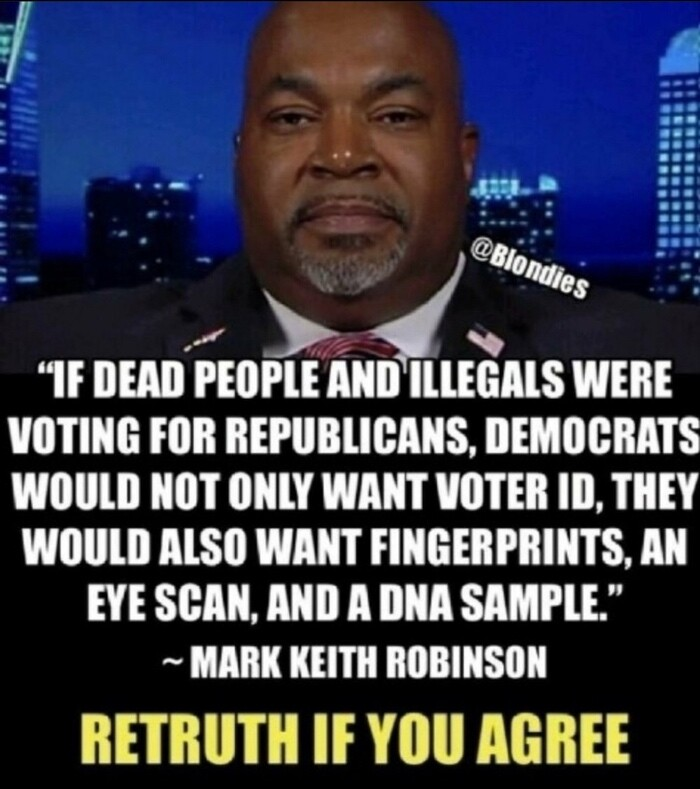
Kamala Harris and Tim Walz are radical Marxists who want to turn America into a woke, Socialist nightmare. Defeat Harris and Walz. Defeat the Democrats.
People need to stop overreacting about Kamala’s plan to reduce food inflation, as if it would lead to communism, mass starvation, and the end of America.
I worked in M&A in the food industry. Here’s a step-by-step summary of what would actually happen:
1. The government announces that grocery retailers aren’t allowed to raise prices.
2. Grocery stores, which operate on 1-2% net margins, can’t survive if their suppliers raise prices. So the government announces that food producers (Kraft Heinz, ConAgra, Tyson, Hormel, et. al.) also aren’t allowed to raise prices.
3. Not all grocery stores are created equal. Stores in lower-income areas make less money than those in higher-income areas, as the former disproportionately sell lower-margin prepackaged foods (“center of the store”) instead of higher-margin fresh products like meat (“perimeter of the store”). Because stores in lower-income areas aren’t able to cover overhead (remember, even if their wholesale costs are fixed, their labor, utilities, insurance, and other operating expenses aren’t fixed… yet), grocery chains start to shut them down. Food deserts in rural areas and in low-income urban areas alike become worse.
4. Meanwhile, margins for food producers are also quickly eroding. Their primary costs (ingredients, energy, and labor) aren’t fixed, and their shrinking gross profits leave less cash flow available to cover overhead, maintain facilities, and reinvest in additional production capacity.
5. Grocery chains, which have finite shelf space, start to repurpose their stores (those they didn’t have to shut down, I should say) to sell more non-price-controlled items—everything from nutrition supplements to kitchenware to apparel—and less price-controlled food products. Your local Kroger or Safeway starts to look and feel more like a Walmart.
6. Food producers stop making products with lower margins. Grocery chain start competing with each other to secure inventory. Since they can’t compete by offering stronger prices (remember, producers aren’t allowed to raise prices here, and, even if they could, grocery chains no longer have the gross profit to bear price increases), they compete on things like payment terms.
7. Small grocery chains start to shut down entirely, or get sold to larger chains like Kroger. In addition to not being able to cover fixed costs, a major reason for this is because they can no longer reliably secure delivery of products, due to producers prioritizing sales to larger customers, which are able to leverage their stronger balance sheets to offer superior payment terms.
8. Smaller food producers—which typically sell via distributors, rather than directly to grocery chains—start to go out of business. Because these producers have an additional step their value chains, and because they have lower volumes over which to spread their fixed costs, their cost structure is inherently disadvantaged compared to major food producers. When grocery stores aren’t able to raise prices, cutting product costs becomes all the more important, and deprioritizing purchases from smaller producers is an easy way to do so.
9. As supply chains break down, lines start to form outside grocery stores every morning. Cities assign police officers to patrol store parking lots, and food producers draft contingency plans to assign armed escorts to delivery trucks.
10. The federal government announces a program to issue block grants for states to purchase and operate shuttered grocery stores. The USDA also seizes closed-down production facilities.
11. The government announces that prices for all key food costs—corn, wheat, cattle, energy, etc.—are also now fixed, to stop “profiteers” from gouging the now-government-operated food industry.
12. Shockingly, the government struggles to operate one of the most complex industries on the planet. The entire food supply chain starts imploding.
13. Communism, mass starvation, and the end of America quickly ensue.
Hey wait a second