How did the Audit firm not find the discrepancy of 15 Lakh Crore over 5 years in Rajesh Exports. Are firms so incompetent to not flag this much big fraud. There's a strict need for action against them too.
NRIs never stop being Indian.
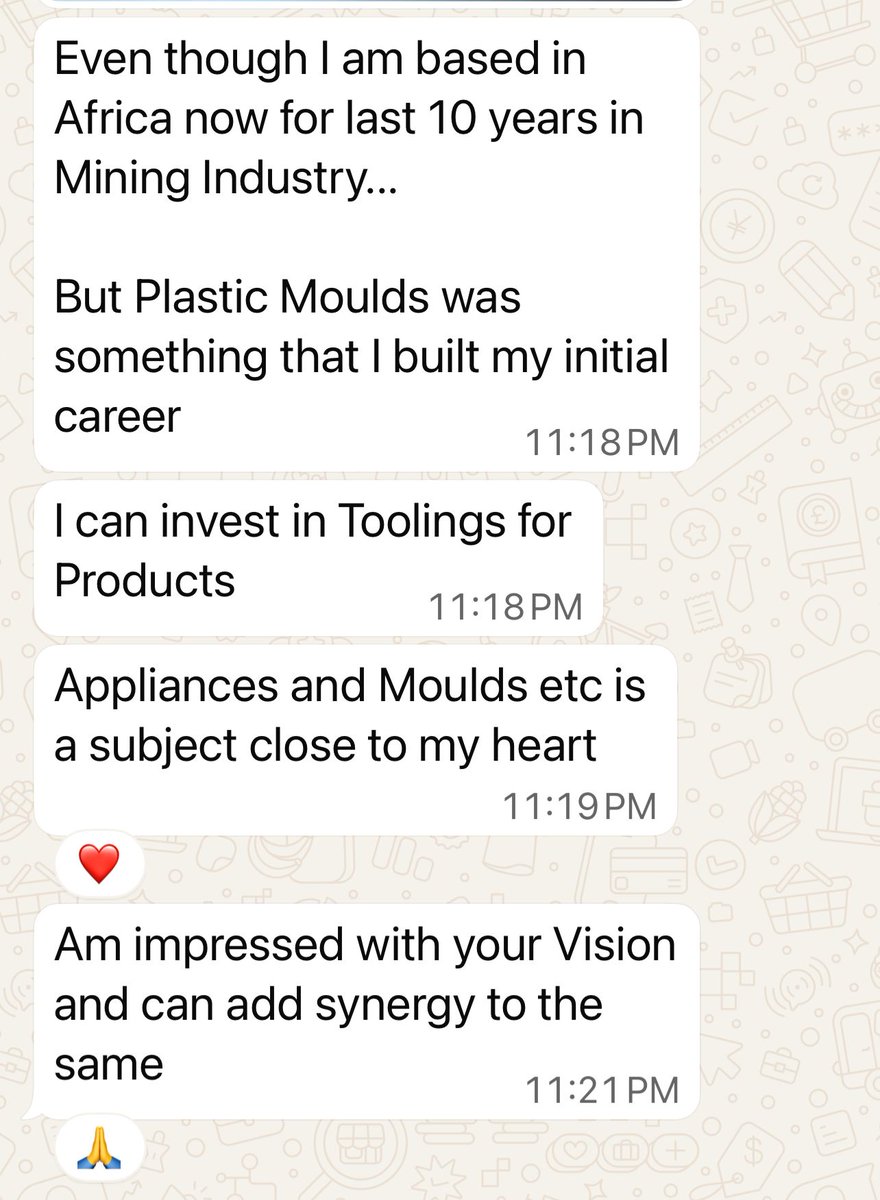
Yesterday, I posted about the idea of mould investing.
The response blew me away.
My inbox was full.
Some people wanted to invest a few lakhs.
And for others there was no limit to investing.
But what stood out was this:
Most were NRIs.
People who left India 20, 30, even 40 years ago.
People from the USA, Australia, Africa, Hong Kong, and many other places.
They had one question:
“How can I help?”
Not:
“How much will I make?”
“When do I get my money back?”
Just:
“How can I help build Bharat?”
That hit me hard.
I was born and raised in Hong Kong.
I have never lived in India.
Yet I feel that pull too.
And clearly, so do millions of others.
You can leave India.
But India never leaves you.
No matter how many years pass.
No matter how far you go.
For many NRIs, India is still home.
And seeing people want to give back,
not for profit, but for nation building,
makes me incredibly proud.
@WalkofV Agree. In a ideological party people have given their lives for the party when there was no power..to be picked out with zero political experience and projected and made a leader to leave the party like this.. it's OK.. maybe these qualities are needed in politics..
To.add his @SuryahSG father was one of the founding members of Bjp..Thoroughly grounded,active in ground,young and can Grow.. seen as clean.hope he stays and is appointed.
He @annamalai_k leaving Bjp is his decision.Bjp backed him and gave him a platform to become what he is..Now he feels he can Grow outside. Best wishes. He is any day superior to dmk admk or tvk..but Bjp should project @SuryahSG if he stays back..Young and has good potential.
🚨EXCLUSIVE | Govt Fixes July 2029 Deadline To Link Chenab To Beas Basin. Here's How The Blueprint Looks
An 8.7-km tunnel will divert surplus water from Chenab basin into Beas river system, which will ring alarm bells in Pakistan
My Story @CNNnews18 https://t.co/k7IfPAHjFD
Empowering our street vendors!
Marking the historic launch day of PM #SVANidhi, a massive thanks to Hon'ble PM Thiru.@narendramodi for transforming the lives of over 75 Lakh beneficiaries across India.
Immensely proud to create a real impact for 1000+ hardworking street vendors in #SouthChennai through this initiative.
தெருவோர வியாபாரிகளின் வாழ்வில் ஏற்றம் தந்த PM SVANidhi திட்டம் தொடங்கப்பட்ட நாள் இன்று! நாடு முழுவதும் 75 லட்சத்திற்கும் மேலான பயனாளிகளின் வாழ்வாதாரத்தை உயர்த்திய மாண்புமிகு பாரதப் பிரதமர் திரு.நரேந்திர மோடி அவர்களுக்கு மனமார்ந்த நன்றிகள்.
நமது #தென்சென்னை பகுதியில் 1000-க்கும் மேற்பட்ட தெருவோர வியாபாரிகளுக்கு இத்திட்டத்தின் மூலம் உண்மையான தாக்கத்தை ஏற்படுத்தி, கடனுதவி பெற்றுத் தந்ததில் பெருமிதம் கொள்கிறேன்!
#NarendraModi
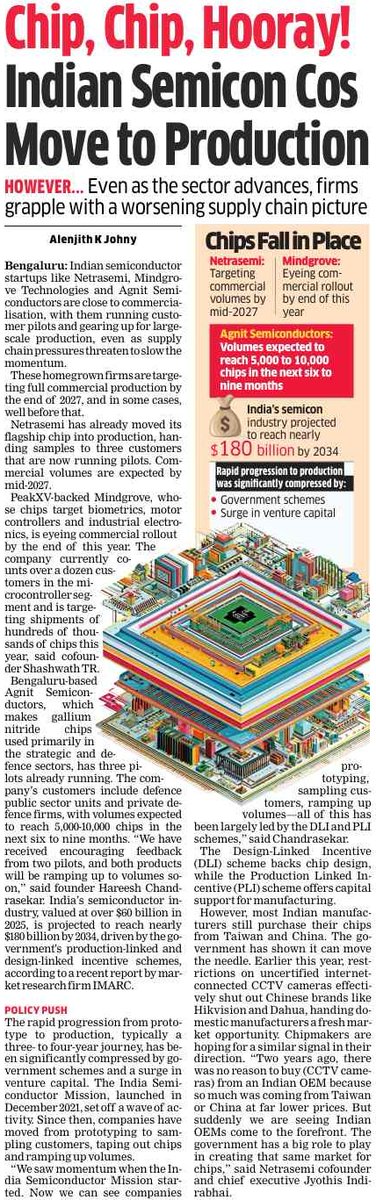
Several Indian semiconductor startups are moving from prototype and pilot stages into early production.
India’s semiconductor industry was valued at over $60 billion in 2025 and could reach nearly $180 billion by 2034.
54,000 tonnes of LPG. Per day. That's what Indian refineries pumped during the 2026 energy shock — up 60% from normal output.
No import panic. No rationing queues. No emergency diplomacy with Gulf states.
Just existing refinery capacity that everyone assumed we didn't have — until we needed it. I think this is the most underreported industrial story of the year. We're so used to the 'India depends on imports' narrative that actual domestic resilience gets zero airtime.
In the screaming, blood-slicked labor wards of colonial Calcutta, young mothers were dying by the 1000s in absolute, unmentioned agony. The heavy, crude steel instruments imported from Europe were designed exclusively for Western anatomy, turning a difficult childbirth into a literal death sentence for Indian women until a quiet Bengali daaktar stepped out of the ward, walked into a local forge & picked up a blacksmith’s hammer.
Long before he became the silent savior of the unborn, Kedarnath Das was just a quiet, intensely observant boy navigating the dusty lanes of mid 19th century Bengal. Born in 1867 into a modest middle-class family, Kedarnath did not possess a lineage of wealth, but he inherited a sharp, analytical mind. He watched a changing India, a nation adapting to Western education while its people quietly starved under colonial economic policies.
He fought his way into the prestigious Calcutta Medical College, graduating in 1892 with a brilliant academic record that forced the British faculty to take notice. While his peers chased lucrative private practices/drifted toward general medicine, Kedarnath chose the messy, chaotic & deeply tragic world of obstetrics. He did not just want to treat disease; he wanted to stand at the very threshold of human life.
By the turn of the century, Kedarnath was appointed as an obstetrician at the Eden Hospital in Calcutta. It was here that he walked into a silent, horrifying epidemic. When a baby was stuck in the birth canal, doctors had to rely on obstetric forceps: metal tongs used to gently guide the child into the world. But the British Empire supplied only British tools, specifically the massive, heavy Simpson & Barnes forceps.
These instruments were engineered for the larger pelvic structures of European women. When British doctors/trained mid-wives applied these brutal, oversized steel clamps to the smaller, deeply delicate & often malnourished frames of Indian mothers, the results were catastrophic. The heavy steel routinely crushed the fragile skulls of the infants or caused fatal, uncontrollable internal hemorrhaging in the mothers.
To the colonial medical establishment, these deaths were dismissed as a mere statistical byproduct of native frailty. But to Kedarnath, it was systemic, mechanical slaughter. He realized a truth that the entire British Empire was too arrogant to see: colonial medicine assumed that 1 imperial size fitted the entire human race.
Kedarnath executed an audacious, decade-long anthropological crusade. Working in absolute silence, away from the prying eyes of British supervisors, he manually measured the pelvic dimensions of 1000s of Indian women across different regions & backgrounds. He compiled a mountain of unprecedented, raw anatomical data.
Armed with his sketches & calculations, Kedarnath bypassed the elite British medical supply chains. He walked into a local Calcutta forge. Amidst the roaring fire, the flying sparks & the rhythmic clang of iron, he instructed the local blacksmith to shape a completely new weapon of survival.
He threw out the heavy, overbearing British design. He forged a pair of forceps that were significantly shorter, lighter & featured a precision-engineered, gentler curve that perfectly cradled the smaller, delicate anatomy of native mothers. Symmetrical, elegant & minimalist, it became known to a handful of stunned specialists as the "Bengal Forceps/the Das Forceps."
When he introduced his handmade prototype into the labor wards of Calcutta, the mortality rates plummeted overnight. Lives that would have vanished into the cold statistics of colonial neglect were suddenly walking out of the hospital doors, healthy & breathing.
The Western world was stunned. British manufacturers in London, who had initially dismissed Indian medical minds, were suddenly forced to mass-produce Kedarnath’s precise design in their factories, exporting the "Das Forceps" across the British Empire & the Americas to save women of similar petite statures worldwide. In 1928, he published Obstetric Forceps: Its History & Evolution, a monumental, 900 page masterpiece that became the definitive global textbook on the subject for half a century. He was knighted for his genius, yet he remained fiercely dedicated to his soil, eventually helping found the indigenous Carmichael Medical College to train Indian doctors on their own terms.
As the 20th century roared forward, bringing partition, independence & the high-tech digital revolution, the memory of Sir Kedarnath Das was quietly, systematically erased. The textbook he authored vanished from modern curriculums. The local forges that once pounded out his life-saving steel were replaced by modern pharmaceutical corporations.
Today, his name does not line our textbooks, nor are there massive national monuments erected in his honor. He has become a complete phantom, a ghost of Indian scientific brilliance. Yet, if you walk into the dusty archive rooms of old medical colleges/look through the vintage surgical kits of vintage rural clinics, you will find a pair of short, elegantly curved, unmarked steel forceps resting in the dark.
Empires have crumbled into the dust of textbooks, & the names of the kings who ruled us have faded from the wind, yet every single time an Indian child is born healthy into a world that once tried to gatekeep its survival, the silent hammer of Kedarnath Das still echoes in the room proving that the ultimate act of freedom is not taking a life, but having the courage to forge the tools that save it.
Leaving Congress, never interested in party posts, but in last 2 yrs forced to take 2 posts,will send my resignation to District President tomorrow...Best of luck ...
Check how public is now demanding all the cut money back from TMC leaders.
Here, TMC guy is asked to give in writing that he will return all of 1lac per local businessman he has taken before elections.
Strongly condemn the shocking attack on MP Shri Abhishek Banerjee in Sonarpur, as he went to meet the families affected by post-poll violence in the state.
The deliberate lack of adequate police protection for a prominent Opposition leader speaks volumes about the BJP’s politics of vendetta and persecution
The Government of West Bengal and the Union Government must ensure security for all Opposition leaders and take immediate steps to prevent such attacks. Political differences can never justify any kind of violence.
@abhishekaitc