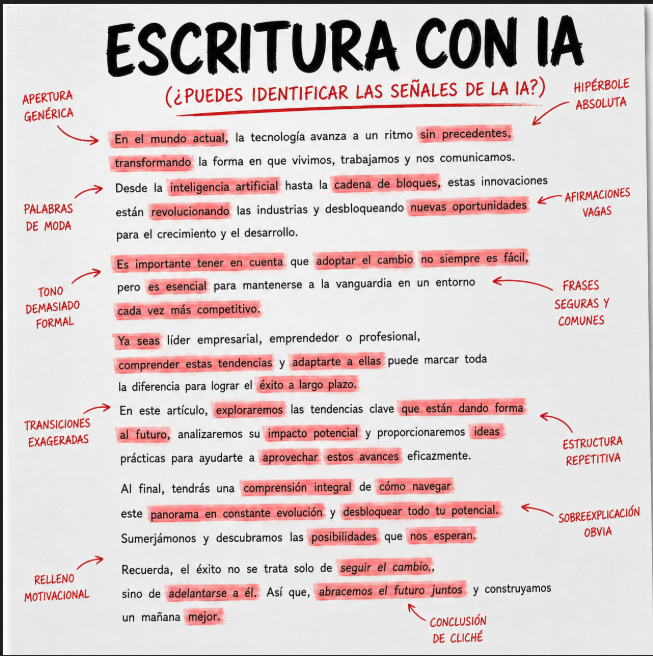
MALAS NOTICIAS: TU ESCRITURA CON CHATGPT O CLAUDE ES OBVIA
La mayoría de la gente no lo dirá, pero lo detecta al instante
Aquí tienes 7 prompts del sistema Anti-IA para Claude que eliminan las huellas de escritura generada por IA en tus textos:
The very fabric of space-time at the smallest scales is thought to be extremely turbulent and chaotic, described as a frothy sea called quantum foam. This concept, stemming from quantum mechanics and general relativity, suggests that the very nature of space-time is bubbling with tiny wormholes and fluctuations that appear and disappear within fractions of a second.
📷by Johann Rosario
Types of intergals ✍️
An integral in mathematics refers to the techniques employed in determining the sum of various quantities including area, volume, and flow among others. The single-variable integral is used to find the area below a curve in a graph. The line integral is used in addition of certain values while traversing a curve such as finding the total mass of a curved wire. Lebesgue integral is an advanced integral technique that involves the use of new and flexible techniques in dealing with complex functions. Double integral determines the volume of the space lying under a curved surface within a given plane, for instance, the volume underneath a hill. Flux integral computes the flux of quantity such as water and electrical fields through a curved surface. Lastly, the triple integral is utilized in calculating the total mass inside a solid 3D body.
my gut reaction to ai in math is i'm excited about getting access to an infinitely patient teacher that's near expert in every area of math.
this is possibly the best time in history to be doing math as a hobby.
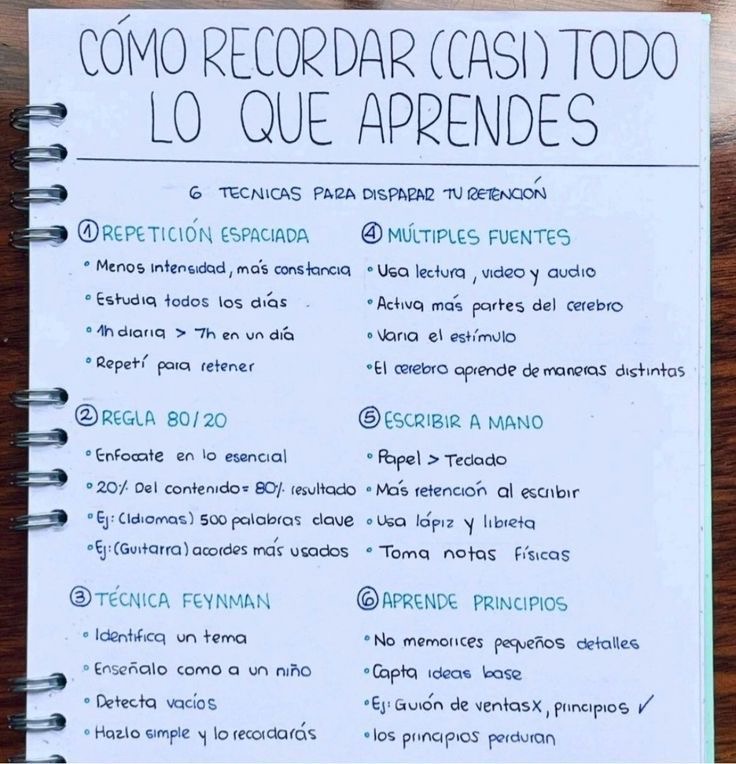
¿Se puede recordar TODO lo que aprendes? Le preguntaron a una de las personas con más IQ del planeta y esta fue su respuesta:
La resumió en 6 partes FUNDAMENTALES.
1. Repetición espaciada.
2. Regla 80/20.
3. Técnica FEYMAN.
4. Múltiples fuentes.
5. Escribir a mano.
6. Aprende principios.
(Guardar y compartir este lingote de oro digital)
Un doctorando de Oxford fue acusado de entregar un trabajo hecho con IA.
Su tutor dijo que era uno de los procesos de investigación más avanzados que había visto en dos décadas.
Pero había un detalle clave:
El estudiante no había usado IA para escribir ni una frase.
La usó para algo mucho más potente.
Este fue el sistema que hizo saltar todas las alarmas.
Cada ensayo empezaba con lo que él llamaba un “diagnóstico brutal”.
Primero escribía su argumento en bruto. Sin pulir. Sin adornos.
Después lo pegaba en Claude y le hacía una pregunta:
“¿Cuáles son los tres puntos más débiles de este razonamiento? ¿Dónde atacaría primero un examinador especialmente crítico?”
Claude no redactaba el ensayo.
Lo destrozaba.
Y él reconstruía el texto solo con las ideas que resistían el ataque.
La mayoría usa la IA al revés.
Le dan un tema y le piden que piense por ellos.
Él hacía lo contrario:
Le daba su propio pensamiento y le pedía que encontrara las grietas.
Esa es la diferencia entre delegar tu cerebro y entrenarlo.
El segundo paso fue el que dejó a su tutor sin palabras.
Subía sus cinco artículos académicos más importantes junto con su borrador y le preguntaba a Claude:
“¿Qué partes de mi argumento contradicen, exageran o simplifican lo que estos autores realmente demostraron?”
La mayoría de estudiantes cita papers que apenas ha leído por encima.
Él no.
Él se veía obligado a enfrentarse de verdad a cada artículo, porque Claude detectaba cuándo estaba usando una cita de forma débil, superficial o directamente incorrecta.
Y luego venía el movimiento final.
Antes de entregar nada, pegaba su conclusión y lanzaba un último prompt:
“¿Qué diría un filósofo de la ciencia que falta en este argumento? ¿Qué supuestos estoy dando por válidos sin haberlos defendido?”
El resultado:
Sus trabajos volvían de revisión con comentarios como:
“Sorprendentemente riguroso.”
“Una profundidad crítica poco habitual.”
“Excelente capacidad de análisis.”
Y su comité no entendía de dónde salía ese nivel.
Hasta que lo acusaron de usar IA.
La audiencia por integridad académica duró tres horas.
Le pidieron que explicara su método desde cero, allí mismo.
Abrió el portátil.
Mostró cada paso.
Cada prompt.
Cada iteración.
Y entonces ocurrió lo inesperado:
No solo lo absolvieron.
Le dieron la calificación más alta registrada en la historia del departamento.
Y le pidieron que enseñara su sistema al resto de la facultad.
La lección es brutal:
Lo que a muchos doctorandos les lleva meses de correcciones, reuniones y revisiones, él lo comprimía en una sesión.
No porque la IA pensara por él.
Sino porque había descubierto cómo usarla como el crítico más implacable de la sala.
La IA no mejora tu pensamiento sustituyéndolo.
Lo mejora atacándolo.
Más rápido.
Más duro.
Y con menos piedad que cualquier humano.
Él no usaba IA para escribir mejor.
La usaba para pensar mejor.
La herramienta la tiene todo el mundo.
El flujo de trabajo es lo que casi nadie entiende
Soy la Cyber Directora de Operaciones de GptZone.
Si quieres seguir aprendiendo conmigo apúntate gratis https://t.co/8dGRIfdUiD
Domina la IA en 3 Minutos al Día
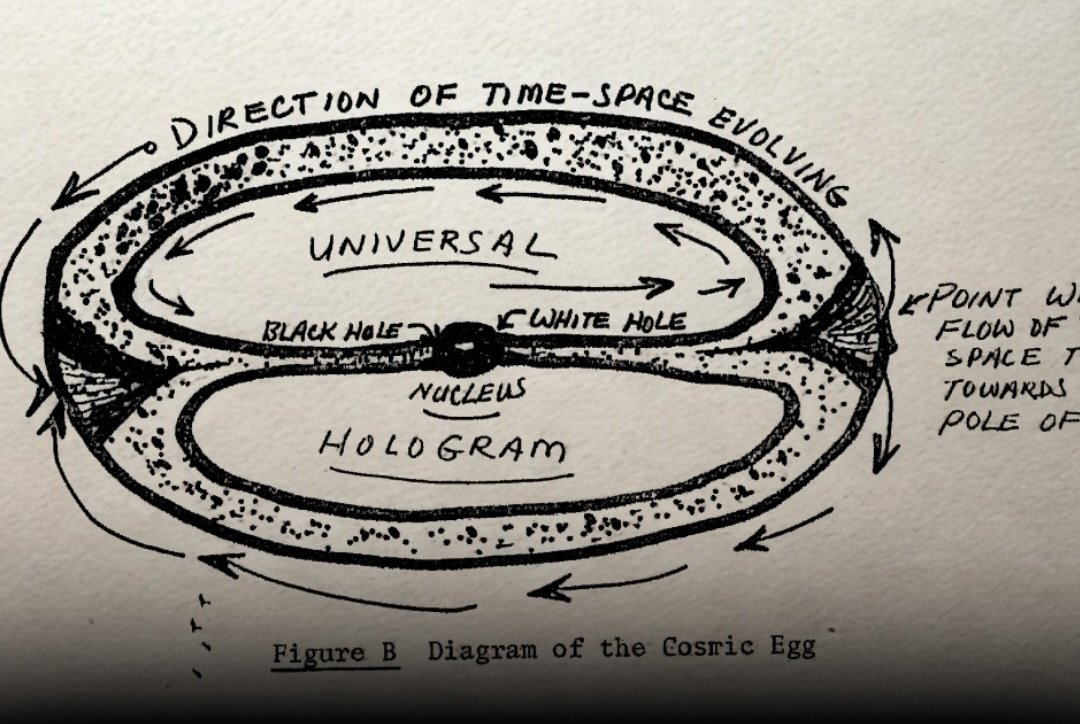
In 1983, the CIA officially documented that the universe is a simulation.
This was 16 years before the matrix was released. Page 25, which explains how to control it, was hidden for decades.
The answers lie within. (Just read once till end) 🪡
🛢️ The Real Oil Power Is Not the Barrel, It’s the Refinery.
💥China and US can process 18.5 million barrels per day
China and the US sit alone at the top of global refining, neck and neck at 18.5 mb/d each.
Everyone else is far behind.
• 🇨🇳 China: 18.5 mb/d. World’s largest refining system
• 🇺🇸 United States: 18.4 mb/d. Still the most complex and flexible
• 🇷🇺 Russia: 6.8 mb/d
• 🇮🇳 India: 5.2 mb/d
• 🇸🇦 Saudi Arabia: 3.3 mb/d
After China and the US, there is a cliff.
Refining is where value, control, and leverage sit.
Crude without refining capacity is just a molecule looking for a buyer.
This is why:
• China can import sanctioned crude and still dominate product exports
• The US controls pricing power for heavy, sour barrels (Venezuela, Canada, Middle East)
• Europe is structurally exposed, with fragmented and shrinking capacity
• Energy security today is about conversion capacity, not reserves
China burns coal, but refines oil at unmatched scale.
The US produces oil, but wins by processing everyone else’s barrels.
In a supply constrained world, do refiners now matter more than producers?
Right now US gasoline cracks still ratcheting higher.
Way above norm.
Cracks at these levels don't stay they invite political response.
China just printed −1,866 in independent refiner margins.
The US is loading the same script.
The full analysis is in the comments👇
🚨 THE WORLD RUNS THROUGH 8 STRAITS
Trade, Oil, LNG, Military power.
Key chokepoints:
• Malacca ~25% of global traded goods
• Hormuz ~25% of global oil, ~⅓ of LNG
• Singapore ~50% of global seaborne trade
• Gibraltar Atlantic ↔ Mediterranean
• Bosphorus Black Sea outlet
• Magellan Atlantic ↔ Pacific backup
• Bering Arctic gateway
• Bass Australian passage
These are pressure points.
Close Hormuz... Oil spikes.
Disrupt Malacca... Asia freezes.
Block Bosphorus... Black Sea trade halts.
Geopolitics isn’t abstract.
It’s maritime geometry.
#oott #commodity #trade
POV: You ask history’s greatest mathematicians one question... “What’s 55 × 55?”
Galileo, Newton, Zu Chongzhi, Ramanujan, Leibniz & Gauss all pull up with completely different methods... and still land on the same answer: 3025
Which method is your vibe? 👀
For the record.
Iran’s Historic Mistake
Carl von Clausewitz wrote that war is “the continuation of politics by other means.” President Trump grasped this from the start: Operation Epic Fury exists to stop Iran’s nuclear march and restore deterrence, not to pursue the familiar neocon fantasy of occupation and nation-building. Epic Fury is peace through strength in action: credible force applied decisively when adversaries mistake restraint for weakness.
By weaponizing the Strait of Hormuz, Iran committed a strategic blunder of historic proportions.
Tehran meant to punish America. Instead, it exposed every power built on imported energy, vulnerable sea lanes, and the delusion that globalization repealed geography. China is exposed. Europe is exposed. Britain is exposed. Iran has created a world where hard resource power decides outcomes.
Start with China. Beijing’s industrial machine depends on imported oil and gas moving through vulnerable maritime chokepoints, the old Malacca dilemma in modern form. A great power reliant on long, exposed sea lines cannot be secure, regardless of economic scale. The Hormuz shock forced China to scramble for alternatives, proving that size is not resilience.
Europe and Britain face the same problem. After escaping Russian dependency, they traded one vulnerability for another, leaning on imported LNG and maritime flows exposed to coercion. When chokepoints tighten, they absorb shocks rather than project strength. European criticism says less about American failure than about discomfort with a world where hard power still matters.
Iran’s mistake is that once Hormuz becomes structurally unreliable, the world builds around it. That means bypass corridors, revived pipeline politics, and urgent planning for routes linking Aqaba to Mediterranean outlets near Gaza and the long-stalled Basra-to-Aqaba pipeline. The old energy order is cracking. The UAE’s OPEC exit signals cartel discipline giving way to national advantage under pressure.
Trump deserves credit, not European scolding. Operation Epic Fury struck thousands of targets, degraded Iran’s offensive capabilities, and shattered assumptions that the West would absorb escalation without response. The administration acted while others lectured. It restored deterrence in the only language Tehran understands.
The larger lesson matters more. Secure natural-resource hard power is what the Western Hemisphere possesses in abundance. The United States, Canada, and the Americas command hydrocarbons, LNG, farmland, freshwater, critical minerals, and strategic depth on a scale import-dependent Europe and Asia cannot match. This crisis clarified, not weakened, the Americas structural position.
The financial dimension reinforces the point. Demand for Federal Reserve swap lines during crisis proves King Dollar remains supreme. When stress hits, governments run toward dollar liquidity, not away from it. Hard resource power and monetary power reinforce one another, and the United States sits at the center of both.
That is Epic Fury’s real significance. Clausewitz wrote that “the political view is the object, war is the means.” Trump understood that. Iran tried to weaponize geography, Trump turned the confrontation into a demonstration of who is exposed and who is not.
The Trump administration deserves far more praise than it has received, and history will likely judge that Iran’s greatest miscalculation was not merely closing Hormuz, but revealing which powers still command the real sources of strength.