Five years ago, we set out with one conviction: the infrastructure moving money across the globe was broken, and nobody was fixing it reliably.
Today, that conviction is backed by $350 million in settled volume, 20,500 transactions across 15 markets in Africa, the GCC and Europe, zero failed settlements, and many lessons.
Shiga V2 is what those lessons became. Moving money taught us that rails alone aren't enough. People need a secure place to hold and use digital value, and organisations need a simple way to build it into how they already work. So we built for both.
Say hello to products and APIs for the digital asset economy.
Say hello to Enta & Pulse! 🚀
See what we've built -> https://t.co/XLo5vdQafa
Nigeria now has two regulators for digital assets, and most operators will need to answer to both.
📌 The SEC regulates assets that behave like investments.
📌 The CBN’s new rules, in force since November 5, cover assets used to pay, settle or move value.
What that means in practice:
🔹 Wallets, exchanges and on/off-ramps need a ₦1 billion CBN license, on top of any SEC capital
🔹 Dollar stablecoins must come through a Nigerian-licensed issuer
🔹 P2P platforms must match every naira payment to the trader’s BVN
🔹 Existing operators must register with the CBN by December 5
We broke down the full rulebook, including where the CBN and SEC regimes align and where they don’t.
Read the full analysis 👇
https://t.co/WgILZJfODa
#Stablecoins #Crypto #Fintech #Nigeria #P2P #CBN #DigitalAssets
Moments we love. Moments we build for. Moments we're grateful for. Thank you once again to our friends, clients, partners & stakeholders for continued support! 🚀💙
"Our hardest problem was never building product(s), it was moving our own money. Our US-raised investment had to fund Nigerian operations, and when our banking provider exited and closed our accounts, we were scrambling to pay local bills. Shiga gave us a reliable way to move funds in and consolidate revenue across the continent. It took a genuine operational risk off the table." — Deji Awoniyi, Founder and CEO, MyPocketCounsel.
A banking provider exiting a market isn't rare; it's one of the specific risks founders operating across borders actually plan around. This is what having a fallback that doesn't depend on any single bank's market decisions actually looks like in practice.
Get started today: https://t.co/Ra8tEKiI80
Reconciliation is one of those problems that looks solved until volume increases; a few transactions are easy to match by hand, a few hundred are not. Most providers leave that matching work to your finance team, buried in a spreadsheet nobody enjoys maintaining.
Pulse names accounts to the business for every supported collection and payout flow, so transactions reconcile without the manual matching layer. Every transaction tracked from quote to settlement, to the kobo, in data your finance team can actually export and trust.
Talk to our team today:
https://t.co/Ra8tEKiI80
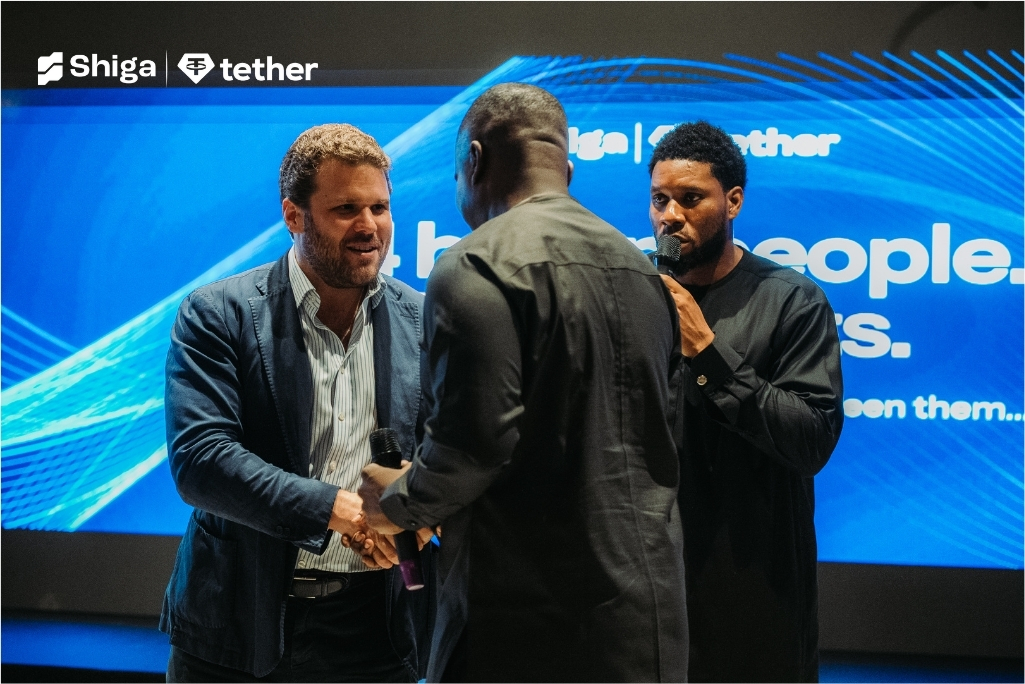
Last week, we hosted "Architects of Tomorrow", a private invite-only event with Tether at Pitstop Village, Ikoyi, and the room said it all: the future of finance is already being built.
A huge thank you to everyone who showed up: our clients, investors, partners, and the industry leaders who shared the stage and the conversation. Special thanks to the Tether team for co-hosting with us, and to everyone behind the scenes who made the evening run smoothly.
The conversations kept coming back to one idea. Stablecoins are following the same path AI did: from “interesting concept” to everyday infrastructure. With regulatory frameworks taking shape in Nigeria and across the region, USDT and blockchain rails are quickly becoming the backbone of how money moves.
That shift is what we build for at Shiga:
🔹 10+ years in financial services, 6 of them building exclusively onchain.
🔹 We’re a portfolio company of Tether, the company behind USDT.
🔹 Stablecoin and blockchain infrastructure designed for how businesses on the continent actually operate.
If you’re looking to add stablecoin payments, move value on blockchain rails, or future-proof your financial stack, we’d love to hear from you.
👉 https://t.co/U3XIOjotAB
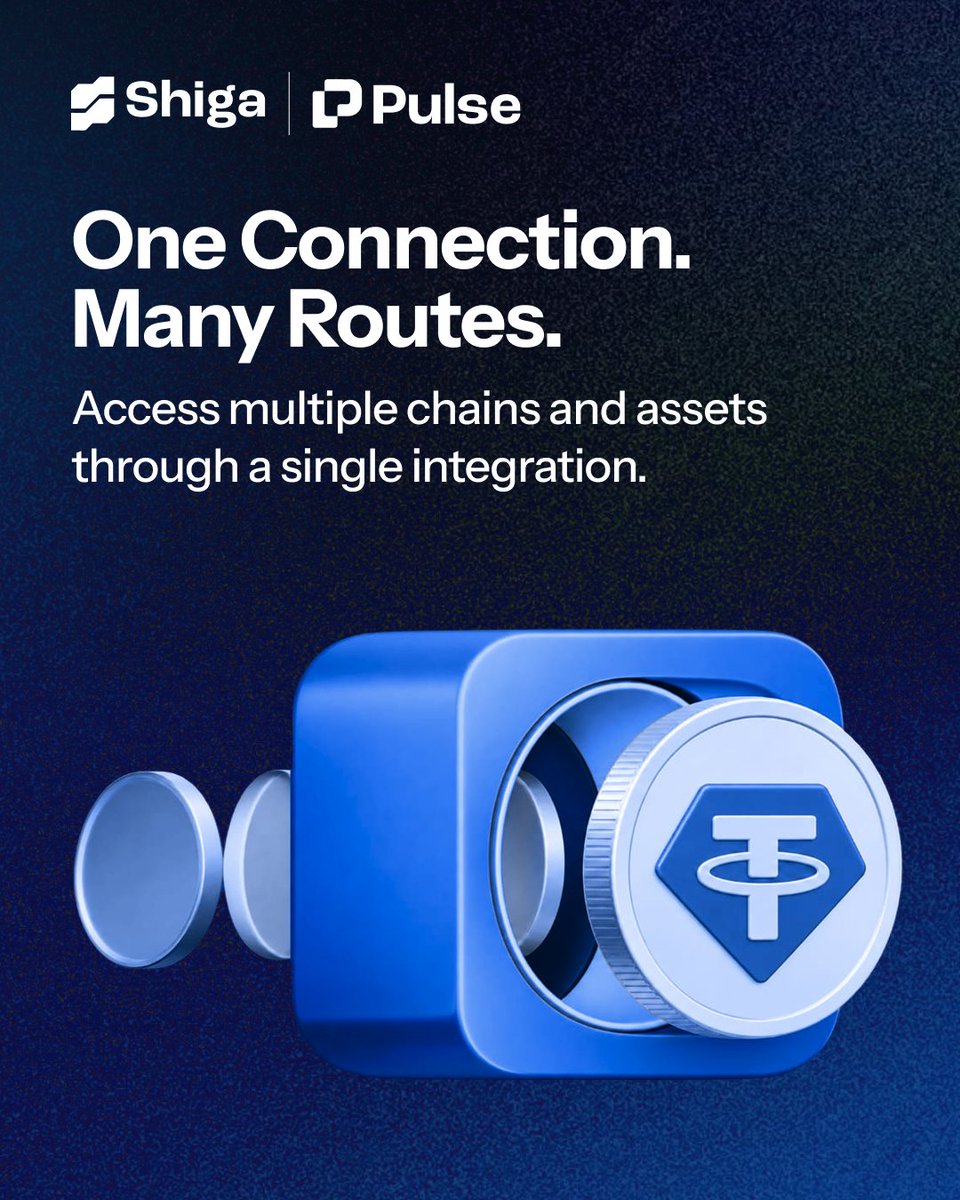
Traditional corridor setups tie you to whatever network your provider happens to support; one chain, one rail, and a new integration every time you need another. It's treated as normal because switching providers to fix it is its own project.
Pulse routes across Ethereum, Base, and Polygon today, live on NGN-USDT and NGN-USDC, with GBP, EUR, Bitcoin, and tokenized gold corridors on the way. All of it sits behind one connection. The asset, chain, and rules for each corridor are configured, not rebuilt.
Talk to our team today
https://t.co/iHCqMiM7Dh
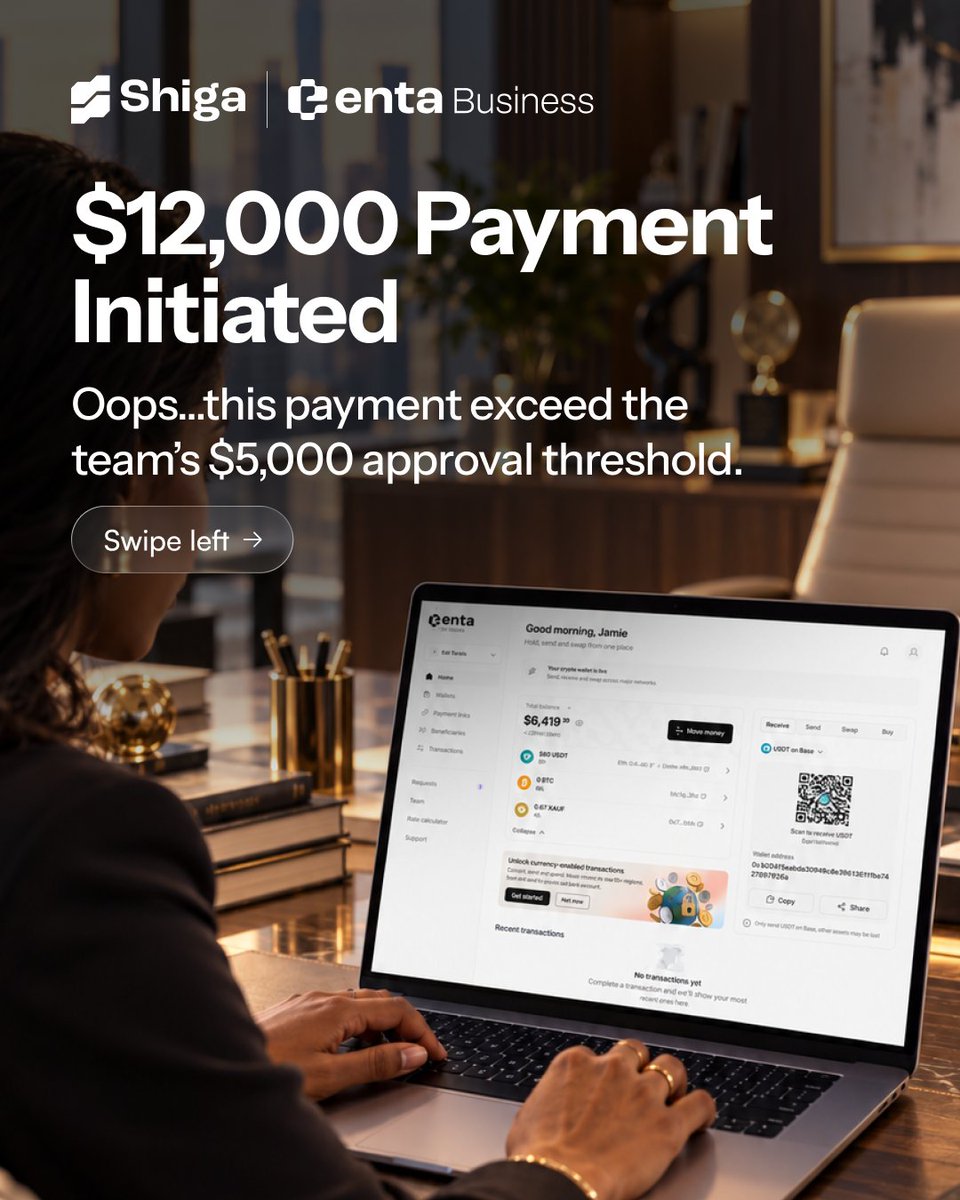
Growing businesses eventually face the same quiet risk: one person with enough access to move real money alone, no second signature required, no record beyond a bank statement.
Enta Business builds the check into the rails themselves. Set a threshold; above a certain amount, a second owner has to approve before a payment goes out.
Every action is logged with who prepared it, who signed off, and when, down to the device and timestamp. Control isn't a policy someone has to remember to enforce. It's the system's default.
Get started with seamless payment threshold & approval management for your business, today.
https://t.co/Ra8tEKiI80
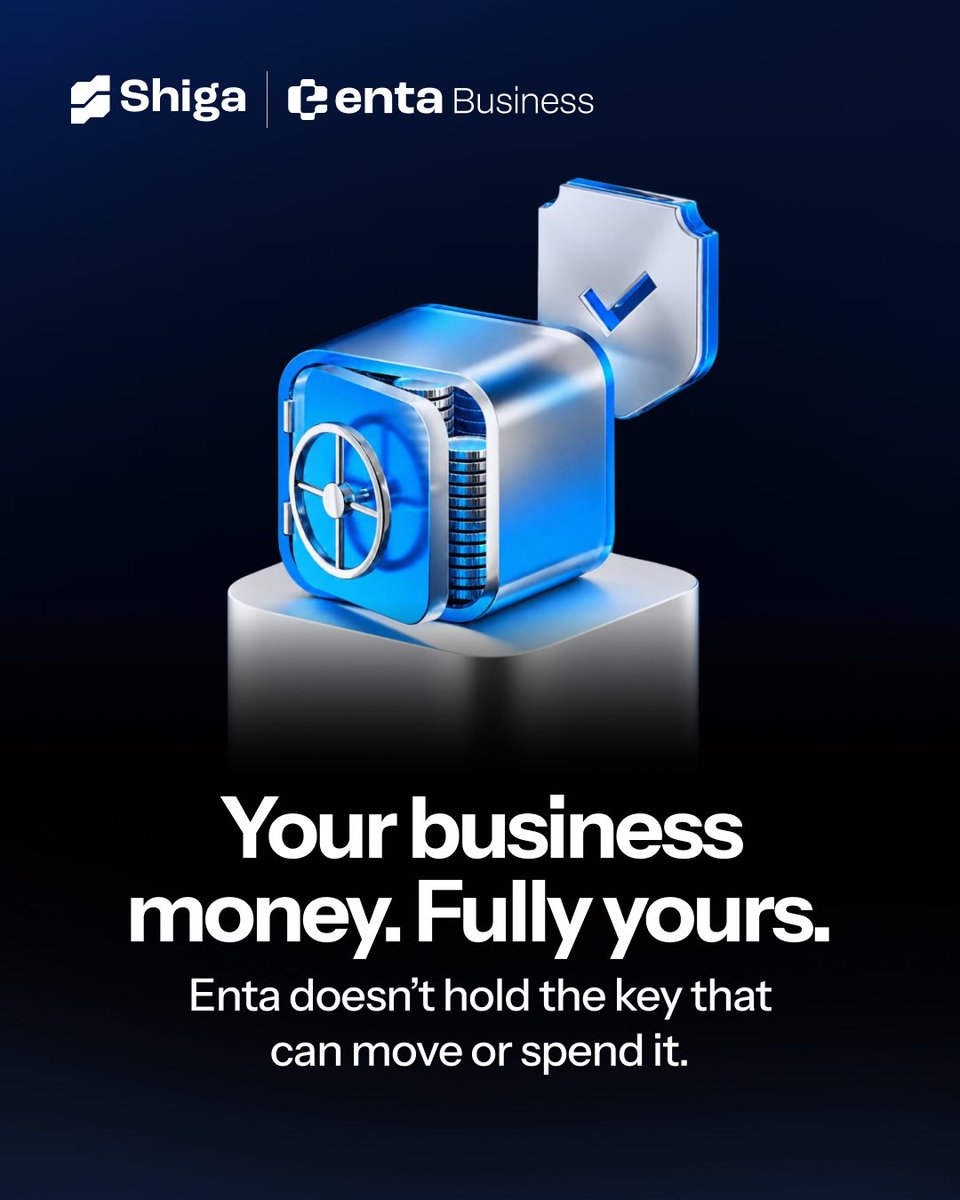
Most business accounts ask you to trust the institution holding your money not to do anything with it. That trust is a policy; a rule the institution has chosen to follow, and could, in theory, choose not to the next day.
Enta Business removes the choice entirely. It's yours, and only yours. No key that can spend it sits with Enta. That's not a policy. It's how our architecture was built. Nothing gets lent out behind your back, because there's no mechanism by which it could be.
Get started today:
https://t.co/Ra8tEKiI80
What you see right now isn't a co-marketing quote pulled for a slide. Shiga Digital, the company behind Pulse, is a portfolio company of Tether.
When the largest stablecoin issuer in the world puts capital behind infrastructure, it's a different category of signal than a partnership announcement. It's a bet on the infrastructure thesis itself. Tether doesn't do 'everyone.’
Talk to our team today:
https://t.co/iHCqMiM7Dh
Billing clients abroad solves one problem and quietly creates another: the money arrives on their timeline, and most businesses feel pressure to convert it on the same day, rate be damned, because that's just when the invoice happened to clear.
With Enta Business, client payments can land and sit in digital dollars, holding their value for as long as you need them to.
Payroll and local costs convert when the rate actually works in your favor; a decision made on your terms, not dictated by someone else's payment schedule.
Save your business from chaos. 👌
Get started today: https://t.co/Ra8tEKiI80
A lot of infrastructure claims trust as a feature. Few can actually show the mechanism behind it.
Pulse's answer is specific: customer balances sit in wallets your users hold, not in a pooled account Pulse controls.
Compliance and counterparty checks run before any transaction settles, with a clear record for review; the system fails closed if a check can't complete.
That's not a trust statement. It's an architectural one. The keys were never Pulse's to hold in the first place.
Talk to our team today:
https://t.co/iHCqMiM7Dh
Every import-dependent business runs the same math without naming it: sell in local currency, restock in dollars or yuan, and hope the exchange rate doesn't move too far between the two.
When the rate inevitably shifts, the gap quietly becomes the business's problem to absorb.
Enta Business lets that working capital sit in digital dollars instead. Held at the value it was collected at, paid out straight to the supplier when the stock is ready. The gap stops being where the margin goes to die.
Protect your capital & margin.
Get started today: https://t.co/Ra8tEKiI80
Every cross-border payments company eventually hits the same wall: a market worth entering, and a naira-specific build standing between them and it. Local licensing. Local liquidity. A corridor nobody on the team has actually shipped before. Pulse exists so that wall doesn't have to be yours to build. One integration handles collection, conversion, and payout into and out of naira; configuration, not a parallel engineering project. The companies already living on Pulse didn't build an African payments stack. They plugged into one. If naira is on your roadmap because your customers are already asking for it, the build-vs-integrate decision is simpler than it looks. Talk to our team today: https://t.co/iHCqMiM7Dh
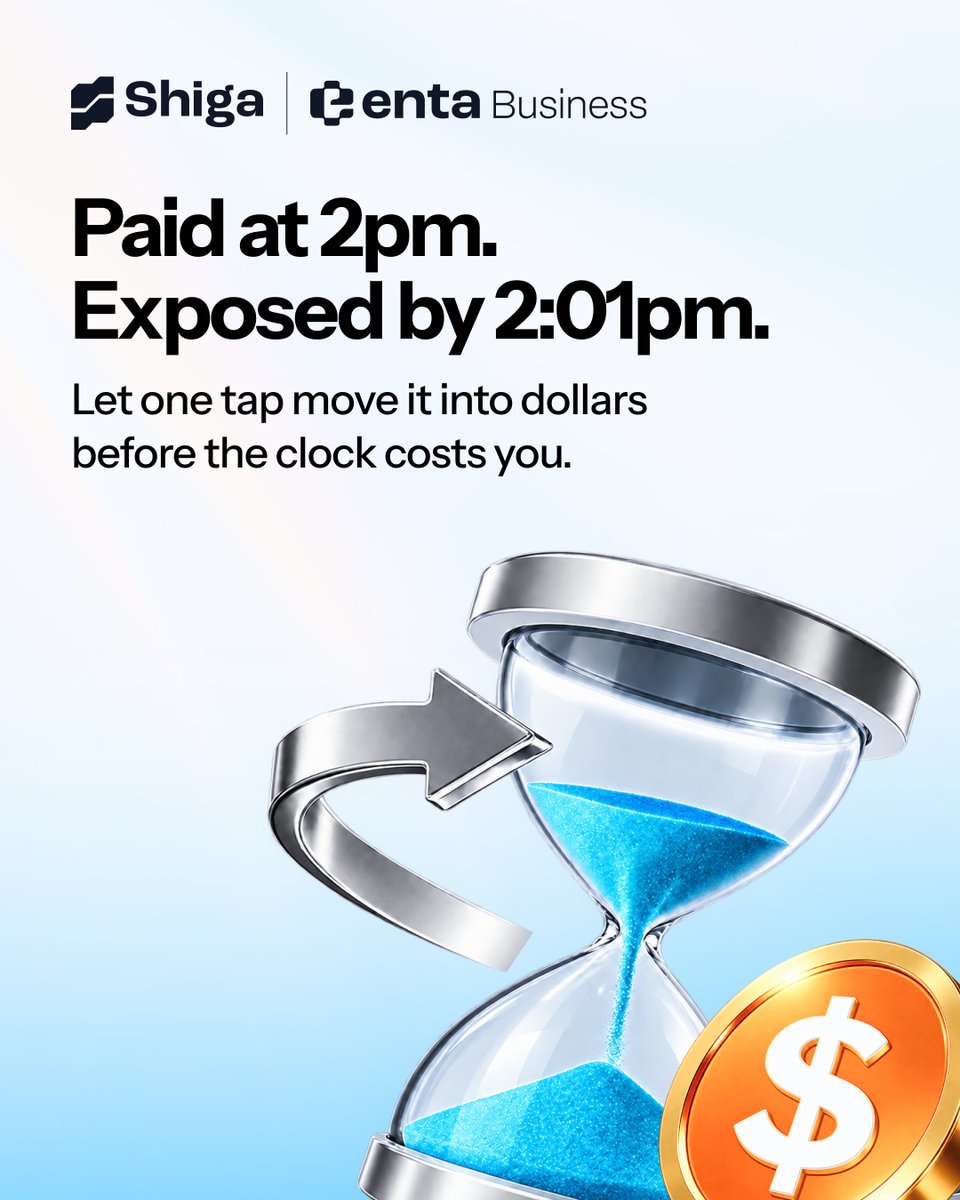
A commodities payment lands in naira, and the clock most business owners don't think about starts immediately. Not next week. Not when the rate "feels bad." The moment the money is sitting in a local account, it's exposed.
Enta Business automatically monitors favorable rates for you based on your transaction history. The second it hits, you get notified. One tap moves the proceeds into digital dollars. The exposure window closes before it has time to cost you anything.
This isn't a hedge you manage manually, checking rates between meetings. It's the clock closing itself.
Save your business margin today:
https://t.co/Ra8tEKiI80
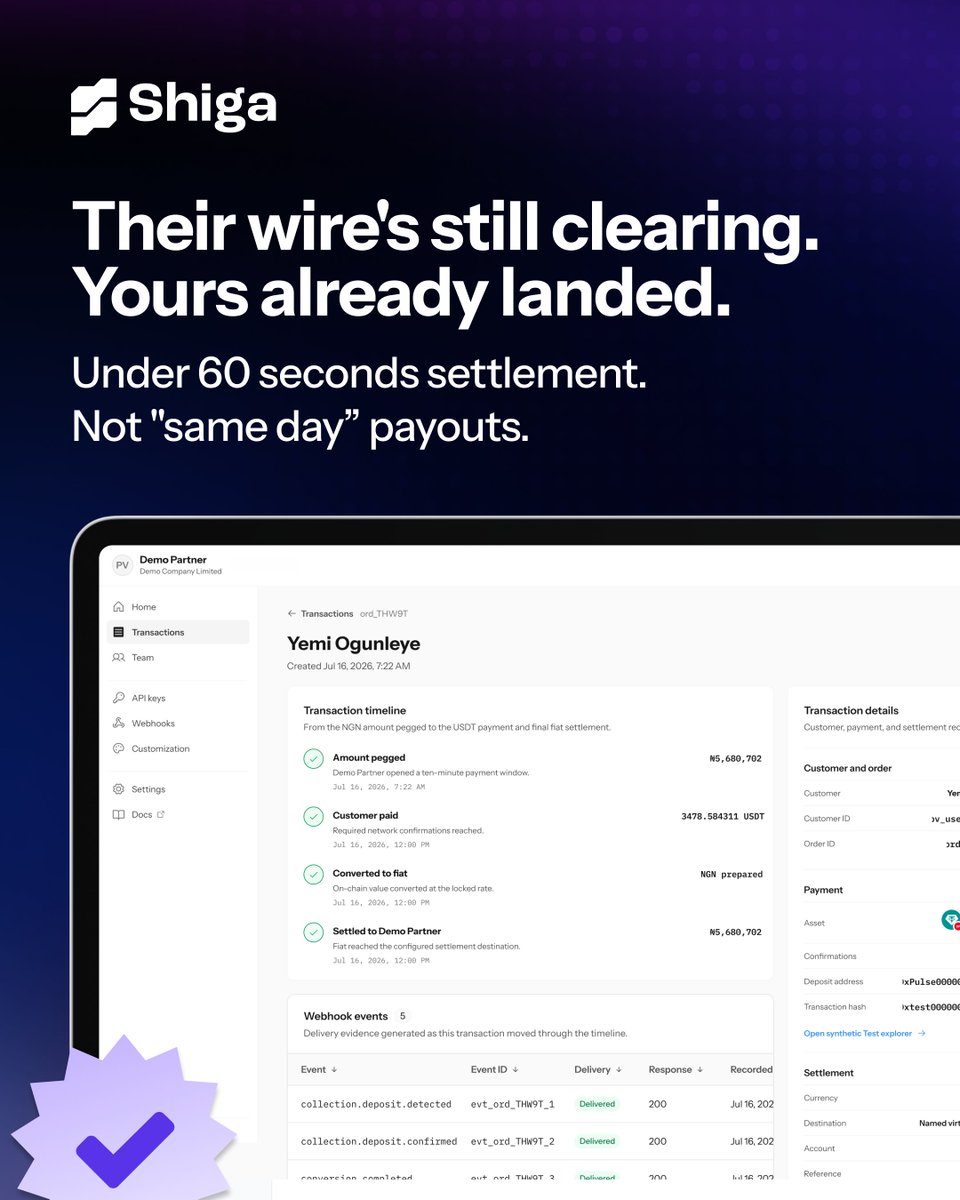
Most settlement infrastructure asks you to wait and call it normal. A wire clears in a day. A correspondent bank leg adds another. By the time funds actually land, the business decision that depended on them has usually already been made some other way; around the delay, not because of it.
Pulse was built against that assumption directly. Funds settle in under 60 seconds after initiation, with zero failed settlements to date. Not an aspiration or marketing gimmick; the number as it stands today, in production, across every corridor currently live.
If speed has ever been the reason a deal, a payout run, or a supplier payment slipped past the moment it mattered, this is what the alternative actually looks like.
Talk to our team now:
https://t.co/iHCqMiM7Dh
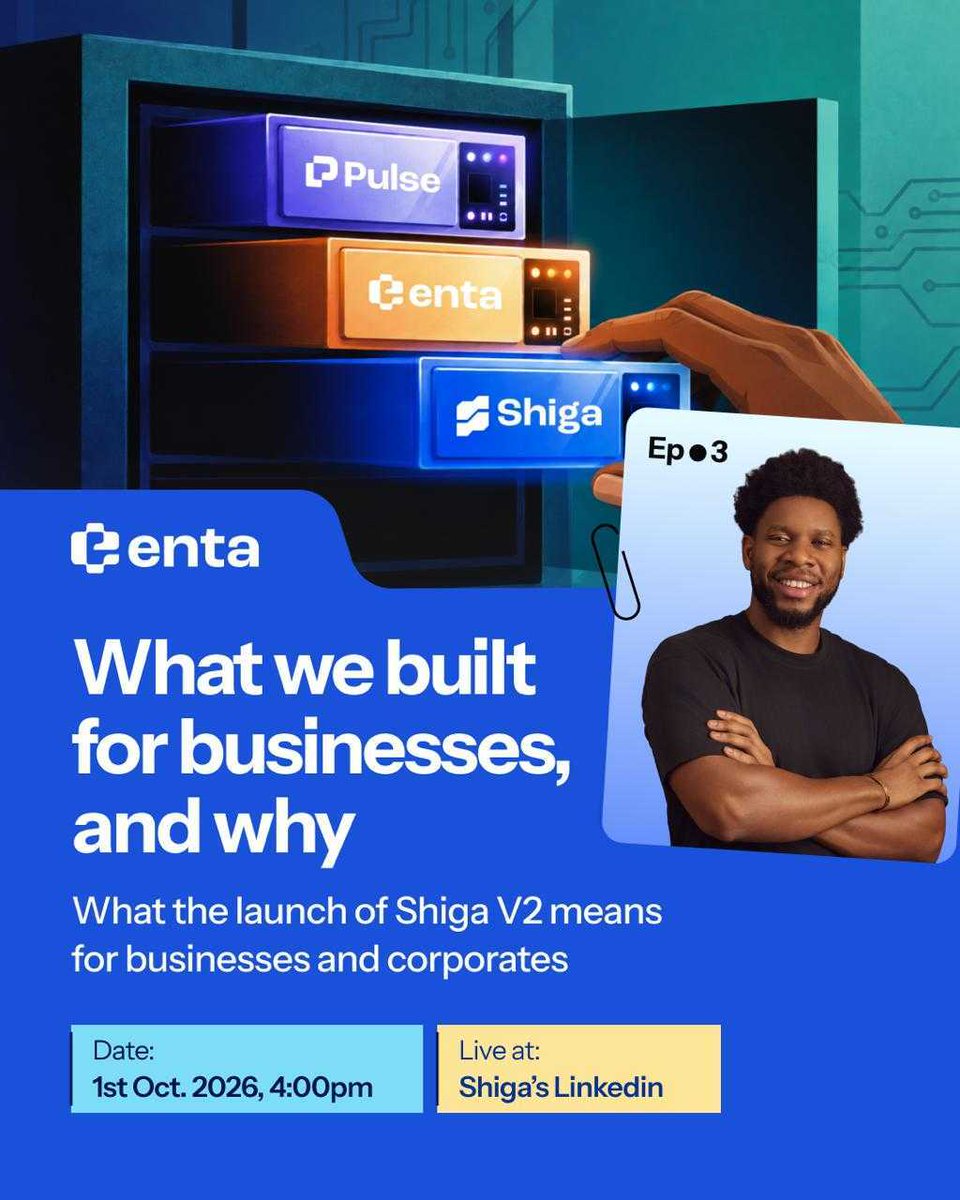
Later today: what we built for businesses, and why. 🚀
@shogz_snr joins us to break down what Enta and Pulse actually mean if you're running a business that moves money across borders. Real product, real reasoning, zero script.
📅 Today, 4:00pm WAT
📍 Join us live 👇
https://t.co/gJ94sM3d7j
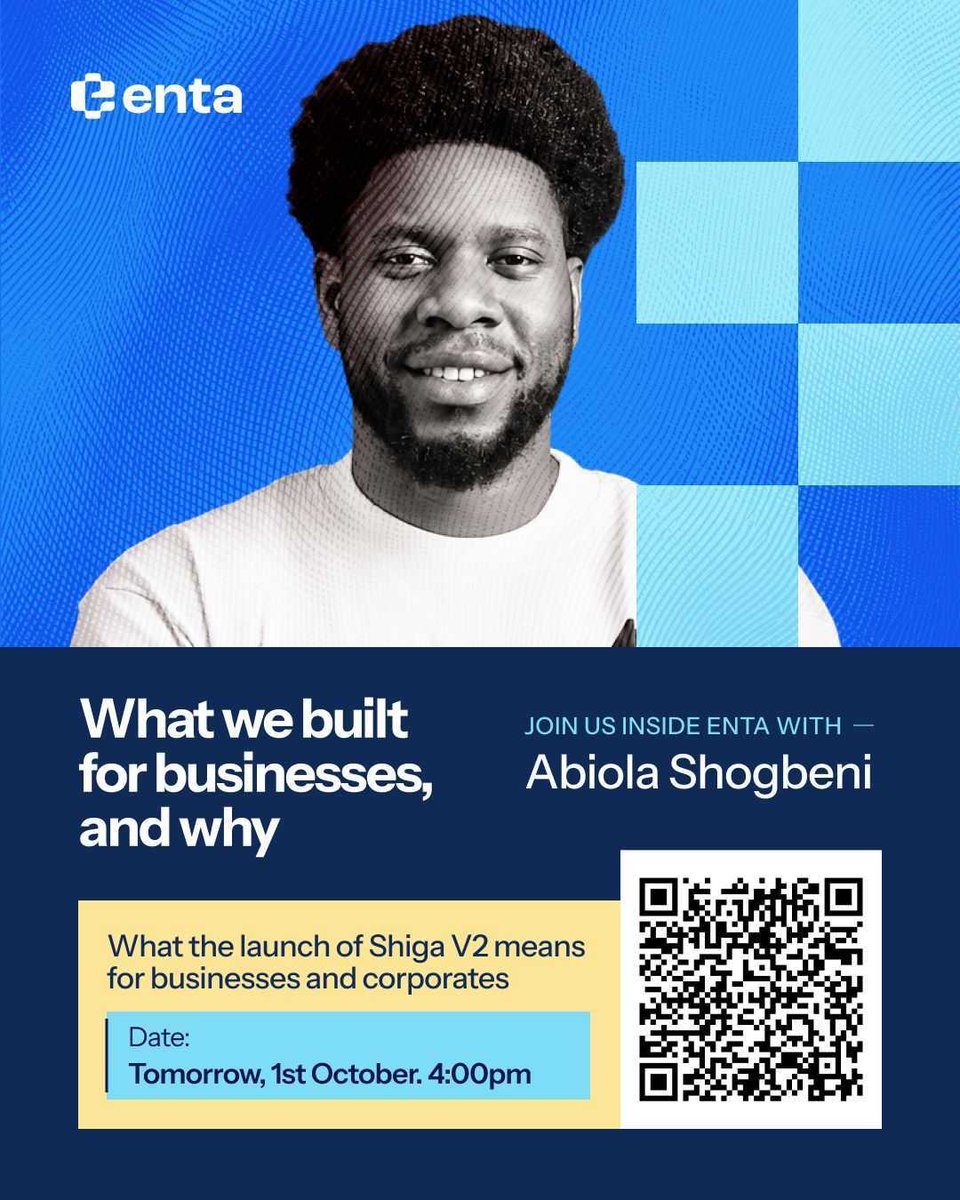
Tomorrow, we're talking business. 🚀
With Shiga's V2 already public, Abiola Shogbeni breaks down what Enta and Pulse actually mean for businesses and corporates moving money across borders. Live, unscripted, questions welcome.
📅 1st Oct, 4:00pm WAT
📍 Get Reminded -> https://t.co/ZCZG1tnwFq
We built Enta Business and Pulse to solve a problem we lived ourselves; moving money across borders, fast, without losing it to fees and delays along the way.
Join us live with @shogz_snr as we walk through what we actually built for businesses, why we built it that way, and what it means for how African businesses move, hold, and settle money. No deck, no script; the real product, live on screen.
🔹 A real look at Enta Business and Pulse -> how they work, not just what they promise
🔹 Why we built it the way we did ->the problems we set out to fix
🔹 Unscripted AMA -> ask us anything, including the hard questions
If you're running a business that moves money across borders, this is for you.
📅 4:00pm WAT
📍 Live on Shiga's LinkedIn
https://t.co/HDVkmkyRj9