1/ Six years in the making! Our preprint on SORDINO fMRI is out. We're sharing the raw data and sequence to facilitate brain-wide mapping in awake, behaving rodents. If this could be useful to your colleagues and friends, please help spread the word!
https://t.co/cdcP6P9XB5
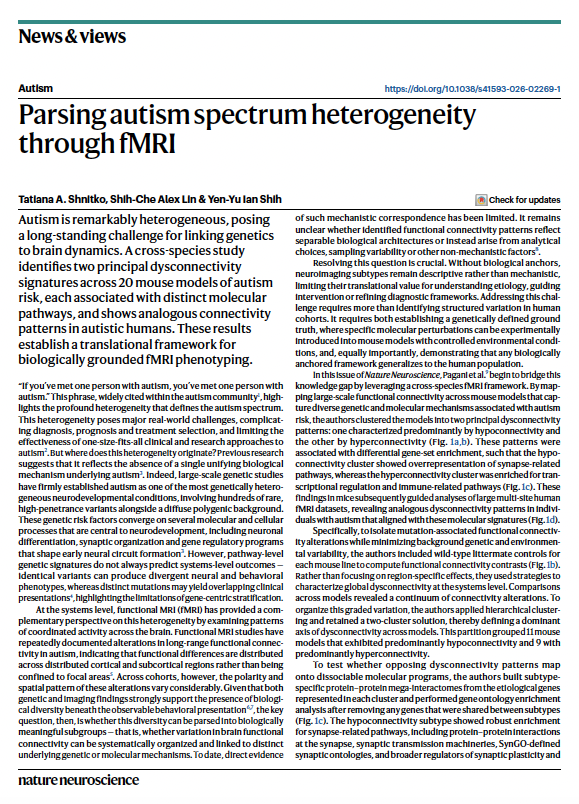
Using fMRI from 20 mouse models and large human cohorts, a new study in @NatureNeuro identifies two dominant dysconnectivity patterns linked to distinct molecular signatures in #autism.
See our N&V on the latest work from @MarcoPagani1985 and @Gozzi_Ale: https://t.co/rFf9FHdKPX
Very grateful to all members in the team who contributed to this work over the years. We hope multimodal approaches continue to open new opportunities for understanding how neurochemical dynamics relate to whole-brain fMRI activity.
https://t.co/6acCG2ftDU
Today we report in @Nature how the human brain evolves functionally from birth to old age—revealing a continuous trajectory of maturation, specialization, and later-life reorganization. 🧠
Paper: https://t.co/6mloH3QdLw
N & V: https://t.co/4rw0rdjg0R
@UNCRadiology@BRIC_UNC
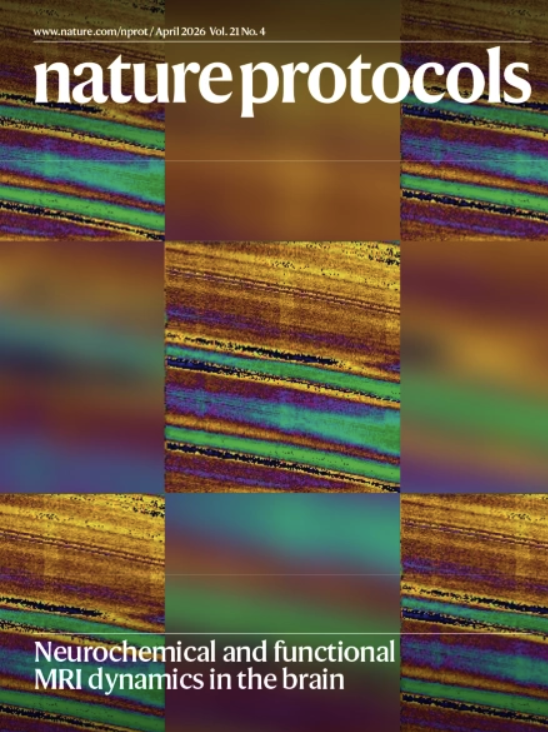
@NatureProtocols We hope this protocol will enable broader adoption of multimodal electrical-based recording + fMRI, bridging information across modalities and species. Please reach out to Tatiana ([email protected]) if you are interested in practicing this protocol.
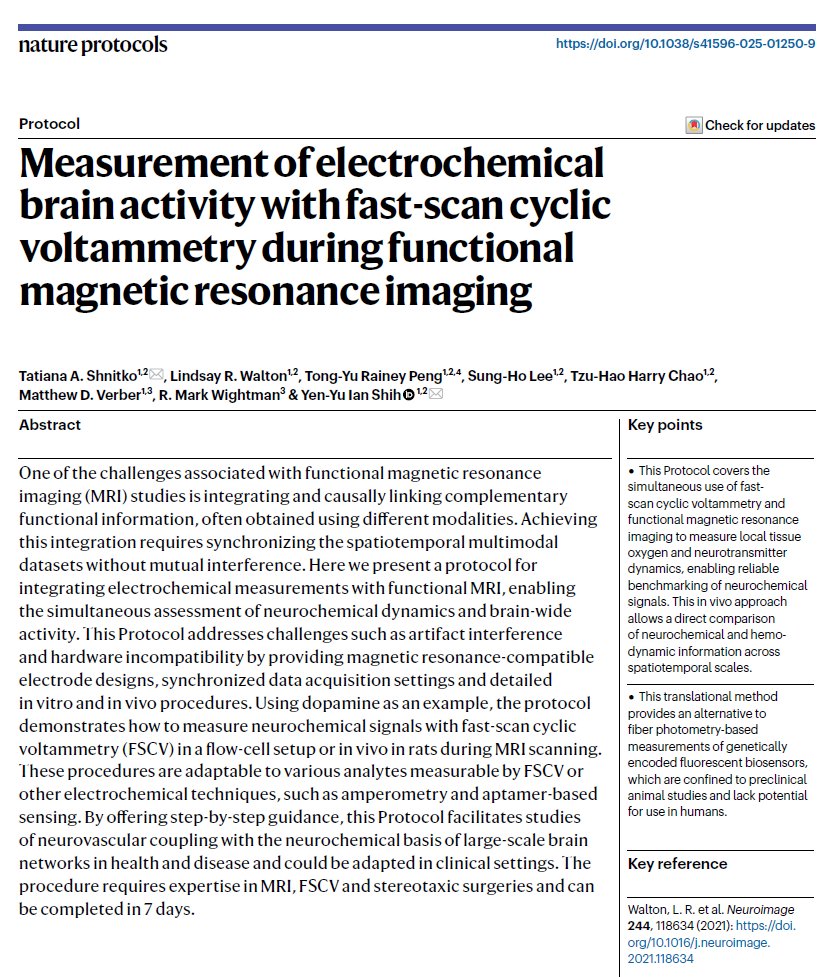
1/6 Excited to share our new @NatureProtocols article led by Tatiana Shnitko: “Measurement of electrochemical brain activity with fast-scan cyclic voltammetry during fMRI”, a step-by-step guide for simultaneous FSCV + fMRI.
https://t.co/WecUr4W2SQ
@NatureProtocols 6/6 The HDCV software developed in-house at UNC sets analyte-specific waveforms and drives TTL synchronization with fMRI. We include practical parameters for dopamine and oxygen detection, stimulation programming, and transparent analysis steps.
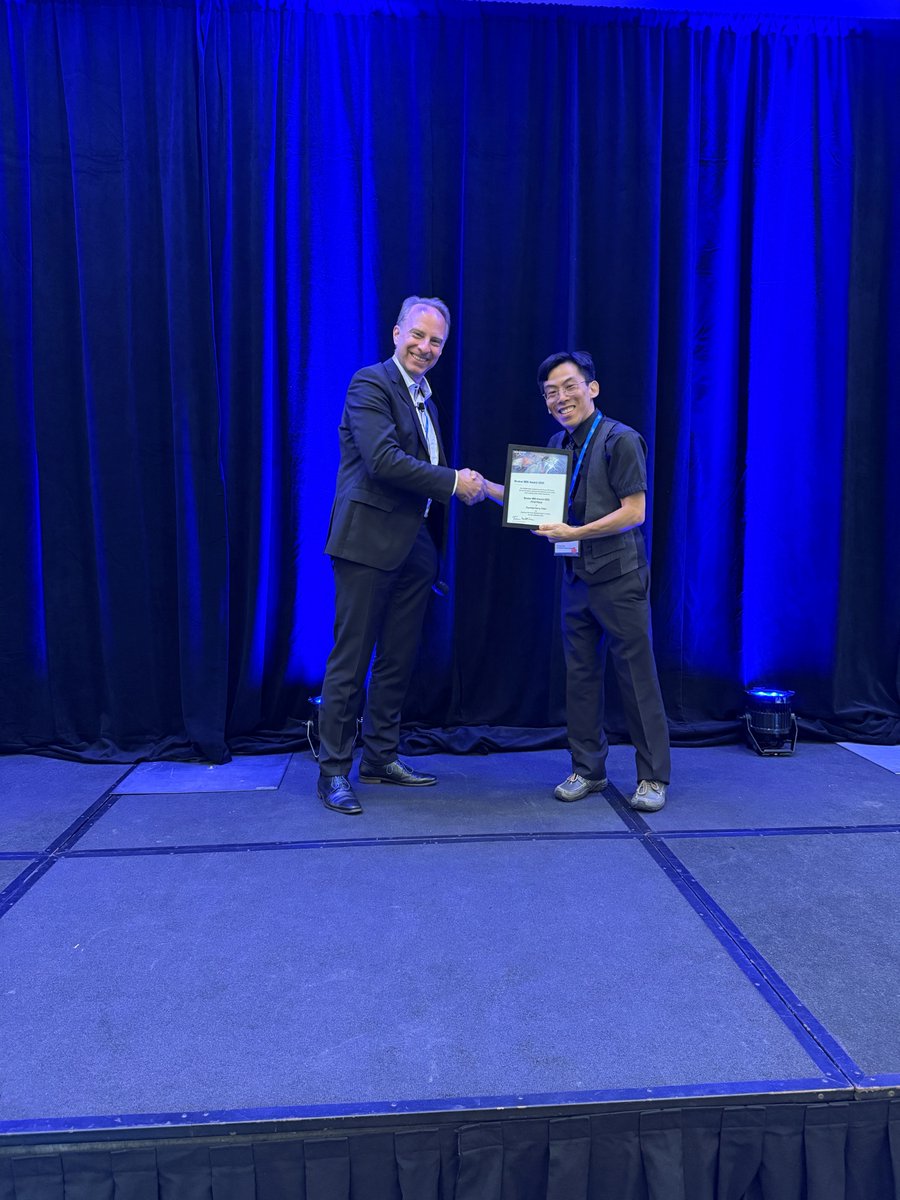
Congrats to this year's Bruker MRI Award Winners, presented at the @ISMRM. 1st place was awarded to Tzu-Hao Harry Chao @UNC for "Mapping Inter-Brain synchronization in Awake, Socially Interacting Mice, SORDINO Sequence for Hyperscanning".
👉https://t.co/EObGKmWRMf
#BrukerMRIAward
Our 6-yr efforts is finally published on Nature Communications!
We discover a neural pathway that regulates the glymphatic system. Its deficit in aging and dementia may result in the pathology. This suggests new targets for diagnosis and treatment.
https://t.co/yMbBCdFuNi
Very much looking forward to the opportunity to share more animal work at @OHBM. Thank you, @MeyerBaese, Lauren, and @ShellaKeilholz, for organizing this!
🚨 #OHBM2025 attendees, the Keilholz MIND lab (specifically me, Lauren and @ShellaKeilholz ) are organizing a symposium!
Come Thursday morning June 26th to learn about the neural mechanisms of FC from a great lineup of speakers - @ShihYYI , @e_deguz , @SeongGi_Kim and Nan Li!
On Thursday (May 15) afternoon at 15:33 in the preclinical brain imaging oral session, @LiMingHsu2 will present a chemogenetic fMRI study building on our prior work (https://t.co/1AiaSVWkW2), studying how PVT modulates locus coeruleus-induced MD-PrL connectivity and behavior.
Come meet @camri_unc members during @ISMRM!
On Saturday (May 10) at the @bruker event and Monday (May 12) at 14:01 in the fMRI power pitch session, @TzuHaoHarryChao will talk about his work mapping inter-brain functional connectivity in socially interacting mice using SORDINO.
On Wednesday (May 14) afternoon at 15:45 in the multimodal fMRI oral session, @LiMingHsu2 will cover a recently published story about the specificity of “optogenetic terminal stimulation”: https://t.co/Ld3xLZXTg6