@karpathy But what level of understanding do we really need? It’s becoming easier to get away with higher levels of understanding (more abstract) and outsource the lower levels (details).
To President @realDonaldTrump,
Don’t do their job for them in one night. For 47 years, the Islamic Republic has tried, and failed, to destroy Iran’s civilization.
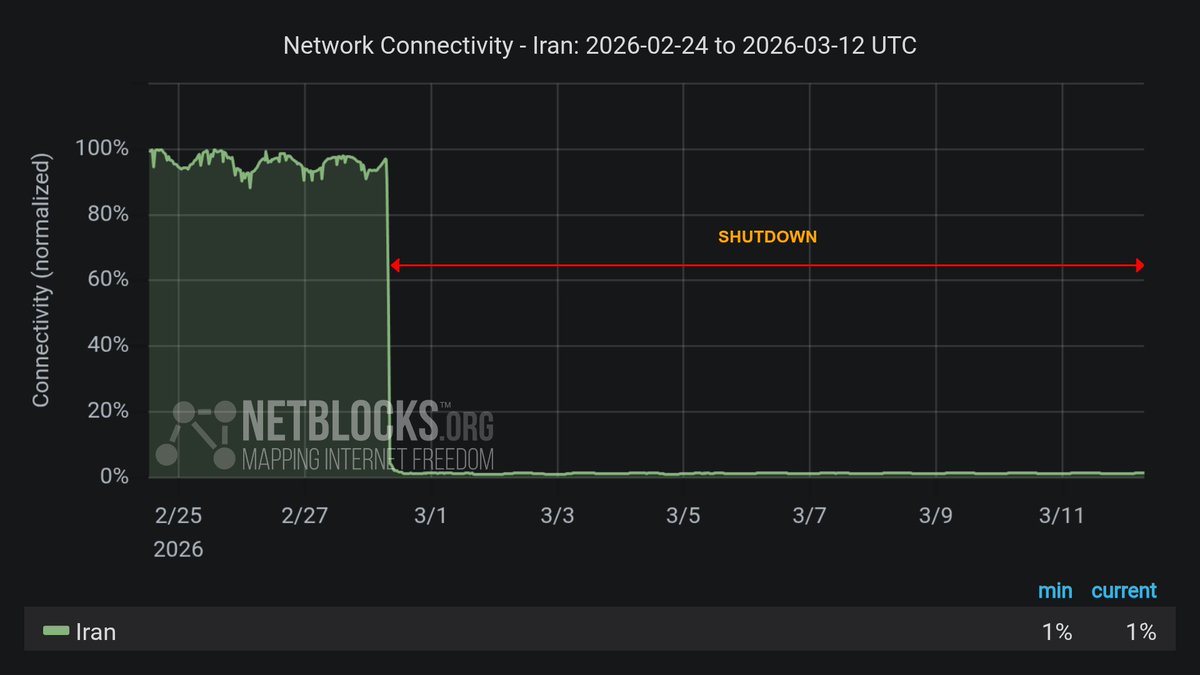
Tonight, millions are living in #DigitalBlackoutInIran, cut off from the world, not even knowing if our families are alive.
Don’t take Iran back to the Stone Age. Target the Stone Age mindset, the officials who are hanging innocent protesters in the 21st century.
Academic friends,
A few of us drafted an open letter calling for protection of civilians & of educational, research, medical & cultural institutions; and for practical support for students and scholars.
Please read, share & sign if you agree:
https://t.co/XHvcOBu5i5
#IranWar
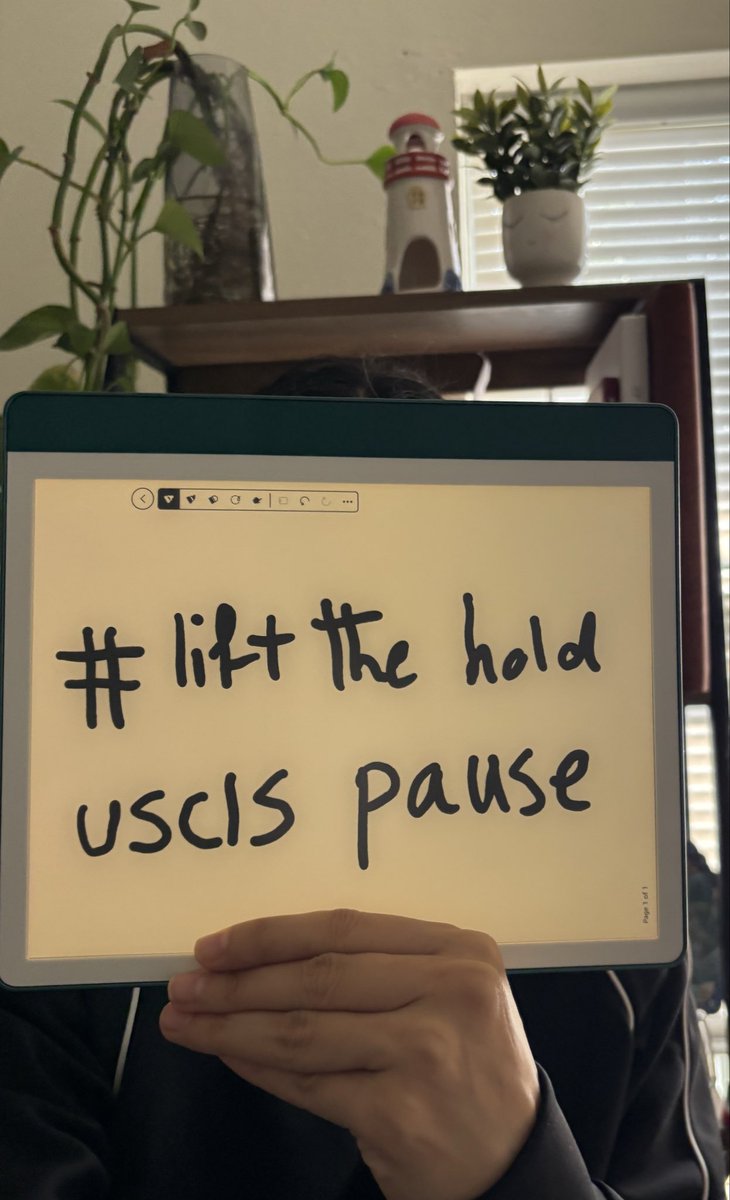
I recently graduated with a Ph.D. and received a postdoctoral offer from a respected institution. #USCISPause is preventing me from starting my position. It has also immobilized me;I can’t work, drive, or afford my expenses.
#LiftTheHold@FoxNews@cnnbrk please cover our stories
⚠️ Update: Metrics show the internet blackout in #Iran has entered its thirteenth day with the incident surpassing 288 hours.
The regime's measure presents a direct risk to the safety, health, and security of civilians who have a right to receive information needed for survival.
@SteveWitkoff As an Iranian university professor who lived in Iran and witnessed the protests, I urge you to stop negotiations with Abbas Araghchi. He does not represent the Iranian people—he represents a regime that has massacred its own people, practices hostage-taking, and terrorizes families. Negotiating with executioners only legitimizes their crimes.
I am an Iranian university professor. I was in Iran until last week and directly witnessed the uprising of the Iranian people. What is happening is a revolution born of desperation and courage. I fully and unequivocally endorse the speeches of Masih Alinejad and Ahmad Batebi at the UNSC. Every claim made by the Iranian regime—including by its foreign minister and its UN ambassador—is nothing but deliberate, systematic lies meant to cover up crimes.
The regime has already killed my friend Parsa Saffar, a brilliant medical student at Mashhad University. Was he a terrorist? His only “crime” was being young, educated, and Iranian. The regime has filled the country with thousands of body bags. Were they terrorists too? How unarmed protesters, many of which being very young students can be terrorists? Why the so called "terrorists" that the Iranian regime claims only kill protesters, and not the rally of regime supporters?
Understanding Iran is painfully simple. Iran possesses some of the world’s largest oil, gas, and natural reserves, yet the Islamic Republic has driven the country into collapse: one of the weakest economies in the region, the least-valued currency in the world, crushing inflation, families unable to afford food or rent, massive unemployment, and millions of young people unable to marry or build a future because of economic despair. The people are angry—and rightly so.
The Islamic Republic has turned Iran into a deadlock through aggression, corruption, killing its own citizens, silencing all free voices, and enforcing internet blackouts to hide its brutality. The Iranian people are demanding regime change—just as people did during the Arab Spring in Syria. The same cruel regime that sent forces to help Bashar al-Assad massacre Syrians is now using the same methods to massacre Iranians.
I call on the United Nations, the UN Security Council, and every single government to end their silence in the face of the Islamic Republic’s murder machine. A regime that massacres its own citizens has no red lines—and will not hesitate to kill the citizens of other countries as well. Act now. Stand with the Iranian protesters. End this brutal regime.
#IranMassacre
#IranRevolution2026
#DigitalBlackoutIran
Despite immense challenges—economic hardship, restrictions on freedoms, and the ongoing struggle for basic rights—the spirit of the Iranian people remains unbroken. Their courage, resilience, and continued advocacy for a better future inspire me deeply.
Iran has given the world poetry, science, medicine, and art. Today, Iranian scientists, artists, and entrepreneurs continue making profound contributions across every field and continent.
The world should stand with the people of Iran, with the students, families, and dreamers who simply want the chance to live freely and with dignity.
#StandWithIran #IranianPeople #HumanRights
Mental health problems too common in science. Should be a big part of the debate about peer review. The way we do it now puts incredible strain on editors, reviewers and authors in terms of overwork, stress from uncertainty, and adversarial interactions.
https://t.co/aozxju3LSq
Exciting work on automated interpretability!
It's both exciting as a way to potentially accelerate and scale interpretability research, and also potentially as a way to get a metric on how interpretable neurons are.
Really exciting new work on automated interpretability:
We ask GPT-4 to explain firing patterns for individual neurons in LLMs and score those explanations.
https://t.co/Fmu8IAb7Hy
LLMs are tools.
Not autonomous "whole" tools, but "parts" that can augment systems.
As such, LLMs on their own are not existential threats. But the systems they play a part in can be.
This calls for social/ideological evaluation of institutions, practices,& systems that use them.
@AndrewLampinen Interesting point! Thanks for sharing! In a separate (unpublished) work we have been working on a related topic. Would be happy to discuss offline :)
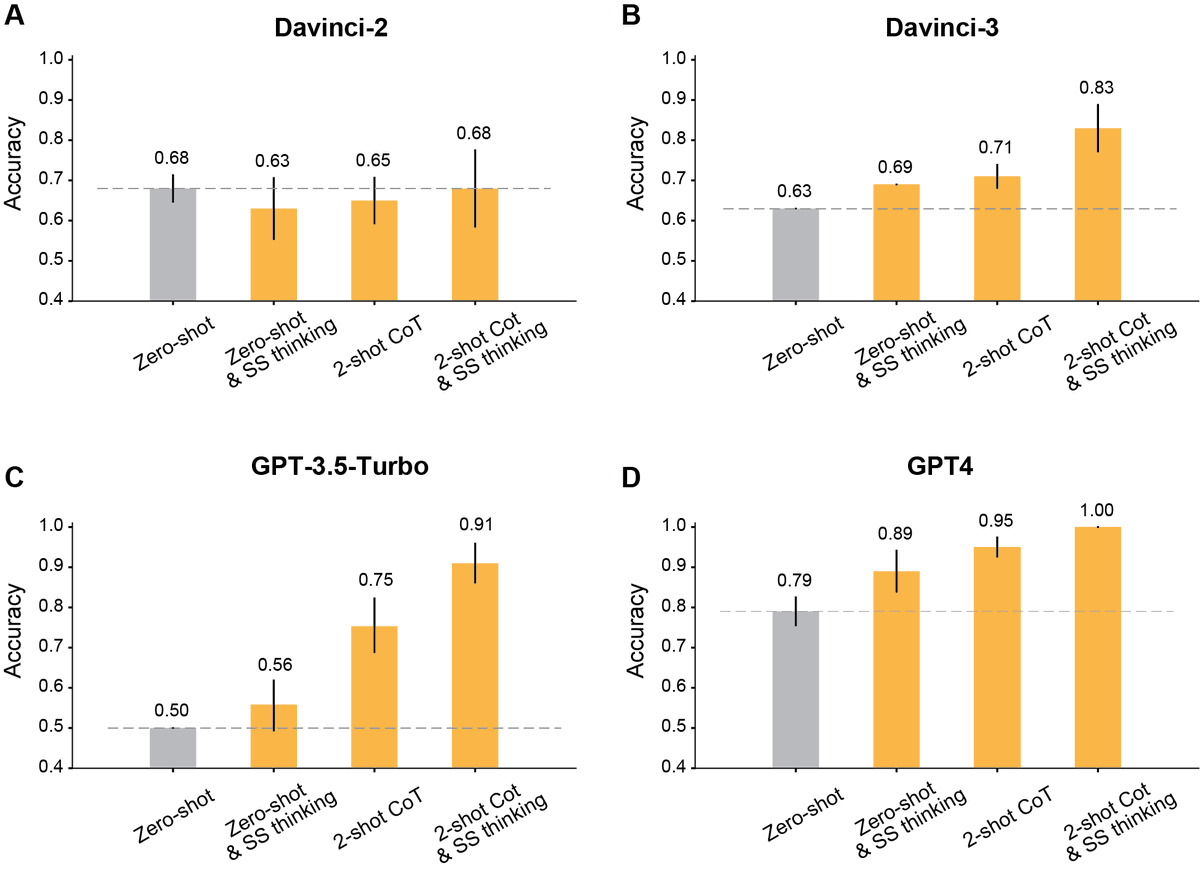
Can recent @OpenAI's LLMs reason about theory of mind? Contrary to some claims, we (@chrishoney) found that, though the baseline performance of the models is poor, they perform well when prompted to think step-by-step and allowed to elaborate their chain-of-thought.
New paper🧵
Can recent @OpenAI's LLMs reason about theory of mind? Contrary to some claims, we (@chrishoney) found that, though the baseline performance of the models is poor, they perform well when prompted to think step-by-step and allowed to elaborate their chain-of-thought.
New paper🧵
@AndrewLampinen to examine the reliability of the LLM ToM responses to variations of the same scenarios, and that’s yet to be explored. IMO, we also need to have new benchmarks that contain a variety of adversarial examples for these use cases.
@AndrewLampinen Thank you for the discussion! These are excellent points!
(1) I discussed data contamination below. Does this address some of your concerns? :)
https://t.co/ld8Qes1iEq
(2) As emphasized in the Ullman paper, it would be crucial to examine
@_florianmai @OpenAI@chrishoney Thanks for your question! We discuss that in the paper, but in sum: LLMs may have seen some of the data during training, but it won't affect our findings: 1) our findings concern the change in performance arising from prompting; and the specific prompts used to