Started this new profile to replace my old one, which was suspended by Twitter and unfortunately couldn’t be restored.
I’d love to connect (or reconnect!) with everyone in these communities:
@Atlassian ecosystem
#SaaS builders
B2B SaaS & Enterprise Software
Agile Development
DevOps & Developer Tools
ITSM & ITAM
AI & Automation
Quantum Computing
Venture Capital
Looking forward to reconnecting with old friends, meeting new people, and continuing the conversations! 🚀
I've seen quite a few posts lately with the same story:
"I canceled my $29/month SaaS subscription and vibe-coded my own app with AI in a weekend."
Cool! I like that. 😎
But I'm curious about the part nobody talks about.
Where do you deploy it? Where do you store the data? What about backups, security, updates, and fixing things when they break?
And six months later, who maintains it?
I'm not against vibe coding. Actually, I think it's great that anyone can now build their own software.
But building an app is one thing. Keeping it running reliably is another.
I'd love to see the full story, including how you manage all of that for less than $29/month.
Or maybe the secret is vibe hosting, vibe security, and vibe maintenance too? 😄
#SaaS #VibeCoding
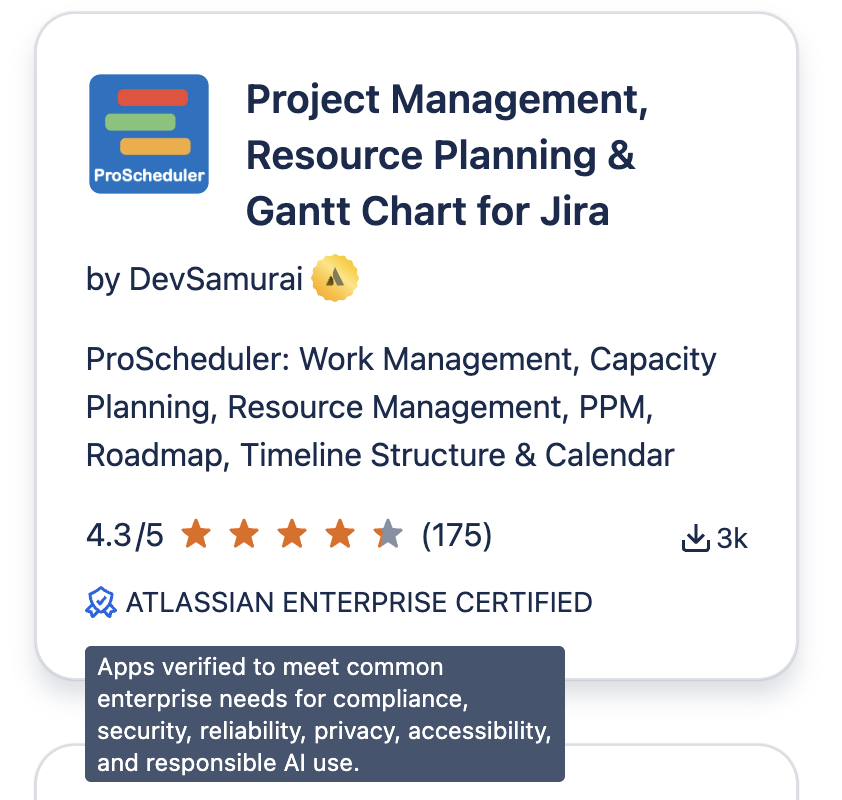
The first outcome of focusing on the “boring things” is here!
TeamBoard ProScheduler has earned the @Atlassian Enterprise Certified badge! 🎖️
Turns out, those boring things aren't so boring after all. 😉
More apps will follow. Yay!
#Atlassian#AtlassianEnterpriseCertified #ProScheduler #ProjectManagement #DevSamurai
Ask an AI assistant to fix a bug and it’ll write the patch in seconds. Ask it whether that code path is covered by tests, or what failed in last night’s run, and it has no idea.
That’s not really the model’s fault. Your requirements, test cases, and execution history live in your test management tool, and the assistant can’t see any of it. So it writes code without knowing what your team already knows about quality.
We’re working on closing that gap. More on this soon.
#AgileTest #SoftwareTesting #Jira
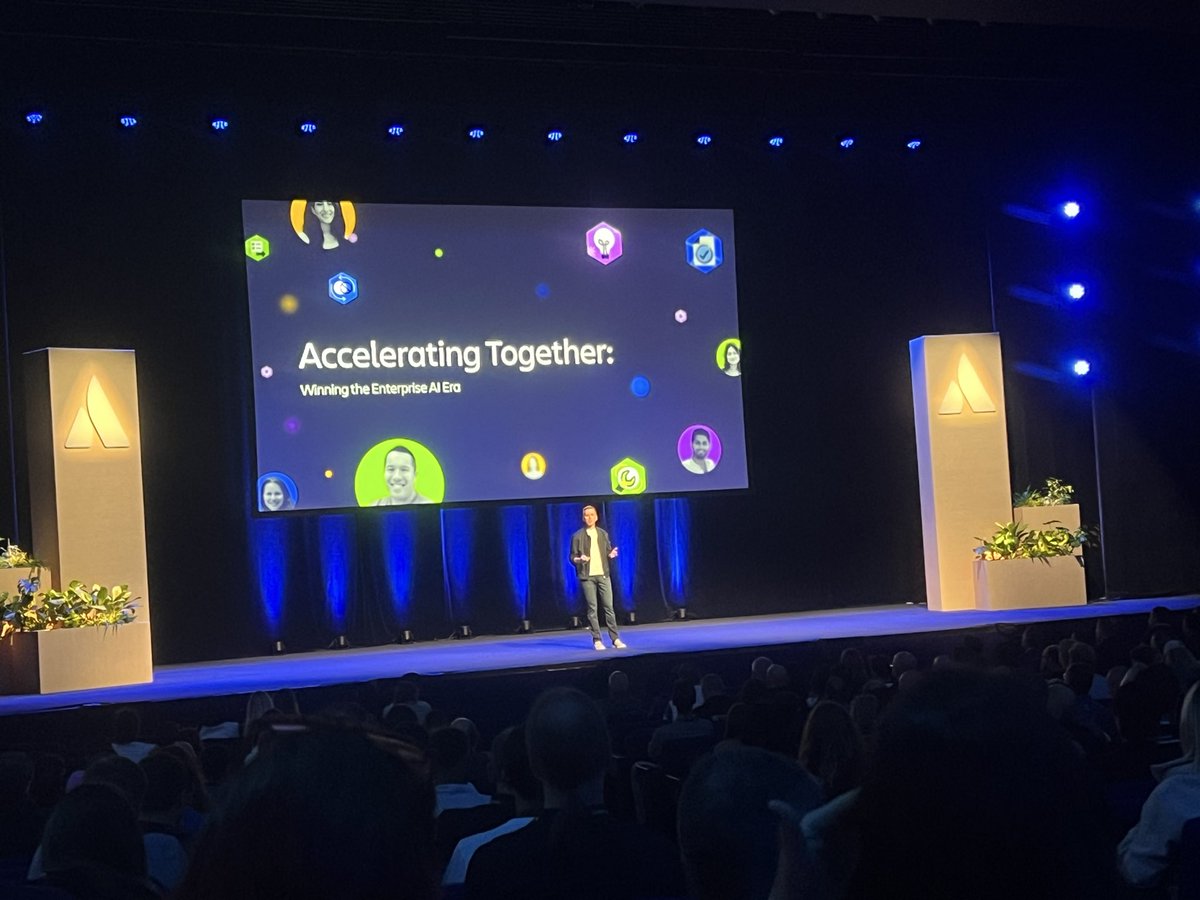
Things Atlassian Events Have Taught Me Over the Years. 🤣
Every event brings new ideas, new connections, and new perspectives. 🚀
Thanks to everyone I've met along the way. See you next year. 🤝
#Atlassian#Team26Europe#Team26#AtlassianCommunity#DevSamurai
Partner Accelerate yesterday was a good one!
To be fair, most of the information is already available online through the different partner channels, kudos to the Atlassian Partner Management team for making so much accessible.
But being there in person is completely different.
I bumped into an ex-coworker and some old friends I hadn’t seen or spoken to in years, met a bunch of new people, heard different perspectives, and got a much better feel for what’s actually happening across the ecosystem.
One Solution Partner asked me:
“Are you here to sell your products?”
My answer: Nope.
We’re pursuing a product-led strategy, so most of our sales happen online anyway.
For events like #TeamEurope, my goal is much simpler:
Meet people. Listen. Learn.
I want to hear what people are building, what problems they’re running into, what’s changing in the ecosystem, and what they’ve learned along the way.
Sometimes the best thing you take home from a conference isn’t a lead or a sales opportunity.
It’s a conversation, a new perspective, an unexpected reunion or an idea you wouldn’t have discovered sitting behind a screen.
#Atlassian #Team26Europe #DevSamurai
If a product is a house, good salespeople don't start by showing the curtains. 🏠
They first help people understand:
Why do you need a house?
They show the pain of living without one:
No place to call home
No security
No comfort
No foundation for the future
Once people understand the problem, then they introduce the solution:
A house with:
📍 A great location
🏗️ A strong foundation
🎨 A thoughtful design
Only after that do they talk about:
✨ The beautiful balcony
🪟 The stylish curtains
🛋️ The furniture
Many companies make the same mistake.
They start with features.
But great salespeople don't sell curtains.
They help people understand why they need a house first.
Because people don't buy features.
They buy solutions to problems they care about.
I came across an interesting discussion about the future of the Atlassian Marketplace, and it got me thinking.
We usually ask:
“What new app should we build?” 🤔
But maybe there's another opportunity:
“What happens when an old app retires?” 👀
As Connect and Data Center apps move toward the end of their journey, customers don't suddenly stop needing those capabilities.
The problem remains. The technology changes.
That creates an opportunity for new Forge apps.
But simply rebuilding the same features isn't enough.
If you're building a replacement, you need a new and innovative approach to solving the same problem.
And customers will ask:
🔄 Can you migrate my data smoothly?
🔒 Can I trust you with my data?
🛡️ What about security and privacy?
⚙️ Will it be reliable?
The hard part may not be rebuilding the features.
It may be solving the old problem in a genuinely better way—and earning enough trust for customers to make the switch.
Maybe the opportunity isn't just replacing an old app.
It's taking a familiar problem and solving it differently for the new platform. 🚀
#Atlassian #Marketplace #Forge #SaaS
“How many IT assets do we have?”
The ITAM system says 1,247.
But… how do you know?
If there’s no network scanning, you’re relying on someone to remember every device, every server, every VM and keep the inventory updated.
New laptop? Maybe documented.
New VM? Maybe not.
Unknown device? 🤷
If you can't scan the network, you can't easily discover what you don't know about.
Manual entry tells you what people recorded.
Network scanning tells you what's actually there. 🔍
That’s why network discovery should be a fundamental part of ITAM.
https://t.co/efKM37OyN6
#ITAM #ITAssetManagement #ITS
When we started building SaaS, we had something every startup dreams of:
Zero users. 😂
So instead of trying to guess what the market wanted, we started with a simple question:
“What do we need ourselves?”
Our team needed a better way to manage the product backlog and release plans → we built ProductGo.
We needed Planning Poker, retrospectives, and a place to keep daily standup notes → AgileBox.
We needed to plan projects and resources → TeamBoard ProScheduler.
We needed to track time and timesheets → TimePlanner.
Our QA team needed a better way to manage testing → AgileTest.
Then the team grew, and suddenly we had another problem:
“Wait… where are all our laptops and IT assets?” 😂
So we built AssetIT.
People started using these apps and giving us great feedback.
That was exciting.
But then we learned another important lesson:
Just because we need something doesn't mean everyone needs it.
We built CRM & Sales Management for Jira because we personally preferred managing sales activities inside Jira.
It made perfect sense to us.
But many companies already had Salesforce, HubSpot, Zoho, or other CRM systems, and they were perfectly happy with them.
Lesson learned:
Building from your own pain is a great way to start.
But eventually, you have to step outside your own bubble and ask:
“Is this a problem only we have, or is this a problem worth solving for many people?”
That distinction can make or break a SaaS product.
And honestly, after years of building apps, I still think solving your own problem is one of the best places to start.
Just don't assume you're the entire market. 😄