What a harrowing read. The husband of German actor Collien Fernandes impersonated her online with AI sexual images and German law protected him. "He not just used her for his & others’ sexual gratification—he had also erased her as a person." @susandominus
https://t.co/vCqqnFtXqf
WHAT REALLY HAPPENED IN NEW ZEALAND AFTER PROSTITUTION WAS DECRIMINALISED?
INTRODUCTION
Not long ago, legalised prostitution as implemented in Germany and the Netherlands was widely considered the ideal solution to prostitution. Proponents of this approach claimed that it respects the right to bodily autonomy, provides safety to women, and could benefit the economy. However, as the association between legalisation and expansion of the sex trade, violence, and human trafficking has become undeniable, sex trade activists have taken another approach. They no longer talk about the failures of legalised and regulated prostitution in Europe and have pivoted to talking about allegations of “stigma” and “harm” in Nordic Model counties, and extoling the “benefits” of full decriminalisation in New Zealand.
In New Zealand, we are promised, there has been an increase in health and safety, no expansion of the sex trade, no human trafficking – not one case – in the 20 years since full decriminalisation was implemented.
How can it be that countries with legalised, taxed and regulated prostitution would be associated with such documented violence and abuse but New Zealand, which is fully decriminalised and operates with almost no oversight, is hailed as a haven of peace and equality?
The New Zealand government established the Prostitution Law Review Committee (PLRC) to review the Prostitution Reform Act of 2003 (PRA). Introduced in June 2003, the PRA fully decriminalised prostitution selling, purchasing, pimping (profiting from other’s prostitution and often controlling or arranging clients for them), brothel-keeping, etc.
The PLRC consisted of 11 individuals, including multiple former brothel-keepers, members of the New Zealand Prostitutes’ Collective (NZPC), a former police officer, and a PhD student (PLRC, 2008, pp 175).
The PLRC has published several reports on the efficacy of the PRA, which have become the authoritative sources on the effects of full decriminalisation. The PLRC claimed the goal of the PRA to be: “…human rights, welfare, occupational health and safety of sex workers, and the prohibition of the use of young persons in prostitution…” – PLRC, 2005, pp. 3
The PLRC published two reports itself and three additional reports were provided by others.
SUMMARY
This paper assesses these reports and refutes their claims about the outcome of full decriminalisation in New Zealand, including claims that:
1. The sex industry has not expanded.
2. Health and safety have improved.
3. Decriminalisation aids the prosecution and conviction of crimes against women in prostitution.
4. The legislation has not harmed vulnerable children who are victims of sexual exploitation.
5. There is no human trafficking in the industry.
THIS PAPER SHOWS THAT NOT ONE OF THESE CLAIMS STANDS UP TO SCRUTINY.
See link in next tweet to read the whole paper.
FACT: Women often struggle to leave prostitution
“… Nobody really prepares you for this, when you enter into prostitution. They tell you about burn out, vaguely, dismissively. But not the details. If it happens you just need time off, they’d say. And so you would, at first, take just a few days. Then a few weeks. Then months. Then you’d realise that you were not just suffering from a transient inertia, but headed towards all out atrophy. I saw it many times over the years in prostitution; women becoming depressed, anxious, hallucinatory. Suicidal, even.
Like me, some of us end up homeless, if we left the brothel we live in, or the pimp ‘boyfriend’ or we simply lost our homes when we stop making the rent. Prostitution, if it is anything, is a choice between homelessness and having men we don’t like, do things we hate, to bodies we don’t know how to love.
For this reason, those in prostitution have a tendency to boomerang in and out of it, like the jaded wives of an unfaithful or cruel husband. We pack our bags, we leave in a triumphant storm. But we find few options available to us. The benefits system is bureaucratic and inhumane. We have little or no work experience and subsequently we find it hard to get a job. We are saddled with anxiety and low self esteem and are fearful of new people, new places, new ways of doing things.
Dejectedly, we head back to the very places that caused our malaise. We may try and put a fresh spin on it, dress it up in our own creative propaganda. It wasn’t that bad. We could do it differently this time. At least it would put a roof over our heads. I still now, amidst daily trials to re-integrate into society – to find paid work and a stable home – think to myself “… would it be so terrible if I went back?”
This is what the Rights Not Rescue campaigns fail to understand; support services should not just be for women who have left prostitution, they are for women who fear having to return to prostitution.
Support services that would offer temporary accommodation, help in applying for crisis loans or disability benefits, counselling, advocacy and advice. But few such services exist and the ones that do are scattered and have limited scope due to the paucity of funding. Unlike in France, where the government has ring fenced a pot of money for such exit services, there is no such funding in the UK, and the domestic violence refuges that exist are themselves facing funding cuts and closures. Part of the movement towards the Nordic Model is in recognising that women often struggle to leave prostitution, and are forced by circumstance to return to it again and again, against their wishes. And it is the only model, that prioritises this kind of funding, for this kind of support.”
To read more, see the link in the next tweet.
« Les violeurs de Gisèle Pelicot et les clients de la prostitution ont beaucoup en commun: ils veulent des femmes inertes, objetisées et déshumanisées. Le système prostitutionnel est inclus dans le continuum des violences sexuelles » #10ans2016
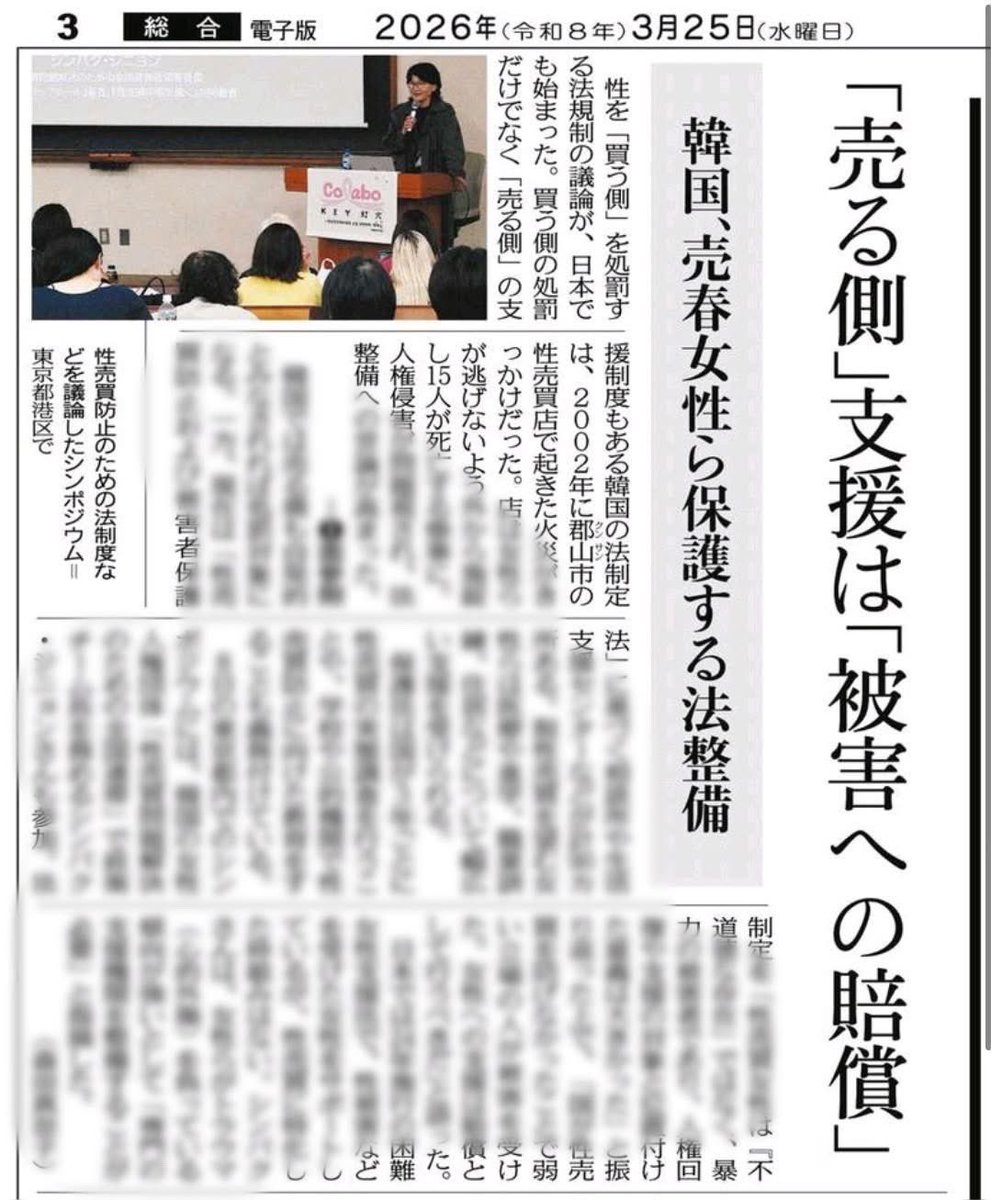
2026 3.8 세계여성의날 맞이 일본 초청 강연 참석 후기
이번 일본 방문은 단순한 일정 이상의 의미를 지닌, 나에게 깊은 울림과 확신을 남긴 시간이었다. 성매매경험당사자네트워크 ‘뭉치’를 대표해 일본 도쿄를 방문해 다양한 당사자들과 활동가들을 만나고, 서로의 경험과 고민을 나눌 수 있었다는
https://t.co/pO5mrCA4kC
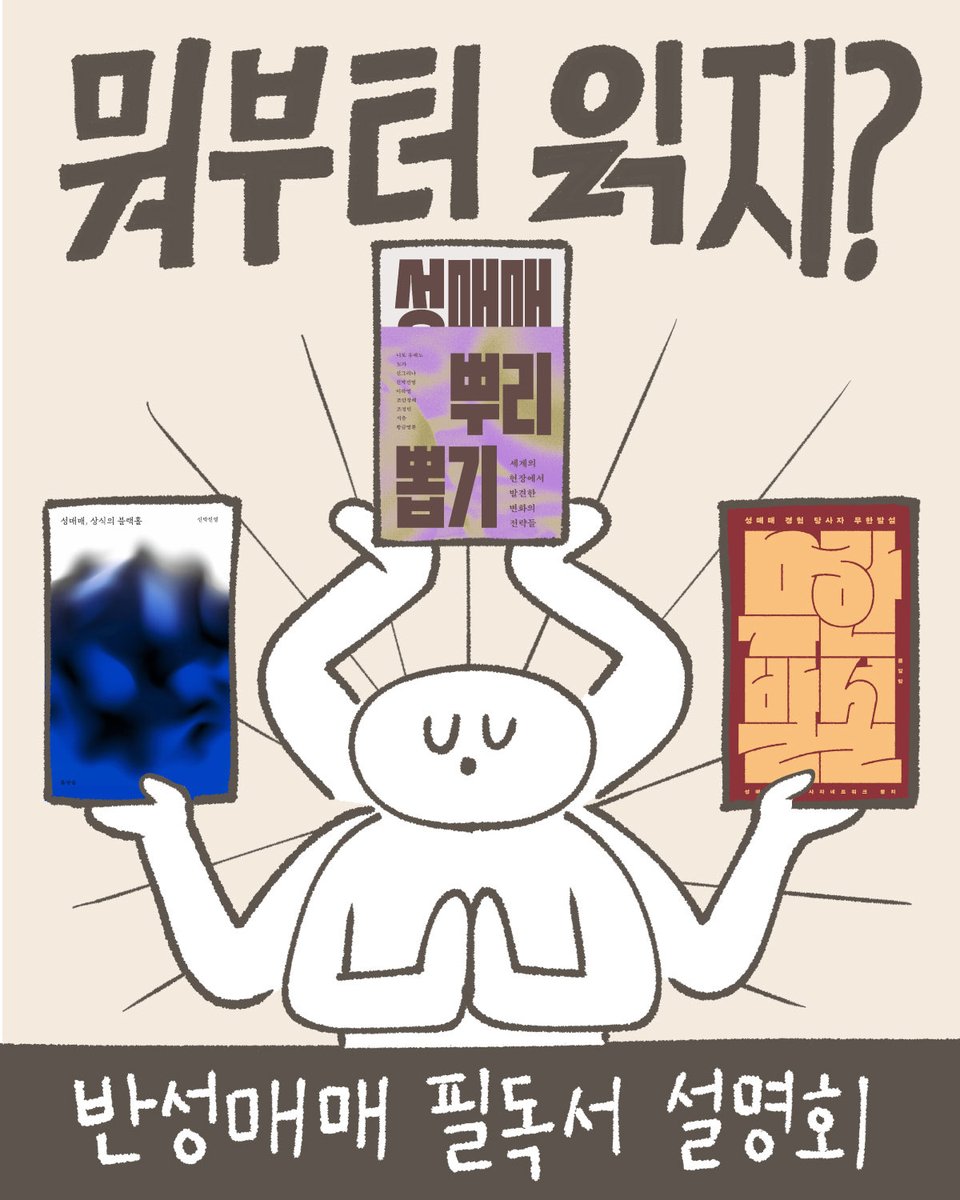
대구여성인권지원센터의 캐리님이 써주신 무한발설 소감문입니다 !
[이 책에는 과거를 잊는 대신, 자신들이 경험한 성착취 현실을 드러내고 알리는 것을 선택한 당사자들의 목소리가 있다. 그리고 그 누구도 착취의 대상이 되어서는 안된다는 사실을 사회에 전하고 있다.]
"Bomnal's story of her survival in the sex trade offers readers a rare and gripping account of global women's condition they will not easily forget."
— Caroline Norma, co-editor of Prostitution Narratives: Stories of Survival in the Sex Trade https://t.co/bwI4xjXQpY
For years the Home Office & National Crime Agency enjoyed a "collaborative working relationship" with websites advertising prostitution.
New FOI's show just how collaborative it got (🔗👇)


![kwau38's tweet photo. [라운드테이블] A.I.와 성평등 - A.I.가 가져올 사회 변화, 젠더로 묻다
📌참가 신청하기: https://t.co/VMMTlwfisf https://t.co/FrklQRYnWb](https://pbs.twimg.com/media/HF_8TqXa0AAwzEF.jpg)

![moongchi2006's tweet photo. https://t.co/pO5mrCA4kC
대구여성인권지원센터의 캐리님이 써주신 무한발설 소감문입니다 !
[이 책에는 과거를 잊는 대신, 자신들이 경험한 성착취 현실을 드러내고 알리는 것을 선택한 당사자들의 목소리가 있다. 그리고 그 누구도 착취의 대상이 되어서는 안된다는 사실을 사회에 전하고 있다.] https://t.co/sx3yG6Mf2T](https://pbs.twimg.com/media/HEx3DYZa0AAek8x.jpg)