We've been cooking some tools to reduce your dependency package attack surface by finding overlapping packages.
Give it a spin here https://t.co/pyWmlziu8G
This is still one of the most chilling videos from the #October7Massacre.
Hamas terrorists had gunned down a mother in Sderot, in front of her young children, who were still trapped in the back of the car.
Under a hail of bullets, Israeli police ran to save these kids. At first, one of the petrified children thought they were the terrorists, who came back to kill them and started pleading "no, please no." When she understood it was the police, she begged them "save us please", asking them to also rescue her baby sister.
The heart truly breaks 💔
We escaped Docker's hypervisor with three lines of bash. CVE-2026-77179: A container gets complete read and write access to the host filesystem.
When you mount a folder into a container, Docker's VMM uses virtio-fs, and the file server runs on the host.
Because of a TOCTOU bug, if a container opens a file, deletes it while holding its file handle open, and replaces the parent folder with a symlink, the kernel will follow the symlink to anywhere on the host.
Full technical breakdown:
https://t.co/jwsc5aozru
New in Claude Code: auto mode.
Instead of approving every file write and bash command, or skipping permissions entirely, auto mode lets Claude make permission decisions on your behalf.
Safeguards check each action before it runs.
I recently met with a junior VC struggling to make a name for himself
He asked me my advice for being successful as a VC
I told him: simply invest very early in generational companies that return a lot of capital (preferably the entire fund)
Then I invoiced him my $1000 consulting fee
I honestly don't understand why more VCs don't implement this strategy
@DaneSherrets & @Shlibness got read/write access to every agent in the Virtuals ecosystem, some controlling crypto wallets worth millions.
The exploit? A GitHub token exposed in the browser during agent creation, and a quick search in their commit history for leaked secrets.
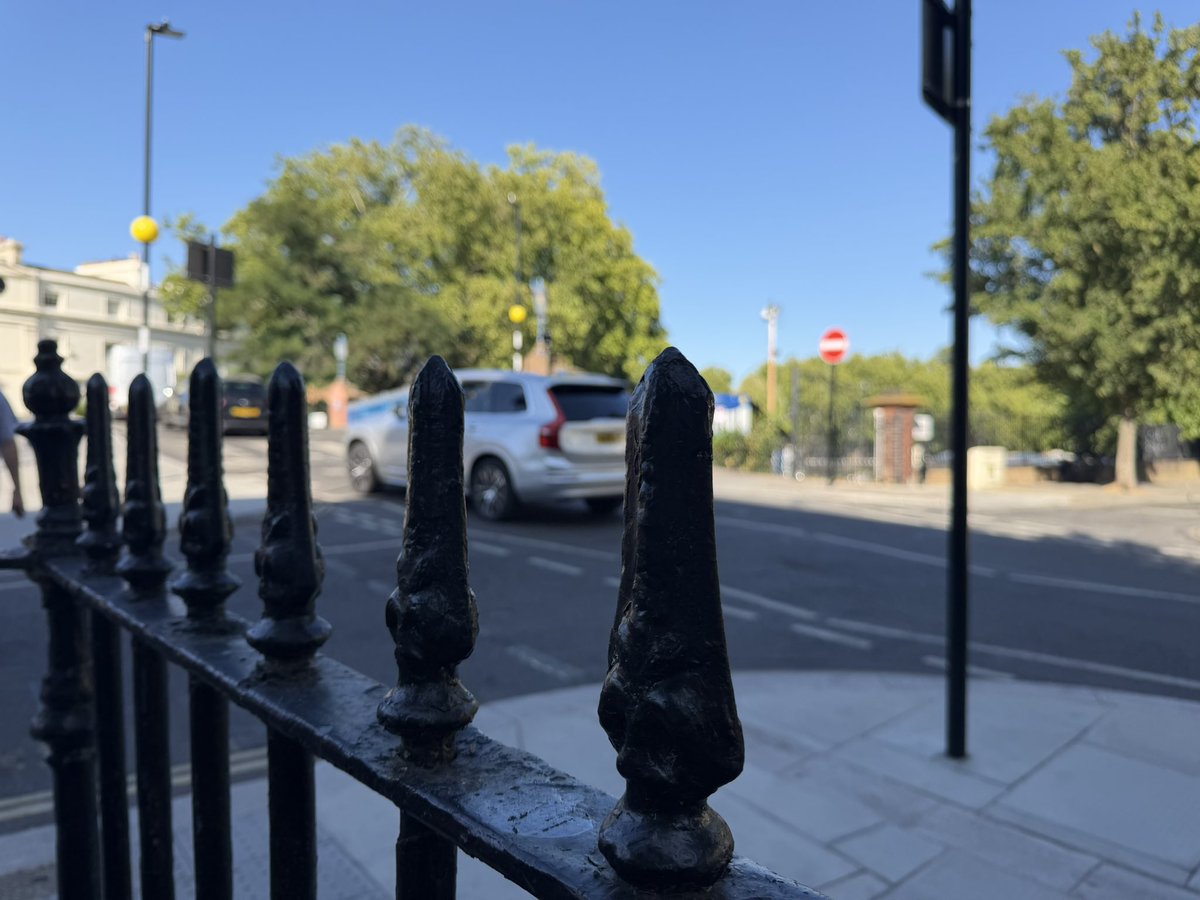
Sitting outside a pub in Little Venice in London right now waiting to photograph an event near here this evening. An orthodox Jewish family walked past. A husband, his wife, their toddler and a baby in a pram. An Arab girl in her twenties just walked up to them and made a gun sign with her hand and said die. Then pointed the ‘gun’ at their each child and said die. She stood there threatening and laughing as she wished them dead. I told her to fuck off and she wandered away laughing. I’m angry at myself for not videoing her instead so you can see the depths of the vermin in this country, protected by the mayor, the police and the government. Photo of where I watched it. Truly awful.
We’ve received notice that the Department of Commerce has lifted export controls on Claude Fable 5 and Mythos 5.
We'll begin restoring access tomorrow, and will share an update soon.
We’re grateful to our users for their patience, and to everyone who worked with us on redeploying the models.
This week the most advanced AI model on the planet got switched off by a foreign government. British researchers were studying it. British companies were testing it. British hospitals were piloting it. Not any more.
This isn't an AI story. It's the story of every industry we used to lead.
Britain has some of the best AI talent in the world. DeepMind was built here. Our AI Safety Institute writes the rules other countries follow. We have the researchers, the universities, the standards.
What we don't have is the power stations to run the data centres, the planning system to build them, or the industrial base to make the chips. So the work happens here and the value lands somewhere else. We invent. Others build. Others decide. Then we read about it on Saturday morning.
Same story as the kit our soldiers don't have. Same story as the factories we used to.
I spent nine months in government making this argument inside the room. I'll make it louder from outside.
🚨 We recently discovered that an unauthorized party obtained a token with access to the Grafana Labs GitHub environment, enabling the threat actor to download our codebase. (1/6)
“Young relatives forced to commit sex acts on each other”
The New York Times didn’t want this to be the conversation. The editors signed off on fictional raping dogs instead. Read what happened on October 7.
Growing up in the UK, I’ve never had someone approach me and say “what are you doing around here” for being black.
This happened to a Jewish man who was simply doing his job.
Combined with the arson attacks, British Jews are targeted in ways people like me aren’t. A sickness.