This same approach can bring about cost effective terrestrial multi-junction solar cells which will increase efficiencies north of 30 and even 40%, thereby increasing power generated relative to the same area.
⚡️ A top theoretical physicist in Japan just posted something that deserves more attention than any benchmark released this year.
Yuji Tachikawa, one of the most respected string theorists alive, showed Claude his research notes from a collaboration that had been stuck at the same point for six months.
The AI found a calculation error, hit the exact wall his collaboration hit, then proposed a way through. He told it: tried that, it didn't work. The model held its position, expanded the approach, and solved the problem. It wrote its own code to verify its own math along the way. He checked everything by hand and posted, shocked: it solved it brilliantly.
Skeptics will call it an anecdote. Weigh the witness. A physicist at this level, famous for precision, posting in Japanese to a Japanese audience, with zero incentive to hype, who verified the result piece by piece before saying a word. His bar for "solved it brilliantly" is among the highest on earth.
Now look at what was actually sold that evening, because the product was deeper than intelligence.
A world-class collaboration stuck for six months was never short of brainpower. It was locked in a groove. Shared training, shared priors, shared blind spots: the same minds re-walk the same path to the same wall, and the coherence that makes a collaboration work is exactly what keeps it stuck.
The machine reproduced the wall, which proves it was operating inside the real problem, then stepped sideways where the field's shared instincts said don't bother. What it delivered was an outside view of the groove. Until last night, buying that required recruiting a genius from a different lineage, which takes years. It now costs a subscription and an evening.
Deeper still. When the expert said "tried that, didn't work," why was the machine right to hold? Because between an idea and a result sit forty steps of algebra where one silent sign error kills the path, and a human who fails at step thirty cannot tell a wrong idea from a wrong turn. So human researchers prune ideas by feel: elegance, smell, what the field rewards.
That feel has a name. Taste. And taste turns out to be a cost-saving heuristic forced on us by slow, expensive verification and finite careers. The machine verifies instantly and for free, so it needs no taste, and is therefore unbound by the field's collective pruning errors. Every formal science has a graveyard of ideas abandoned as ugly or unpromising. That graveyard is now mispriced.
This also settles the order in which domains fall, and it is the reverse of what everyone assumed. Fields fall by speed of verification, never by prestige. Theoretical physics carries its own instant grader, symbolic math, so it falls early. The moat was never creativity. The moat was always the cost of checking.
One more detail. Halfway through his thread, the physicist's pronoun for the machine shifts from "it" to "he." A man whose profession is precision changed the category of the thing he was describing at the exact moment it showed him peer-grade competence. The pronouns move before the benchmarks do.
Six months of stall, resolved before breakfast, by a man alone with his notes at midnight. Discovery was never bounded by talent or funding.
It was bounded by the number of independent competent passes over the world's stock of stuck problems, and that number just became effectively unlimited wherever an answer can be checked.
The scarce inputs of science are now the quality of the question and the courage to show the machine your dead ends.
⚡️ A top theoretical physicist in Japan just posted something that deserves more attention than any benchmark released this year.
Yuji Tachikawa, one of the most respected string theorists alive, showed Claude his research notes from a collaboration that had been stuck at the same point for six months.
The AI found a calculation error, hit the exact wall his collaboration hit, then proposed a way through. He told it: tried that, it didn't work. The model held its position, expanded the approach, and solved the problem. It wrote its own code to verify its own math along the way. He checked everything by hand and posted, shocked: it solved it brilliantly.
Skeptics will call it an anecdote. Weigh the witness. A physicist at this level, famous for precision, posting in Japanese to a Japanese audience, with zero incentive to hype, who verified the result piece by piece before saying a word. His bar for "solved it brilliantly" is among the highest on earth.
Now look at what was actually sold that evening, because the product was deeper than intelligence.
A world-class collaboration stuck for six months was never short of brainpower. It was locked in a groove. Shared training, shared priors, shared blind spots: the same minds re-walk the same path to the same wall, and the coherence that makes a collaboration work is exactly what keeps it stuck.
The machine reproduced the wall, which proves it was operating inside the real problem, then stepped sideways where the field's shared instincts said don't bother. What it delivered was an outside view of the groove. Until last night, buying that required recruiting a genius from a different lineage, which takes years. It now costs a subscription and an evening.
Deeper still. When the expert said "tried that, didn't work," why was the machine right to hold? Because between an idea and a result sit forty steps of algebra where one silent sign error kills the path, and a human who fails at step thirty cannot tell a wrong idea from a wrong turn. So human researchers prune ideas by feel: elegance, smell, what the field rewards.
That feel has a name. Taste. And taste turns out to be a cost-saving heuristic forced on us by slow, expensive verification and finite careers. The machine verifies instantly and for free, so it needs no taste, and is therefore unbound by the field's collective pruning errors. Every formal science has a graveyard of ideas abandoned as ugly or unpromising. That graveyard is now mispriced.
This also settles the order in which domains fall, and it is the reverse of what everyone assumed. Fields fall by speed of verification, never by prestige. Theoretical physics carries its own instant grader, symbolic math, so it falls early. The moat was never creativity. The moat was always the cost of checking.
One more detail. Halfway through his thread, the physicist's pronoun for the machine shifts from "it" to "he." A man whose profession is precision changed the category of the thing he was describing at the exact moment it showed him peer-grade competence. The pronouns move before the benchmarks do.
Six months of stall, resolved before breakfast, by a man alone with his notes at midnight. Discovery was never bounded by talent or funding.
It was bounded by the number of independent competent passes over the world's stock of stuck problems, and that number just became effectively unlimited wherever an answer can be checked.
The scarce inputs of science are now the quality of the question and the courage to show the machine your dead ends.
Longi, China’s 🇨🇳 largest solar maker, has begun producing solar cells that replace silver with copper at its Shaanxi facility. Solar accounted for 17% of global silver demand last year.
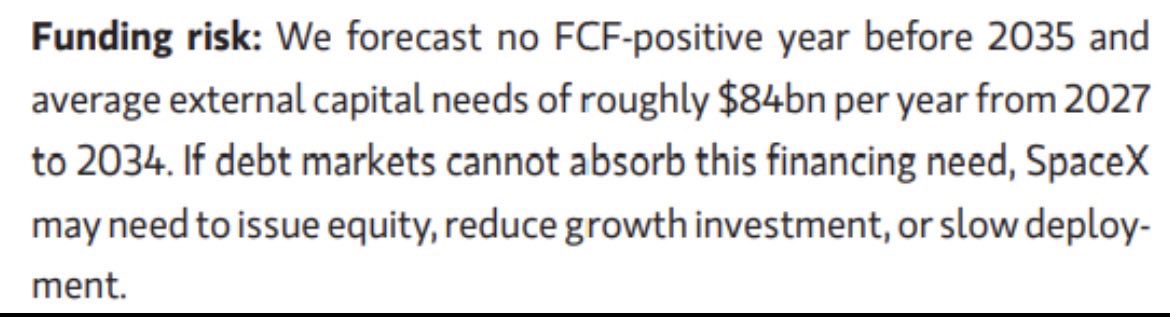
I know we are only halfway through the year, but I feel it will be hard to top this comment from one of the obligatory buy recommendations on $SPCX issued by one of the underwriters this week. It is truly glorious.
autonomous robot driving through the field at night. no chemicals. no pesticides. just UV light killing pathogens and pests while everyone sleeps. this is @tricrobotics.
this is what chemical-free pest control looks like at scale.
Solar and related batter installs made up 91% (!) of all new energy added to the U.S. grid in Q1 — and that’s mostly before the war and after Trump ripped out subsides in the IRA.
All of America watching Euros rave about Waffle House, Chilis apps, buying Combos at a rural gas station, floating the Chattahoochee, and ranch dressing on the internet:
🚨 The “blowout” jobs report that just killed your rate cut? Misleading.
It was bartenders. 🍺
70K hospitality hires for the World Cup -> 5x normal. Wall Street saw a hot economy. It was a soccer tournament.
Back out the one-off and there’s NO blowout -> just trend. Yes, there’s a soccer tournament sitting on top of a trend-line economy. 🤯
Look under the hood. 🧵