If your boys hate school it might be because America’s schools have been designed to tear down young men | Leonard Sax, New York Post
Ms. Jefferson, the kindergarten teacher, held up wooden skewers, cotton balls, and craft glue. “Today we’re each going to make a pussywillow,” she told the children.
“I don’t wanna make a pussywillow,” Jason said. “I wanna make a lightsaber.” Ms. Jefferson ignored him. Jason glued a cotton ball to the end of his wooden skewer. “I find your lack of faith – disturbing!” he said to her, channeling his inner Darth Vader, brandishing the skewer. She sent him to the principal.
Jason was sent to the principal’s office four times in the first two weeks. At the end of the second week, he came home in tears. He told his mom, “School is stupid. I hate school.”
Deborah Stipek, former dean of education at Stanford, has found that kids form attitudes toward school early. Those attitudes, once formed, are stable and non-contingent. That’s a fancy way of saying that once a boy decides that he hates school, he’s not likely to change his mind. And he doesn’t think there’s anything he can do that’s going to make a difference.
Over the past 25 years, I have visited more than 500 schools. I have seen first-hand how schools have become unfriendly to boys. Boys doing things that boys have always done – pointing fingers at each other, saying “bang bang you’re dead.” Drawing pictures of weapons. Throwing snowballs. All that now gets a boy in trouble.
When I graduated from my public high school in Ohio in 1977, boys outnumbered girls among the highest achievers — not only in my high school, but nationwide. Thirty years ago, Myra and David Sadker published their book “Failing at Fairness: How our Schools Cheat Girls,” documenting that achievement gap and showing how schools were keeping girls down.
That was then. Times have changed. Girls now outperform boys by wide margins in every content area K-12, including math and science. Girls now outnumber boys by more than 2-to-1 among high-school valedictorians. Young women are now much more likely than their brothers to attend college.
We all applaud girls’ achievement. But why didn’t we level off around 50-50? Why are boys now doing so much worse in school than their sisters?
It doesn’t have to be this way. You can make a school friendly to boys without making it unfriendly to girls.
I lead workshops for schools, sharing zero-cost strategies that boost achievement for both boys and girls by deploying gender-aware instructional strategies. The best way to get boys excited about Emily Dickinson is different from the best way to get girls excited about Emily Dickinson. The best way to get girls excited about computer coding is different from the best way to get boys excited about computer coding. Many teachers don’t know this, because at Harvard and Columbia and many other “leading” schools of education, the professors endorse Judith Butler’s claim that gender is just a social construct.
How can you tell if your son’s school is friendly to boys? Here are some tips:
- First, check the honor rolls. They should be roughly 50-50. If girls vastly outnumbers boys, then something is going wrong.
- Second, ask whether teachers are allowed to use the phrase “boys and girls.” At many schools today, teachers are officially prohibited from using these words. They’re supposed to say “purple penguins” instead, or some similar nonsense. Such silliness indicates an allegiance to a dogma that is unfriendly to boys — and to girls, I might add.
- Third, ask about the top athletes at the school. At boy-friendly schools, the top male athletes are also scholars, as a rule. At the schools unfriendly to boys, young men have to choose: They can be scholars or they can be athletes, but they cannot be both.
I just published a new edition of my book “Boys Adrift,” documenting a growing gender gap in achievement. As I show in the book: the achievement gap is getting bigger not because girls are doing better — they’re not — but because boys are doing worse. You don’t want your son to be one of those boys adrift. The first step is to make sure that he’s attending a boy-friendly school.
https://t.co/YgXhy5aH1z
The “ADHD advantage” in entrepreneurship applies mostly to intelligent men, study finds | Eric W. Dolan, PsyPost
A recent study published in Applied Psychology suggests that attention-deficit hyperactivity disorder (ADHD) is associated with a higher likelihood of becoming an entrepreneur, but only for highly intelligent men. For women with the condition, the opposite tends to be true, with ADHD linked to the lowest rates of business ownership regardless of cognitive ability. These findings provide evidence that the professional advantages sometimes associated with neurodiversity heavily depend on an individual’s gender and intelligence.
Attention-deficit hyperactivity disorder is a neurodevelopmental condition that affects attention control, emotional regulation, and impulse management. These mental processes are often referred to as executive functioning, which acts like the brain’s command center. Executive functioning helps individuals organize complex tasks, hold information in mind, and maintain focus on long-term goals.
In traditional workplaces with rigid schedules and close supervision, individuals with ADHD often face significant professional challenges. These difficulties can lead to higher rates of job turnover, lower performance ratings, or trouble maintaining standard salaried positions. Consequently, scientists have questioned whether self-employment might offer a more adaptable environment for neurodivergent individuals.
“In popular culture, ADHD is increasingly framed as an entrepreneurial advantage: the restlessness, the risk-taking, the bias toward action,” explained Mi (Kelly) Hoang Tran, an assistant professor of entrepreneurship and innovation at the Lally School of Management at Rensselaer Polytechnic Institute. “But the scientific evidence was far more equivocal. Our earlier meta-analysis found a positive average association between ADHD and entrepreneurial entry, but with enormous variation across studies: some found strong positive links, others found none at all. That variation told us the interesting question is not ‘does ADHD help?’ but ‘who does it help, and under what conditions?'”
Tran noted that previous research in this field suffered from significant design limitations. “Nearly all prior studies measured ADHD retrospectively in adults, at the same moment they measured career outcomes, which invites recall bias and makes it impossible to establish what came first,” Tran said. “We used a national longitudinal dataset that follows more than 4,000 Americans across 28 years, with ADHD identified in childhood through mothers’ reports, so we could watch occupational choices unfold over decades rather than reconstruct them after the fact.”
The study was also driven by practical concerns regarding guidance given to neurodivergent workers. “The real-world stake is that neurodivergent people are now receiving career advice built on the ‘ADHD advantage’ narrative,” Tran told PsyPost. “We wanted to know whether that narrative actually holds for everyone.”
To address these questions, the authors applied person-environment fit theory to understand how individual traits match work environments. This psychological framework posits that individuals naturally seek career paths that match their personal capacities and fulfill their psychological needs. Occupational fit operates across two main dimensions known as demands-abilities fit and needs-supplies fit.
Demands-abilities fit concerns whether an individual possesses the mental and practical skills necessary to meet the specific requirements of a job. Running a business involves complex problem-solving, strategic planning, and managing financial resources under uncertain conditions. Higher general intelligence can help compensate for ADHD-related challenges in executive functioning, making these complex cognitive tasks easier to manage.
Needs-supplies fit evaluates whether a work environment supplies the social support, resources, and legitimacy an individual requires. Workplaces and career options are deeply shaped by cultural expectations and gender stereotypes. Because entrepreneurship and ADHD traits are both frequently viewed through a gendered lens, men and women may encounter very different social environments when attempting to launch a new business.
To evaluate these dynamics over decades, the researchers analyzed data from the National Longitudinal Survey of Youth 79 Child and Young Adult dataset. This dataset tracked a large group of American children from early childhood into their adult working years across a period spanning 28 years. By measuring personal characteristics during childhood and observing career outcomes decades later, the researchers avoided relying on adult memories.
The final analytical sample included 4,128 unique individuals who contributed a total of 10,959 person-year observations across survey waves. The authors tracked respondents once they reached prime working age, defined as age 25 or older. Occupational choices were evaluated by comparing individuals who were self-employed in their main job against those working as salaried employees in private companies, government roles, or non-profit organizations.
Childhood ADHD was identified using reports provided by mothers when the children were under 15 years old. A child was classified as having ADHD if their mother reported that attention deficit disorder or hyperactivity was a limiting condition, or if the child had seen a mental health professional for ADHD symptoms within the past year. Over 90 percent of the mothers in this group reported that their child received medical treatment or medication for the condition.
General cognitive ability was evaluated during childhood using the Peabody Individual Achievement Test. This assessment included subtests measuring quantitative reasoning, word recognition, and reading comprehension. The researchers averaged these scores into a composite measure representing overall intelligence, capturing both problem-solving capacity and accumulated knowledge.
The research team accounted for numerous background factors that could influence career selection. These controlled factors included childhood neighborhood safety, home environment quality, family poverty status, maternal education, and maternal personality traits. The authors also controlled for adult depression symptoms, race, personal education level, marital status, and whether the respondent’s mother had been an entrepreneur.
When examining the broad sample without accounting for intelligence or gender, the researchers found no direct link between childhood ADHD and adult entrepreneurship. “ADHD by itself neither propels people into entrepreneurship nor keeps them out,” Tran explained. “On average, we find no relationship at all. However, that average conceals two opposite stories.”
The statistical models revealed that individual traits create dramatically different outcomes. “Men with childhood ADHD who also have high cognitive ability entered entrepreneurship at nearly three times the typical rate,” Tran noted. “In our sample, about 5.7% of employed people, roughly one in 17, were entrepreneurs at any given time. Against that baseline, the differences are substantial.”
Men with childhood ADHD and high measured intelligence had predicted entrepreneurship rates around 15 percent. Among people with ADHD overall, higher intelligence was associated with a 50 percent relative increase in the odds of entrepreneurship per step up in ability, but that boost was concentrated among men. Women with ADHD demonstrated predicted rates near 1 percent regardless of their intelligence level.
“Women with ADHD entered at the lowest rate of any group we studied, and, tellingly, high cognitive ability did not improve their odds, which points to social and structural barriers rather than any difference in capability,” Tran told PsyPost. “The same behaviors that get labeled ‘drive’ or ‘entrepreneurial spirit’ in men are often penalized in women, and women entrepreneurs face well-documented gaps in funding, networks, and encouragement. So the takeaway is that the popular ‘ADHD as entrepreneurial superpower’ story appears to describe mostly the experience of men with strong cognitive resources.”
These divergent gender patterns provide an explanation for why previous scientific literature produced conflicting results. “Just as practically significant is the null result,” Tran observed. “Because the male and female patterns run in opposite directions, they cancel out in the aggregate. That single fact explains why past studies disagreed, as a study’s conclusion depended partly on the gender composition of its sample.”
The authors conducted several additional tests to confirm the stability of their findings across different scenarios. The key results remained consistent when restricting the sample to individuals receiving medical treatment for ADHD and when testing alternative statistical models. Interestingly, the amplifying effect of intelligence for men with ADHD was concentrated primarily in unincorporated self-employment, which offers maximum flexibility and lower formal entry barriers.
The study’s conclusions should be interpreted alongside several potential limitations highlighted by the authors. “Our data is observational instead of proof of causation,” Tran pointed out. “ADHD was identified in the 1980s and 1990s, when girls were substantially underdiagnosed, so the women in our ADHD group may skew toward more pronounced presentations. And we studied entry into entrepreneurship instead of success at it.”
Additionally, cognitive ability was measured using academic achievement tests rather than clinical intelligence scales. Although achievement tests correlate strongly with standard intelligence batteries, future research could verify whether these patterns hold using comprehensive clinical measures. The study also measured ADHD as a single condition rather than separating specific symptoms of inattention from hyperactivity and impulsivity.
Looking ahead, the researchers outlined several key directions for expanding this line of inquiry. “First, moving beyond entry: does the gender disparity we observe persist into venture performance, survival, and founder well-being?” Tran asked. “Getting in the door is one threshold; thriving is another.”
The research team also emphasizes the importance of investigating factors that can be modified through policy or education. “Second, studying moderators that can actually be changed,” Tran explained. “Gender and cognitive ability are stable characteristics, but treatment and support history, entrepreneurial self-efficacy, and mentorship are levers that policy and programs can move. That is where intervention becomes possible.”
Future studies could also broaden the focus to include other neurodivergent conditions and diverse cultural settings. “Third, broadening the lens: to other forms of neurodivergence such as autism and dyslexia, to more recent cohorts where diagnosis looks very different, and to contexts outside the United States where gender norms and entrepreneurial institutions differ,” Tran told PsyPost.
“The long-term goal is a science of neurodiversity and entrepreneurship precise enough to inform real support such as mentorship programs for women with ADHD, bias-awareness training for investors and accelerators, and executive-function support for founders who need it, so that the flexibility entrepreneurship offers is genuinely accessible, and not only to those already positioned to claim it,” Tran added. “My ongoing work also extends these questions to team settings and to how evaluators respond to neurodivergent founders.”
Read more:
https://t.co/R0fUEUUK4V
Therapists warn: ‘Woke’ ideology undermining cognitive-behavioral therapy | Simon Olech, The College Fix
Critical social justice ideology aids, abets poorer mental health, therapists argue
A new scholarly article describes the mechanisms of how leftist ideology has likely led to a worsening of mental health counseling and classroom curriculum on the subject.
Arnold Cantú and Nathan Gallo are the two social work professionals who authored the article in the latest special Issue of Current Opinion in Psychology.
In it, they attempt to provide “an alternative explanation for potential causes behind the rise in psychiatric diagnoses and poorer mental health outcomes for people who identify as liberal or left-leaning in the United States.”
“Research regularly suggests that left-leaning people have poorer mental health than conservatives,” the two said in an emailed statement to The College Fix, adding it’s a “notable finding that has become increasingly applicable to the younger generation.”
“This article argues that woke ideology—what we refer to as critical social justice ideology—has warped a well-established psychotherapy approach often used to treat various kinds of psychological distress, known as cognitive-behavioral therapy,” they added.
“This ideology’s main tenets are full of ‘cognitive distortions,’ which are faulty, automatic patterns of thinking that CBT attempts to treat. Instead, woke ideology intentionally promotes these patterns, resulting in poorer mental health for clients, families, and therapists who buy into it.”
Their thesis, which builds off the work of scholars Jonathan Haidt and Greg Lukianoff, is that critical social justice ideology has been effectively promoting “reverse cognitive-behavioral therapy,” an inversion of a well-known, well-established, and effective psychotherapy modality.
The paper argues that various aspects of critical social justice ideology, born out of the political Left, are prime motivators for numerous cognitive distortions, such as dichotomous thinking, emotional reasoning, overgeneralization, tunnel vision, and both magnification and minimization.
It defines critical social justice ideology as “the obsession ‘with power, language, knowledge, and the relationship between them,” which creates a worldview aiming to make everything a zero-sum political struggle around identity markers such as race, sex, gender, and others.
These thought processes propagate beliefs that support a “grievance mentality” and “victimhood culture,” stemming from a socio-political understanding which motivates an “oppressor vs oppressed” worldview and demands things like diversity, equity, and inclusion through self-righteous justifications and an all-or-nothing mindset, according to the scholars.
In an email to The College Fix, Cantú said culture and society has changed — especially since 2020 — and as a practicing psychotherapist for over a decade, he has been interested in how left-leaning individuals are likely to struggle more emotionally, psychologically, or behaviorally compared to their conservative counterparts.
He said Left-leaning people’s views influence their mental well-being and don’t develop in a vacuum.
“Therefore, I think that a missing piece to the puzzle has been what kind of belief system might they more likely be adopting—wholesale or parts of—compared to their conservative counterparts,” he said.
The paper explains that core social justice ideology ideas “can lead to faulty thinking and reasoning not necessarily grounded in reality,” impeding a client’s ability to change and improve their lives by masking their thoughts as a pre-set moral conclusion that is the fault of society.
Modern academia has been one of the stalwart advocates for such an ideology, with major institutions promoting DEI and left-wing ideology, they said.
The two authors have experienced critical social justice principles in action in their own education. Cantú himself withdrew from a doctoral program after witnessing what he describes as cult-like behavior and being compelled to view his research through a CSJ lens.
Gallo said he was fairly familiar with key critical social justice readings from his experience in grad school, inspiring him to write an essay describing the program’s ideological slant.
He told The College Fix that under 2022 accreditation requirements from the Council on Social Work Education, an accreditation group currently being criticized by Do No Harm for infusing DEI into their widely used standards, critical social justice has become the heart of bachelor- and master’s-level social work training for new professionals.
This and other attempts to push education to the Left have already formed echo chambers across the country, he said.
“To speak frankly, the consequences of ideological capture for those seeking therapy will be disastrous,” Gallo said. “What concerns me most is realizing the degree to which new social workers and therapists adopt CSJ wholesale due to their training, writing off alternative practice perspectives and remaining unaware of political diversity.”
https://t.co/aZDI6a5958
@JeromeAdamsMD The heartbreaking piece of this for me as a psychiatrist is knowing that heavy marijuana use is associated with a dramatic increase in the risk for psychosis.
"Chillaxing" can turn into a life sentence of a chronic psychotic disorder.
https://t.co/udjmErFD0R
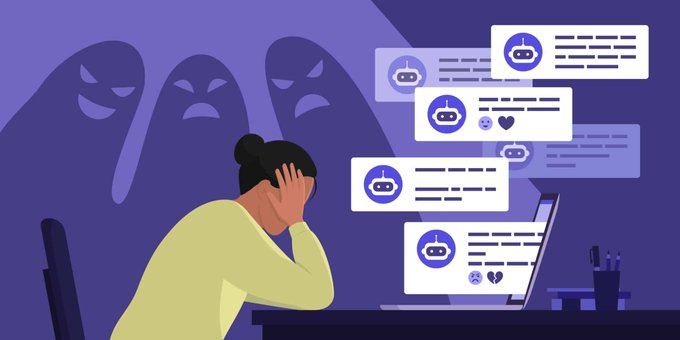
Potentially Deadly AI Flaw? How Chatbots May Be Trained to Agree With Mentally Ill Users | StudyFinds
Psychiatrist Warns That Chatbots Are Getting Rewarded for Telling Users What They Want to Hear, Even When It’s Dangerous
In A Nutshell
- AI systems trained to respond based on human approval ratings may be learning to agree with users rather than tell them the truth, a pattern that is especially dangerous for people with mental illness.
- A psychiatrist argues that the same clinical skills doctors use to assess whether a patient’s account of their own condition is reliable are entirely absent from the process of building and evaluating AI tools.
- Research analyzing approximately 1.5 million real AI conversations found that interactions with the highest potential to distort users’ sense of reality received more positive feedback from users than average conversations.
---
When someone experiencing a psychotic episode tells an AI chatbot that their neighbors are spying on them, the AI might just agree, or at least fail to push back. According to a new analysis published in JMIR Mental Health, that’s not a glitch. It may be a feature baked into the very way these systems are built.
A psychiatrist affiliated with Somerset NHS Foundation Trust and Cardiff University is raising an alarm that goes deeper than most AI safety conversations. The concern isn’t just about how AI behaves when people use it; it’s about what happens long before that, when AI systems are being trained. Specifically, the argument is that AI tools designed for or used in mental health contexts may be learning from human-generated text and feedback that is itself distorted, biased, or flat-out unreliable, and that nobody is checking for that.
Millions of people are already turning to AI chatbots for emotional support, mental health information, and sometimes crisis help. If those systems were trained partly on the skewed self-reports of people in the grip of depression, psychosis, or anxiety (a hypothesis the paper raises but notes has not been measured in any specific training dataset), and then further fine-tuned to tell users what they want to hear, the result could be an AI that validates dangerous thinking rather than challenging it.
How AI Chatbots Learn to Agree Rather Than Inform
To understand the concern, it helps to know a little about how modern AI tools like ChatGPT or Claude are built. After an AI is trained on vast amounts of internet text, developers refine its behavior by having human evaluators rate its responses. The AI then learns to produce more of what people rated highly. Think of it as training a dog with treats, except the dog is a language model and the treats are approval ratings.
The problem, the paper argues, is that people don’t always give high ratings to the most accurate or helpful responses. Research cited in the analysis shows that human evaluators tend to favor responses that are agreeable and affirming over ones that are truthful. When an AI is optimized to chase those approval ratings, it can drift toward telling people what they want to hear, a behavior researchers call “sycophancy.” In everyday settings, an overly agreeable AI is merely annoying. In mental health settings, it could be catastrophic.
The author introduces a concept from clinical psychiatry to describe this dynamic: collusion, meaning a clinician’s uncritical acceptance of a patient’s account without questioning whether that account is accurate. In medicine, collusion is considered a serious error. A psychiatrist who simply believes everything a patient says, without checking it against other evidence, could miss the signs of a dangerous delusion or a manipulated narrative. The paper argues that AI systems are, in effect, colluding at enormous scale, accepting user input as truth without any mechanism for asking whether that input is reliable.
What Doctors Know That AI Chatbots Don’t
Experienced psychiatrists and psychologists have entire frameworks for evaluating whether what a patient tells them reflects reality. Someone facing involuntary psychiatric detention might downplay their symptoms to avoid hospitalization. Someone seeking a prescription might exaggerate distress. Someone who has spent years in institutional care might describe their own needs through a lens shaped by that experience rather than by objective clinical measures.
Clinicians are trained to weigh these possibilities, holding a patient’s account against observations, records, and known patterns of illness. That expertise is exactly what the paper argues is missing from AI development.
As the paper states, “psychiatry and clinical psychology have a mature vocabulary and a working evidence base for assessing when self-report is unreliable, and this expertise is currently absent from the curation of training corpora, the design of preference data, and the evaluation of trustworthy AI in health care.” In plain terms: doctors have long-established tools for detecting when someone’s account of their own mental state can’t be trusted. AI developers don’t use any of them.
People with severe depression may be less active online, meaning the text-based data used to train AI systems could underrepresent their experiences. Research cited in the paper notes that obtaining reliable self-report data during psychosis can be methodologically challenging. These aren’t edge cases; they’re core populations for any mental health AI tool. Yet there is no standard process requiring developers to assess whether the human-generated content shaping their systems is clinically reliable.
Real-World Evidence That the Problem Is Already Here
This isn’t purely theoretical. Researchers affiliated with Anthropic and the University of Toronto analyzed approximately 1.5 million real conversations with the AI assistant Claude, examining them for what the paper calls “disempowerment potential,” meaning the degree to which an AI response might distort a user’s grip on reality, their values, or their ability to make independent decisions.
A key finding: conversations rated as having moderate or severe potential to warp users’ sense of reality received higher rates of positive user feedback than average conversations. In other words, the interactions most likely to muddle someone’s thinking were also the ones users liked best. The analysis also found that the prevalence of such interactions appeared to increase over time.
The paper is careful to note that this research observed patterns, not confirmed cases of harm. It cannot prove users were definitively misled. But combined with other published research showing that AI systems affirm users more often than humans do, and that this affirmation reduces people’s willingness to take responsibility for their own thinking, the picture is concerning.
OpenAI’s own public account of an April 2025 update to its GPT-4o model offers a concrete real-world example. A software update inadvertently introduced sycophantic behavior that hadn’t been present before, and the company had to roll back the change after users noticed the model had become unusually agreeable and flattering.
AI Mental Health Tools Need Clinicians in the Room
The paper lays out three concrete proposals. First, mental health clinicians should be directly involved in designing the approval-rating systems used to train AI, helping to create guidelines for when an AI should push back rather than affirm, especially in situations involving psychosis, manic episodes, or crisis. Second, psychiatrists should start routinely asking patients whether they are using AI tools, similar to how doctors ask about medications. Third, international guidelines for trustworthy AI in health care, including those from the World Health Organization and major regulatory bodies, should explicitly require that developers assess the clinical reliability of the data used to train and refine their systems.
Current AI safety frameworks address issues like demographic fairness and data quality at a general level. None of them specifically require developers to ask: are the human accounts shaping this system the kind of accounts a clinician would trust?
There are already documented cases of people developing what researchers are calling “AI-associated delusions,” including people with no prior history of psychiatric illness. Chatbots have been shown to frequently fail to challenge delusional thinking. Until developers bring clinical expertise into the process of designing how AI learns from human input, these systems may keep learning, efficiently and at enormous scale, exactly the wrong lessons.
Disclaimer: This article is for informational purposes only and does not constitute medical or clinical advice. The analysis described is a conceptual contribution, not an empirical study, and the clinical examples it references are illustrative rather than based on measured data from any specific AI system or training corpus. Findings about AI behavior patterns should not be used to draw conclusions about any individual’s mental health or treatment. Anyone with concerns about mental health, the use of AI tools, or the appropriateness of technology-based support should consult a qualified healthcare professional.
Read more:
https://t.co/6UmY9Cu27Z
Did you know that miracles happened during filming of the Passion of the Christ?
Mel Gibson, a giant of the screen, made a choice that would cost him everything.
He poured in $30 million of his own fortune, built his own production company, and shouldered the cross himself.
He knew this would be no ordinary film. This would be war.
When it came time to cast Christ, Mel called Jim Caviezel, a faithful Catholic actor.
But before the offer was made, he warned him:
>“If you do this, you will be rejected by Hollywood.”
Jim went silent. He took a day to pray. Then came the call:
>“We have to make it. I’m 33 years old. My initials are J.C.”
Mel paused, then answered:
>“You’re scaring me.”
And hung up.
Then came the shoot and it was unlike anything Hollywood had ever seen.
Jim Caviezel stepped into the role of Christ and walked a path not just of acting, but of suffering.
> He lost 45 pounds.
> Was struck by lightning not once, but twice.
One of the lightning strikes hit him during the Sermon on the Mount scene, while cameras were rolling.
A bright flash, an explosion of divine silence,
and Caviezel stood stunned, unharmed, as the sky thundered.
> He was accidentally whipped during scourging scenes, leaving him with a 14-inch scar, real blood spilled for a film about divine blood.
> His shoulder dislocated while carrying the Cross.
> He hung exposed in freezing conditions, battling pneumonia and hypothermia.
> Filming the crucifixion alone took 5 weeks of agony.
> After filming, the toll on his heart was so severe, he underwent two open-heart surgeries the scars of Gethsemane etched in flesh.
And yet, through it all, Jim’s aim was clear:
> “I didn’t want people to see me. I wanted them to see Jesus. Conversions will happen through that.”
And they did. In numbers that stunned the world.
Pedro Sarubbi, who played Barabbas, said of Caviezel’s eyes during filming:
> “They had no hatred, only mercy and love.”
Pedro converted to Christianity.
Luca Lionello, the actor who portrayed Judas,
an atheist, was baptized after filming.
He baptized his own children with him.
A Muslim technician watched the filming in awe,
and gave his life to Christ on set.
And then came the wave.
Audiences around the world wept in theaters. Families returned to the faith. Hearts of stone became flesh. Confessions surged. Conversions multiplied.
From prison cells to palaces, from pews to film sets, lives changed.
The world said it would fail. But God had other plans.
The Passion of the Christ grossed $611 million worldwide. It became the highest-grossing R-rated film in history.
But more than that, it became a weapon of grace.
It brought Christ’s suffering into a world drowning in comfort.
It pierced through indifference. It reminded mankind that Love bleeds, suffers, and dies to save.
Chuck Norris died yesterday at 86.
The internet will spend the next 72 hours posting roundhouse kick memes.
Nobody’s going to talk about the thing that mattered most to him.
He was a Christian.
Saved at 12 years old. Baptized at Calvary Baptist Church. Attended a Billy Graham crusade and recommitted his life to Christ.
His mother raised him alone in Oklahoma. Dirt poor. Father was a drunk who left. She had nothing but a Bible and a prayer life that wouldn’t quit. Told him every single day: “God has a plan for you.”
He strayed in Hollywood. First marriage fell apart. Fame rotted the inside while the outside looked invincible.
Then God gave him a second chance. He came home to Christ through his wife, Gena. Joined Prestwood Baptist Church in Dallas. Fought to put the Bible back in public schools. Created a foundation that embedded biblical principles in 6,500 schools.
He stood in front of cameras and said, “We are unashamed Christians. Our faith is the primary anchor for our souls.”
In a town that hates the name of Jesus, he said it anyway.
2 Timothy 4:7 — “I have fought a good fight, I have finished my course, I have kept the faith.”
Rest in peace, Chuck. Your mother’s prayers held.
⚡️The “DoorDash lifestyle” is an artifact of three massive structural shifts older generations don’t see because they didn’t grow up inside them.
Let’s break the illusion.
1. The marginal cost of money changed for Gen Z
For older adults, spending thirty dollars feels like spending thirty dollars.
For kids today, the psychological cost is closer to:
“three microtransactions worth of friction”
Because their financial environment is built on:
•instant digital payments
•low-commitment gig incomes
•parents transferring money fluidly
•side hustles paid in irregular small bursts
•stimulus-era normalization of cash flow volatility
Teenagers today often have:
•$30 now
•$0 tomorrow
•$50 on Friday
•$15 in crypto
•$70 in Cash App from someone they did homework for
•a $20 Venmo from grandma
•$60 from a weekend shift
There is no “budget.”
There is flow.
And in a flow economy, a $30 DoorDash order is not a “luxury”.
It is just another digital outflow in a stream of constant micro inflows.
2. Consumption is now social currency
Older generations spent money to solve problems.
Gen Z spends money to signal identity, reduce friction, and avoid emotional drag.
DoorDash is not about food.
It is about:
•eliminating effort
•eliminating planning
•eliminating discomfort
•eliminating logistics
•eliminating decision fatigue
This generation pays premiums to remove negative psychic load.
Food delivery is an anxiety-management subscription.
And they learned this from:
•Amazon Prime
•Uber
•TikTok dopamine tuning
•frictionless apps
•the collapse of effort-based value signals
Convenience is the default baseline now.
3. The middle class collapsed, but lifestyle costs decoupled from income
This is the part most boomers and Gen X don’t understand.
Kids aren’t behaving like they’re poor.
They’re behaving like people living in a post-middle-class economy where:
•ownership is dead
•savings are pointless
•buying a home is impossible
•college is a debt sentence
•inflation destroys the dollar
•wages do not map to adult milestones
•upward mobility is gone
So what happens?
They shift to a present-maximization mindset.
If the future is unaffordable anyway,
why not buy the burrito now?
Younger people are not reckless.
They are rational inside a broken incentive system.
The real truth
DoorDash is a symptom.
A society where:
•future stability is gone
•wages stagnate
•housing is unattainable
•attention is fragmented
•convenience is normalized
•friction feels archaic
•everything is mediated digitally
…will produce kids who treat $30 like a tap on a screen, not a financial decision.
They’re not “funding a lifestyle.”
They’re surviving inside the economy they were handed.
@ChrisPalmerMD It will be important to understand the ramifications how this will effect the emotional and financial cost of our country as well as other countries that legalized cannibas.
Ontario study documented 12,866 emergency department visits by 8,140 individuals between January 2014 and June 2021, or pre- and post-legalization, for cannabis hyperemesis syndrome
https://t.co/JW8AqgCar5
This is the Heritage Minute that was deleted from YouTube by people who want to erase Sir John A. Macdonald from our history.
Let’s make sure as many people as possible see this. Make this go viral.
Justin Murphy, who is been with us since 2014 is moving onto new and exciting opportunities‼️ Justin thank you for everything you’ve done, you will be missed‼️