Over 40 years experience as a market economist and central bank analyst. Follower of common sense economics and damage inflicted from reckless money creation.
Who's next to hike rates after Australia?
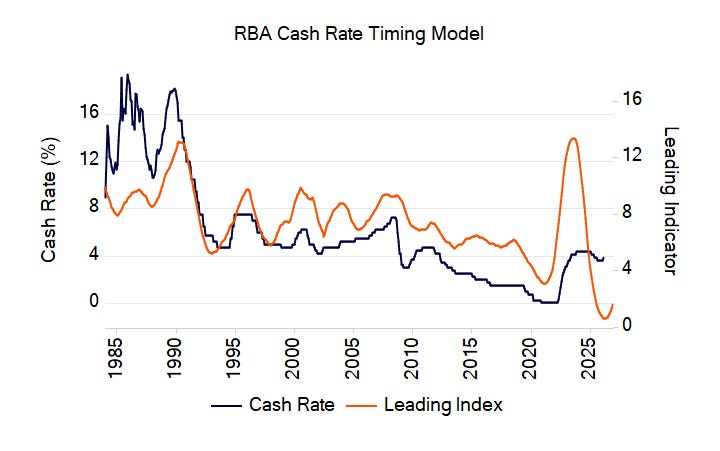
Since last year, we have been highlighting the increasing risk that the Reserve Bank of Australia would reverse policy course in 2026, which hiked this month, in line with our model!
The 2026 rate hikes begin. Australia’s Reserve Bank has kicked off the 2026 global rate hike season with a 25bps increase in its cash rate.
We told subscribers this was coming, and it follows our analysis of the outlook for Australian inflation, which we had been warning about last year.
Australia 2026: Modest Growth, Rising Inflation Risks - Our latest Money Supply & Macro Weekly is out now.
Will 2026 see hawks back at the RBA helm?
Is AI a bubble? Read Dr Frank Shostak's latest article
The Essence of Financial Bubbles: The Role of Central Bank Policies
Central bank-driven easy money creates impressive but unaffordable bubble activities that will collapse once the shrinking subsistence fund can no longer sustain them
https://t.co/OyYuROdD64
Our latest weekly note is out.
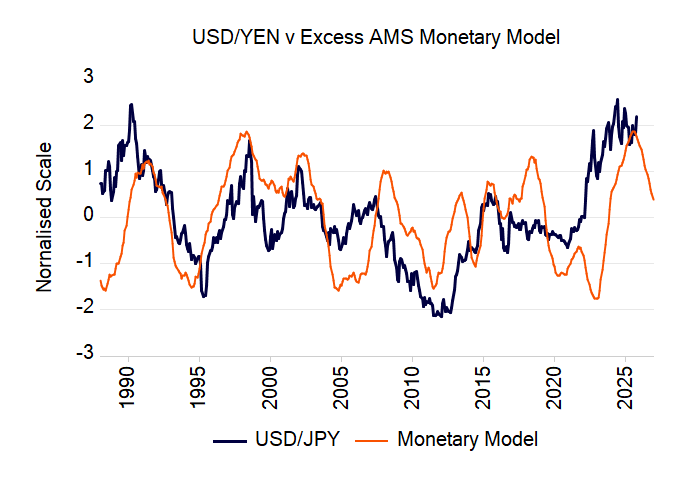
More carry trade angst. The world seems to be obsessed with the risks of capital flooding back to Japan if the BoJ raises interest rates. Really? Find out what the real drivers are and what our monetary model is signaling ahead for the Yen.
Yen Carry Trade Concerns?
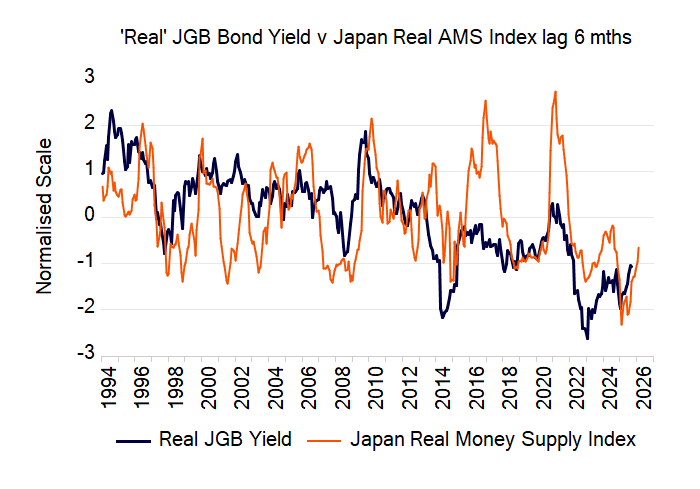
In this week’s Money Supply & Macro report, we’re exploring the diverging paths of the Bank of Japan (BoJ) and the Federal Reserve (Fed), and their implications for broader markets and the ever-popular yen carry trade. We’ll compare the economic outlooks for Japan and the US, with a focus on money supply shifts—our Adjusted Money Supply (AMS) as the core driver in our analysis.
Japanese real bond yields look set to continue to rise
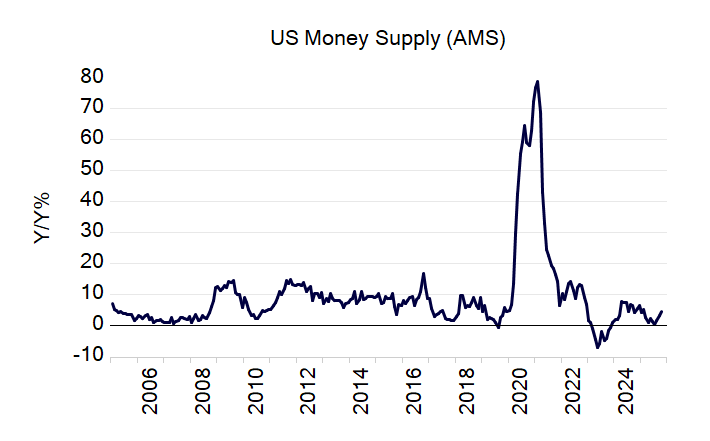
The US money supply was just released for October. For the month, our measure of money supply (AMS) increased by $160 billion. The annual growth rate has now risen to 4.5% from 0.1% in July earlier this year.
Furthermore, in the last 3 months the money supply has risen by over $610 billion!
Does a growing economy require a growing money supply?
Read Dr Shostak's latest article below
https://t.co/t5U4ca5mHI
@PeterSchiff@RandPaul@RonPaul@RepThomasMassie
Subscribe to our Substack to receive Frank's latest articles straight into your inbox.
Australian rate cuts dashed?
Downunder, employment increased by 42.2k in October, above the market forecast for a 20k increase. The unemployment rate also edged down to 4.3% in October from 4.5% in the month before. The stronger than expected employment growth puts a spanner in the works as far as expectations of further RBA rates cuts this year are concerned.
Furthermore, making use of the (inverted) yearly growth rate of lagged Australian money supply (AMS), we can suggest that the momentum of the Australian unemployment rate is likely to ease ahead, which is good news for Aussie workers.
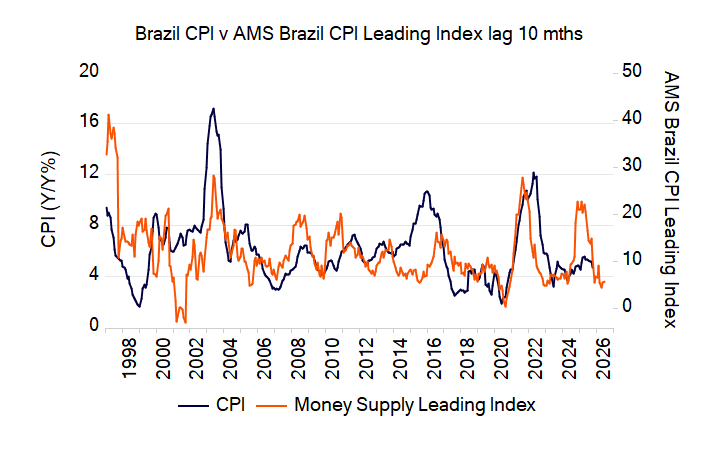
Brazil’s inflation will continue to fall. That’s the inescapable conclusion from our money supply analysis.
The yearly growth rate of the Brazil’s CPI eased to 4.7% in October from 5.2% in September. In October last year it was 4.8%.
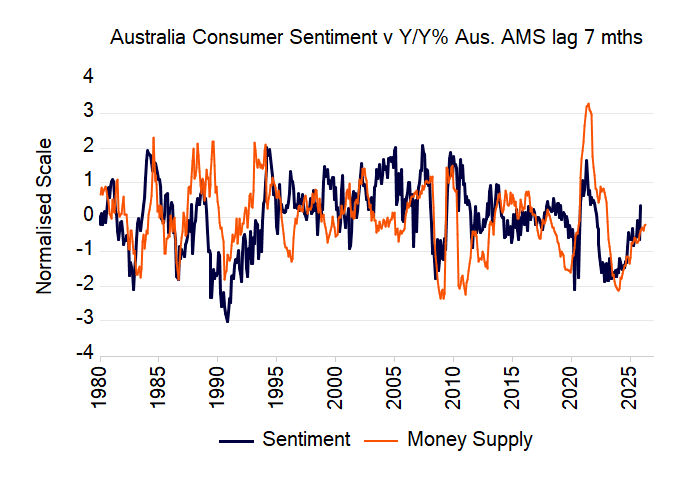
Australian consumer sentiment jumped sharply in November, rising by 12.7% for the month to 103.8. The underlying trend in consumer sentiment has been rising since November 2022 when it stood at 78.
This increase in consumer sentiment is in line with the lagged Australian money supply which has been trending up & continues to do so.
Gilt, James Gilt: licenced to print money
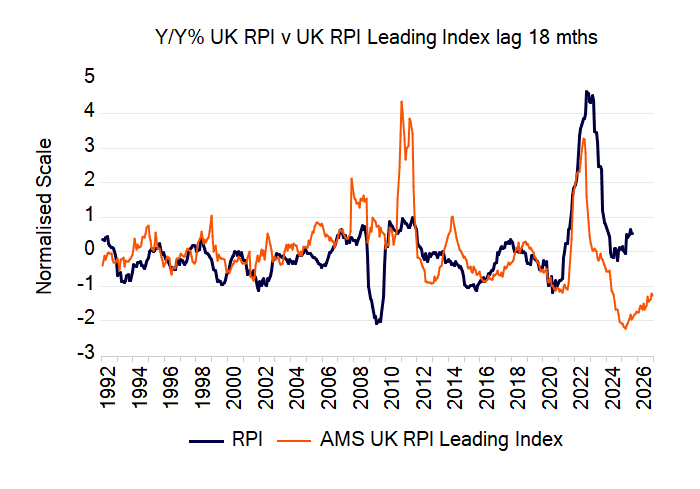
Now that we have your attention, this week we take a look at the UK’s economy and markets and where they are heading in 2026.
With monetary indicators suggesting that inflation could bottom soon and economic growth set to see a very modest improvement, there is the risk that the BoE may soon end its easing cycle & if this were to happen the UK gilt market may be in for a surprise.
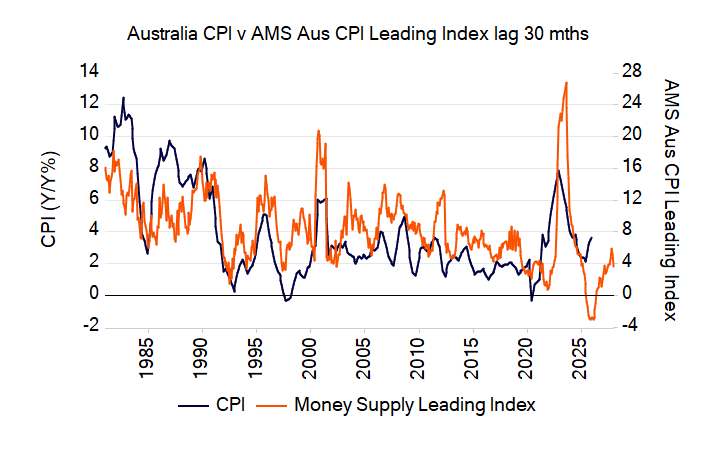
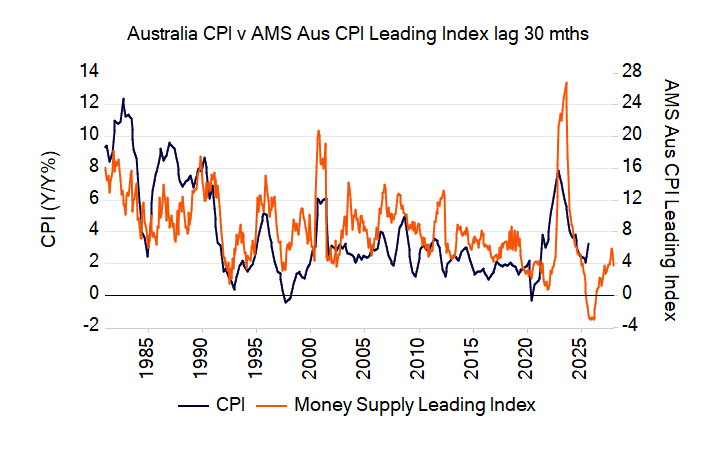
Australian CPI shocker? The jump in CPI came as a surprise to many.
The lagged monetary signals were suggesting a strengthening in the growth rate of CPI. Follow the money