Relationship Between Tendon Tissue and Shoulder Disability Change During an 8-Week Exercise Intervention for Rotator Cuff Tendinopathy: An Observational Study
https://t.co/I84SzgdUn7
Relationship Between Tendon Tissue and Shoulder Disability Change During an 8-Week Exercise Intervention for RC Tendinopathy
Main takeaways:
-Structure may matter more early on for symptoms
-Tendon size (inflammation?) decreased on involved and uninvolved
https://t.co/4ARMc7zgHj
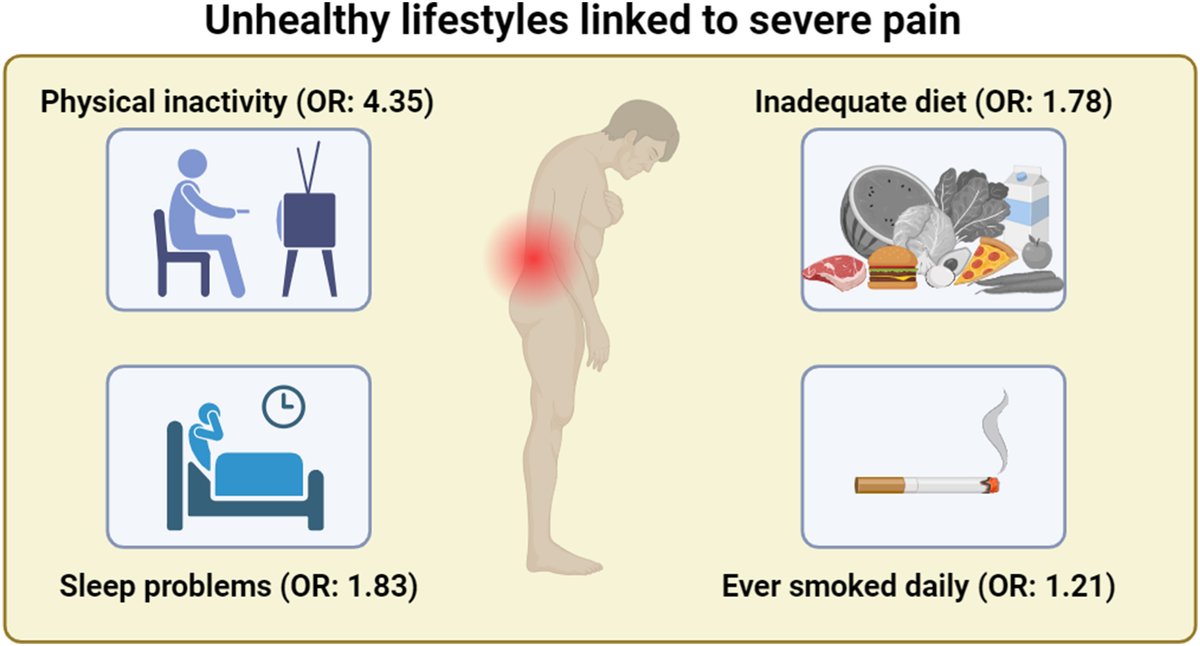
Physical inactivity is the most important unhealthy lifestyle factor for pain severity in older adults with pain: A SHARE-based analysis of 27,528 cases from 28 countries.
👇👇👇
https://t.co/tODsK7dz6y
Congratulations @Shoulder_PT Dr. Oscar Vila Dieguez on successfully defending your dissertation! The COOR lab is incredibly proud your accomplishments. And sorry we were so excited on that day we forgot to get a pic! We wish you success in your postdoc! @LoriMichener @uscbkn
This week, our student Oscar Vila Dieguez was awarded the prestigious Jacqueline Perry Scholarship, recognizing his academic excellence and honoring the legacy of a remarkable contributor to our department and the field of science as a whole.
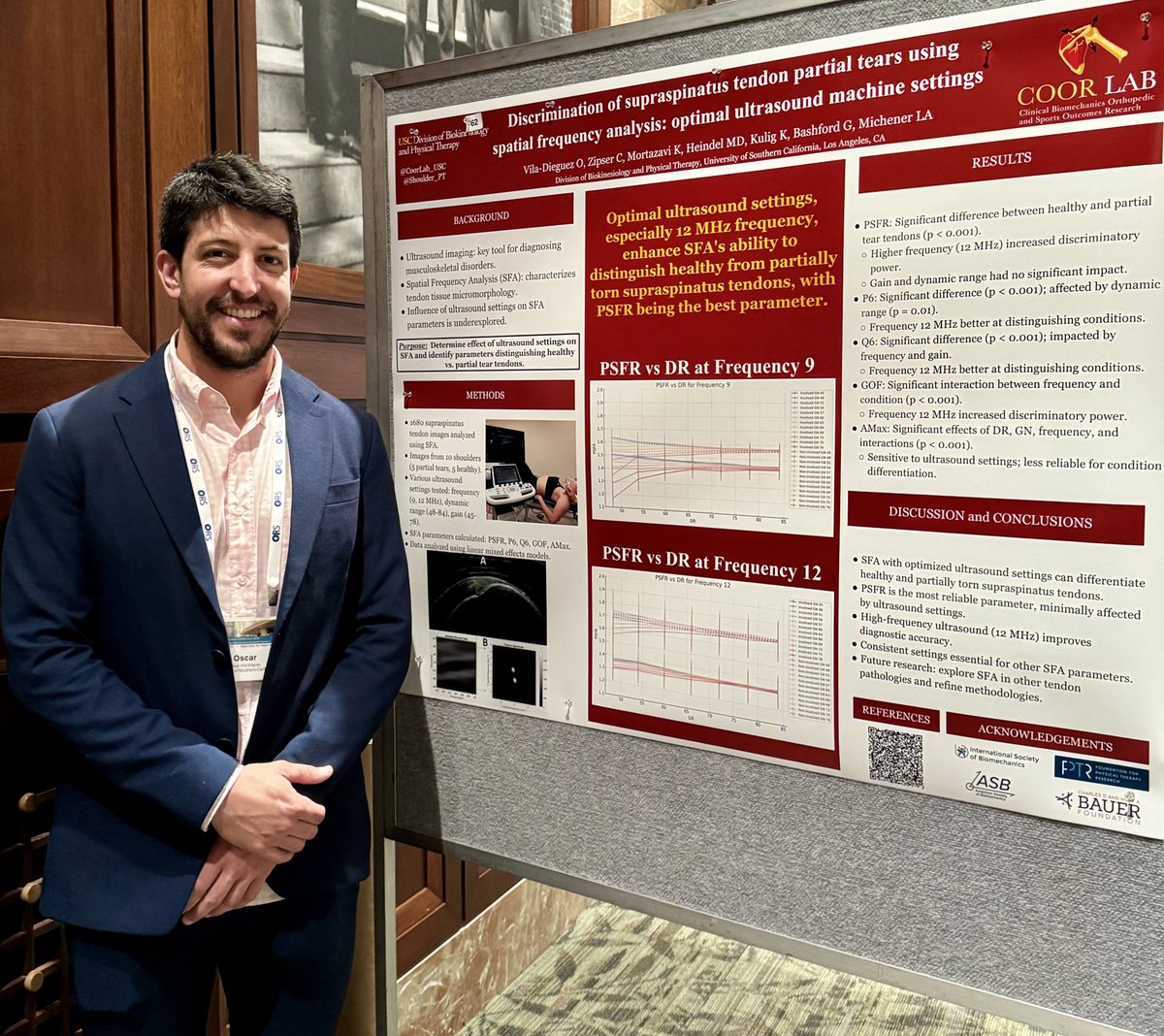
Some cool spatial frequency analysis going on in the @CoorLab_USC to determine if intratendon tissue organization changes with exercise and whether that relates to patient reported outcomes
Congratulations to our student Oscar (@Shoulder_PT), recipient of the Graduate Student Grant-in-aid for his project “The relationship of neuromuscular and tendon tissue factors to patient recovery in rotator cuff tendinopathy: an 8-week clinical investigation”
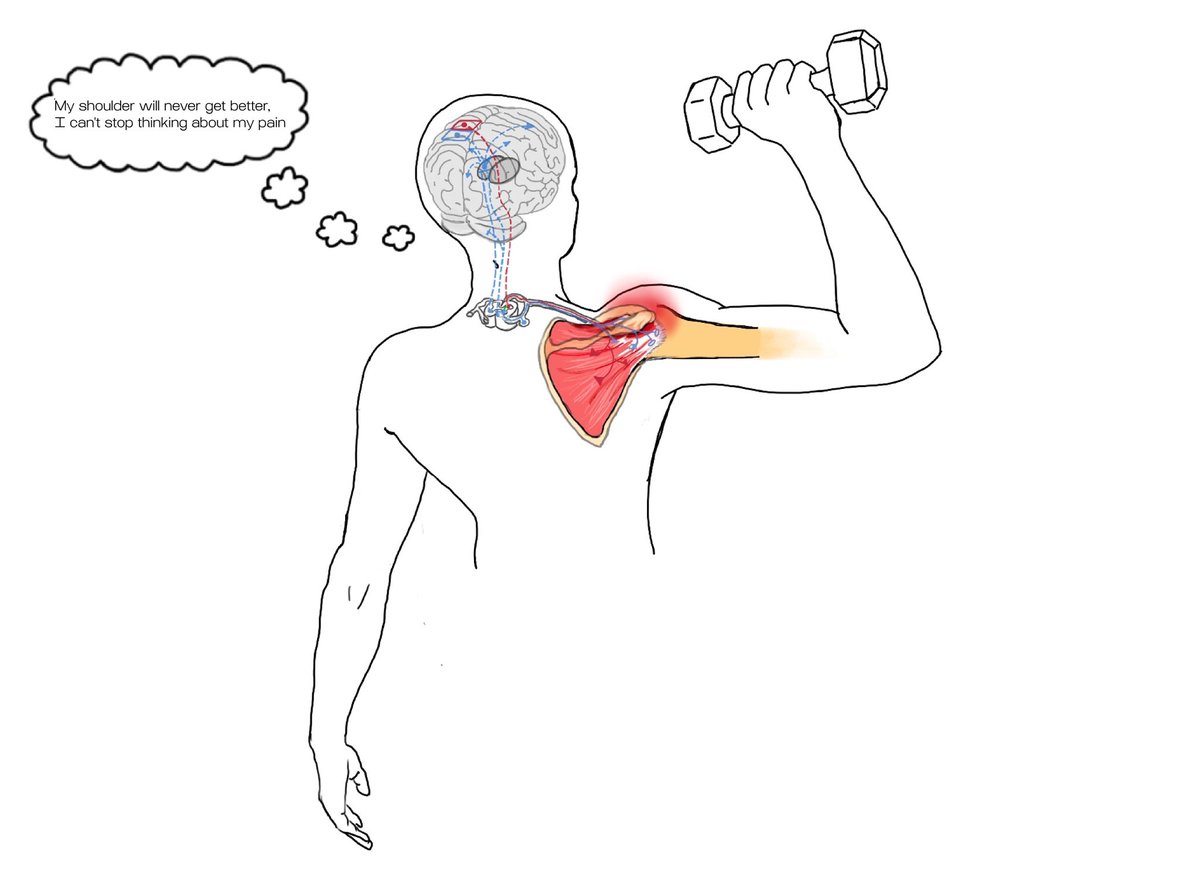
PhD candidate Oscar Vila-Dieguez (@Shoulder_PT), awarded the @ISBiomechanics Matching Dissertation Grant for completion of his research on the mechanisms of improvement in rotator cuff tendinopathy, exploring tendon morphology, neuromuscular and psychosocial factors. Congrats!
A Unique Look at the Evolving Role of Physical Therapists - Dr. James Gordon, Chair of the Division of Biokinesiology and Physical Therapy at the University of Southern California | Osmosis Raise the Line https://t.co/uPzky52Mug
@DerekGriffin86 @ChrisLittlew00d Identifying those with structural deficits versus those without and providing correct treatment may be a way to decrease overtreatment
@DerekGriffin86 @ChrisLittlew00d We may need to improve methods to identify a tissue biomarker. Just trying to communicate that dismissing tissue wouldn’t be wise, in case somebody is getting that message. In our paper we discuss some of this: https://t.co/6bzWqOgAPG
@DerekGriffin86 @ChrisLittlew00d Hi Derek. While I agree, I think it’s important to keep in mind that:
1.- Tissue is probably the most relevant factor for a good chunk of patients with RCRSP (Let’s subgroup further)
2.- Even though we have emphasized tissue, our methods may not be detecting relevant micro chang
Nature's Take 🔊 How will ChatGPT and generative AI transform research?
Nick Petric Howe, Magdalena Skipper, Richard Van Noorden, and Yann Sweeney discuss how AIs are impacting science https://t.co/m7QjX23HRj
NIH News: #NIH revises its research grant review process to improve focus on scientific merit and reduce reputational bias. The framework will be implemented for applications submitted on or after Jan. 25, 2025. https://t.co/mbZCqcuDuS