My first article published on @MongabayIndia on landslides in Darjeeling and local people's opinions! Thanks to @sahanaghosh8 for helping me with the edits and @petemcgowran for the photographs. I hope it is a good read for people... https://t.co/t4zvAeOuH5 via @mongabayindia
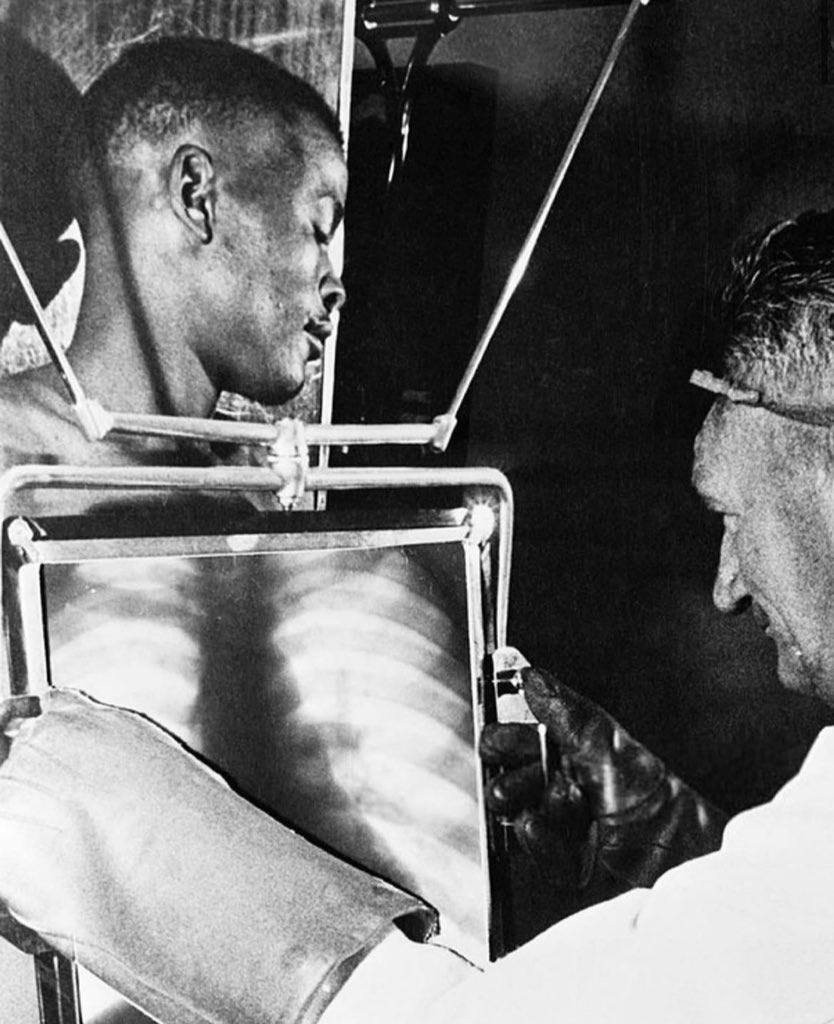
South African mine workers were x-rayed by radiologists at the end of each shift before leaving the De Beers diamond mines in Kimberley, South Africa, 1954. This was done to prevent even the smallest of diamonds from being smuggled out of the mine via the stomach.
Diamonds were first discovered in South Africa in 1867. The son of a farmer by the name of Daniel Jacobs collected what he thought were shiny stones along the bank of the Orange River. Other kids in the neighboring Villages would use the stones to play games. Soon, they caught the eye of a neighbor named Schalk van Nieker who offered to buy one for money. The boy's mother laughed and just gave it to him.
Nieker passed the stone around to a few people to see if it had any value. It soon ended up in the hands of a physician and amateur geologist by the name of W.G. Atherstone who came to the conclusion that it was a 21.25 carat diamond. Once the governor of Cape Colony purchased the diamond for £500, news began to spread throughout the region, and prospectors started to congregate in hopes of striking it rich.
Two Englishmen by the name of Cecil J. Rhodes and Barney Barnato decided to buy up the mines in the area. In 1888, they combined their holdings to create De Beers Consolidated Mines Limited, establishing its headquarters in Kimberley, South Africa.
Most of the people who ended up working in the mines were Black migrant workers. Most of their lands had been seized by British colonists, and they had no other means of making a living, other than to work in the mines for subsistence wages. Between 1897 and 1899, more than a thousand Black laborers died due to mining accidents and a host of disease-related illnesses.
The precursors to apartheid began to really take root in the city of Kimberley in which communities were divided up by ethnicities, and mixed marriages became outlawed. Certain public areas were reserved for "European Only," and the movement of African people was heavily restricted. Apartheid only came to an end in the early 1990s.
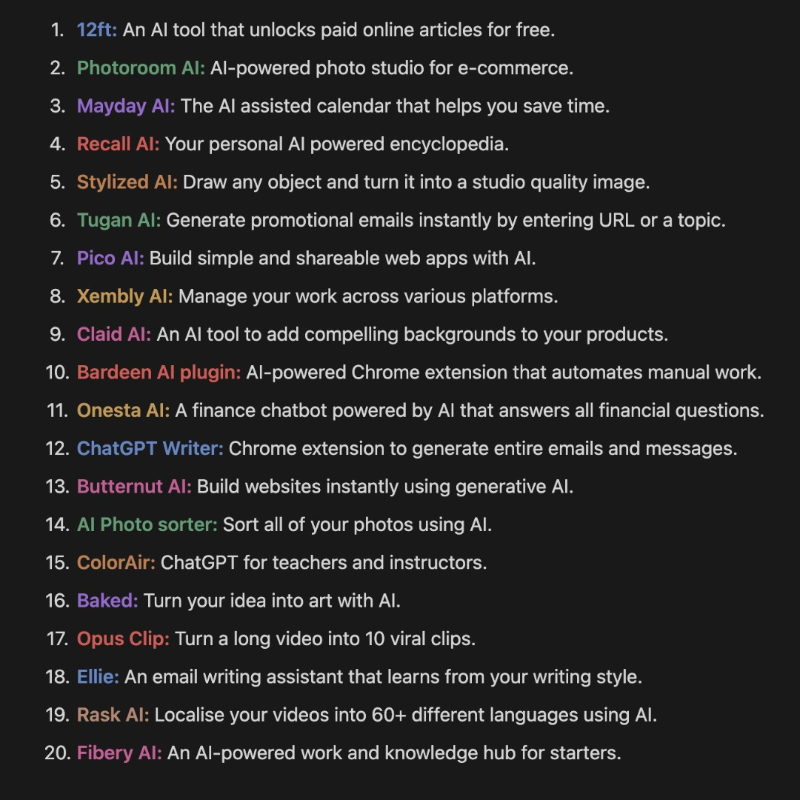
If you're not using AI, you're falling behind.
Here are 20 AI tools to future-proof yourself. Get more tools like this by signing up to Superhuman AI--the world’s biggest AI newsletter.
Today enjoyed giving 35' of slides + discussion on landslide related research I've been involved with while @kclgeography 2000-2023. Presented to Landslide Group @durham_uni convened by @_IHRR PDRA @slopenslide. Fun giving research snippets and many colleagues associated w. them.
PhD viva passed- 5th May becomes a special day for me now. An enjoyable experience during the viva with @alex_densmore and @winsonannie. An impossible journey without the supervision of @BruceDMalamud and @dramydonovan. Thank you for believing in me..
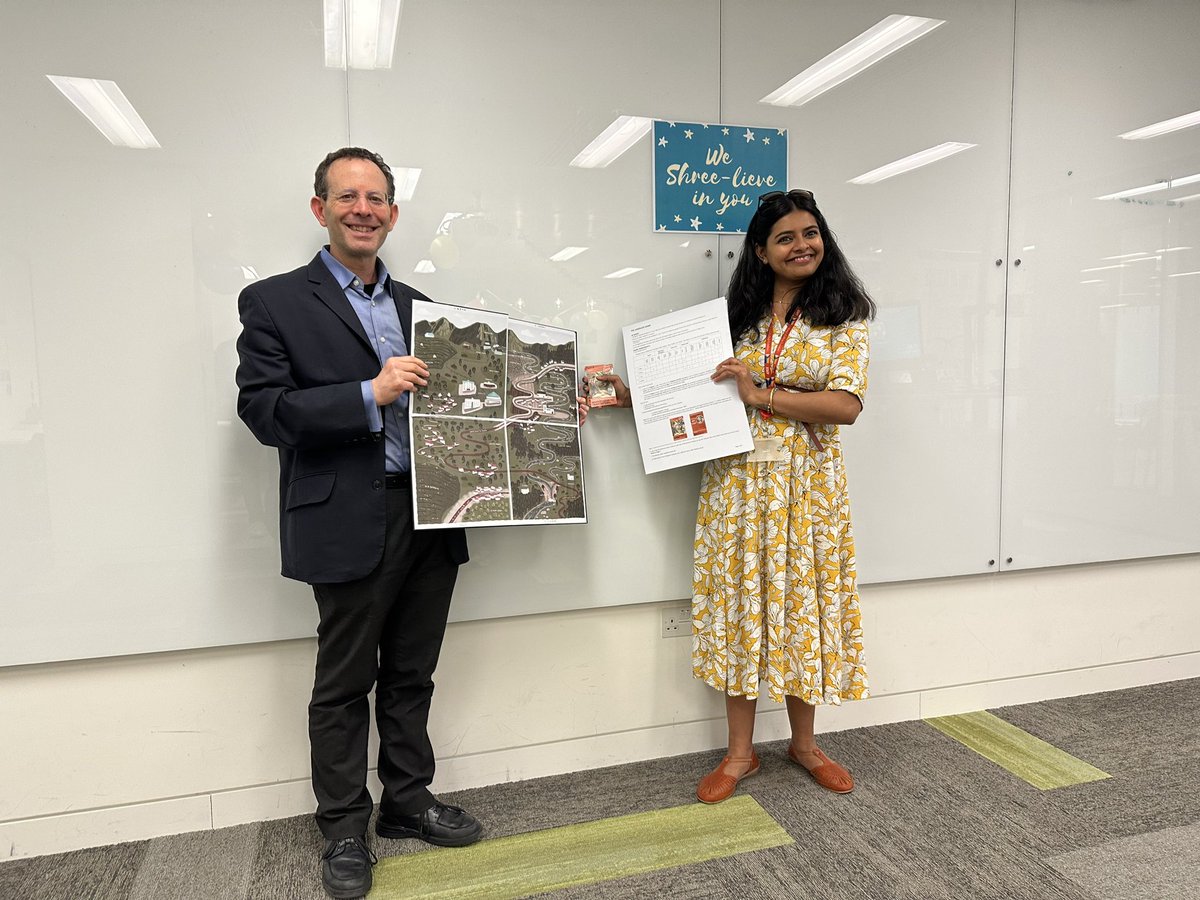
Congratulations to @kclgeography student @ShreeKCL for passing PhD viva. Her thesis “Belief-based probabilistic methods & serious games for landslides: A case study in Darjeeling Himalayas, India” Co-supervised @dramydonovan & myself. Photo: part of ch. 6 landslide serious game.
📢 Scholarship opportunity📢
Thinking of studying #geography with us?
New scholarship available to Black British students from economically disadvantaged backgrounds from the #GreaterLondon area.
Come study with us! Apply now 👇
https://t.co/y0AXcpOUqc
Congratulations to @kclgeography student @ShreeKCL for passing PhD viva. Her thesis “Belief-based probabilistic methods & serious games for landslides: A case study in Darjeeling Himalayas, India” Co-supervised @dramydonovan & myself. Photo: part of ch. 6 landslide serious game.
I am a CHILD. I’m only 16. I go to school every day in order to learn, make friends and thrive.
Kentucky just made it illegal for me to use the bathroom in school. They are forcibly taking away my healthcare. I can no longer speak to a school counselor without (1/2)
“Climate change is happening, it’s us that caused it.”
Climate scientist Dr Tamsin Edwards tells @krishgm why the latest Intergovernmental Panel on Climate Change is so important.
https://t.co/WRyGyG9RR5
Disasters trap the least developed countries in a cycle of disaster, respond, recovery, repeat.
🌀To stop the spiral, disaster risk reduction must be embedded in national development strategies, sectoral budgets, and economic plans.
https://t.co/GwFvEgzjRB #LDC5#GlobalGoals
It's always nice to have an excuse to revisit fieldwork photos 🤣 great to have some questions from the PEBES people about methodology to get me thinking too!
Disaster Management folks, any case studies where what is framed as a disaster by the state is not seen as a disaster by the local communities. Rather, seen positively by local communities.
📢PhD opportunity in the intersection of #NLP, #digitalhumanities and extreme events (#flood#drought & #heatwave).
Not bragging, but we have access to a unique dataset of 200+ million newspaper articles in Germany ;)
⏰Deadline 13.02 https://t.co/IXWITKxa0K