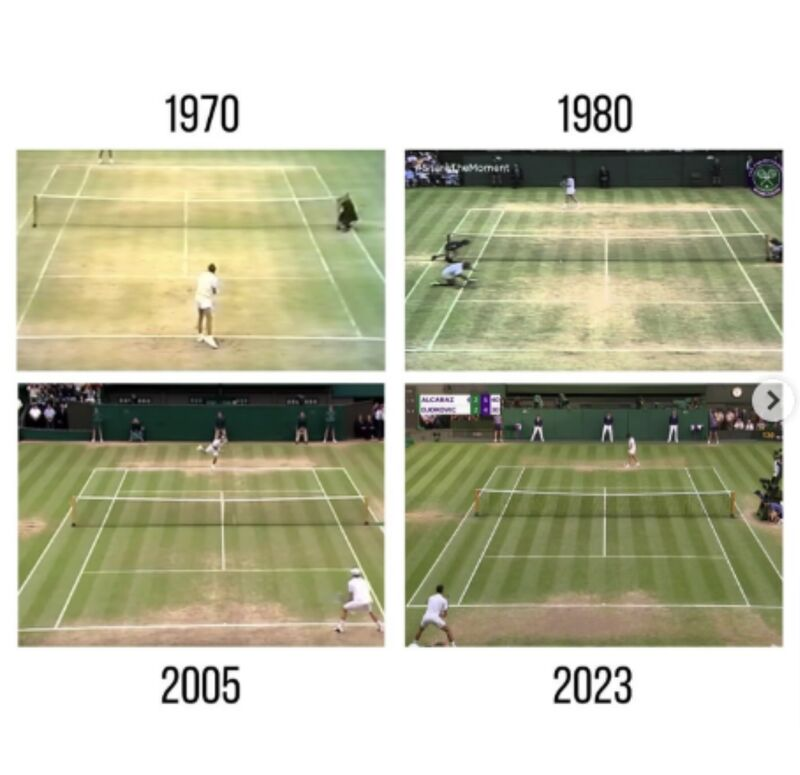
The grass on Center Court at Wimbledon over the decades shows a change in the wear patterns. This transformation is not the result of new, more resilient turf or grounds keeping technologies, but due to changing racket technology.
In the era of wooden rackets, the heavy weight of the racket resulted in a "serve and volley" game. Given the impossibility of finishing a point from the back of the court, players resorted to volleying to win points at the net.
With the shift from wooden rackets to modern materials, the game moved towards powerful baseline play. Today's players are taller, hit hard from both sides, serve aggressively, and finish points predominantly from the back of the court.
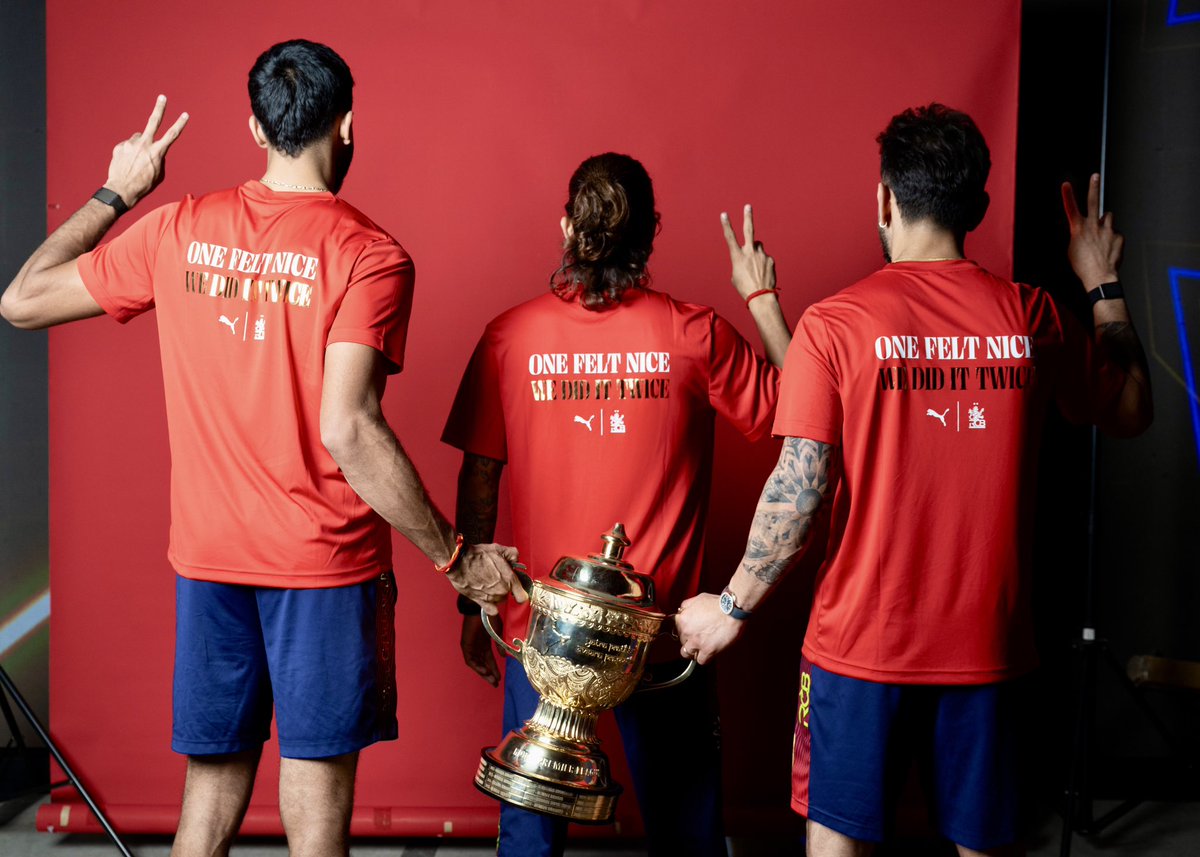
Started the season with belief. Ended with back to back titles. 🏆
This team lived every emotion together. The highs, the pressure, the hurdles, and the unwavering support. It feels extra special because… this place is HOME! ❤️ @RCBTweets
Indeed! To conflate a Rasgulla with an Idli is not just a culinary error; it is a profound cosmological misunderstanding.
To begin with, the comparison is practically a biological impossibility. She is comparing chhena (the delicate, squeaky, pristine curd of milk) with a meticulously fermented batter of parboiled rice and black gram (urad dal). Their compositions are from entirely different kingdoms. One is an airy, spongy lattice designed to trap light sugar syrup; the other is a dense, wholesome, steamed matrix of complex carbohydrates and proteins. Their taste, consistency, structural integrity, and existential purpose share absolutely nothing in common.
But more important, her attempt to dismiss the Idli as merely a blank canvas for sugar syrup does a grave disservice to what is arguably one of the greatest engineering marvels of the culinary world.
The Idli is not a mere "bland cake." It is a masterclass in biotechnology. To achieve the perfect Idli is to balance the delicate microflora of wild fermentation over a cold night, resulting in a steamed cloud that is a triumph of gut health, lightness, and nutritional balance. It is a savoury monolith of South Indian culinary genius, perfectly engineered to absorb the sharp tang of a well-spiced sambar or the fiery depth of a molaga-podi (gunpowder) paste infused with cold-pressed sesame oil or nutritious melted ghee.
To suggest an Idli would even consent to being drowned in sugar syrup is to fundamentally misunderstand its dignity.
If this lady finds Rasgullas overrated, argue that on the merits of their sponginess or sweetness. But please, leave the noble, perfectly fermented, steamed majesty of the Idli out of your dessert-table polemics, ma'am!
When L Sivaramakrishnan was 14 an Indian player called him to clean his shoes. On his 17th birthday another Indian player said, ‘you have got a chocolate cake as dark as his skin colour’. Now at 60, LS opens up on his old wounds and battling depression.
https://t.co/r9ov4fwIuc
The first reason is that WhatsApp never uses the regular internet request system most apps rely on. Instead of your phone asking a server “is there anything new for me?” every few seconds which is slow and wasteful WhatsApp keeps a persistent open connection between your device and its servers at all times. The moment you’re online, that connection is alive and waiting. When you hit send, your message travels down an already-open pipe. There’s no handshake, no setup, no negotiation. The door is already open.
The second reason is the protocol. WhatsApp is built on XMPP, a messaging protocol engineered specifically for real-time communication. It’s lightweight, binary-encoded, and designed to move small packets of data with almost no overhead. A text message is tiny a few hundred bytes at most. Pushing that through an already-open connection over a protocol built for exactly this purpose takes microseconds on the network side.
The third reason is infrastructure.
WhatsApp operates data centers positioned strategically around the world. When you send a message, it doesn’t travel to a single central server it routes to the nearest available one, minimizing the physical distance data has to travel. And physical distance is the one thing even the best engineering can’t fully eliminate. Light through fiber still has a speed limit. Keeping servers close to users is how WhatsApp works around it.
Then there’s the delivery receipt system. The double tick you see isn’t confirmation that the recipient read the message the first tick fires the moment WhatsApp’s server receives it, not when it lands on the other person’s phone. You see confirmation almost instantly because the server is close, fast, and always listening. The second tick comes when it reaches their device. The blue ticks come when they open it.
When you hit send, you’re not waiting for a round trip. You’re dropping a tiny package into an open pipe, aimed at the nearest fast server, using a protocol built for nothing but speed.
That tiny red nub sitting between the G, H, and B keys on keyboards has been quietly dividing the tech world for over 30 years. Half the people who encounter it have no idea what it does. The other half refuse to use anything else.
It’s called the TrackPoint. And it was born out of a single frustrating observation.
In 1984, a researcher named Ted Selker conducted a study showing that it takes a typist 0.75 seconds to shift their hand from the keyboard to the mouse and a comparable amount of time to shift back.  That 1.5 seconds of lost time, multiplied across an entire workday, felt like a solvable problem. So he built something that would eliminate it entirely; a pressure-sensitive nub planted right in the middle of the keyboard, so your hands never had to leave the keys at all. IBM introduced it commercially in 1992 on the ThinkPad 700 series. 
The way it works is not what most people expect. It doesn’t move like a joystick. It responds to pressure. Beneath the rubber cap sit strain gauges that measure the force applied in different directions and translate it into cursor movement. The harder you press, the faster the cursor moves.  There is no repositioning, no lifting your finger, no running out of space. Infinite cursor movement from a single fingertip that never moves more than a millimeter.
The red color almost didn’t happen. IBM’s product safety division had reserved red exclusively for emergency power-off switches on mainframe computers.
ThinkPad designer Richard Sapper got around this by calling the color IBM Magenta and when the first batch shipped, the engineers made it decidedly more crimson. A loophole dressed in plain sight. 
Power users programmers, analysts, executives who live on their keyboards swear by it. The reason, according to Lenovo’s chief design officer, is that your hands never leave the home row. You type and navigate simultaneously, without the constant interruption of reaching for a trackpad.  Once mastered, people say it feels less like using a tool and more like an extension of thought.
Most laptops abandoned it. Lenovo never did. And the people who know, know.
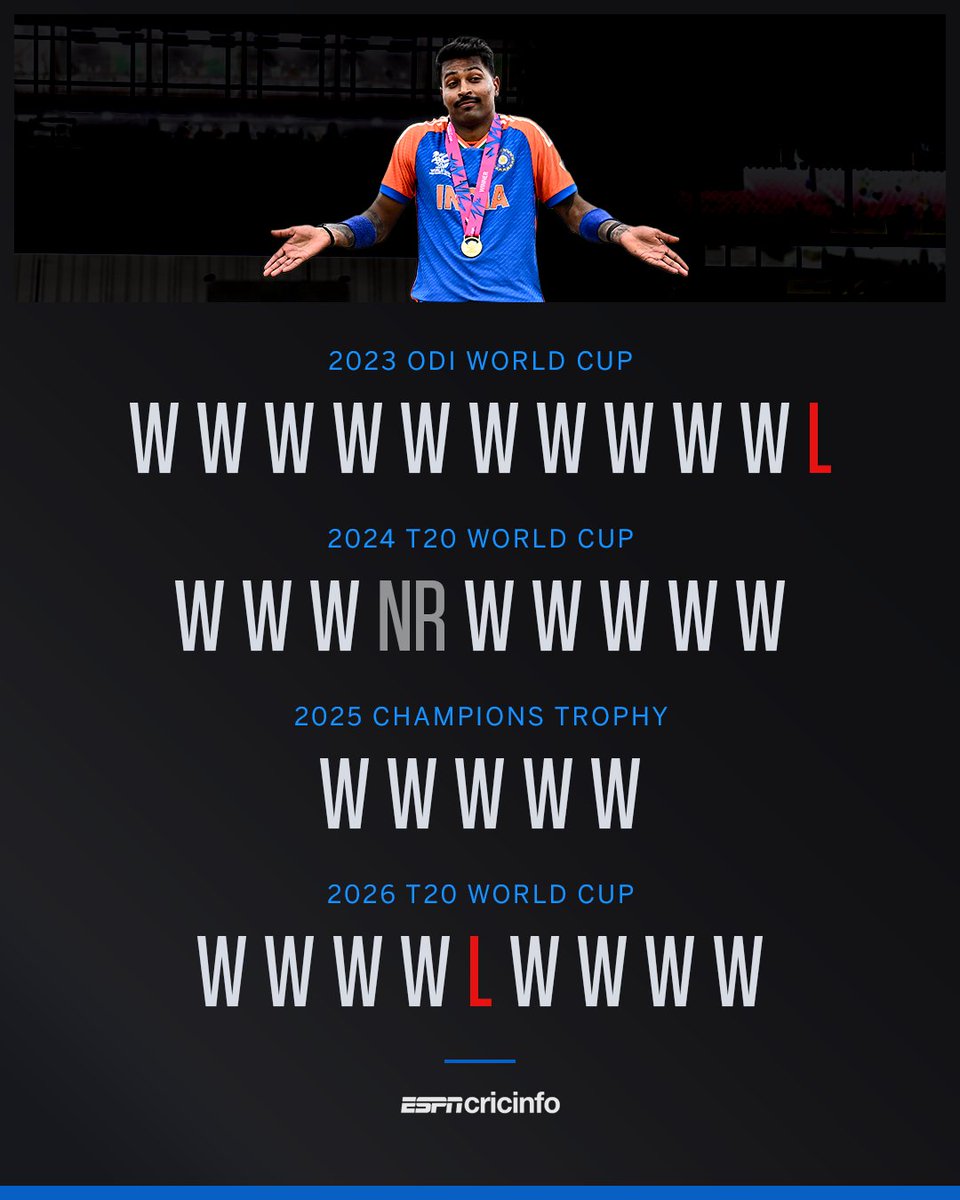
Champions ⭐️⭐️⭐️ Phenomenal win for Team India in Ahmedabad. Absolutely no match for the explosive cricket played by us throughout the tournament. Brilliant character shown by the boys to keep fighting in tough situations and become world champions once again. Congratulations to all the players and all the members of the management for achieving this feat. Jai Hind 🇮🇳❤️
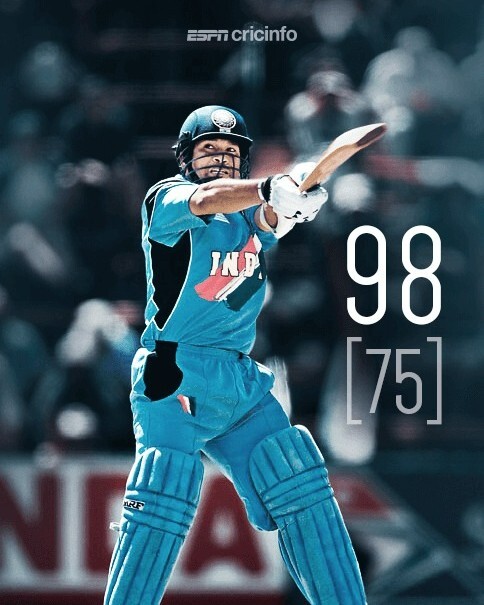
The best innings of his career considering the match situation. The maturity he showed throughout was outstanding.
A top-class, match-winning knock from Sanju Samson. 👏
The London to Calcutta bus was one of the most ambitious transport services of the 20th Century. Launched in 1957, it connected England to India across roughly 10,000 miles, making it the world’s longest bus route at the time. A full round trip totaled more than 20,000 miles and took around 50 days each way.
The journey crossed numerous countries, including Belgium, Yugoslavia, and regions of northwestern India, and it later became closely linked with the Hippie Trail of the 1960s and 70s. Tickets covered travel, food, and lodging, with prices starting at £85 in 1957 and rising to £145 by the early 1970s.
By 1976, political instability in parts of the Middle East made the overland route too risky to continue, bringing an end to this remarkable chapter in long-distance travel history.
#archaeohistories