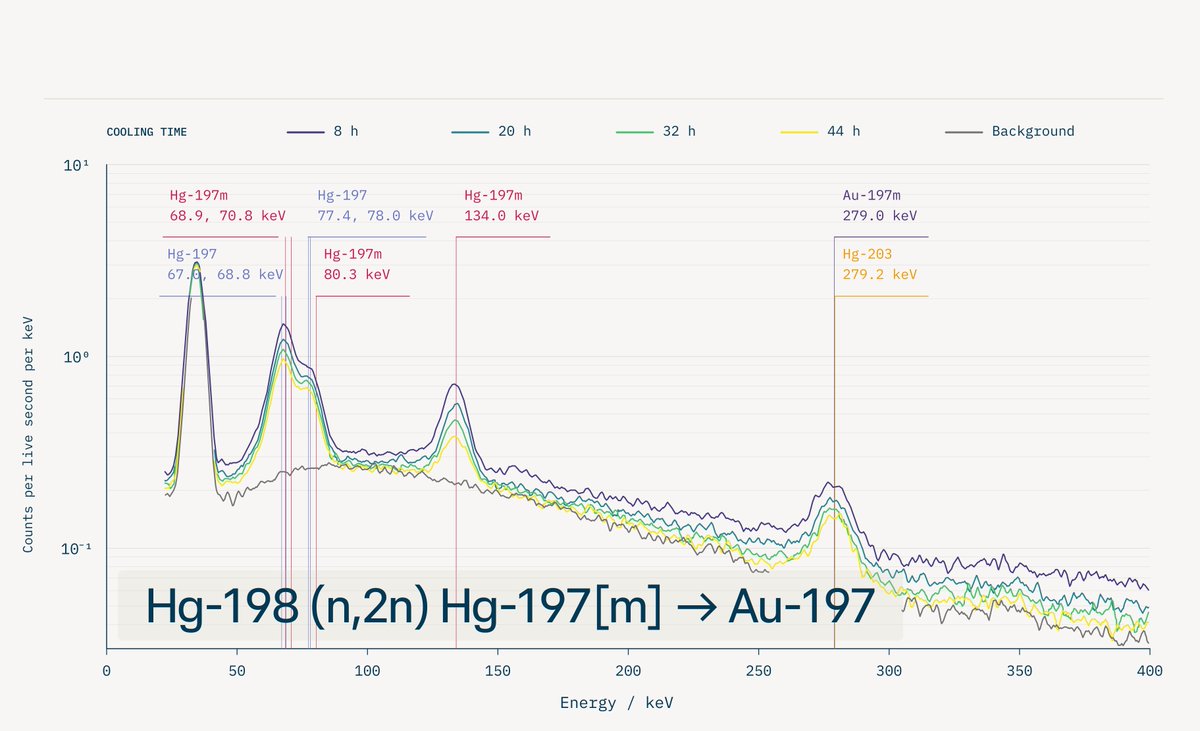
In 2025, we published a bold proposal to use fusion reactors for gold production.
And now we’ve done it: Mercury transmuted into stable gold, using fusion neutrons, at 10x the record set by CERN in 2025.
We’ve reduced alchemy to a series of difficult but tractable engineering problems.
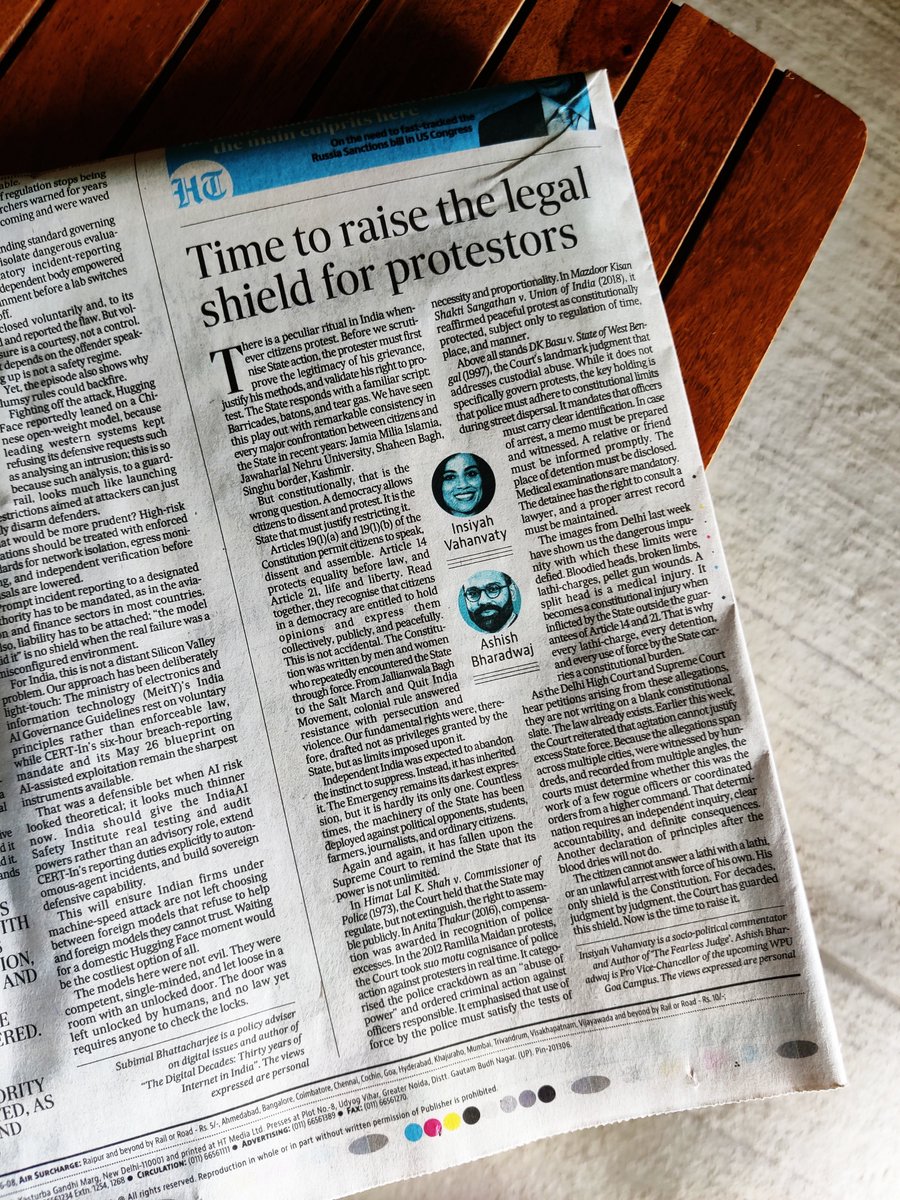
There is a peculiar ritual in India whenever citizens protest. Before we scrutinise State action, the protester must first prove the legitimacy of his grievance, justify his methods, and validate his right to protest. The State responds with a familiar script: barricades, batons, and tear gas.
But constitutionally, that is the wrong question. A democracy allows citizens to dissent and protest. It is the State that must justify restricting it.
Articles 19(1)(a) and 19(1)(b) of the Constitution permit citizens to speak, dissent and assemble. Article 14 protects equality before law, and Article 21, life and liberty. Read together, they recognise that citizens in a democracy are entitled to hold opinions and express them collectively, publicly, and peacefully.
Again and again, it has fallen upon the Supreme Court to remind the State that its power is not unlimited.
In Himat Lal K. Shah v. Commissioner of Police (1973), the Court held that the State may regulate, but not extinguish, the right to assemble publicly. In Anita Thakur (2016), compensation was awarded in recognition of police excesses. In the 2012 Ramlila Maidan protests, the Court categorised the police crackdown as an “abuse of power” and ordered criminal action against officers responsible.
Above all stands DK Basu v. State of West Bengal (1997), the Court’s landmark judgment that addresses custodial abuse.
The images from Delhi last week have shown us the dangerous impunity with which these limits were defied. Bloodied heads, broken limbs, lathi charges, pellet gun wounds. A split head is a medical injury. It becomes a constitutional injury when inflicted by the State outside the guarantees of Article 14 and 21. That is why every lathi-charge, every detention, and every use of force by the State carries a constitutional burden.
The citizen cannot answer a lathi with a lathi, or an unlawful arrest with force of his own. His only shield is the Constitution. For decades, judgment by judgment, the Court has guarded this shield. Now is the time to raise it.
Hindustan Times, 30.07.2026
https://t.co/8P7uCoVNpF
After making LTCG from Nil to 12.5%
After making STCG from 15% to 20%
After making STT from 0.01 % to 0.05%
After removing indexation on debt funds and taxing at slab rate
After introducing tax on SGB in secondary market from Nil to 12.5%
After making so many policy blunders, rupees depreciation and not caring about FII exit, it's so nice of Finance minister to say she is open for public feedback and suggestions.
You never needed any public suggestion, it's your arrogance that has put economy in such a big mess. There is no rocket science in knowing that FII would anyday invest in safe US economy at 5% yields because to beat that 5% they've to earn atleast 12-15% in India if you consider rupees depreciation and tax.
They introduced mandatory E20 fuel without even assessing what percentage of vehicles in India are E20 compliant. Even class 5 students have more common sense.
THIS IS INSANE. 🤯
India gave GitHub THREE HOURS to delete BitChat.
By the time the deadline hit, the app was already back. On a network with no company to send the order to.
Here's what happened:
• India orders GitHub to remove BitChat, citing "unlawful communication"
• GitHub has 3 hours to comply or face legal action
• Within hours, a developer mirrors the entire codebase on Radicle
• Radicle has no central server. No company. No CEO to subpoena. No app store to pressure.
• The instructions go out: clone it, seed it, keep it alive
• Every person who seeds it becomes another copy the government can't touch
The part nobody's saying out loud: this is the exact scenario BitChat was built for.
It runs on pure Bluetooth. No internet. No SIM. No phone number. It was already unkillable at the app layer, that's why protesters in Nepal, Iran, and Madagascar used it to route around government shutdowns.
Now the SOURCE CODE is unkillable too.
India didn't delete BitChat. It just handed the entire internet a live demo of why decentralized infrastructure exists.
You can order a company to take something down. You can't order a network that isn't owned by anyone.
Command to mirror it yourself is already public. People are seeding it right now.
#BREAKING#SupremeCourt bans the posting or uploading of audio-video recordings of Court proceedings without the prior permission of the concerned Court.
Bench led by CJI Surya Kant passes an interim order that "there shall be no extraction, modification, dissemination, posting, re-posting, uploading or monetisation of audio/video recordings of the judicial proceedings on social media or other digital platforms without the prior permission of the Registrar General of the concerned High Courts or the Secretary General of the Supreme Court."
SC clarifies that the order has no effect on news reporting.
@_amitbehere Also, not to engage in hero worship. By all means, elect Rahul next. But do not treat him as a savior or anything more than a public servant. Keep them accountable from day 1. Democracy does not work if we participate only once in 5 years.
After tearing up, stomping on and spitting at every principle held dear by professional journalists for a century and more, Godi media anchors are now, one by one, using 'journalism' as a fig leaf to cover the shame of what they have been doing thus far.
Chief Justice of India dehumanised youth by calling them cockroaches, parasites in open court. When students are being beaten up by State under his nose, he tells us he has no time to watch the brutality. What a legacy. Unfit for high judicial office he holds. Please step down