@AidanRMackenzie@AndrewDamitio #2 would be a lot more meaningful if the surface reauth enabled TIFIA for residential to proceed w/o projects needing an investment-grade credit rating. Thankfully the same NEPA cat ex is included for RRIF in Section 10506
Incredibly based that a candidate for Congress is unleashing @ShroyerAaron co-authored takes on federal housing policy. Very excited for former Rep. McAdams to be back in Congress next year
Having been talking about a variation of this on the campaign trail for awhile now—no reason prime federal land owned by USPS cannot be used for public service housing so first responders and teachers can work where they live!
In my hometown, the post office is on 9.5 acres of land! The possibilities!
Here's a piece we've been working on for a while. Happy to finally see it published!
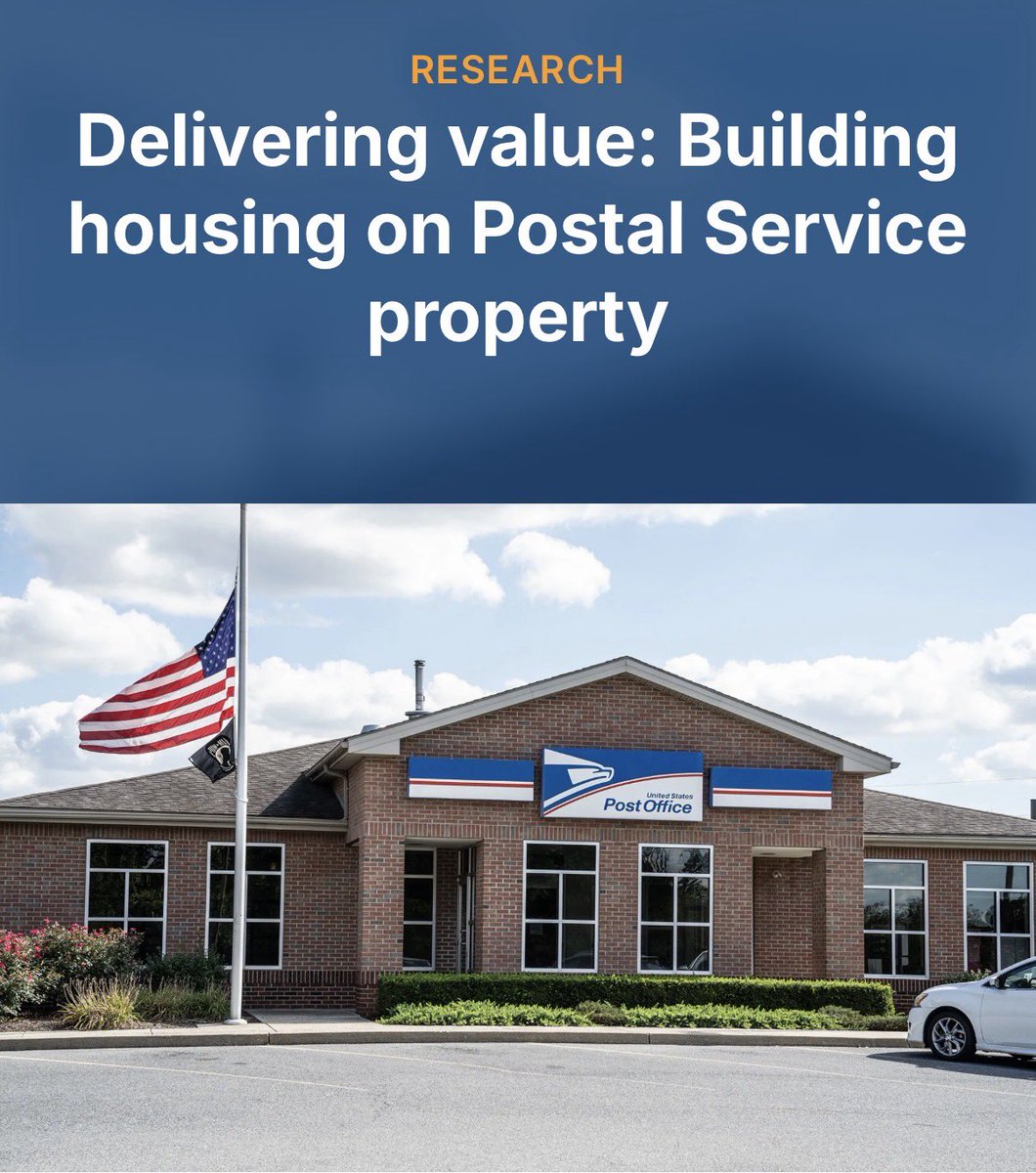
America faces two major challenges at the same time: a severe housing shortage and growing fiscal pressure on the U.S. Postal Service.
In this new Brookings piece, my co-authors and I argue that these problems can help solve each other.
The Postal Service owns a vast portfolio of land in communities across the country—much of it already connected to infrastructure, transit, and neighborhood centers. By strategically redeveloping underutilized postal properties for housing while maintaining postal operations, we estimate the potential to create up to 237,000 housing units nationwide and generate meaningful long-term revenue for USPS.
This is not about privatizing the Postal Service. It’s about strengthening a critical public institution by using its assets more productively while helping address America’s housing supply crisis.
The idea builds on lessons from international examples, existing USPS authorities, and a broader belief that government can be more entrepreneurial and innovative in how it manages public assets.
Grateful to my co-authors and the Brookings Institution for the opportunity to contribute to this conversation. @ShroyerAaron
Read the piece here: https://t.co/h1r0kJeh3z
New @BrookingsInst paper from me estimating the housing potential of USPS-owned property nationwide & the annual revenue that a full build-out could generate 🧵
The House's response to the Senate housing bill came out tonight.
The House protects build-to-rent, removing the 7-year disposition requirement that discouraged housing supply for renters in the Senate bill.
There are other good things in the House package, like a model single-stair building code.
More to read through, but this is a good next step!
🔄 WHAT CHANGED: Build Now Act (Sec. 204)
Penalizes jurisdictions that don’t build enough housing by cutting their CDBG allocation.
House caps penalty and sunsets program after 5 fiscal years (Senate ran it through FY 43).
The Cavs / Pistons game went into OT & I was still awake for the 21st Century ROAD to Housing Act bill text drop
Quick, non-exhaustive 🧵to break down what’s still in / what’s new / what’s out / what changed:
🔄 WHAT CHANGED: FHA multifamily loan limits (Sec. 212)
Increases the supply of affordable housing by raising the Federal Housing Administration’s (FHA) multifamily loan limits. House version fixes a drafting error in the Senate-passed version.